
Which materials are suitable for safe water tank refurbishment?
Suitable materials for safe water tank refurbishment must be certified for contact with potable water, compatible with the tank construction and resistant to corrosion, deterioration and microbial growth. Depending on the defect and tank type, this may include approved lining systems, repair compounds, replacement seals, access covers and fittings selected to restore watertight integrity without compromising water quality.
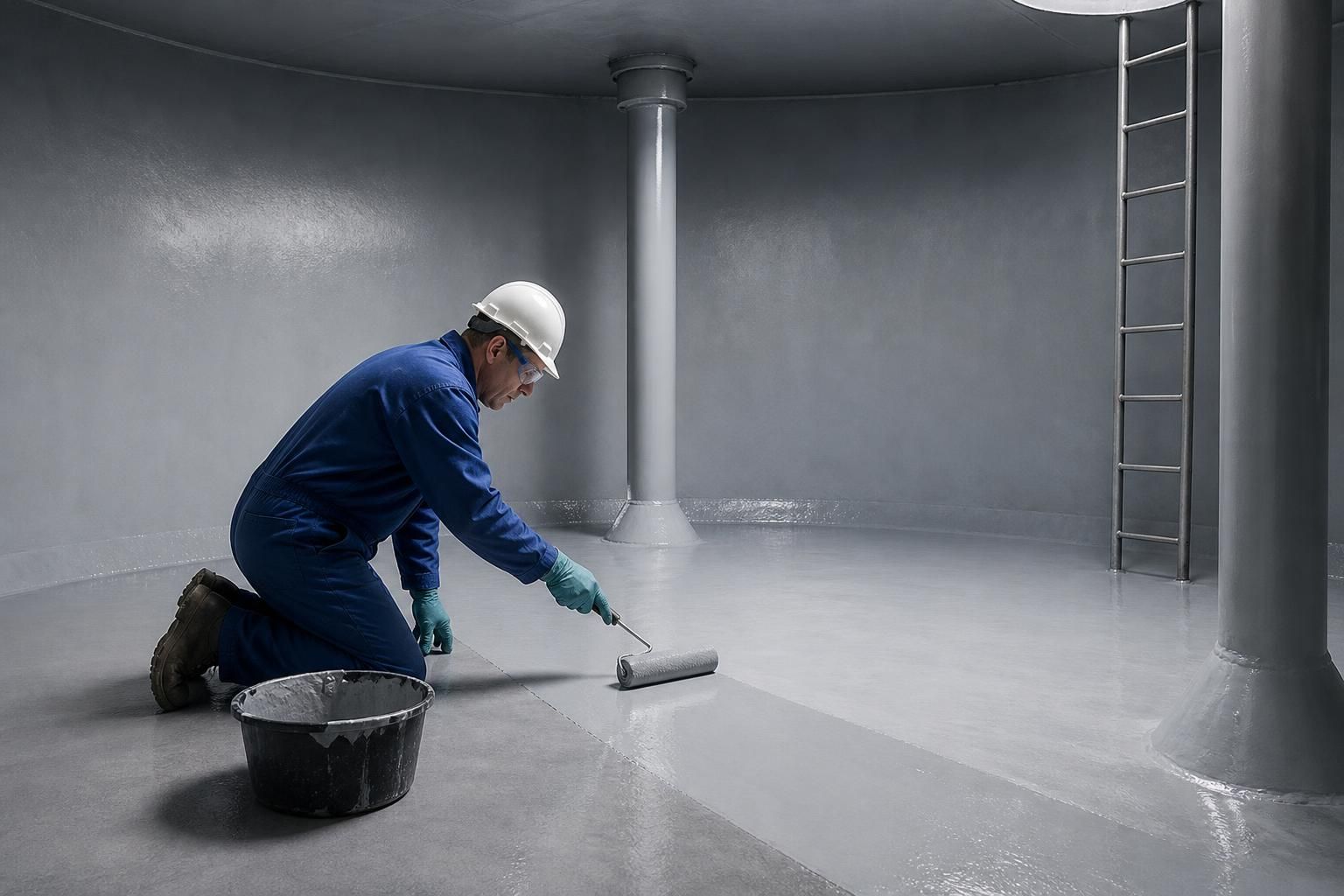
Suitable materials for water tank refurbishment are those that are demonstrably compatible with the stored water, the tank substrate and the operating conditions. For tanks supplying potable water, every coating, sealant, repair compound, lining and replacement component that comes into contact with the water should have appropriate evidence of suitability for potable-water use, such as relevant UK regulatory approval or compliance with recognised standards including BS 6920 where applicable.
Tank lining systems are commonly used where the existing tank shell remains structurally sound but its internal surface has corroded, cracked, become porous or is difficult to clean effectively. Approved epoxy, polyurethane and other specialist resin systems may be suitable, provided the product is designed for immersion and certified for the intended water application. The selected lining must bond to the substrate, tolerate the tank's temperature and water chemistry, and form a continuous finish without pinholes, uncured areas or exposed substrate.
A coating intended for floors, general metalwork or external structures should not be assumed to be safe inside a water tank. Some products can release substances into the water, soften during immersion or deteriorate when exposed to cleaning chemicals. The product specification, approval documentation and application instructions should therefore be checked before work begins.
Repair mortars and fillers can be appropriate for local defects in concrete, masonry or cementitious tanks. They may be used to fill voids, repair damaged arrises, reinstate joints or provide a sound surface for a compatible lining. The material should be suitable for continuous or intermittent contact with the stored water, provide adequate adhesion and be capable of curing fully in the site conditions. Ordinary building filler, plaster, unapproved cement mixes and decorative finishing products are not suitable substitutes.
Corrosion-resistant metalwork may be needed where internal supports, brackets, access arrangements or other tank components have deteriorated. Stainless steel can be suitable in some applications, but the grade, fabrication method and surrounding water conditions must be considered rather than treating all stainless steel as interchangeable. Where existing galvanised or coated steel is retained, damaged areas need to be assessed carefully because corrosion beneath a coating can continue unseen. Any replacement metalwork should be isolated or finished in a way that does not introduce contamination or create conditions that encourage corrosion.
Seals, gaskets and joint materials should be selected for the fluid, temperature range and intended service life. Potable-water-approved elastomers, including suitable grades of EPDM or other approved materials, may be used for access covers, flanges, pipe connections and removable fittings where their chemical compatibility has been confirmed. A seal that is acceptable for wastewater, heating systems or general industrial use is not automatically acceptable for drinking-water storage. Joint materials should also resist compression set, swelling and degradation so that the connection remains watertight after refurbishment.
Access covers, vents and fittings form part of the hygienic barrier, not just the tank's mechanical arrangement. Replacement covers should close securely, prevent the entry of insects and debris, and be made from materials appropriate to the environment. Vents and overflow arrangements should maintain the required protection against contamination while allowing the system to operate correctly. Internally exposed fixings, screens and supports should likewise be corrosion-resistant and suitable for contact with the stored water.
Flexible or prefabricated liners can be considered where a tank's internal surface is extensively degraded but the main structure can still support the refurbishment system. Their suitability depends on the liner material, anchoring method, detailing around penetrations and ability to avoid folds, trapped water and inaccessible voids. A liner should not conceal unresolved structural movement, active leakage or contamination problems. The supporting tank and all connection details need to be prepared in accordance with the system design.
Material selection should account for more than potable-water approval. The assessment should consider:
- the tank's construction, including concrete, steel, GRP or another substrate;
- the nature and extent of corrosion, cracking, porosity, leakage or surface failure;
- water temperature, chemical characteristics and likely cleaning regime;
- mechanical stresses, movement, vibration and pressure at joints and penetrations;
- curing, drying and ventilation requirements during installation;
- the condition of the tank's roof, access points, supports, internal fittings and external surfaces; and
- whether the proposed repair allows the tank to be inspected and cleaned in future.
Materials are generally unsuitable when their approval cannot be verified, their intended use is unclear, or their performance depends on conditions that cannot be achieved inside the tank. Other warning signs include strong residual odour after curing, flaking or blistering, incompatibility with the existing substrate, excessive surface roughness and detailing that leaves ledges or recesses where sediment can collect. Materials should also be rejected where they would make future disinfection, inspection or sampling more difficult.
Preparation is as important as the material itself. Surfaces normally need to be emptied, cleaned and inspected before loose material, corrosion products, biofilm, grease and old failing coatings are removed. Moisture levels, surface profile and defects should be checked against the chosen system's requirements. Mixing ratios, application thicknesses, overcoating intervals and curing conditions should be controlled and recorded rather than estimated on site.
After refurbishment, the completed surface and components should be inspected for continuity, adhesion, defects and secure fixing. The tank should then be cleaned and disinfected using a method appropriate to the system and the intended use. Where required by the risk assessment or site procedures, water samples can provide additional evidence that the refurbished tank is suitable to return to service. Product approvals, batch details, preparation records, application information, photographs and post-work checks should be retained as part of the refurbishment record.
The final choice should be made from the tank survey and the proposed refurbishment specification, not from a material's general reputation. A specialist water hygiene assessment can help establish whether a lining, local repair, component replacement or a combination of materials is technically appropriate and can be maintained as part of the site's ongoing water safety arrangements.
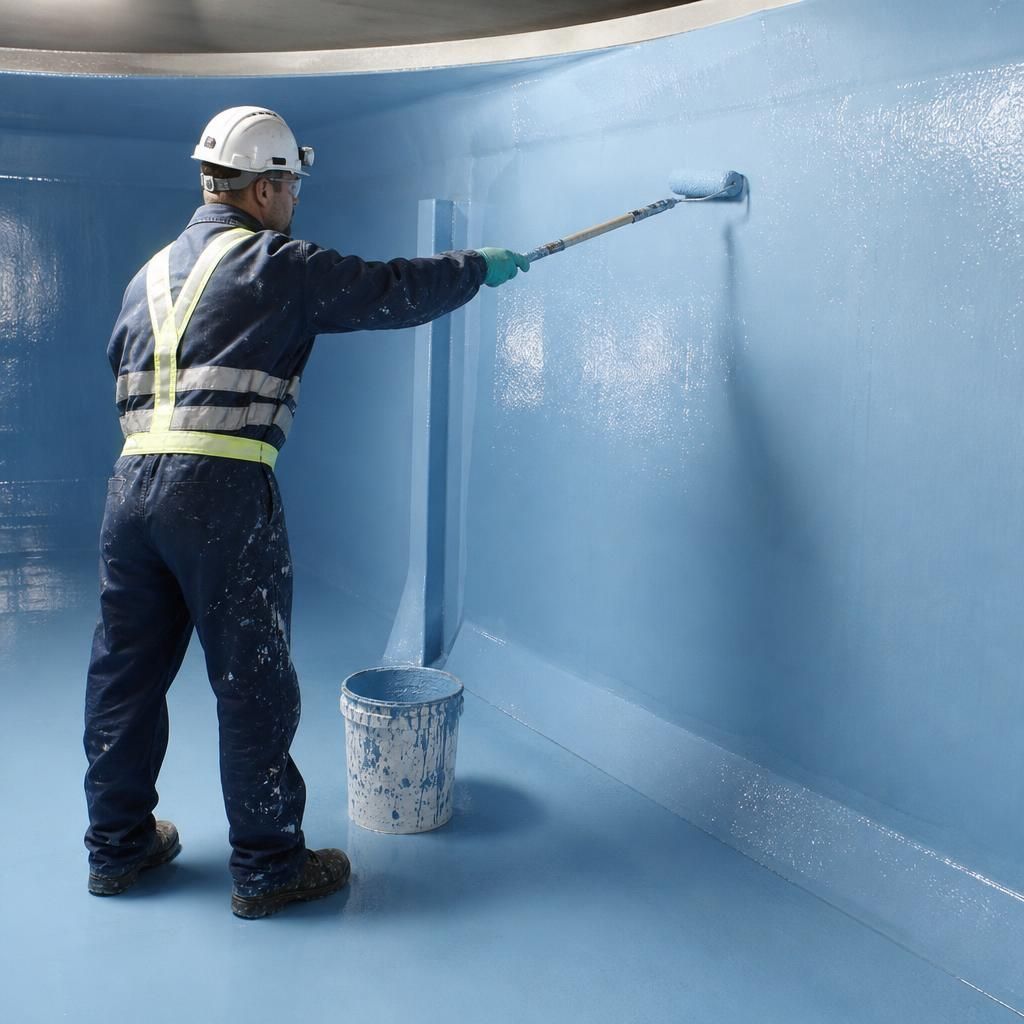
A material can be suitable on its own yet unsuitable when combined with the tank’s existing materials. Refurbishment specifications should therefore assess interfaces between coatings, repair compounds, sealants, fixings and the tank shell. Dissimilar metals may promote corrosion, while incompatible coatings can lose adhesion or trap moisture between layers. Where compatibility is uncertain, the proposed system should be checked against the manufacturers’ technical information and, where appropriate, tested on a representative area before full application. This helps confirm that the complete refurbishment build-up—not just each individual product—will provide a stable, hygienic internal surface.
Discuss suitable materials for your water tank refurbishment
Need to determine which materials are appropriate for your tank? Discuss the proposed refurbishment with Blue Fish Water Management Ltd so the specification can be reviewed against the tank’s condition, water use and compliance requirements.