
When should a water tank be refurbished rather than replaced?
A water tank is usually a candidate for refurbishment when its structure remains sound and defects such as damaged coatings, seals or localised corrosion can be safely repaired. Replacement is generally more appropriate where deterioration is widespread, the tank’s integrity is uncertain, or refurbishment cannot provide a hygienic, compliant and maintainable water storage system.
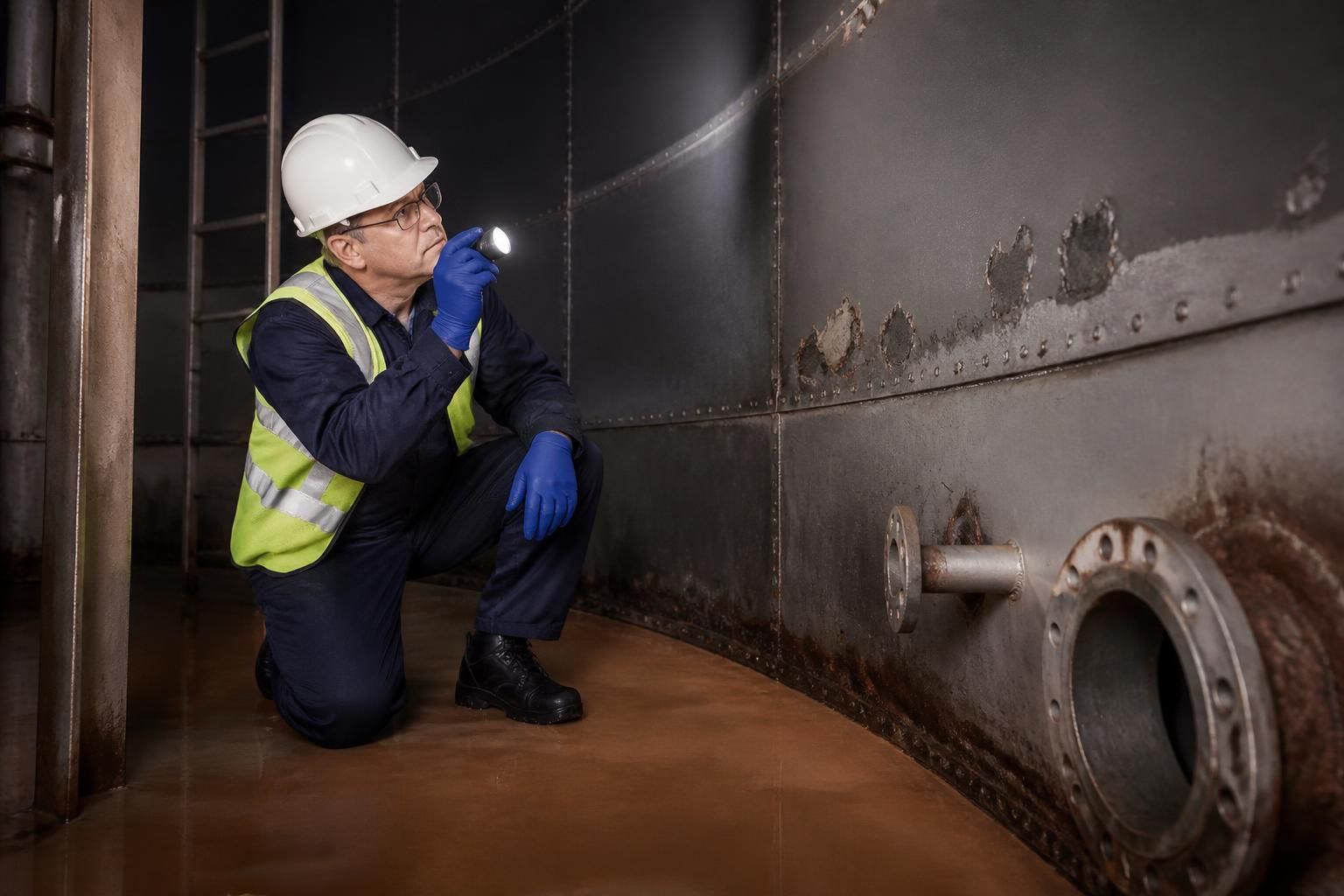
Refurbishment is the better option when a competent inspection shows that the tank can be restored to a safe, hygienic and serviceable condition without leaving significant uncertainty about its future performance. Replacement is more appropriate when the required work would be extensive, access is impractical, or the completed refurbishment would not provide a reliable basis for managing water quality and structural safety.
The decision should follow a documented condition assessment rather than the tank’s age alone. The assessment should consider the tank body, joints, internal surfaces, access arrangements, supports, connections, insulation, overflow and warning systems. It should also record defects such as pitting, cracking, distortion, failed sealant, delamination, contamination, poor drainage or evidence that previous repairs have not remained effective.
Refurbishment is commonly considered where:
- the main tank shell and supporting structure can be inspected and remain suitable for continued use;
- defects are confined to repairable areas, such as deteriorated lining systems, seals, fittings or local surface corrosion;
- the tank can be drained, cleaned and prepared properly before remedial materials are applied;
- the proposed repair will produce a smooth, cleanable and hygienic internal finish;
- the tank’s access points, inspection arrangements and associated components can be brought up to an acceptable standard; and
- the refurbished tank can be monitored and maintained without creating unreasonable difficulty for the duty holder.
A repair specification should explain how the defect will be prepared, treated and checked. For example, coating or lining work may require removal of unsound material, preparation of the substrate, treatment of corrosion, application of a suitable potable-water system and inspection of the finished surface. Simply covering a defect without addressing its cause can conceal deterioration and make later assessment more difficult.
Replacement should be given greater weight where:
- corrosion, cracking, distortion or other deterioration affects the tank extensively rather than in isolated locations;
- the condition of concealed or inaccessible areas cannot be established with sufficient confidence;
- the tank has repeatedly required repair and further work would provide only a temporary solution;
- the existing design makes cleaning, inspection, drainage or disinfection unnecessarily difficult;
- the tank is incompatible with the system’s operational requirements, including its capacity, connections or installation environment; or
- the work needed to refurbish it would approach the scale and risk of installing a new tank without delivering equivalent long-term maintainability.
Hygiene is a separate consideration from structural condition. A tank may appear physically repairable but still be unsuitable if internal surfaces cannot be cleaned effectively, stagnant areas cannot be eliminated, contamination cannot be removed, or the proposed materials are not suitable for contact with wholesome water. The assessment should therefore consider how refurbishment will affect cleaning, disinfection, inspection and routine water hygiene controls.
Operational constraints also influence the decision. The responsible organisation should establish whether the tank can be isolated, emptied and worked on safely, whether temporary storage is needed, and whether the surrounding plant or building allows the required access. If removing the tank would involve major disruption, refurbishment may be practical; conversely, difficult access can make a repair unsafe or prevent the necessary preparation and quality checks. These points should be assessed before selecting a method.
Cost is relevant, but it should be compared on a whole-life basis rather than by looking only at the initial quotation. The comparison should include preparation, access equipment, cleaning, disinfection, temporary arrangements, follow-up inspections and the likelihood of further remedial work. A lower initial cost does not make refurbishment suitable if the result is difficult to maintain or leaves unresolved risks. Likewise, replacement is not automatically the best choice if a properly specified repair can provide a durable and hygienic installation.
The final decision should be supported by records showing the inspection findings, photographs where appropriate, the proposed scope of work, material information, risk controls and post-work checks. Where refurbishment is selected, the documentation should make clear which defects were addressed and what limitations, monitoring arrangements or future inspections remain. Where replacement is selected, the specification should address the new tank’s access, drainage, overflow protection, insulation, materials and connection to the wider water system.
In practice, refurbishment is justified when it restores the tank without compromising hygiene, integrity or future maintenance. Replacement is the safer route when the evidence cannot support that conclusion, when deterioration is too extensive, or when the existing arrangement cannot be brought to a suitably controllable standard.
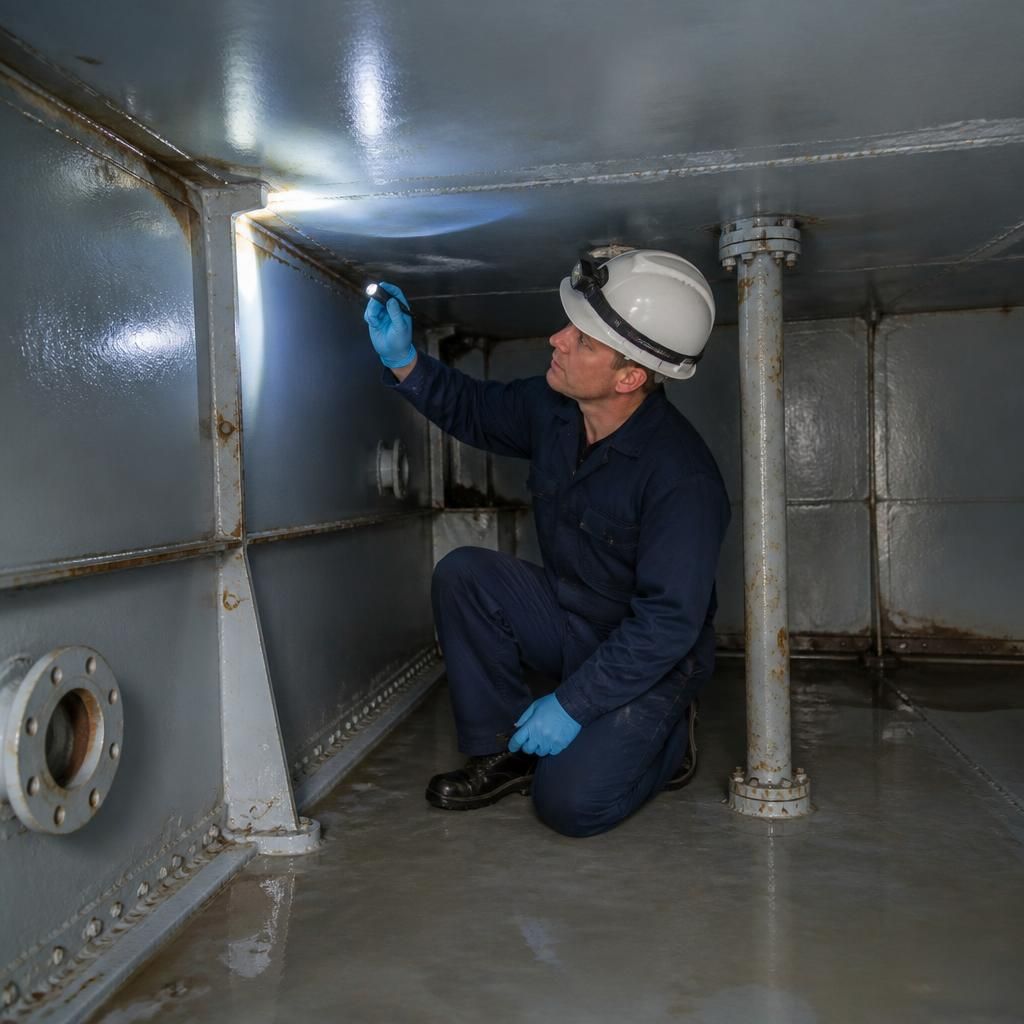
A refurbishment decision should remain subject to what is found once the tank has been drained, cleaned and prepared. Preparation can reveal deeper corrosion, weakened sections, voids beneath old lining systems or defects around joints that were not visible during the initial inspection. The work specification should therefore include clear hold points before repairs are covered, allowing the condition to be reassessed and the decision to change to replacement if the tank cannot be restored reliably.
This approach avoids treating refurbishment as a fixed commitment. It allows minor, well-defined defects to be repaired while preventing unsuitable substrate or concealed deterioration from being hidden beneath a new lining. The completed work should be accepted only after the repaired areas, internal finish and associated fittings have been checked against the agreed specification.
Discuss whether refurbishment or replacement is right for your water tank
If you need an independent view on whether refurbishment or replacement is appropriate, discuss your tank’s condition and proposed next steps with Blue Fish Water Management Ltd. A documented assessment can help inform the specification and support a proportionate decision.