
What evidence of competence should a water tank relining contractor provide?
A competent water tank relining contractor should provide documented evidence of relevant training, practical experience, suitable insurance, and a clear method statement supported by site-specific risk assessments. They should also be able to explain their materials and procedures, demonstrate how work is inspected and recorded, and provide relevant compliance documentation for the completed refurbishment.
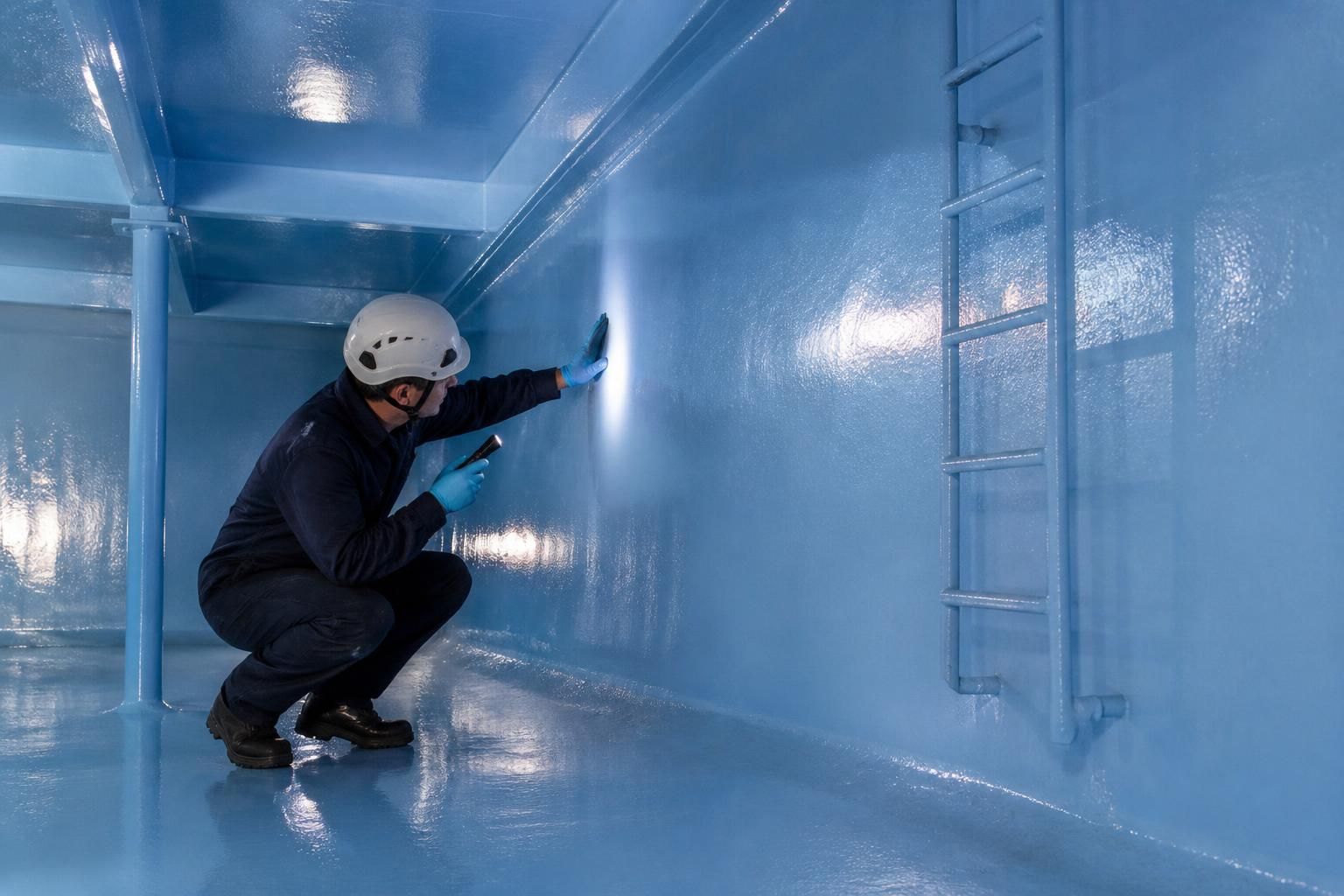
A competent water tank relining contractor should be able to prove that its people, materials, application methods and quality controls are suitable for the tank and its intended use. The evidence should be specific to the proposed relining system and site, rather than limited to a general statement that the contractor is experienced.
Ask for evidence covering the following areas:
- Relevant personnel competence: records showing that operatives have been trained in the preparation and application of the particular lining system, together with any relevant water hygiene, confined-space, working-at-height or access training required for the site.
- Comparable experience: examples of previous tank relining projects involving similar tank construction, condition, size, water use and operating constraints. Case information should explain the work completed, not simply list the contractor's name on a project reference.
- Material suitability: technical data sheets, safety data sheets and certification for the proposed coating or lining. Where the tank stores wholesome water, the documentation should demonstrate suitability for contact with drinking water under the requirements applicable to the location and intended use. The contractor should also be able to identify product batch information and any limits on temperature, curing, application conditions or service use.
- Quality inspection: a defined inspection regime for surface preparation, application and curing. Depending on the lining system, this may include records of surface cleanliness, environmental conditions, coating thickness, adhesion, pinhole or holiday detection and visual defects. The inspection methods should be appropriate to the manufacturer's requirements and the specification.
- Water hygiene controls: evidence of how the tank will be protected from contamination during the work and how it will be cleaned, disinfected and returned to service. Any post-work sampling should be arranged through a suitably competent laboratory, with results retained in the handover records.
- Quality management and supervision: clear identification of the person responsible for overseeing the work, checking application records and dealing with deviations. If subcontractors are used, the main contractor should explain who supervises them and how their competence is verified.
Third-party certification can support a contractor's claims, but it should be checked for scope and currency. A certificate may relate to the organisation's management system, a specific product, or an individual's training; these are not interchangeable. A contractor should explain what each certificate demonstrates and how it applies to the proposed relining work. Membership of a trade body is also useful context, but it is not by itself proof that a particular tank has been assessed or relined correctly.
The evidence should be matched to the tank's function. A lining for a domestic water storage tank may require different product and hygiene documentation from one used for process water, fire protection or non-potable service. The contractor should therefore request information about the stored water, tank material, previous coating, known defects and operating conditions before confirming the specification. If the proposed system is unsuitable for the substrate, service temperature or water-contact requirements, general experience does not remedy that defect.
At completion, request a handover pack containing the final product and batch details, application and curing records, inspection results, photographs where appropriate, cleaning and disinfection records, laboratory reports where sampling was undertaken, and details of any limitations or recommended future inspections. The pack should identify what was repaired, what was not included, and any conditions that must be met before the tank is brought back into service.
A useful way to test the quality of the evidence is to ask whether an independent responsible person could reconstruct the work from the records. Vague claims such as “fully certified”, “approved materials” or “completed to standard” are not enough without the relevant certificate, specification, inspection result or completion record. For a B2B site, these documents form part of the asset's compliance history and should be retained with the water system's maintenance and risk-management records.
Blue Fish Water Management Ltd can help businesses interpret water hygiene and compliance information alongside wider legionella control requirements. The contractor carrying out the relining should still provide the project-specific evidence and completion documentation needed to demonstrate that the refurbishment was properly specified, controlled and recorded.
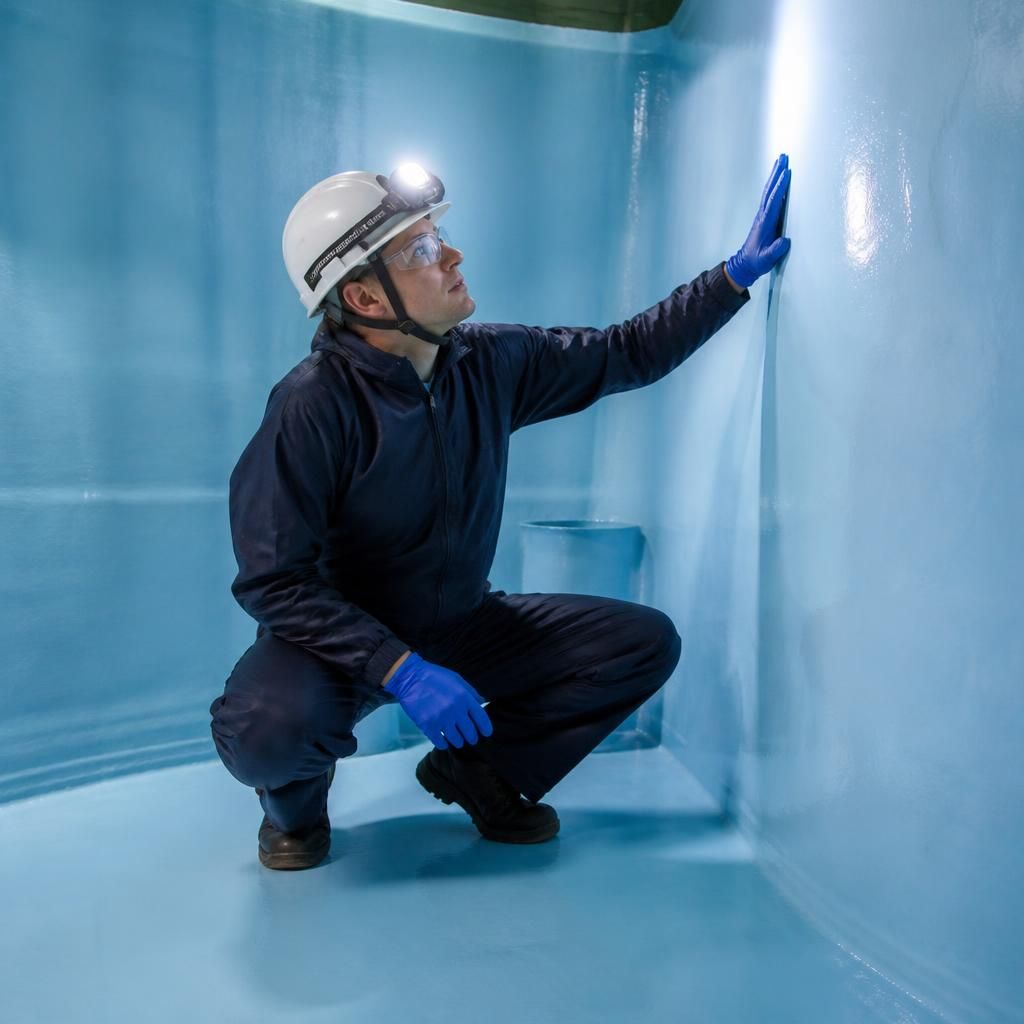
Insurance documentation is a separate part of a contractor’s competence evidence: it shows whether the business has appropriate cover for the work, but it does not prove that the relining system has been correctly selected or applied.
Ask to see current policy schedules and check that the named business is the same entity you intend to contract. The cover should be relevant to the proposed activities and site conditions, including work inside tanks where applicable. Confirm any stated exclusions, limits or conditions that could affect access arrangements, specialist preparation, subcontracted work or damage to the existing water system.
Also check that the quotation, method statement and insurance information describe the same scope. If the contractor proposes to use subcontractors, the documents should make clear who carries responsibility for their work and whether they hold suitable cover themselves. Any mismatch between the contracting entity, the insured party and the people carrying out the relining should be resolved before work starts.
Discuss Your Water Tank Relining Evidence Requirements
If you are assessing a proposed water tank relining project, discuss the evidence requirements with Blue Fish Water Management Ltd to clarify what should be provided for your site and intended water use.