
How disruptive is water tank relining to normal site operations?
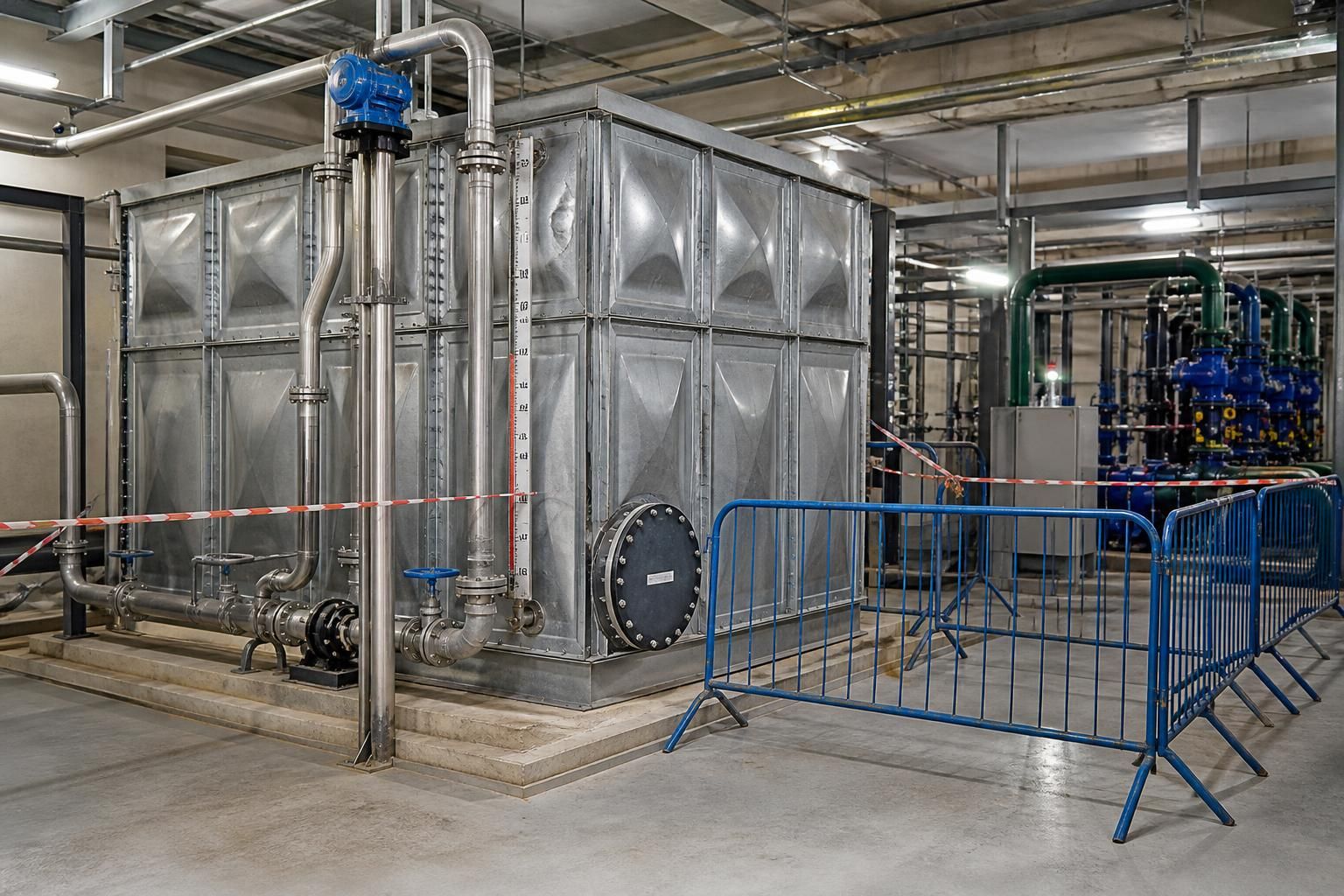
Water tank relining can cause anything from limited, localised interruption to a temporary restriction on the wider water system. The main operational impact occurs while the tank is taken out of service for access, cleaning, surface preparation, lining application, curing and inspection. A properly planned project separates these activities from the site’s critical operations wherever the system design allows.
The first consideration is the tank’s function. A tank serving a non-essential process may be isolated with little effect beyond that area. A tank forming part of a domestic, industrial or commercial water supply may affect outlets, production processes, welfare facilities, fire protection arrangements or other connected equipment. The number of tanks and the availability of duty and standby capacity also influence whether the site can continue using part of the system during the work.
Before work starts, the responsible parties should establish:
- which outlets, processes and systems depend on the tank;
- whether another tank, mains supply or temporary storage can maintain essential demand;
- how the tank will be isolated, drained and safely accessed;
- where equipment, materials and waste will be brought into and removed from the site;
- which site activities could be affected by noise, restricted access, water discharge or temporary changes to the supply; and
- what checks are required before the tank is placed back into service.
This information allows the project to be scheduled around operational constraints rather than treating the tank as an isolated asset. For example, work may be coordinated with planned maintenance, a period of reduced process demand or the availability of alternative storage. The appropriate arrangement depends on the system and should be confirmed through the site’s risk assessment and method statement.
Tank isolation is often the most significant operational control. Inlet and outlet connections need to be identified and secured so that the tank cannot fill unexpectedly or continue supplying downstream services while people are working on it. Draining may require controlled discharge, and the route for that discharge must be suitable for the volume and condition of the water. If isolation cannot be demonstrated, work should not proceed until the risk has been resolved.
Access arrangements can create disruption even when the water supply itself is maintained. Relining may require access to a plant room, roof space, service yard or other controlled area. Hatches, walkways and lifting routes may need to remain clear, while ventilation, lighting and electrical equipment must be appropriate for the work. Where entry into the tank is required, confined-space controls, atmospheric checks, supervision, rescue arrangements and suitable personal protective equipment become central to the work plan.
The preparation stage can be more intrusive than the application of the lining. Internal surfaces may need cleaning, descaling, drying and mechanical preparation so that the lining can bond correctly. This can generate noise, dust, debris and wash water, depending on the tank’s condition and the specified system. Containment and housekeeping measures should prevent contamination of adjacent plant and keep shared areas safe for other personnel.
Once the lining has been applied, the tank may need to remain isolated while the material cures. The required period is determined by the product specification, temperature, ventilation, coating thickness and the conditions identified by the contractor. It should not be shortened merely to restore service sooner. Returning the tank to use before the lining has adequately cured can affect its performance and may introduce avoidable water quality risks.
A project may therefore have several distinct operational stages:
- pre-work checks, isolation and controlled drainage;
- cleaning, preparation and inspection of the tank;
- repair of defects where required;
- application and curing of the approved lining system;
- final inspection and removal of equipment and waste; and
- reinstatement, flushing, sampling or other verification before normal use resumes.
These stages do not all affect the site in the same way. Some preparatory work may be completed without taking the tank out of service, whereas internal work normally requires isolation. Conversely, reinstatement can affect downstream users even after the physical relining is finished because valves, pipework and controls must be returned to their intended configuration and the system checked.
Where uninterrupted supply is important, temporary measures may reduce the effect on operations. These can include using another storage tank, changing the operating sequence of a multi-tank system, arranging temporary water storage or maintaining only defined essential services. Such measures need their own assessment: temporary hoses, tanks, pumps and connections must be suitable, protected from contamination and managed so that they do not create a separate water safety or trip hazard.
Fire protection requires particular care. A tank connected to fire-fighting equipment must not simply be isolated on the assumption that another water source will provide equivalent protection. The responsible person should confirm the effect of the proposed works on the fire strategy and agree any temporary impairment controls with the relevant competent parties before the tank is taken out of service.
Sites with vulnerable occupants, hygiene-sensitive processes or strict production controls may need additional precautions. The work plan may need to address access segregation, protection from dust and debris, control of cleaning chemicals, prevention of cross-contamination and the timing of flushing or sampling. In a manufacturing environment, the operational consequence may be loss of process water rather than inconvenience at outlets, so the assessment should consider the entire connected system.
Communication is an important part of reducing disruption. The site team should know which areas are affected, what temporary restrictions apply, who controls the isolation points and what conditions must be met before the tank is used again. Clear notification helps prevent staff or contractors from reopening valves, entering controlled areas or relying on a supply that has not yet been released.
At completion, the tank should be inspected and the system reinstated in a controlled sequence. Depending on the installation and the scope of work, this may include checking the finished lining, confirming that no debris or materials remain, flushing the tank and connected pipework, carrying out water quality testing and updating maintenance or risk assessment records. The tank should only be returned to normal operation once the agreed acceptance criteria have been met.
In practical terms, relining is least disruptive where the tank’s role is understood, alternative capacity is available, access is straightforward and the work is coordinated with site operations. It is more disruptive where the tank is a single point of supply, supports essential or safety-critical systems, has difficult access, requires extensive preparation or cannot be isolated without affecting other users. A contractor’s method statement should explain these interfaces rather than providing a relining procedure alone.
For a business assessing a proposed project, the key question is not simply how long the lining work takes. It is which services depend on the tank, what can safely remain in operation, what temporary controls are needed and what evidence is required before reinstatement. Addressing those points in advance makes the operational impact measurable and helps the site maintain control throughout the work.
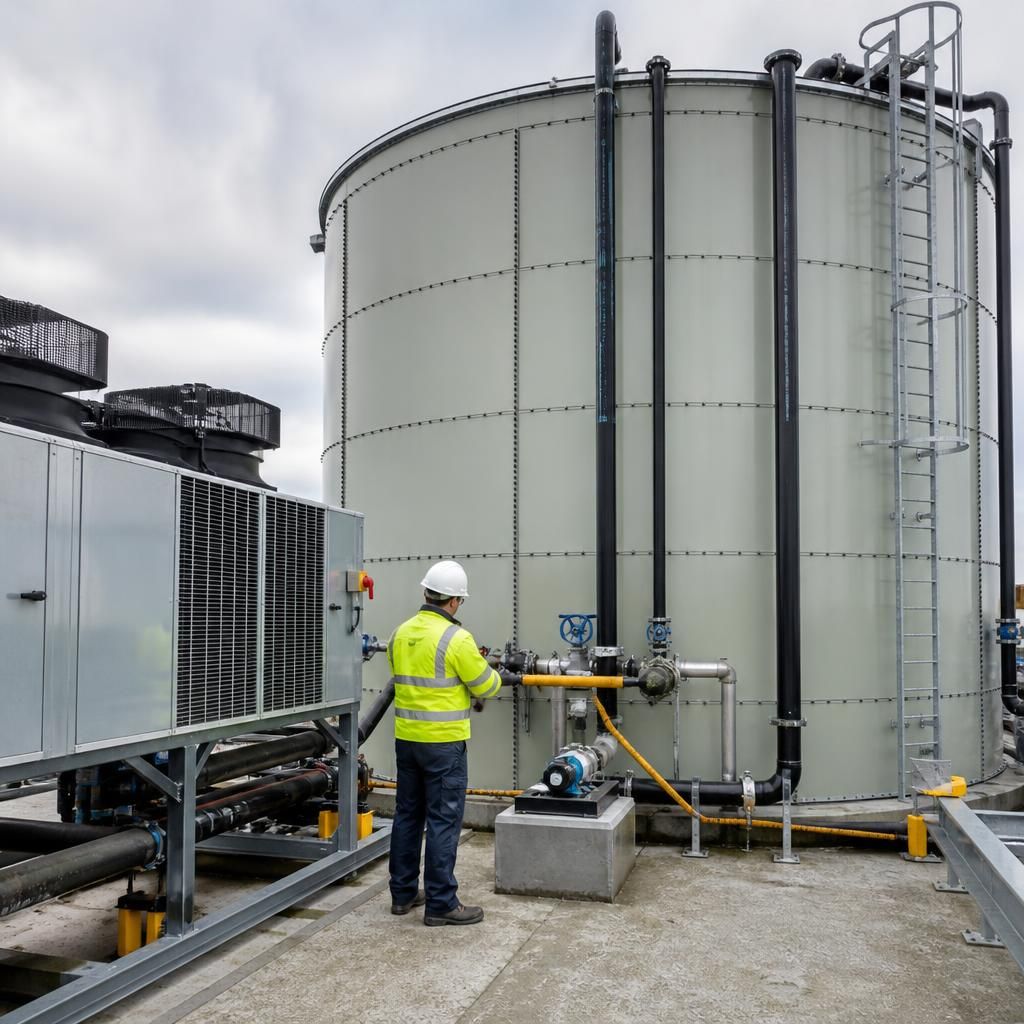
Assess the operational impact of water tank relining
Ask Blue Fish Water Management Ltd to review your tank’s operational role and proposed relining arrangements before work is scheduled. A site-specific assessment can help identify dependencies, isolation requirements and suitable controls for maintaining safe operations.