
Is water tank relining suitable for every storage tank?
No. Water tank relining is suitable only where the tank’s material, structural condition, damage, access and intended use allow effective preparation and application of a compatible lining system. Tanks with severe structural deterioration, unsuitable construction or contamination that cannot be removed may require refurbishment beyond relining or complete replacement.
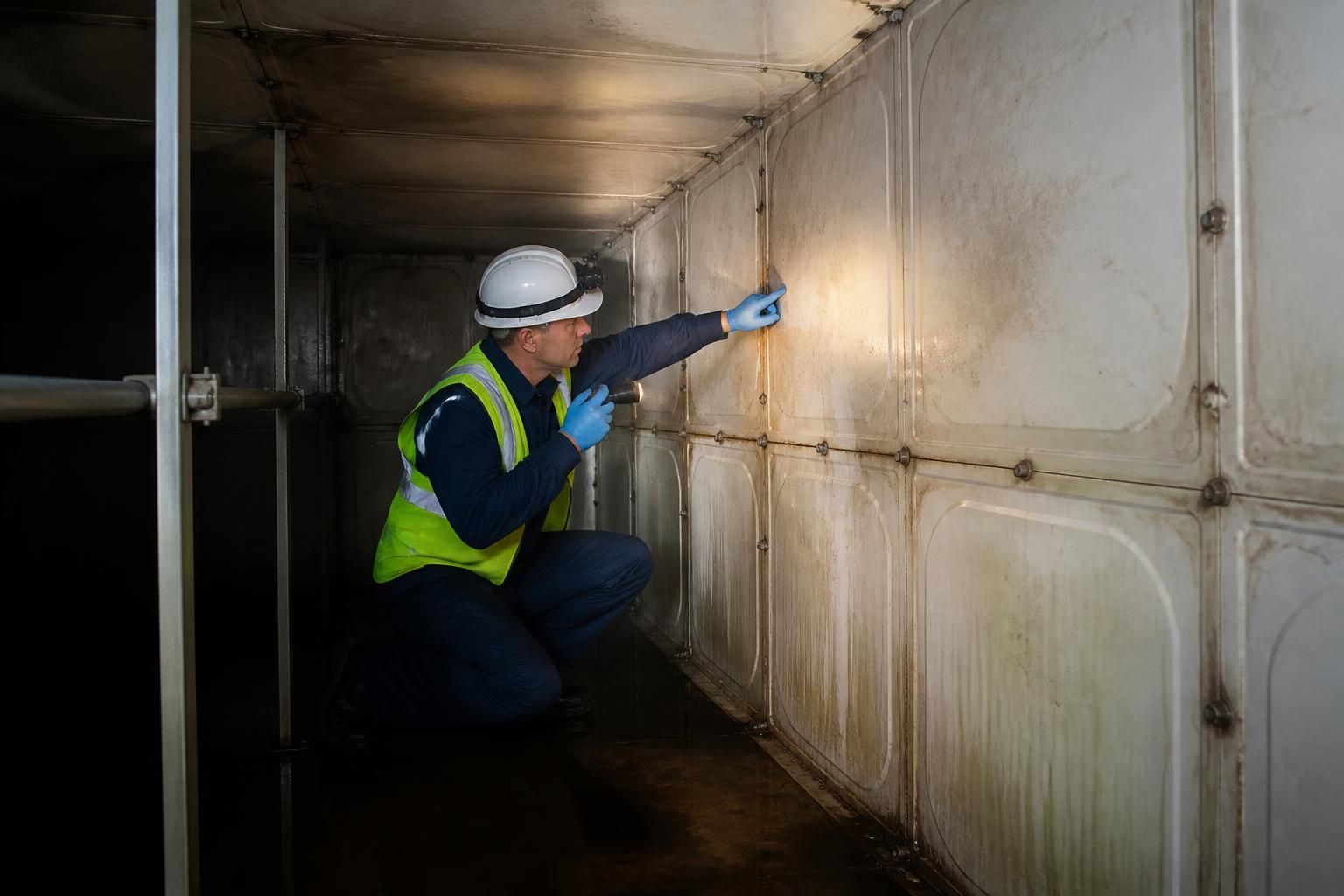
Water tank relining is not universally suitable. It can be an appropriate method for extending the serviceable life of a storage tank, but only when the tank can support a lining system that is compatible with the water, operating conditions and construction of the vessel. Suitability should be established through a documented inspection and specification rather than assumed from the presence of a leak or corrosion.
The tank material is an important starting point. Steel, galvanised steel, concrete and some composite or GRP tanks may be capable of accepting a lining, but each requires different preparation and coating considerations. The condition of the substrate, the presence of previous coatings and the way the tank was manufactured can affect adhesion. Sectional tanks also require particular attention to panel joints, bolt fixings, gaskets and movement between sections. A lining that performs well on one substrate may not be appropriate for another.
The proposed use of the stored water determines the specification. A tank supplying drinking water or domestic hot and cold water systems needs a lining system suitable for contact with that water and supported by the relevant product information. Industrial process water, sprinkler or fire protection water and other non-potable applications may have different chemical and performance requirements. The operating temperature, water chemistry, cleaning regime and any treatment chemicals must be considered before a product is selected.
The inspection should consider more than the visible surface. A competent assessment will normally review:
- the extent and location of corrosion, pitting, cracking or delamination;
- the condition of seams, joints, corners, supports, penetrations and internal fittings;
- whether the tank remains dimensionally stable when empty and when full;
- the condition of the base, plinth and surrounding structure;
- the effectiveness of inlet, outlet, overflow, warning and drainage arrangements;
- the condition of existing coatings and whether they can be removed or securely overcoated;
- the likely presence of scale, sludge, biofilm, oils or other residues; and
- whether the tank can be safely isolated, drained, cleaned, prepared and inspected throughout the work.
Preparation often determines whether relining will succeed. The surface must be sufficiently clean and stable for the lining to bond. Loose corrosion, friable material, scale and incompatible coating residues may need to be removed using a method appropriate to the tank and its surroundings. Cleaning alone does not correct defective joints, distorted panels or active water ingress. Where those conditions remain, applying a coating may conceal the defect without resolving its cause.
Existing linings can make assessment more complex. If their composition, age or adhesion is unknown, the contractor may need to test them or remove them before specifying a new system. Applying one material over another without confirming compatibility can lead to blistering, peeling, softening or contamination of the stored water. Product data should therefore identify the permitted substrate, preparation standard, curing requirements and service conditions.
Access and site conditions also affect practical suitability. The work area must allow operatives to prepare every relevant surface, apply the lining evenly and verify the finished result. Restricted access may prevent proper treatment of corners, the underside of covers or areas around fittings. Ventilation, humidity, temperature, lighting and safe entry arrangements can influence preparation and curing. If these conditions cannot be controlled adequately, a different repair method or a replacement tank may be more appropriate.
Relining may also be unsuitable where the tank is part of a system that cannot be taken out of service for the required work and curing period. Any temporary storage, bypass or alternative supply arrangements need to be considered by the responsible organisation before the specification is agreed. The effect on users, critical processes, fire protection and water hygiene controls should be recorded as part of the work plan.
Water hygiene requirements remain relevant after the lining has been applied. The completed tank should be inspected for missed areas, pinholes, runs, uncured material and defects around fittings. It may need to be flushed, cleaned and disinfected in accordance with the system’s risk assessment and the lining manufacturer’s instructions before being returned to service. For a tank serving a domestic water system, post-work checks and any required water testing should be proportionate to the risk and documented.
A sound suitability decision should leave a clear record of the inspection findings, proposed preparation method, selected lining system, application conditions, curing requirements and acceptance checks. It should also explain any defects that have been repaired separately and identify limitations that remain. This information supports future inspections and helps the duty holder understand what maintenance is still required.
In practice, a tank is a stronger candidate for relining where its supporting structure remains reliable, the substrate can be prepared effectively, the lining is demonstrably compatible with the stored water and the site can accommodate the work safely. If those conditions cannot be demonstrated, relining should not be treated as an automatic solution. The appropriate outcome may instead be targeted repairs, a more extensive refurbishment specification or replacement following a documented technical assessment.
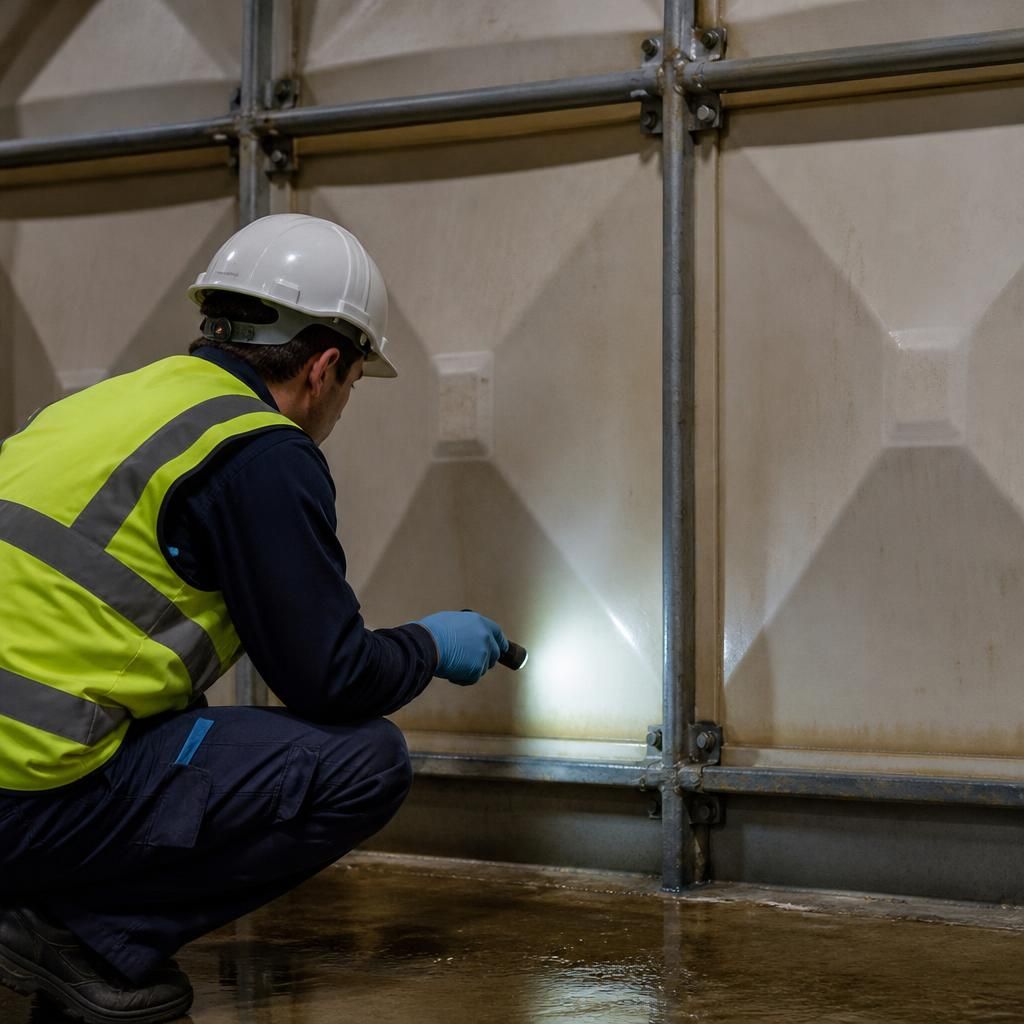
The age of a storage tank does not, by itself, determine whether relining is suitable. An older tank may remain a candidate where its construction is understood, its supporting structure is sound and the proposed lining can be applied to a properly prepared surface. Conversely, a relatively newer tank may be unsuitable if its design, materials or previous repairs prevent reliable adhesion or inspection.
This is why suitability should be based on the tank’s actual condition and history rather than its installation date alone. Records of previous leaks, modifications, coatings and repairs can help identify risks that may not be apparent during a brief visual inspection.
Discuss whether your storage tank is suitable for relining
Discuss your storage tank with Blue Fish Water Management Ltd to determine whether relining is technically appropriate for its intended use. An assessment can help clarify the most suitable next step where relining, further refurbishment or replacement may be considered.