
How should businesses choose a pressure cleaner with water tank equipment?
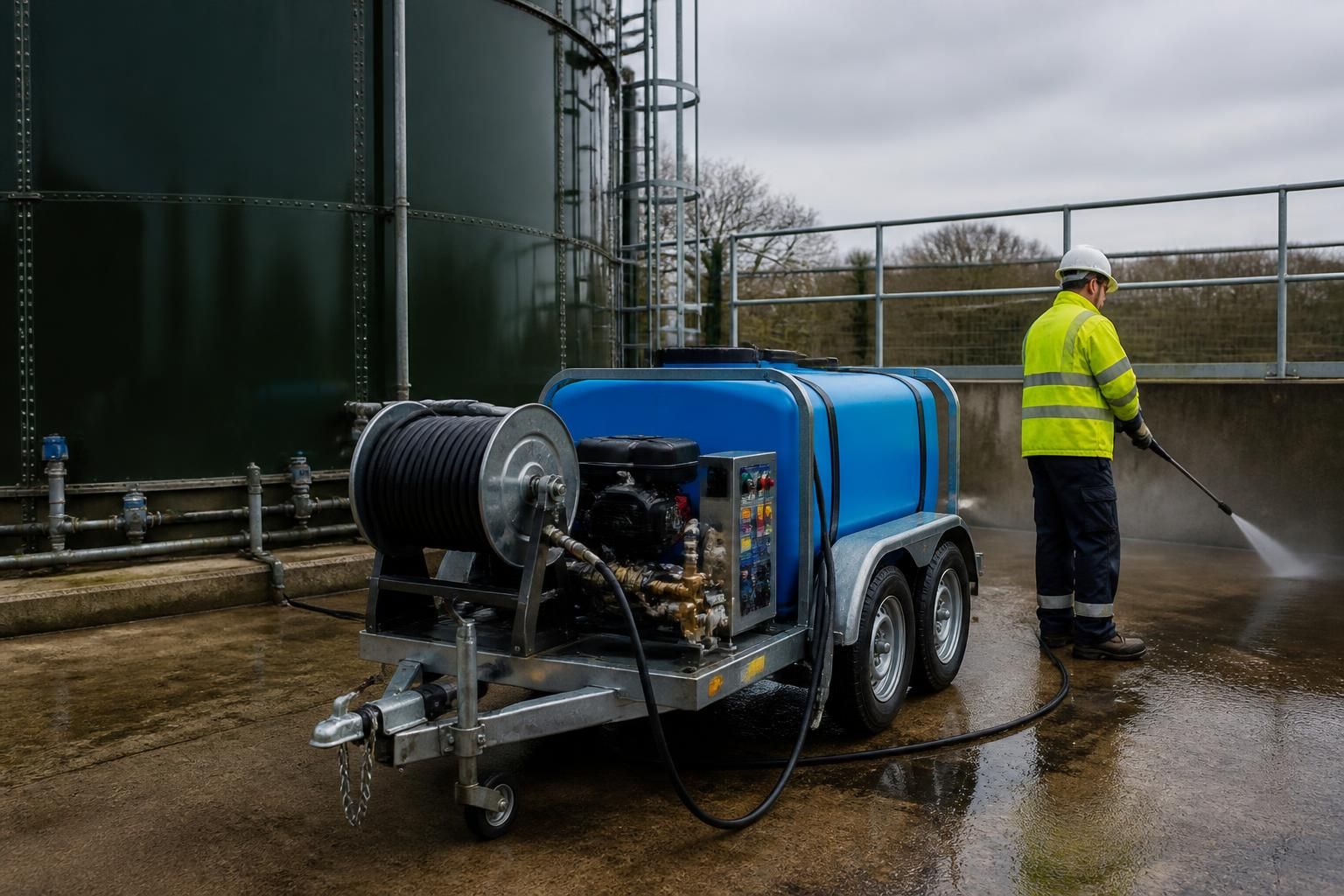
A suitable pressure cleaner with water tank equipment should be selected as part of a documented water tank cleaning method, not by pressure rating alone. The supplier should demonstrate that the equipment, attachments, water management arrangements and operating controls are appropriate for the tank construction, the contamination present and the condition in which the water system must be returned.
Assess the equipment package. A professional system may include more than a pressure washer and onboard tank. The supplier should be able to explain the purpose of the pump, hose, lance, nozzles, filters, extraction equipment and any tools used to remove deposits. Adjustable controls and suitable attachments are important because a rigid jet or excessive force can damage tank linings, joints, seals, access covers and associated fittings. Equipment should permit effective cleaning without relying on a single aggressive setting.
Check compatibility with the tank and its contents. Before selecting a cleaner, the contractor should review:
- the tank material, lining and internal fittings;
- the type and extent of sediment, scale, biofilm or other contamination;
- the size and layout of the tank, including access openings and restricted areas;
- whether the tank forms part of a potable, domestic, process or fire-water system; and
- any restrictions on chemicals, cleaning agents or contact with the tank surface.
This information determines whether pressure washing is appropriate and which accessories and controls are needed. It also helps prevent a cleaning method that dislodges contamination without removing it from the tank or that causes avoidable damage to the system.
Examine the operator’s competence and planning. The equipment should be used by people who understand water hygiene, contamination control and the risks associated with pressurised equipment. Ask for a method statement and risk assessment covering access, electrical equipment, slips, spray exposure, manual handling, confined-space risks where applicable, and the protection of connected services. The plan should identify isolation requirements and explain how clean equipment, hoses and tools will be kept separate from contaminated items.
Consider water quality and hygiene controls. Water used during cleaning must be suitable for the intended application and managed so that it does not introduce further contamination. The supplier should explain how hoses, nozzles and other components are cleaned, stored and transported between jobs. Where equipment is used for more than one type of water system, documented cleaning and disinfection controls are particularly important. A water tank on the pressure-cleaning equipment does not, by itself, demonstrate that the complete process is hygienically controlled.
Review the wastewater arrangements. A responsible contractor should explain how dirty water, sludge and removed material will be contained, transferred and disposed of. The arrangement should reflect the contaminants involved and the site’s drainage restrictions. Discharge should not be left as an informal decision for the operative on the day. The cleaning record should identify any unusual contamination, disposal issue or condition that requires attention before the tank is returned to service.
Ask how the result will be verified. The supplier should define what completion means for the particular tank. This may include a visual inspection, confirmation that deposits have been removed, photographic records, a report on defects and, where required by the water management plan, appropriate water sampling or further checks. Testing is not a substitute for physical cleaning, and a clear distinction should be made between evidence of cleanliness and evidence that the wider water system is safe to recommission.
Compare quotations on method rather than headline price. A useful quotation should state the equipment proposed, preparation and isolation requirements, cleaning stages, wastewater controls, exclusions, reporting and any follow-up actions. It should also identify whether remedial work is included or reported separately. Vague descriptions such as “high-pressure clean” make it difficult to judge whether the selected machine and operating method are suitable for the tank.
For a business managing legionella risk, the final choice should fit the site’s wider water hygiene arrangements. The cleaning record, defects identified and any test results should be capable of being incorporated into the water system’s compliance documentation. Selecting a pressure cleaner on this basis provides a traceable method that supports safe maintenance rather than treating the equipment as an isolated piece of machinery.
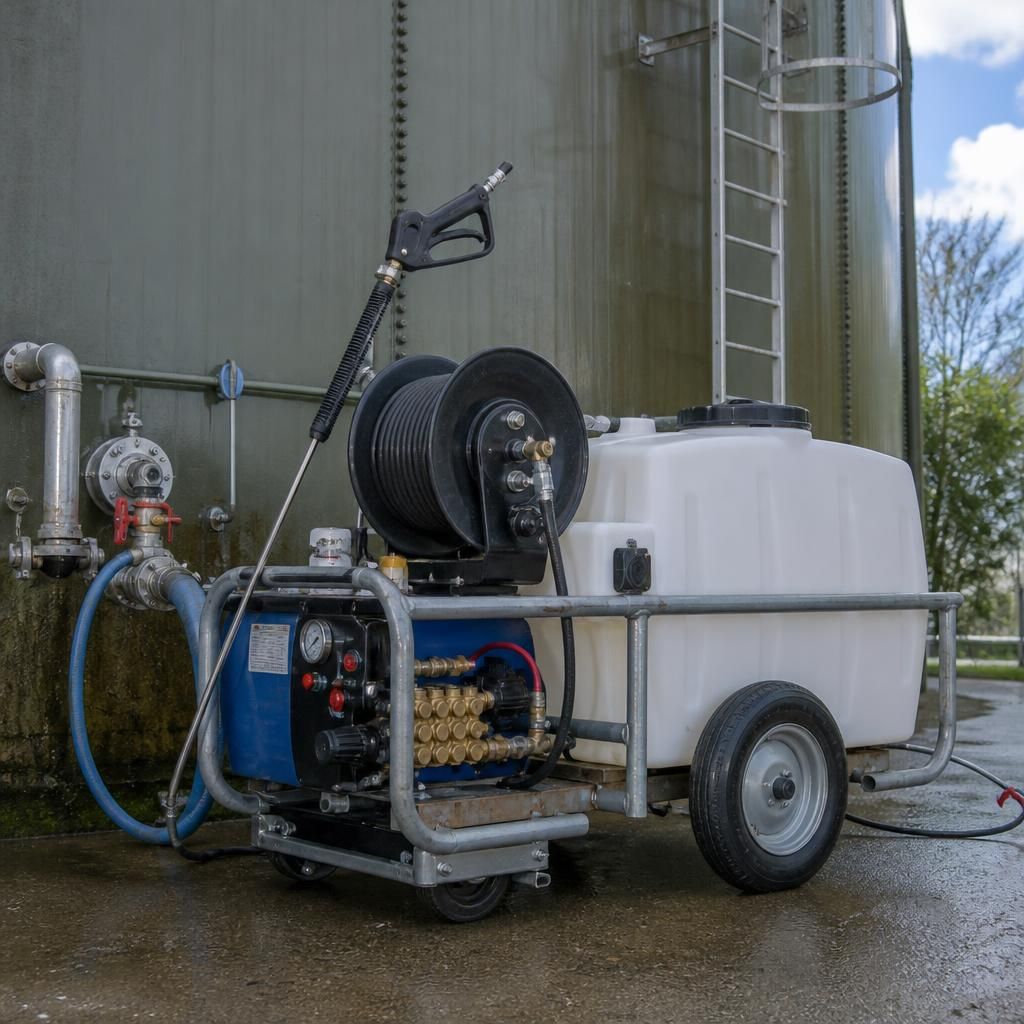
A pressure cleaner with water tank equipment should also be compatible with the site’s available power, ventilation and operating conditions. A machine that cannot be safely powered or used in the proposed location is unsuitable, even if its cleaning performance appears adequate on paper.
- Confirm whether the equipment requires a suitable electrical supply, fuel or another power source, and whether that arrangement is permitted on site.
- Check that electrical equipment can be protected from water exposure and used with appropriate residual-current protection.
- Do not use combustion-powered equipment where exhaust fumes could enter a building, enclosed tank area or ventilation system.
- Consider noise, vibration and cable management where cleaning takes place near occupied areas or sensitive plant.
- Ask the supplier to explain how the machine will be positioned, isolated and monitored during operation.
These checks should be recorded before the cleaning date so that the selected equipment works safely within the site’s infrastructure rather than creating a separate operational hazard.
Discuss Your Water Tank Pressure Cleaning Requirements
Discuss your water tank pressure cleaning requirements with Blue Fish Water Management Ltd to help identify a suitable equipment package and cleaning approach for your site.