
How should a water tank be recommissioned after pressure washing?
After pressure washing, a water tank should be inspected for remaining debris or damage, thoroughly disinfected, refilled with a suitable water supply and returned to service only after the required water quality checks have been completed. The recommissioning record should document the cleaning, disinfection, inspection and test results to support legionella control and compliance.
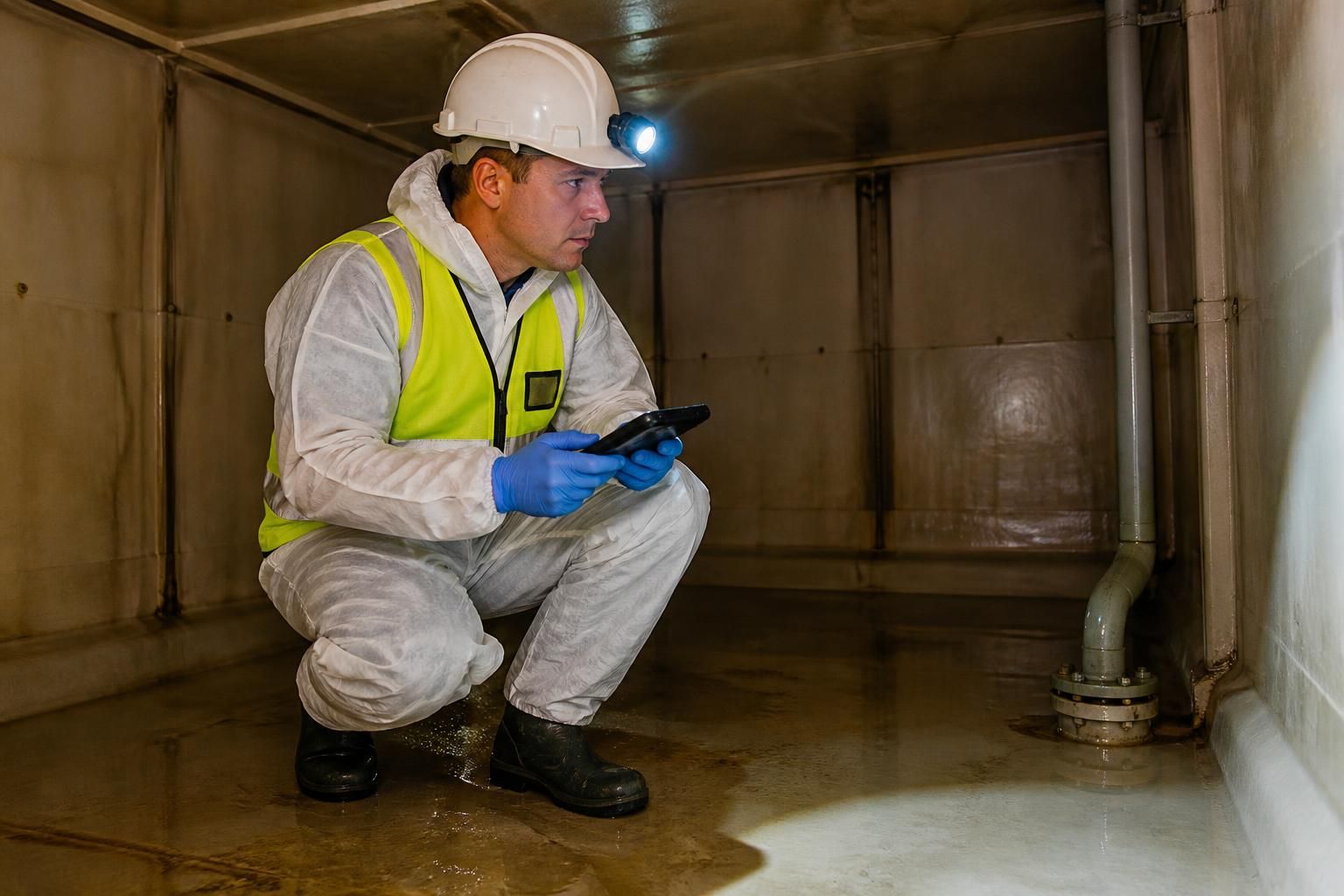
Recommissioning a water tank after pressure washing is a controlled return-to-service process, not simply a matter of turning the water supply back on. The tank, its fittings and the connected water system must be shown to be hygienically suitable, mechanically sound and safe to operate before normal use resumes.
The process should begin with a review of the work carried out and the tank’s role within the water system. This establishes whether the tank supplies drinking-water outlets, showers, healthcare facilities, production processes or other higher-risk uses. The system’s risk assessment should determine the appropriate controls, sampling requirements and any additional precautions needed before outlets are used.
Before the tank is brought back into operation, a competent person should verify the condition and security of relevant components, including:
- the tank body, internal surfaces, cover, seals and access arrangements;
- inlet, outlet, drain and overflow connections;
- float-operated valves, isolation valves and other control equipment;
- vent and overflow screens, which should prevent the entry of insects and foreign material;
- supports, insulation and any associated pipework; and
- the arrangement of pipes and valves, checking that there is no unintended connection to a wholesome or non-wholesome supply.
Pressure washing can remove deposits effectively, but it does not by itself establish that the system is microbiologically safe. Recommissioning therefore requires a suitable disinfection procedure, selected according to the tank material, system design and relevant water hygiene guidance. The procedure should be controlled and evidenced, including the disinfectant used, the parts of the system treated, the measured concentration where applicable and the required contact period.
Following disinfection, the system should be flushed in a controlled manner so that disinfectant and loosened material are removed without creating a risk to occupants, the drainage system or the wider environment. The responsible person should confirm that the water at relevant outlets is suitable for use and that any residual disinfectant is within the limits specified by the applicable procedure. Where the tank supplies downstream equipment or outlets, those parts must also be considered; treating the tank alone may not address contamination elsewhere in the distribution system.
Water samples should be taken from appropriate locations and handled by a competent sampler. The sampling plan may include the tank and representative downstream outlets, with microbiological analysis commissioned where required by the risk assessment or the site’s control scheme. A laboratory result should be interpreted alongside the site history, system temperatures, usage patterns and any known vulnerabilities rather than viewed in isolation. If results are unsatisfactory, the tank should not be treated as fully recommissioned until the cause has been investigated and corrective work has been completed.
The responsible person should also confirm that routine controls can resume. This may include checking tank access, inspection arrangements, temperature control where relevant, turnover, outlet use and planned monitoring. Showers and other aerosol-generating outlets deserve particular attention because they can present a greater exposure risk if the connected system has been out of service or poorly controlled.
A complete recommissioning record should link the pressure-washing work to the subsequent control measures. It should identify the tank and location, the date of the work, the people responsible, observations about the tank and fittings, the disinfection method, flushing arrangements, sample locations, laboratory findings, defects and any actions still outstanding. The asset register, schematic, legionella risk assessment and written control scheme should be amended when the work changes the system or its operating controls.
Under the principles set out in the Health and Safety Executive’s Approved Code of Practice L8 and HSG274, the dutyholder remains responsible for ensuring that control measures are suitable for the premises and system. A tank should therefore be returned to service only when the evidence supports that decision and a named responsible person has authorised it. If the tank forms part of a complex commercial or industrial installation, independent water hygiene advice can help establish the correct sampling, disinfection and follow-up requirements.
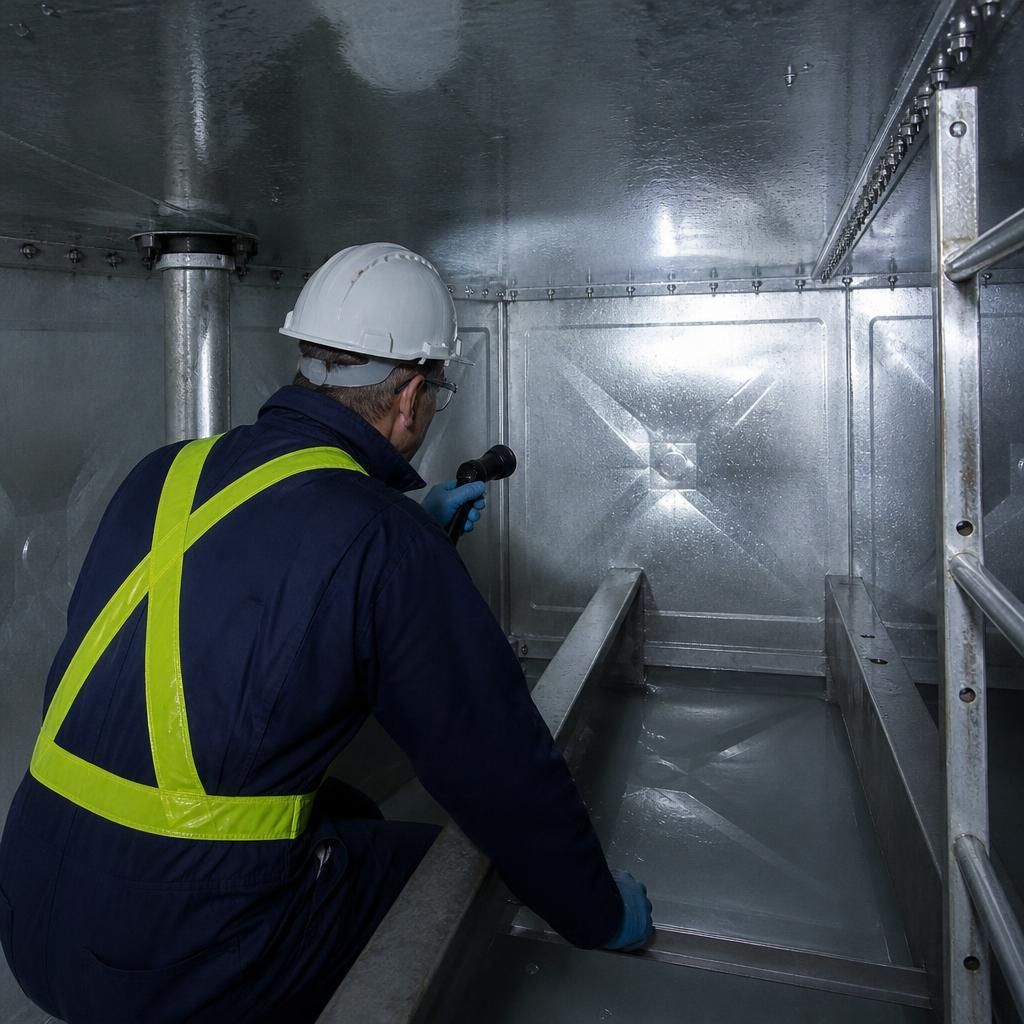
Recommissioning also requires a controlled mechanical restart after cleaning and disinfection. Temporary hoses, blanks and isolation arrangements should be removed or returned to their intended configuration, with valves reset against the system schematic rather than by assumption.
- Fill the tank gradually and check joints, fittings and connected pipework for leaks.
- Confirm that the float valve closes correctly and that the overflow remains clear.
- Open outlets in a planned sequence to restore flow without causing sudden pressure changes.
- Check that pumps, level controls and alarms operate as intended where they form part of the installation.
Any leak, abnormal noise, poor flow or control fault should be resolved before the tank is considered fully operational. This final functional check complements the hygiene verification by showing that the system is safe to operate as well as suitable for use.
Discuss your water tank recommissioning requirements
If you are planning to return a pressure-washed tank to service, discuss the recommissioning requirements with Blue Fish Water Management Ltd so the next steps match the tank’s use and site controls.