
How is a water tank pressure washing method selected?
A water tank pressure washing method is selected by assessing the tank’s construction, condition, access, water system design and the type of contamination present. The chosen approach must remove contamination effectively without damaging surfaces or compromising water quality, followed by appropriate cleaning, disinfection and verification.
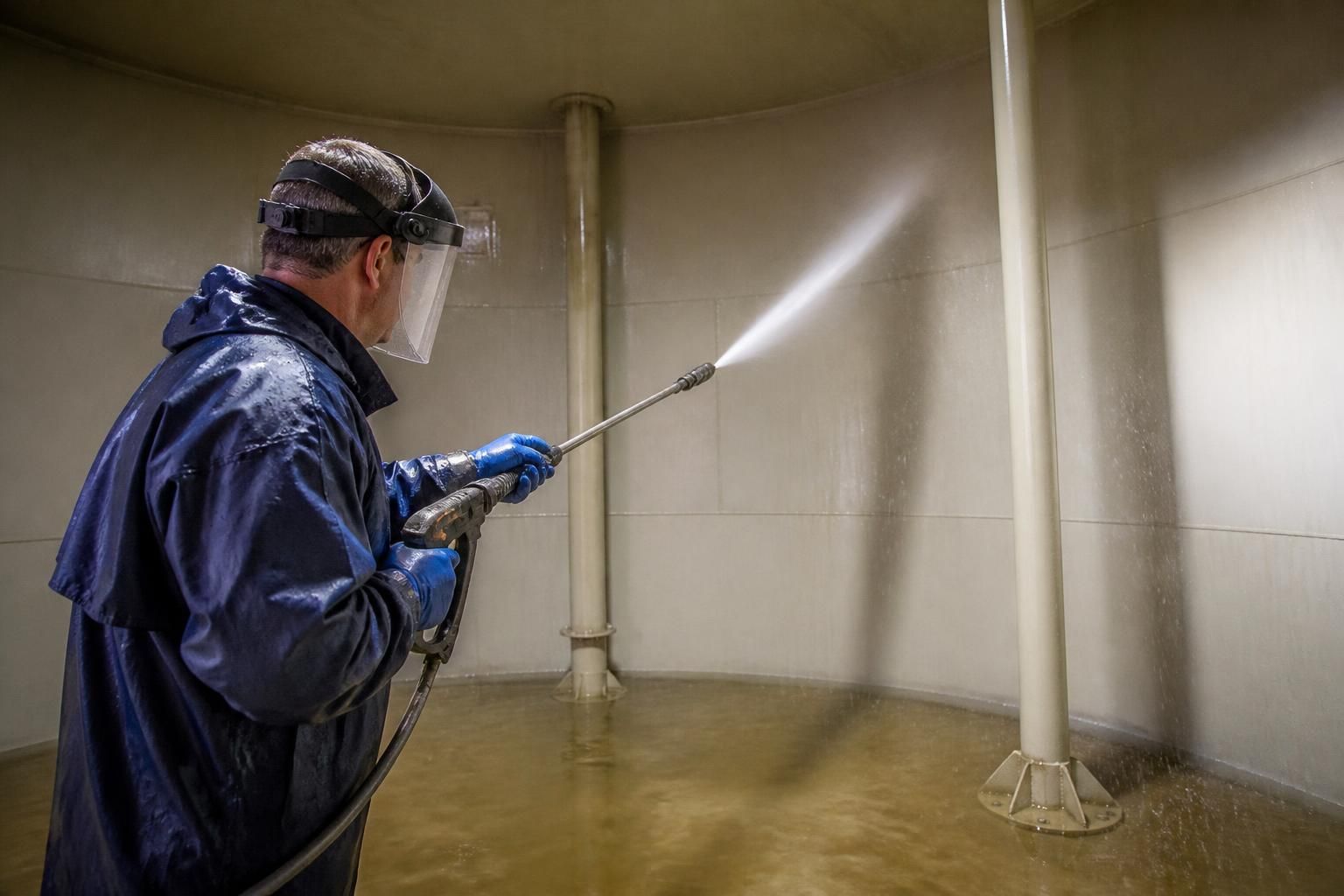
The appropriate water tank pressure washing method is selected by matching the cleaning force and equipment to the tank’s materials, internal layout, condition, access constraints and contamination risk. A suitable method removes deposits without eroding coatings, damaging fittings or dispersing contamination into the wider water system.
The assessment normally considers the following factors:
- Tank construction and surface: GRP, steel, concrete and lined tanks tolerate different cleaning techniques. The condition of protective coatings, joints, seals and internal components is checked before deciding whether pressure washing is suitable and what pressure can be applied.
- Tank condition: Light sediment may require a controlled wash and removal of loosened material, while heavy scale, corrosion products, biofilm or sludge may need staged cleaning. A fragile or deteriorated surface may require reduced pressure, localised treatment or remedial work rather than aggressive washing.
- Internal design: Baffles, partitions, inlet arrangements, outlets, overflows, float valves and access covers affect nozzle choice and cleaning sequence. The method must reach vulnerable areas without forcing debris into pipework or leaving uncleaned dead spots.
- Access and working space: The size and position of the access opening determine whether operators can use fixed, flexible or remote cleaning equipment. Restricted access may call for smaller hoses, specialist nozzles or a staged approach that limits the amount of equipment introduced into the tank.
- Type and location of contamination: Deposits attached to the base, walls, roof or fittings may respond differently to washing. The operator considers whether the material is loose, adhered, greasy, scaled or biologically contaminated, as well as how it can be contained and removed.
- Water system design: The tank’s role in the supply, storage or distribution system influences isolation, drainage and protection of downstream assets. Valves and outlets are managed so that loosened material and wash water do not enter sections that have not been cleaned.
Pressure is then selected conservatively. Higher pressure is not automatically more effective: it can strip a lining, expose corrosion, damage seals, drive contamination into joints or create aerosols. A lower-pressure method with suitable nozzle control may provide better results where the tank has a delicate coating, older fittings or limited structural integrity. The distance from the surface, spray pattern and duration of application are also controlled, rather than relying on pressure alone.
Equipment selection follows the same principle. A cleaning head may be chosen for broad coverage on open surfaces, whereas a flexible lance or targeted nozzle may be more appropriate around fittings and corners. Operators also consider whether the equipment can be safely positioned, removed without contaminating the tank and used without damaging internal components. Water used for the work, drainage arrangements and waste handling must be compatible with the site’s hygiene controls.
Before work begins, the proposed method should be checked against the tank’s operating condition and the relevant risk assessment. This includes confirming isolation, safe access, ventilation, electrical and mechanical risks, protection of connected plant and arrangements for removing sediment and wastewater. Where contamination presents a significant hygiene risk, controls should prevent spread to personnel, surrounding areas and connected water services.
A practical selection process usually involves:
- Reviewing tank records, drawings, previous inspection findings and the intended water use.
- Inspecting the tank, its fittings and accessible surfaces to identify construction, defects and deposits.
- Determining the cleaning force, nozzle type, access equipment and removal method that will achieve adequate coverage with the least risk of damage.
- Agreeing isolation, drainage, wastewater containment and protection measures before cleaning starts.
- Adjusting the method if the inspection reveals unexpected deterioration, inaccessible areas or contamination that cannot be safely removed by pressure washing alone.
The final choice should also account for what happens after washing. Loosened material must be removed rather than left to settle, and the tank should undergo the required cleaning and disinfection process before being returned to service. Inspection and appropriate verification then help establish whether surfaces, fittings and outlets are acceptably clean and whether further remedial work is needed.
For a business, the method statement should record the basis for the selection, the equipment and pressure controls to be used, the areas to be cleaned, the precautions for connected systems and the checks required on completion. This provides a clear link between the tank’s condition, the cleaning technique and the evidence needed to support water hygiene management.
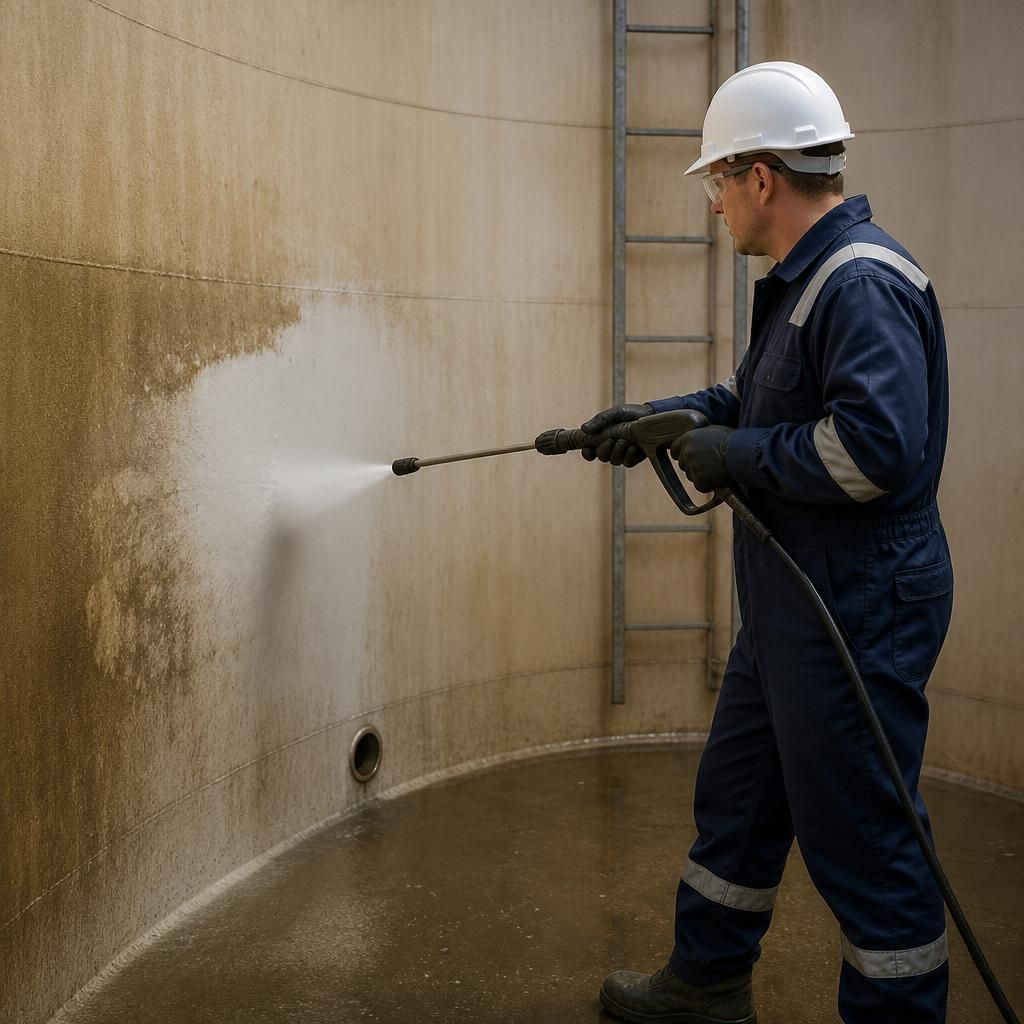
A small test area can help confirm whether the proposed water tank pressure washing method is suitable before full cleaning begins. The operator can assess how the surface responds, whether deposits are being removed rather than redistributed, and whether the wash water can be controlled and recovered safely. The test should include representative surfaces and fittings, particularly where coatings, sealants or older materials may react differently.
Results from the test area may lead to changes in nozzle selection, pressure, working distance or cleaning sequence. If the surface is damaged, contamination remains firmly attached or wastewater cannot be managed safely, pressure washing may need to be combined with another controlled treatment or postponed until remedial work is completed. Recording this decision provides useful evidence that the final method was based on the tank’s actual condition rather than a standard setting.
Discuss your water tank pressure washing method
Discuss your proposed water tank pressure washing method with Blue Fish Water Management Ltd to clarify the practical requirements for your site. Share the relevant tank and system details so the cleaning approach can be considered against your water hygiene arrangements.