
When should businesses arrange water tank pressure washing?
Businesses should arrange water tank pressure washing when inspection or a legionella risk assessment identifies sediment, scale, biofilm, corrosion debris or other contamination that cleaning and disinfection must remove. It is also appropriate after contamination, remedial work or prolonged isolation, with the timing determined by the tank’s condition, water quality results and the site’s written water hygiene programme.
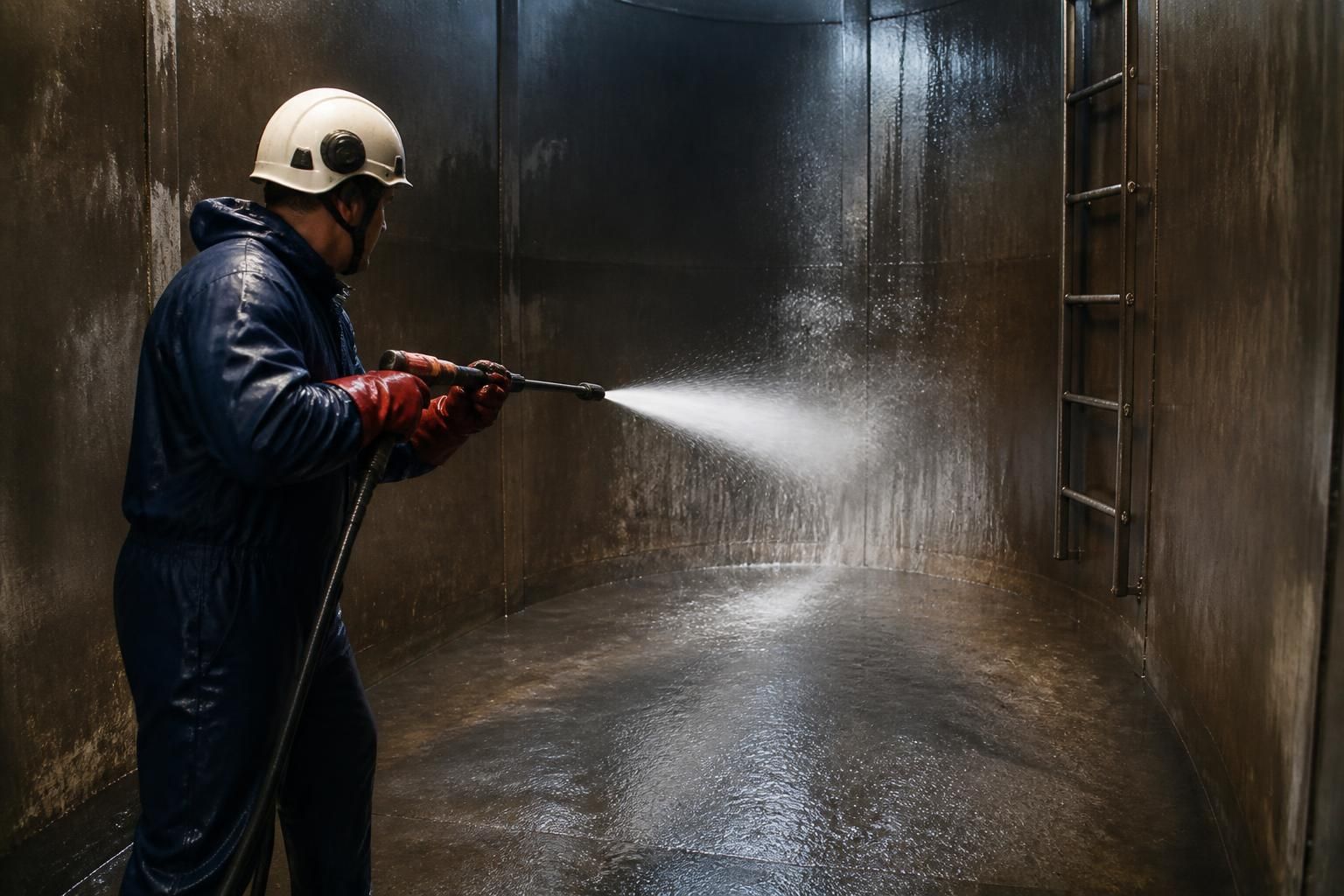
Businesses should schedule water tank pressure washing through a documented, risk-based water hygiene programme rather than at an arbitrary fixed interval. The appropriate point depends on the tank’s condition, the risks created by the water system, inspection findings, monitoring results and any change affecting how the installation is operated.
A routine inspection should establish whether pressure washing is justified and when the work can be carried out safely. This should consider the tank interior, inlet and outlet arrangements, lids and access points, overflow and warning pipes, sediment accumulation and the condition of internal coatings or components. A tank may require attention before its normal review date if deterioration or deposits are developing more quickly than expected.
Businesses should review the need for pressure washing when:
- water quality monitoring produces an unexpected result or shows a developing trend that requires investigation;
- inspection identifies deposits that cannot be removed effectively by less intensive cleaning;
- the tank has received an ingress of dirt, floodwater, debris or another contaminant;
- construction, plumbing or maintenance work may have introduced debris into the stored water;
- the tank’s lining, fittings or structural condition has deteriorated and cleaning must form part of wider remedial work;
- the premises change use, occupancy or operating arrangements, altering the demand placed on the stored-water system; or
- monitoring records, complaints or operational changes indicate that the existing control measures need reassessment.
There is no single pressure-washing interval that is suitable for every business. A low-use system, a tank serving a vulnerable population and a heavily used industrial installation may present different risks. The responsible person should therefore use the site’s legionella risk assessment and written control scheme to determine the review frequency, while retaining evidence for why a particular intervention date was selected.
Timing also needs to take account of the wider water system. The work may require isolation, temporary changes to supply, protection of downstream outlets and coordination with other planned maintenance. It should be arranged only after the business has considered how the tank will be taken out of service, how users will be supplied during the work and how the system will be verified before normal operation resumes. Any required water-quality sampling, disinfection or remedial action should be planned as part of the same controlled process rather than treated as an unrelated task.
Pressure washing is particularly important where deposits are firmly attached or where the tank’s condition means that ordinary cleaning is unlikely to provide adequate removal. The method should not be selected solely because a tank has reached a particular age. A competent assessment should confirm that the equipment, pressure and cleaning approach are appropriate for the tank material, lining, fittings and surrounding installation. Excessive or unsuitable pressure can damage surfaces and create further maintenance issues.
After the work, the business should update its records with the reason for intervention, inspection findings, cleaning details, water-quality results, any defects identified and the actions still outstanding. The risk assessment and written water hygiene programme should be reviewed if the work reveals a previously unrecognised risk or leads to changes in operation. This creates a defensible basis for deciding when the tank should next be inspected and whether future pressure washing remains necessary.
In practice, the correct time is the point at which evidence shows that accumulated contamination, a change in risk or an operational event has made the existing control measures insufficient, allowing the work to be planned without compromising the safety and continuity of the wider water system.
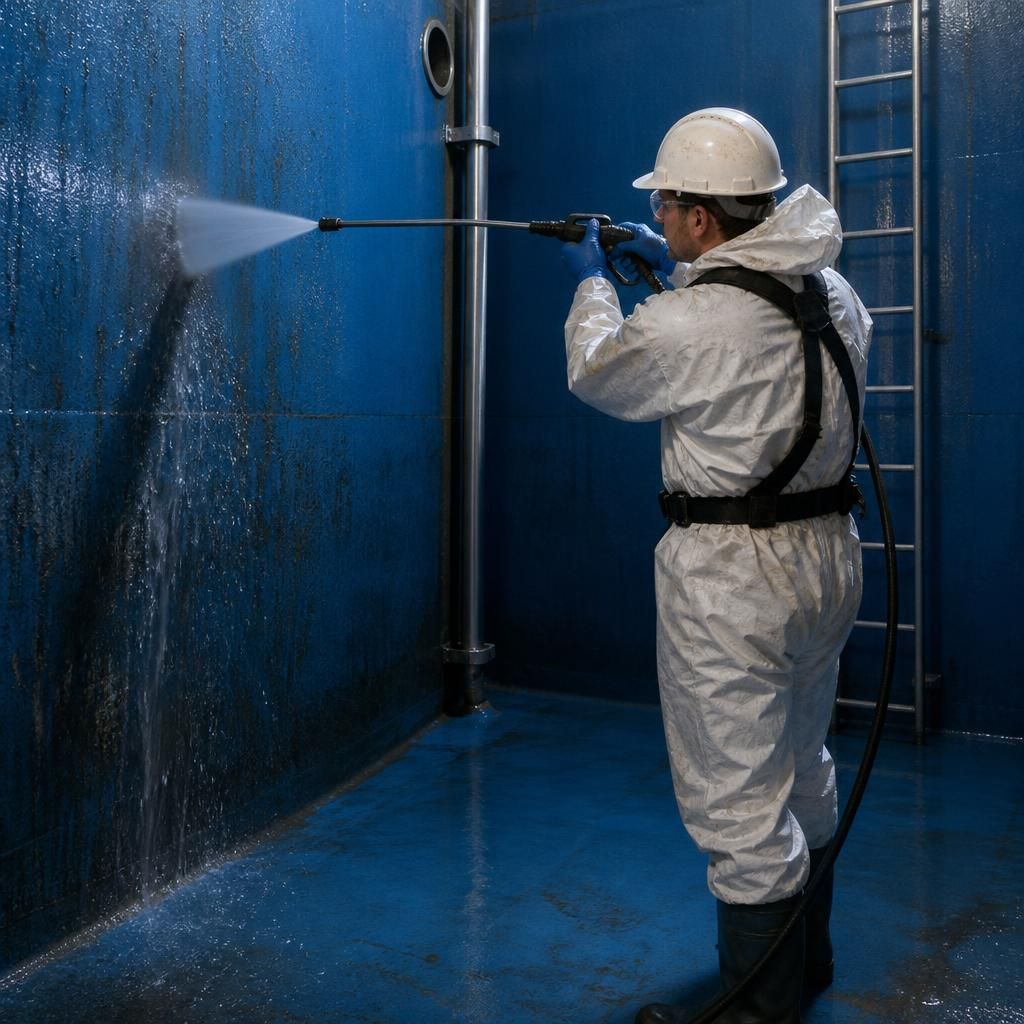
Businesses should bring forward water tank pressure washing when contamination or deposits recur after routine controls have been completed. Repeated build-up may indicate an unresolved issue such as damaged internal surfaces, inadequate protection from dirt ingress or operating conditions that allow debris to accumulate. In that situation, pressure washing should be treated as part of a wider investigation rather than a complete solution on its own. The business should identify the underlying cause, assess whether the tank or its components require repair, and confirm that the planned cleaning will address the condition found.
Discuss When to Arrange Water Tank Pressure Washing
Discuss your tank’s inspection findings and proposed pressure-washing scope with Blue Fish Water Management Ltd to establish an appropriate, documented next step.