
How does a water tank pressure washer control contaminated wash water?
A water tank pressure washer controls contaminated wash water by containing runoff, preventing it from entering clean water systems or uncontrolled drainage, and directing it to an agreed collection point. The collected water can then be assessed and disposed of or treated in accordance with the site’s drainage arrangements, environmental requirements and legionella control procedures.
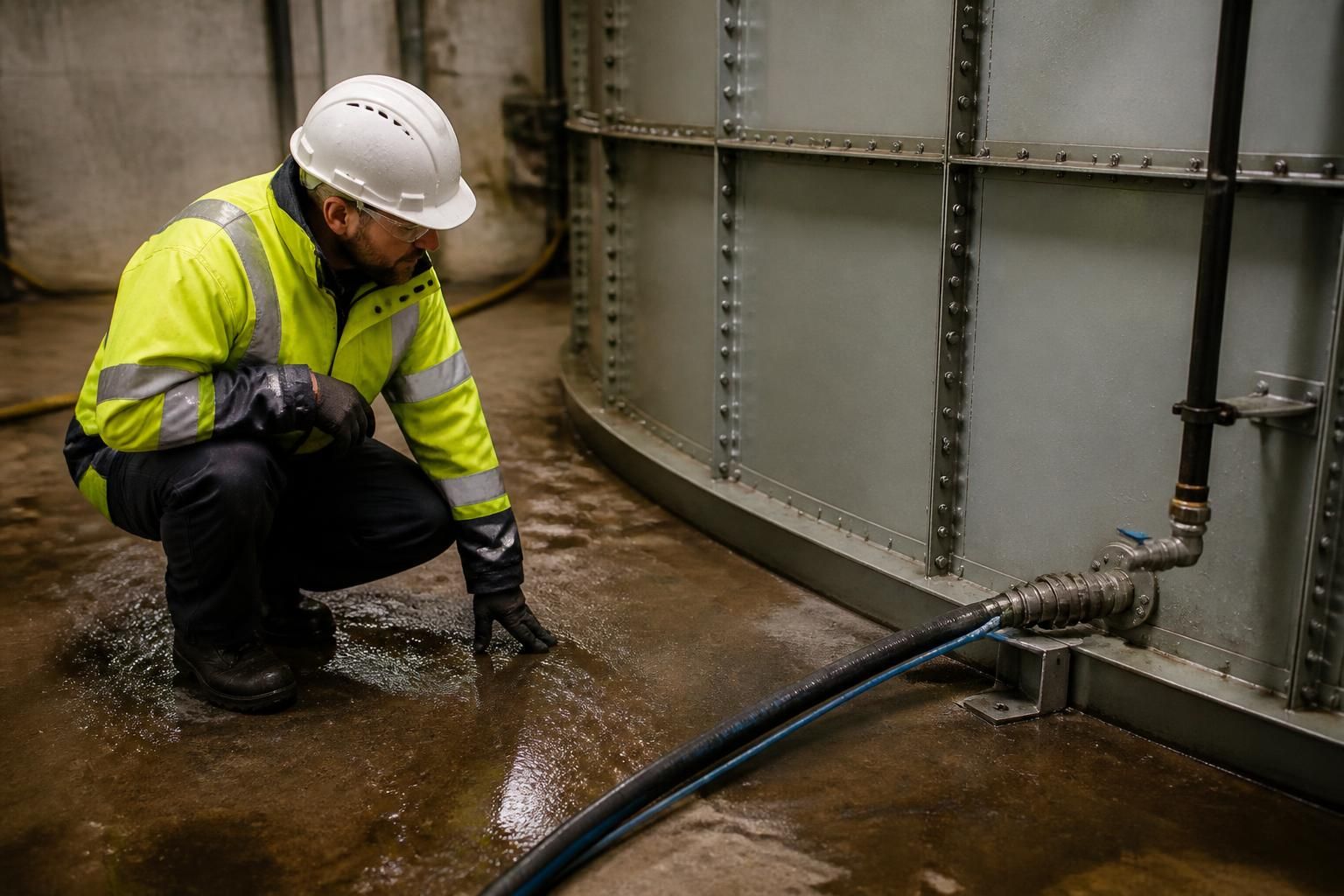
The key control is to keep the cleaning circuit separate from the tank’s normal water supply and the site’s drainage system throughout the work. A suitable water tank pressure washer procedure identifies where wash water will collect, prevents uncontrolled flow from the tank or work area, and uses appropriate recovery, storage and disposal arrangements for the resulting liquid.
Before cleaning, the contractor should establish the tank’s drainage route and the condition of nearby drains. Surface-water drains, foul-water drains and trade-effluent connections may have different acceptance requirements. The responsible person should confirm which route, if any, is permitted for the expected wash water and whether consent is required. If the discharge route is unsuitable or uncertain, the water should be retained for an agreed disposal decision rather than released.
Physical controls can include drain covers, temporary bunding, sealed collection points and barriers around access openings. These measures help prevent water escaping across floors, entering unprotected gullies or reaching areas used for clean water storage. The equipment layout should also allow hoses to be secured and monitored, because a displaced hose or overflowing collection container can defeat an otherwise well-planned control.
The wash water may contain sediment, corrosion products, scale, biofilm, organic matter and residues from cleaning or disinfection products. It should therefore be treated as potentially contaminated until its characteristics and disposal requirements have been considered. Where practical, solids should be allowed to settle or be removed separately, while recovered liquid is transferred into a suitable holding container or other approved collection arrangement. Containers should be stable, closed where appropriate and clearly identified to avoid accidental reuse or connection to the potable-water system.
Pressure and flow should be managed as part of the containment plan. Excessive flow can overwhelm a collection arrangement, while spray directed towards tank openings, access points or surrounding surfaces can spread contaminated droplets. The operator should work to the agreed method statement, inspect the collection system during cleaning and pause the wash if the available capacity or containment is no longer adequate. Any spill should be managed under the site’s incident procedure, with the affected area cleaned and the event recorded.
Control also extends to the people and equipment involved. Hoses, pumps, recovery tools and containers should be kept from contact with clean-water fittings and protected from cross-contamination between tanks. Operators may need suitable personal protective equipment and controls to reduce contact with contaminated water or inhalation of spray. Used consumables and removed debris should be handled as part of the same waste assessment rather than placed into general waste without consideration.
After collection, the responsible parties should decide whether the water can be discharged through an approved route, requires treatment, or must be removed by an appropriately arranged waste service. That decision depends on the site’s drainage arrangements, the substances present and any instructions from the relevant authority or water company. Records should identify the collection method, disposal route, unusual contamination, spills and corrective actions. Keeping this evidence with the tank-cleaning documentation helps demonstrate that contaminated wash water was controlled rather than simply released.
For legionella control, wash-water management should sit alongside the wider risk assessment and cleaning method statement. The documents should define isolation arrangements, containment measures, equipment hygiene, operator precautions, discharge decisions and reinstatement checks. This provides a clear link between the physical handling of the water and the site’s broader water hygiene controls.
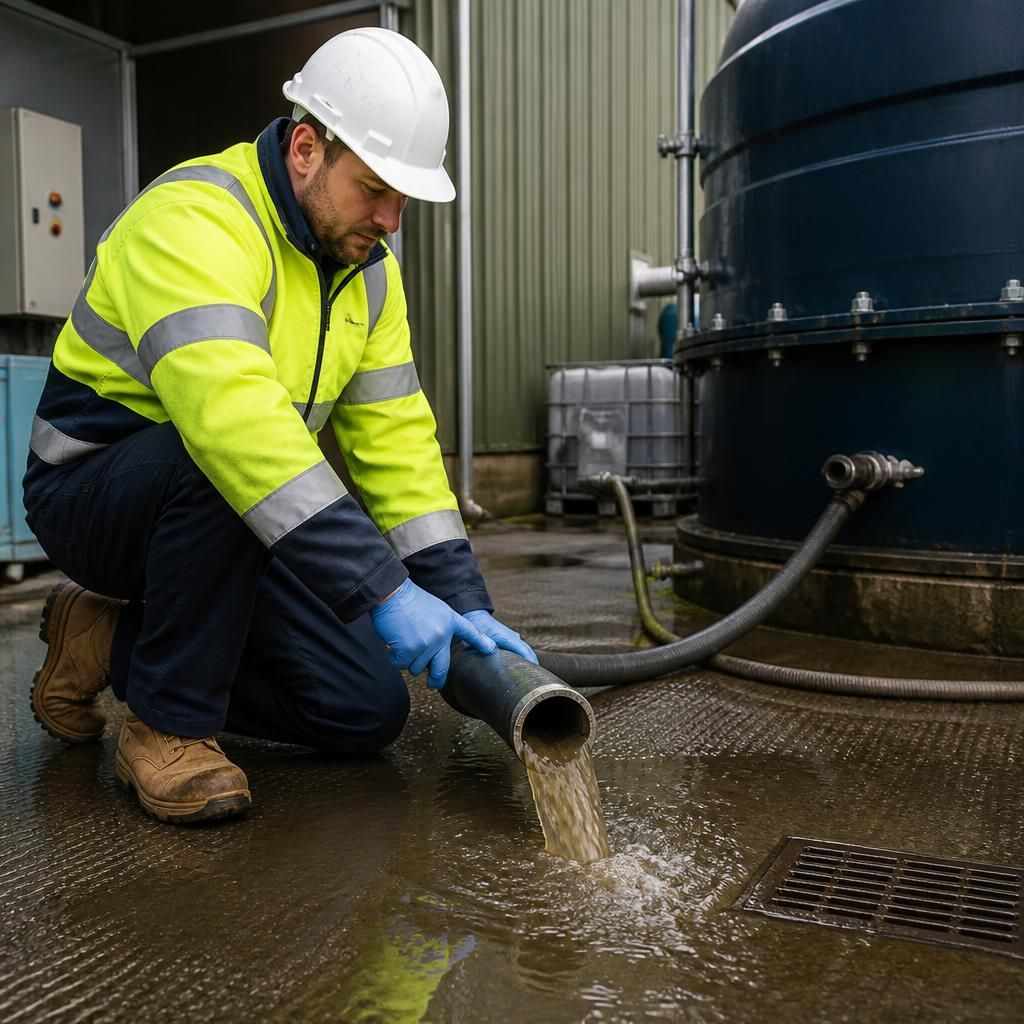
The first flush from a storage tank often carries the highest concentration of settled sediment, scale, corrosion products and loosened biofilm. A water tank pressure washer procedure should therefore treat this initial wash water as a separate, higher-risk stream rather than mixing it immediately with later rinse water.
Separating the first flush helps the operator assess the waste more accurately and prevents heavily contaminated liquid from filling the recovery system unnecessarily. Later rinse water must not be assumed to be suitable for discharge simply because it appears clearer; it remains part of the cleaning waste until the agreed disposal decision has been made. This staged approach gives the responsible person a clearer record of what was removed from the tank and how each wash-water stream was managed.
Discuss your water tank pressure washer requirements
Discuss your water tank pressure washer requirements with Blue Fish Water Management Ltd to determine the appropriate cleaning, containment and documentation arrangements for your site.