
How is a water tank pressure washer service verified after cleaning?
A water tank pressure washer service is verified through a documented post-cleaning inspection, confirming that visible contamination, deposits and cleaning residues have been removed without damaging the tank or associated components. Where the risk assessment requires it, water samples are then tested, with the findings, methods, corrective actions and final condition recorded for compliance purposes.
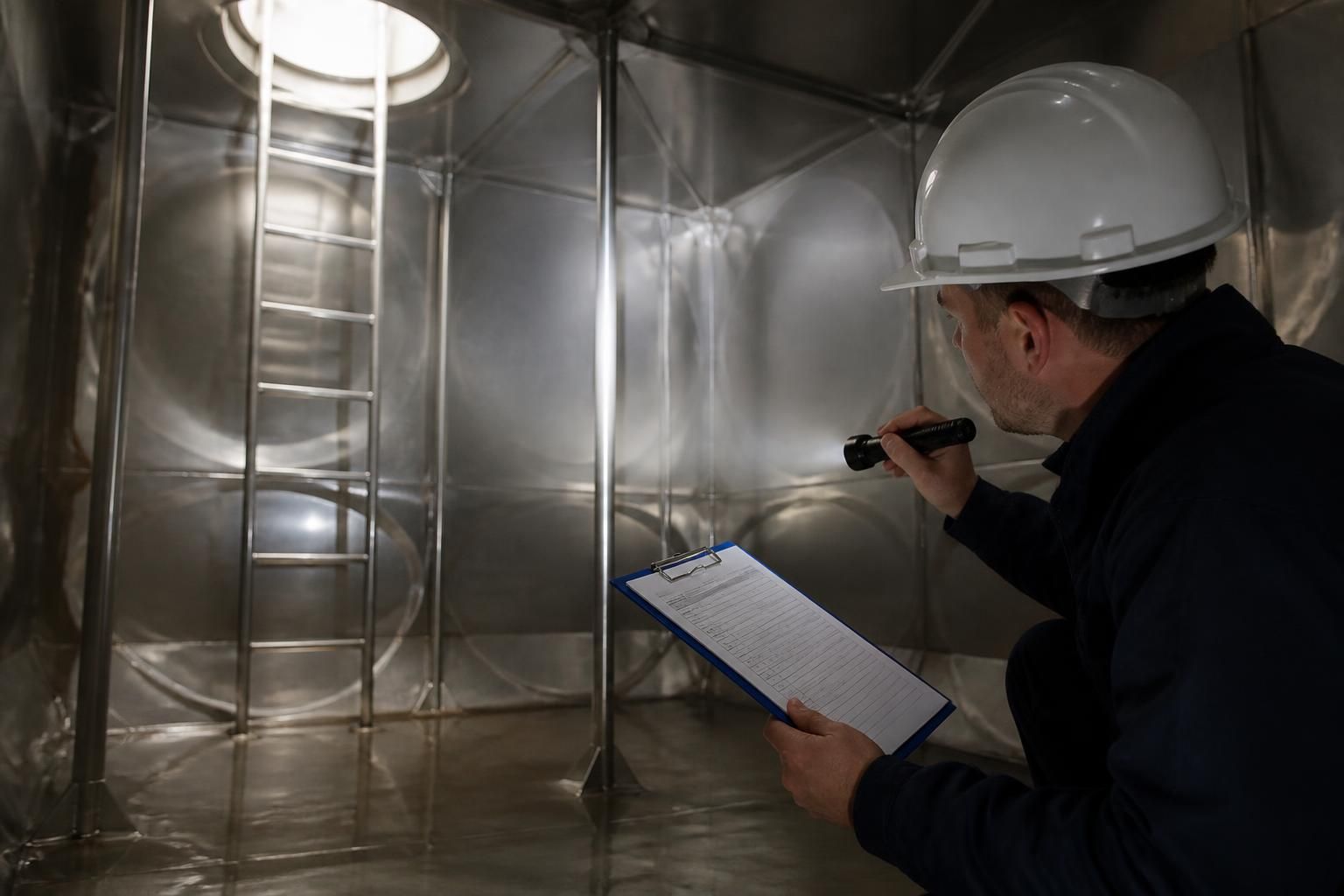
Verification is a staged sign-off against pre-agreed acceptance criteria, combining condition checks, functional checks and, where indicated, laboratory evidence. The person responsible should be able to show not only that the tank looks clean, but that it has been returned to a safe, serviceable condition and that the work can be traced to the system’s water hygiene records.
1. Confirm the scope of work
Before accepting the service, the completed work should be compared with the risk assessment, quotation, method statement and site records. This confirms that the correct tank, compartments, pipework connections and associated fittings were included. Any areas that could not be accessed, drained or cleaned should be clearly identified rather than treated as complete.
The verification record should normally identify:
- the tank or system reference and its location;
- the date and personnel involved;
- the cleaning method and equipment used;
- any restrictions, defects or deviations from the planned method;
- the person who carried out the final inspection; and
- any follow-up actions required before the system is put back into use.
2. Inspect the tank and fittings
A competent inspector should examine the internal surfaces, corners, joints, supports and areas around access points. Particular attention is needed at low points, around outlet arrangements and wherever sediment or organic material could collect. The inspection should also consider whether pressure washing has exposed deterioration, disturbed coatings, damaged seals or loosened fittings.
Visual acceptance is not simply a judgement that the tank appears better than before. The result should be assessed against defined criteria, such as the absence of remaining deposits, loose material, visible sludge, cleaning debris and standing water in unintended locations. Photographs can support the record, especially for large tanks, restricted-access areas and defects that require separate remedial work.
3. Check the system before refilling
Before the tank is returned to service, the relevant valves, lids, access covers, vents, screens, overflow arrangements and connections should be checked. The inspection should establish that covers are secure, fittings are correctly reinstated and there is no obvious route for foreign material or contamination to enter the tank.
Where components were removed during cleaning, their reinstatement should be recorded. A leak check or operational check may also be appropriate, depending on the tank design and the work carried out. If cleaning has altered the condition of a component, that issue should be assessed before the system is commissioned.
4. Confirm chemical and physical cleanliness where relevant
If a cleaning or disinfection chemical has been used, the verification process may include checking that it has been adequately removed or reduced to an acceptable level before the supply is used. The appropriate check depends on the substance, system and risk assessment. It should be carried out using a suitable method and with the result recorded, rather than relying on appearance alone.
The final condition should also be checked for remnants of the cleaning process, including loose fragments, hose debris, displaced sediment and pooled water. These materials can compromise water quality after the tank is refilled even when the main surfaces appear satisfactory.
5. Use sampling when the risk assessment requires it
Laboratory sampling is not a substitute for inspecting the tank, and a clear visual result does not automatically remove the need for testing. Sampling requirements should be determined by the system risk, the nature of the contamination, the cleaning method and any applicable control procedure. Samples must be taken from representative points using suitable containers and handling arrangements.
Where microbiological analysis is required, the report should identify the sampling locations, collection date, test requested and laboratory result. A competent laboratory, including a UKAS-accredited laboratory where required by the client’s compliance arrangements, should be used for relevant water testing. Results need to be interpreted in context; an unsatisfactory result should trigger investigation and appropriate corrective action rather than being filed without review.
6. Review deviations and corrective action
Verification should document anything that prevents the work from being accepted without qualification. Examples include inaccessible internal areas, damaged tank surfaces, defective access covers, persistent deposits, incomplete drainage or a sample result requiring further investigation. The record should state who is responsible for the action and what evidence will demonstrate completion.
Further cleaning, repair, disinfection, flushing or repeat sampling may be necessary. The tank should not be signed off as fully complete merely because the planned visit has ended. Where part of the system remains outside the agreed acceptance criteria, the status should be recorded as conditional or incomplete until the issue has been resolved.
7. Assemble the compliance evidence
A suitable close-out pack brings the evidence together so that the dutyholder can demonstrate what was done and how the result was assessed. Depending on the system, this may include:
- the completed service report and inspection checklist;
- before-and-after photographs;
- cleaning, flushing or disinfection records;
- chemical or other verification results, where applicable;
- laboratory certificates and sampling details;
- records of defects, remedial work and outstanding actions; and
- confirmation that the system was safely reinstated.
These records should be retained with the site’s water hygiene documentation and used to update the risk assessment or written control scheme when the condition of the tank, its operation or its inspection requirements have changed. This creates an auditable link between the pressure washer service and the ongoing control of water quality.
For a business commissioning the work, the practical acceptance test is therefore whether the evidence answers four points: what was cleaned, what condition was found afterwards, whether the tank and system were safe to return to use, and what testing or follow-up remains outstanding. A qualified water hygiene provider can structure the inspection, testing and documentation around those requirements rather than treating cleaning alone as proof of completion.
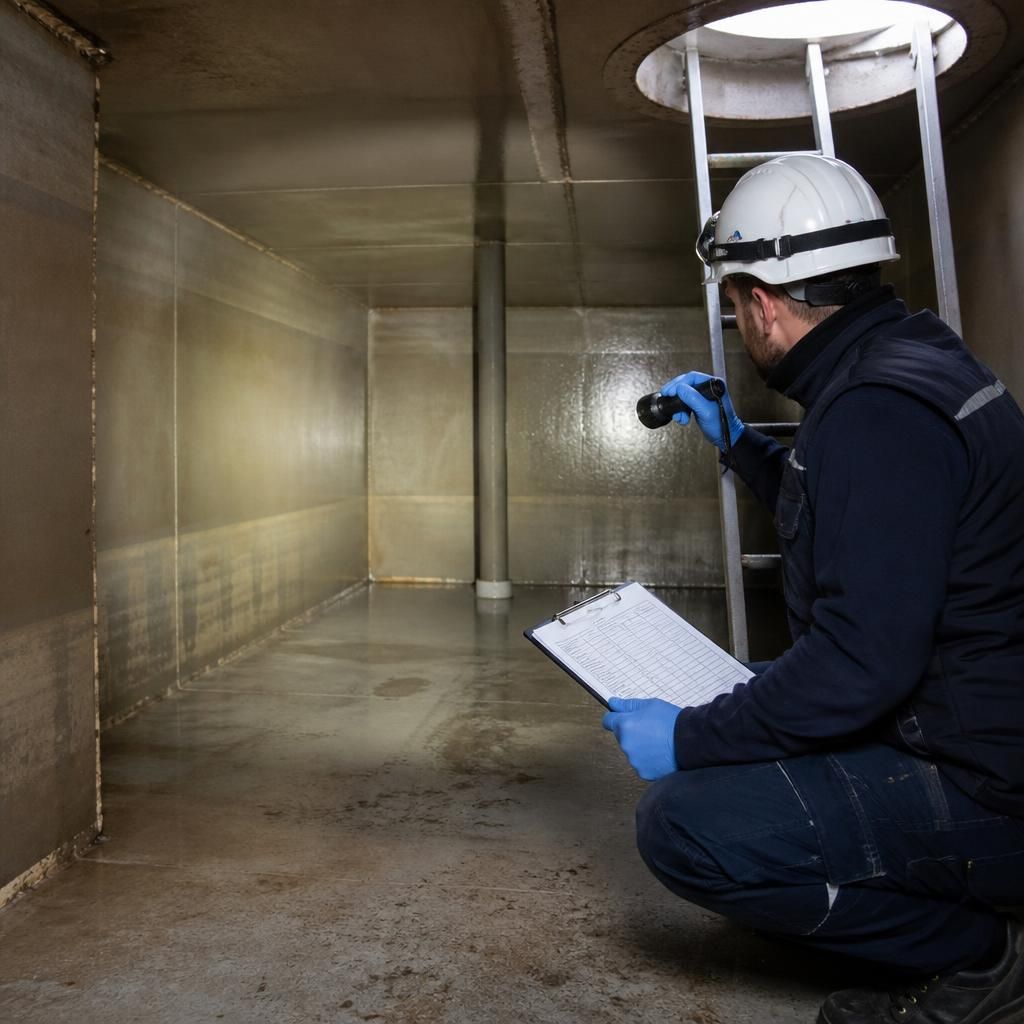
Verification is only reliable when the inspection itself has been carried out safely and with adequate access. Before entering or examining a tank, the responsible person should confirm that the system has been isolated as necessary and that any access, ventilation or confined-space controls required by the site’s procedures are in place. An inspection that covers only the area visible from the hatch should be recorded as limited, not treated as a full confirmation of cleanliness.
The verifier should also have sufficient knowledge to distinguish ordinary cleaning marks from corrosion, coating failure, damaged seals or conditions that could affect water quality. This makes the final decision more than a visual sign-off: it confirms that the inspection was suitable for the tank design, the work completed and the risks identified for that system.
Discuss your water tank pressure washer verification requirements
Discuss your water tank pressure washer verification requirements with Blue Fish Water Management Ltd to establish suitable acceptance criteria, inspection records and any follow-up testing needed for your system.