
What should a water tank pressure washer method statement include?
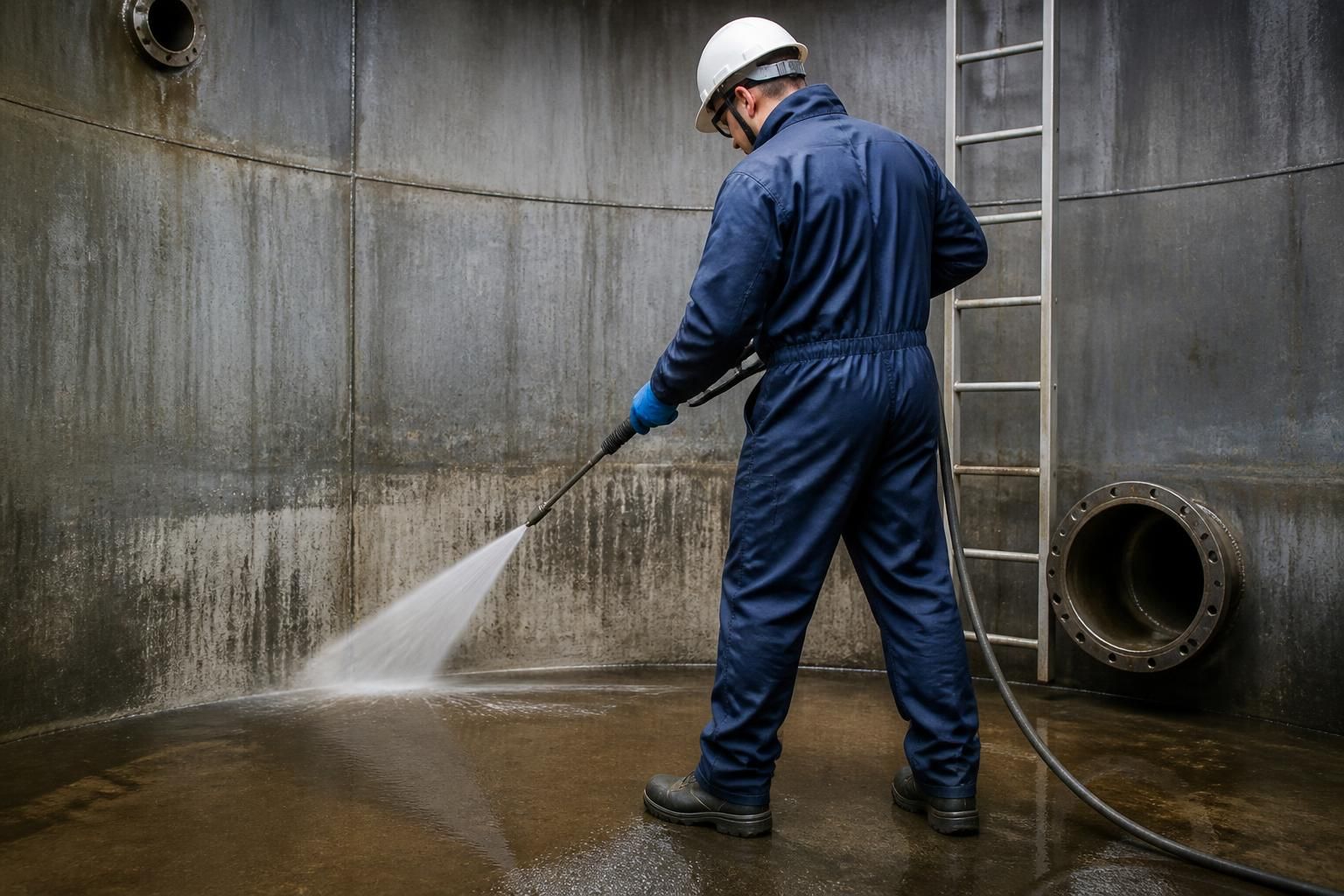
A water tank pressure washer method statement should translate the site-specific risk assessment into a controlled, workable procedure. It must explain how the tank will be made safe, how cleaning will be carried out without spreading contamination or damaging the installation, and how the completed work will be checked and documented.
Site and system information
The document should identify the tank, its location, capacity where relevant, connected pipework and the reason for cleaning. It should record the condition and type of tank, the access point, internal fittings, inlet and outlet arrangements, overflow, drain and any components that could be affected by pressure or cleaning activity. Existing defects, contamination, sediment, corrosion or damaged coatings should be noted before work starts so that pre-existing conditions are not confused with damage caused during the task.
The method statement should also explain the boundaries of the work. For example, it should state whether the service covers internal surfaces only, associated fittings, external areas or connected pipework, and identify any work that is excluded. This prevents operatives and the client’s representatives from working to different assumptions.
Responsibilities and competence
Named roles should be assigned for the person in charge, the cleaning operatives, the site contact and anyone responsible for isolating or reinstating the water system. The statement should confirm that operatives understand the equipment, the cleaning technique, contamination controls and the relevant emergency arrangements. If tank entry is required, it must address the separate competence, supervision, rescue and confined-space controls needed for that work. A pressure washer method statement should not be used to authorise entry into a tank unless the entry risks have been assessed and controlled specifically.
Pre-start controls
- Confirm that the tank can be taken out of service and establish how users will be protected from interruption or loss of supply.
- Identify and isolate relevant water, electrical and mechanical supplies, with the isolation points clearly recorded and checked before cleaning.
- Prevent accidental refilling, pressurisation or operation of connected equipment while the tank is being cleaned.
- Inspect the access route, work area, lighting, ventilation, floor condition and stability of any platform or access equipment.
- Check whether other contractors, occupants or operational activities could introduce a risk or interfere with the work.
- Agree how the tank will be returned to service and who is authorised to remove isolations.
Where the tank forms part of a critical or complex water system, the method statement should identify dependencies such as temporary supply arrangements, staged isolation or coordination with the responsible person for legionella control. These details make the document specific to the installation rather than a generic pressure-washing template.
Equipment and operating parameters
The document should identify the pressure washer, hoses, lances, nozzles, guards, electrical supplies and any wet-vacuum or drainage equipment to be used. It should state the operating limits selected for the tank and explain why they are suitable for the surface, lining, joints, seals and internal fittings. The highest available pressure should not automatically be used: excessive force can remove protective coatings, open defects or drive contaminated material into inaccessible areas.
Pre-use checks should cover hose connections, trigger controls, nozzle condition, electrical cables, plugs, residual-current protection where applicable, fuel or battery arrangements, and the security of access equipment. Damaged equipment should be removed from use. The method should also describe how hoses and tools are kept clean and protected from contact with contaminated ground or other dirty surfaces.
Contamination and hygiene controls
Because tank deposits may contain biological contamination, the statement should explain how contact, splashing and aerosol formation will be reduced. It should specify the required protective clothing, hand and face protection, respiratory protection where the assessment identifies a need, and the arrangements for changing, cleaning and disposing of contaminated PPE.
Cleaning should be planned to avoid directing spray towards openings, air intakes, adjacent equipment or clean areas. The method should set out how removed sediment and debris will be collected, how dirty tools and hoses will be segregated, and how operatives will avoid transferring contamination to the surrounding water system. If chemicals or disinfectants are used, the document should refer to their product information, safe handling requirements, contact conditions and rinsing arrangements rather than relying on informal instructions.
Safe cleaning sequence
- Confirm that the tank has been isolated, drained and made safe in accordance with the agreed procedure.
- Inspect and record the internal condition before pressure washing.
- Remove loose deposits using the least aggressive suitable method before applying pressure.
- Work methodically across the surfaces, controlling spray direction and avoiding vulnerable fittings.
- Keep personnel outside the spray zone and maintain secure access throughout the task.
- Collect sludge, solids and wash water as the work progresses rather than allowing them to accumulate or enter an unauthorised drain.
- Stop work if hidden damage, unexpected contamination, unsafe access or an equipment defect is found.
The sequence should include clear stop-work criteria. Examples include loss of isolation, uncontrolled discharge, damaged tank fabric, failure of ventilation, a change in weather affecting external work, or any condition that makes the agreed controls ineffective. Changes should be reviewed and recorded rather than dealt with by silently departing from the method statement.
Drainage and environmental arrangements
A compliant method statement should identify where water, sediment and residues will go and who has approved that route. Wash water must not be discharged to a surface water system or other drain without confirmation that the discharge is permitted and suitable. Where collection, settlement, filtration, treatment or removal by a waste contractor is required, those arrangements should be stated before work begins. The document should also cover spill response and the protection of nearby drains, soil, equipment and stored materials.
Completion, reinstatement and records
The method statement should explain how the tank will be inspected after cleaning, including checks for remaining deposits, coating damage, displaced fittings, blocked outlets and abnormal defects. It should define who accepts the condition of the tank and what happens if further remedial work is needed.
Before reinstatement, the tank and associated components should be left in the agreed hygienic condition, with temporary materials removed and access covers, valves and guards correctly secured. The return-to-service procedure should include removal of isolations by an authorised person and any required flushing, disinfection, sampling or other post-cleaning checks. The completed record should link the work to the tank, date, operatives, equipment used, observed condition, waste arrangements, deviations, defects and recommendations. Photographs, inspection sheets and test or sampling results can provide useful supporting evidence where they are appropriate to the system and the agreed scope.
Finally, the document should include a review process. Any incident, near miss, unexpected contamination or departure from the planned method should be reported and used to revise the risk assessment and method statement before similar work is repeated. This keeps the procedure aligned with the actual tank, the equipment selected and the condition found on site.
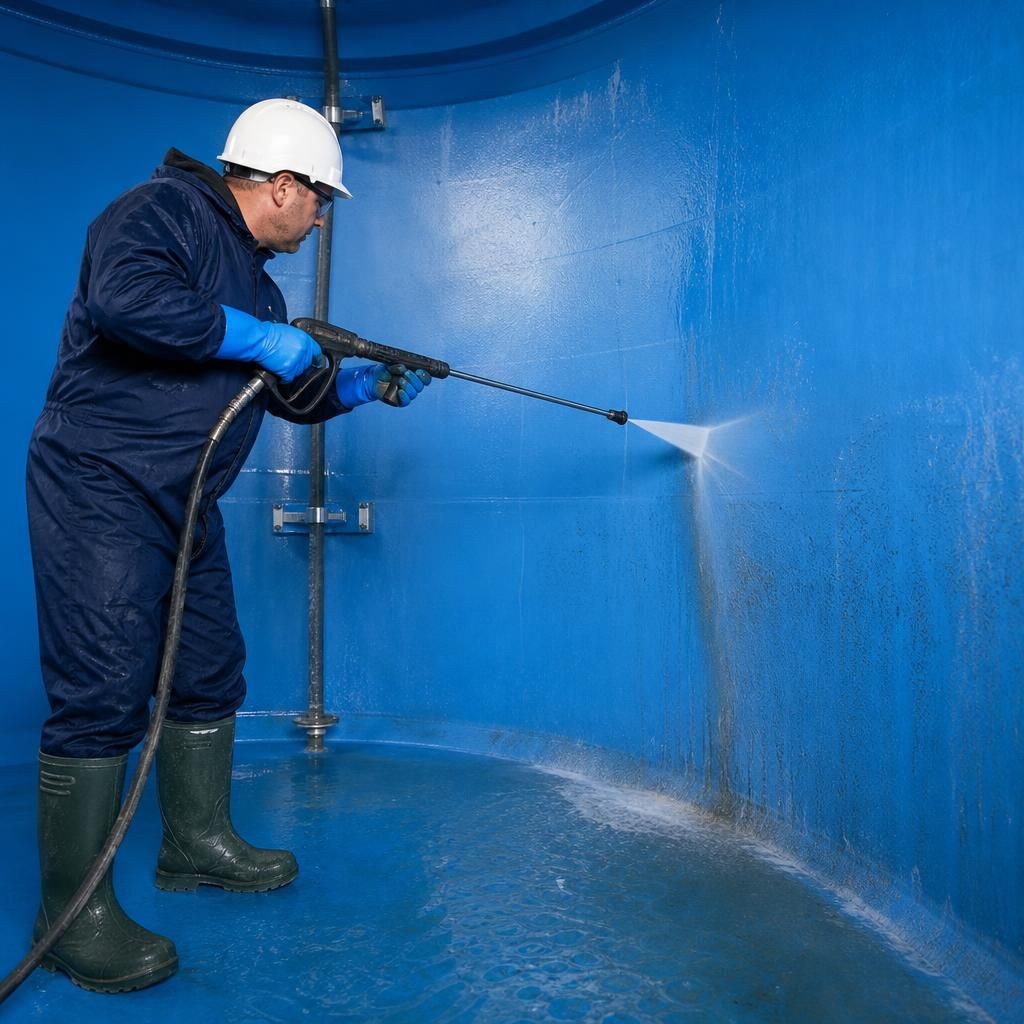
A water tank pressure washer method statement should be a controlled working document, not a generic description of cleaning. It should show the current tank-specific procedure, identify its revision or issue date, and confirm that the people carrying out the work have been briefed on the approved method before starting.
Keep a copy available at the work area and record any questions, agreed clarifications or changes raised during the briefing. If site conditions require a departure from the document, the work should pause until the change has been assessed, authorised and incorporated into the revised method. A short acknowledgement record can show who attended the briefing and understood the controls.
Need help reviewing a water tank pressure washer method statement?
If you need help reviewing a water tank pressure washer method statement, contact Blue Fish Water Management Ltd for practical advice on its site-specific controls, documentation and proposed cleaning work.