
When should businesses commission a water tank pressure washer?
Businesses should commission a water tank pressure washer when inspection, risk assessment or water quality results indicate sediment, scale, biofilm or other contamination that routine draining and manual cleaning cannot remove effectively. Professional pressure washing is also appropriate before a tank is returned to service after contamination, remedial work or prolonged disuse, provided the method is suitable for the tank and system.
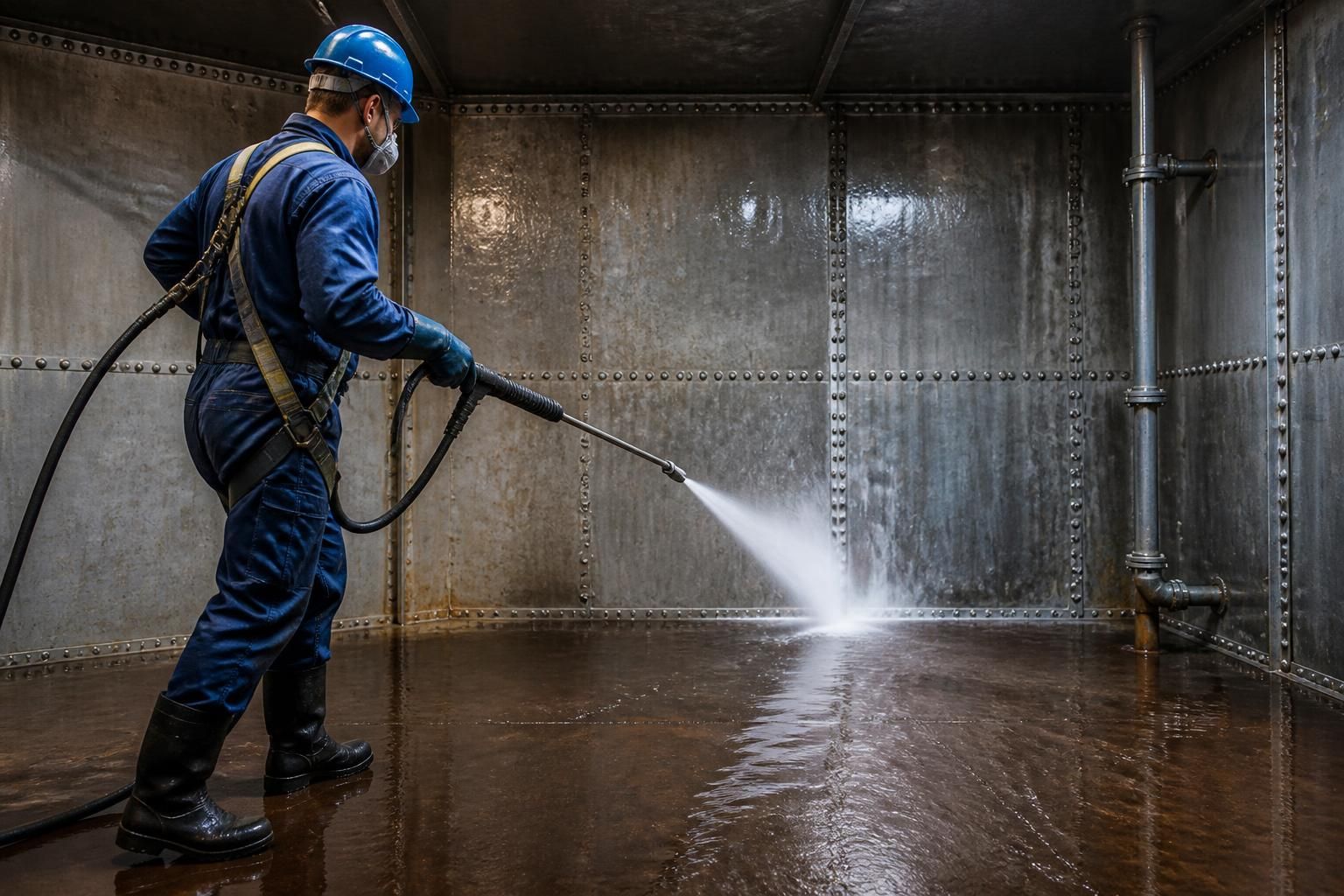
Businesses should commission a water tank pressure washer when a competent assessment shows that the tank requires a controlled, high-pressure cleaning method and that the tank, lining and connected system can safely withstand it. The decision should be based on the tank’s condition, intended use, operating history and water hygiene risk rather than on an arbitrary cleaning interval.
Pressure washing is often appropriate where deposits are firmly attached to internal surfaces. A conventional drain-down may remove loose material, but it may not adequately clean areas around seams, corners, access points, outlet connections or internal supports. A pressure washer can provide more effective mechanical action in these locations, provided the equipment and technique are suitable for the tank construction.
Businesses may also need to commission the service when the tank is affecting the operation of the wider water system. Examples include debris reaching strainers or valves, restricted flow at outlets, recurring fouling of pumps, or evidence that material is being carried into downstream pipework. In these circumstances, cleaning should be considered alongside investigation of the cause. Poor turnover, unsuitable storage conditions, damaged components or ineffective tank design may allow the problem to return even after the tank has been cleaned.
A pressure washing service can be considered as part of planned maintenance where inspections show a gradual deterioration in internal condition. The appropriate interval will depend on the tank’s use, construction, water source, operating conditions and findings from previous inspections. A fixed schedule should not replace condition-based checks. Inspection records and water hygiene documentation should be used to decide whether cleaning is necessary and whether pressure washing remains the most suitable method.
Changes to the system can also justify a fresh cleaning decision. This may include alterations to storage capacity, changes in occupancy or water demand, replacement of tank fittings, modifications to inlet and outlet arrangements, or a change in how the premises are used. Such changes can affect water turnover and access for inspection. The tank should be reassessed rather than assuming that an existing maintenance arrangement remains appropriate.
Before commissioning pressure washing, the responsible person should confirm the following:
- the tank’s material, lining, age and structural condition;
- whether the internal surfaces, joints and fittings are compatible with the proposed pressure and cleaning method;
- how the tank will be isolated, drained and safely accessed;
- how wash water, loosened material and any cleaning chemicals will be contained and disposed of;
- whether the work could affect connected storage tanks, pumps, controls or downstream outlets;
- what disinfection, inspection and testing will be required before the system is used again; and
- how the work will be recorded within the site’s water hygiene management arrangements.
Pressure washing should not be commissioned as a standalone response to a suspected water hygiene incident. If there is a concern about contamination, the tank and affected system should first be managed in accordance with the site’s risk assessment and written control procedures. Cleaning may form part of the corrective action, but it may also be necessary to address temperature control, stagnation, damaged insulation, cross-connections or other conditions that contributed to the concern. Cleaning does not remove the need for appropriate disinfection or post-cleaning verification where those measures are required.
The method may also be unsuitable for a tank with degraded surfaces, a damaged lining, weak fittings or restricted access. Excessive pressure can cause further damage, drive material into joints or create a new hygiene risk. A specialist should therefore specify the equipment, pressure, access arrangements and containment controls before work begins. The resulting method statement should make clear how the tank will be protected and how the system will be returned to service safely.
In practical terms, the right time to commission a water tank pressure washer is when inspection and water hygiene evidence identify a cleaning need, the tank is suitable for pressure washing, and the work can be planned with isolation, waste control, disinfection and verification included. Where those conditions are not met, repair, replacement, alternative cleaning or further investigation may be more appropriate than pressure washing alone.
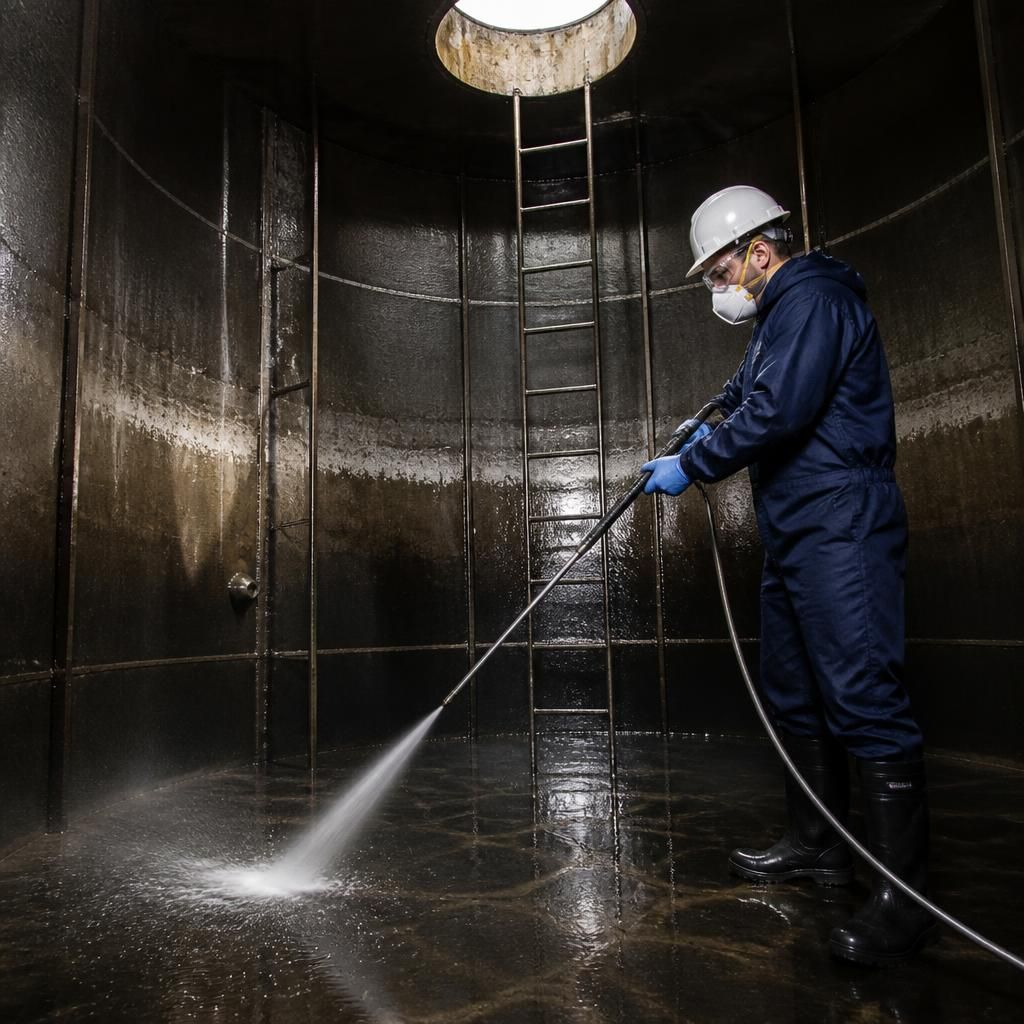
Where a site has multiple linked storage tanks, a water tank pressure washer may need to be commissioned as part of a coordinated cleaning plan rather than as an isolated task. The affected tank should be identified, separated from the rest of the system where appropriate, and assessed for any risk of transferring sediment or contaminated wash water through shared pipework, pumps or controls.
This is particularly important where tanks operate in parallel or serve different parts of a premises. The cleaning sequence, temporary arrangements and return to service should be defined in advance so that work on one tank does not undermine the condition or operation of another. The decision to pressure wash should therefore consider the configuration of the complete storage system, not just the visible condition of one tank.
Discuss when to commission a water tank pressure washer
Contact Blue Fish Water Management to discuss whether a water tank pressure washer is appropriate for your site and what information should be reviewed before commissioning the work.