
How does a water tank pressure washer protect tank surfaces during cleaning?
A water tank pressure washer protects tank surfaces by using controlled water pressure and suitable nozzles to remove deposits without unnecessary abrasion or impact. The cleaning method can be adjusted to the tank’s material, lining and condition, helping preserve protective coatings while removing contamination from the surfaces.
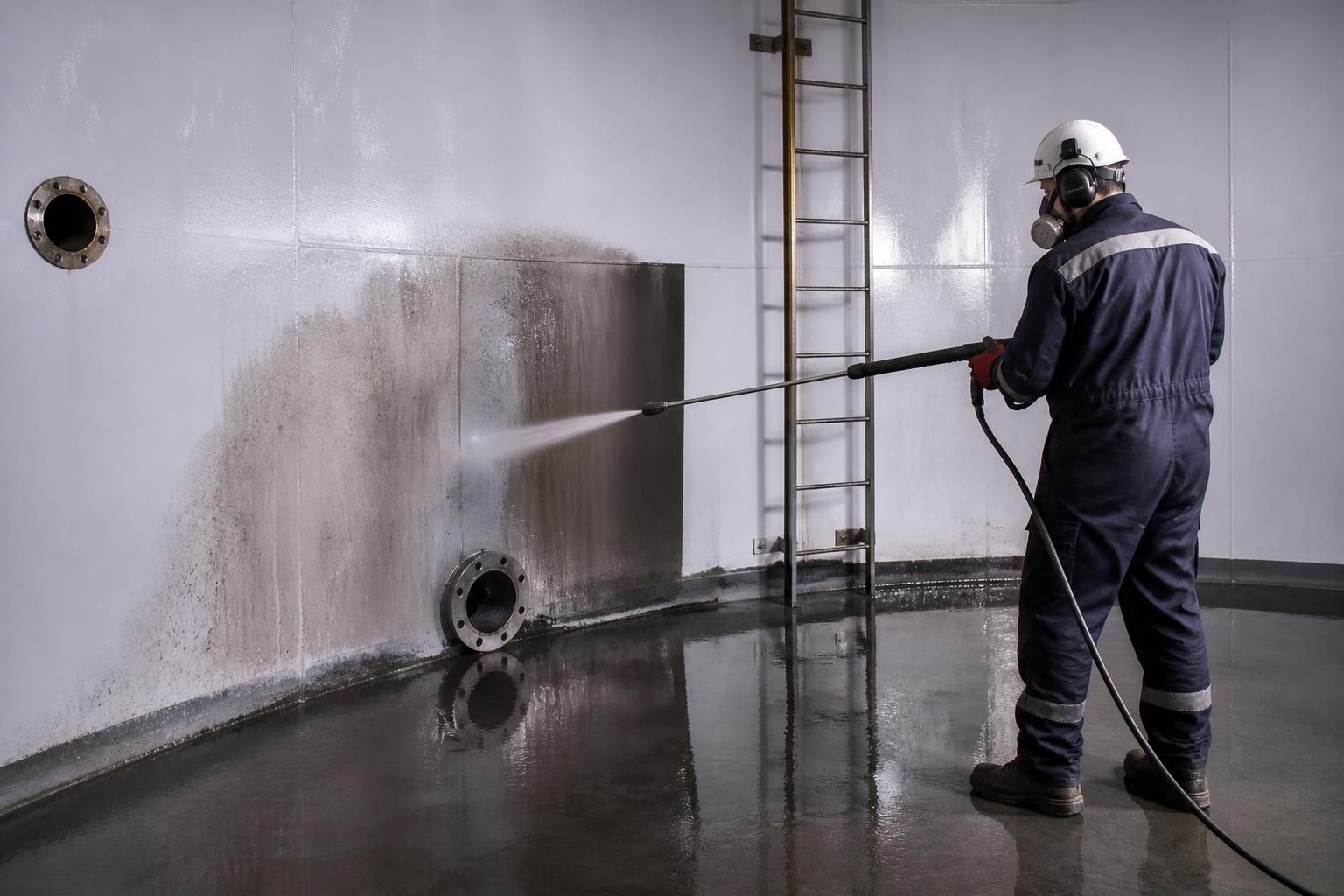
A water tank pressure washer protects tank surfaces by managing the forces applied during cleaning rather than relying on maximum pressure. The cleaning plan should account for the tank’s construction, internal finish, existing defects and the type of deposit present, so contamination can be removed without unnecessarily stripping coatings, eroding substrates or damaging fittings.
Surface protection starts with inspection. Before cleaning, the operator should identify the tank material and examine accessible areas for corrosion, blistering, flaking paint, exposed aggregate, cracks, failed sealant, damaged joints and loose components. Existing weaknesses affect the cleaning method. A sound epoxy lining may tolerate a different treatment from an ageing coating that is already lifting, while a glass-reinforced plastic tank requires care to avoid exposing fibres. Recording these conditions also distinguishes pre-existing defects from damage discovered after cleaning.
The pressure washer should be selected and adjusted as part of the method, not treated as a one-setting piece of equipment. Surface impact is affected by several factors, including:
- water pressure and flow rate;
- the nozzle pattern and spray angle;
- the distance between the lance and the surface;
- the speed and direction of each pass;
- how long the jet remains over one area; and
- the hardness and adhesion of the material being removed.
These variables work together. A narrow jet held too close to a lining can cut or lift a coating, even when the overall cleaning task appears straightforward. Conversely, a suitable spray pattern and consistent movement can remove deposits with less concentrated impact. Operators should keep the lance moving, avoid holding the jet on one spot and use a progressive approach where the deposit or surface condition demands it.
The cleaning sequence is also important. Loose material should be removed before more persistent deposits are treated. Softened scale, sediment and biofilm can then be washed away in stages instead of being attacked repeatedly with excessive force. This reduces the risk of embedding abrasive particles into a coating or dragging grit across a surface. Cleaning from higher areas towards collection points can help prevent already-cleaned sections becoming contaminated again, provided the wash-water control arrangements are suitable for the tank and site.
Particular care is needed around vulnerable features. Welds, corners, seams, tank-floor junctions, pipe penetrations, access points, gaskets, level sensors and protective linings may respond differently from the main wall surface. A jet directed into a joint can dislodge sealant or force water behind a lining. Fittings should not be used as convenient targets for removing deposits, and removable or sensitive components should be protected, isolated or cleaned by an appropriate alternative method where necessary.
Different tank surfaces present different risks:
- Coated steel: excessive impact can expose the metal beneath a lining, creating a route for corrosion.
- Uncoated steel: aggressive cleaning can worsen existing pitting or leave a surface that requires prompt drying and remedial attention.
- Concrete: unsuitable pressure can erode the cement-rich surface, enlarge defects or expose aggregate.
- GRP and other composite materials: damaged gel coats can expose fibres and create a rougher surface that is more difficult to clean effectively.
- Plastic tanks: concentrated impact or unsuitable chemicals can mark, deform or weaken the surface and associated fittings.
Water temperature and cleaning chemicals must be considered alongside pressure. Heat or detergents may help loosen certain deposits, but they can be incompatible with a tank lining, seal, membrane or potable-water application. Any chemical used should be suitable for the construction materials and the intended water use, applied according to its instructions and removed through thorough rinsing. Increasing chemical strength or temperature is not a substitute for a properly assessed cleaning method.
Protecting the surface does not mean leaving deposits in place. It means choosing the least aggressive effective method and monitoring the result as work progresses. Operators should compare cleaned areas with untreated sections, check whether the deposit is releasing as expected and reassess the method if the surface begins to mark, soften, shed coating or show exposed substrate. Where a defect is found, cleaning should not be used to conceal it; the condition should be recorded and referred for suitable remedial advice.
After cleaning, the tank should be inspected for remaining deposits, coating loss, corrosion, cracks, damaged seals and loose debris. Rinsing should remove cleaning residues and dislodged material without introducing further mechanical damage. A suitable service record can document the tank condition, cleaning method, areas treated, defects observed and any recommendations for repair or follow-up monitoring. This evidence helps the responsible person demonstrate that cleaning was carried out with regard to both water hygiene and the ongoing integrity of the tank.
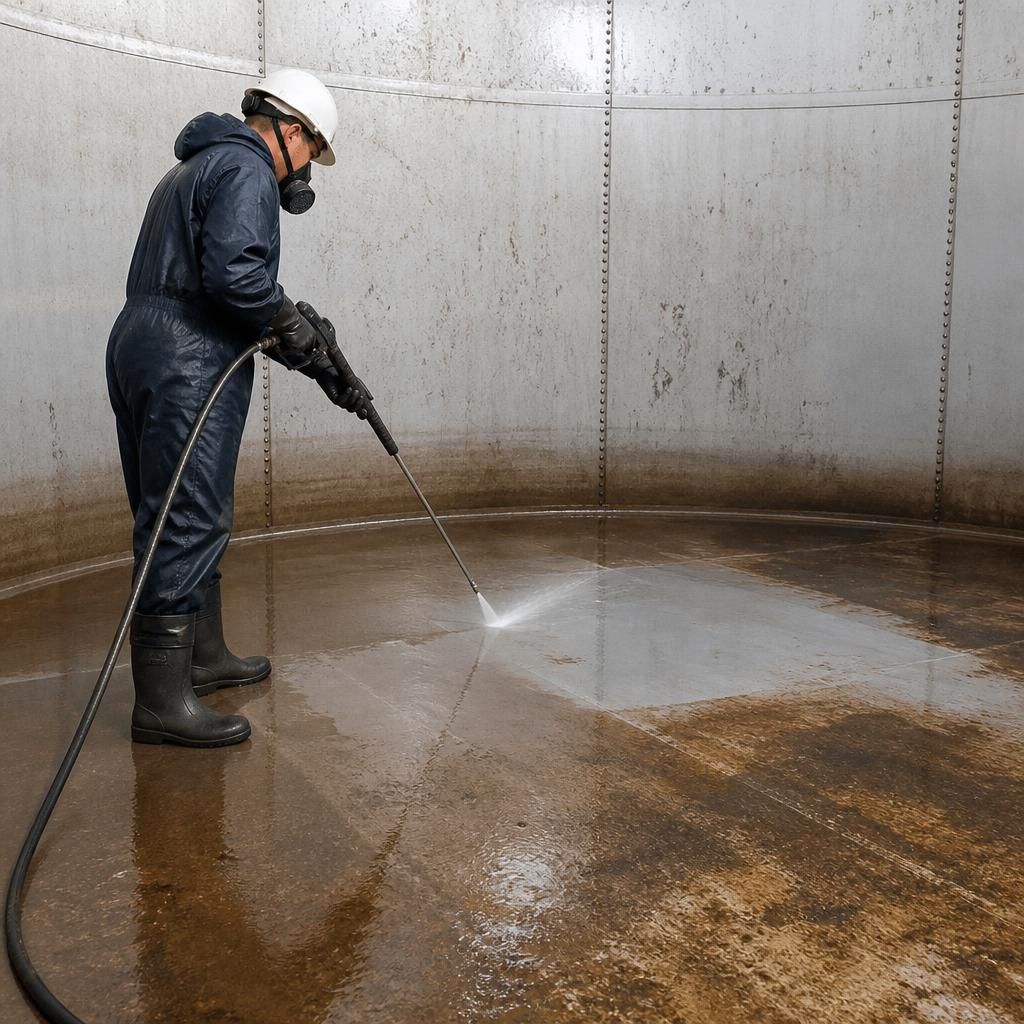
A controlled test area helps establish how a tank surface will respond before full cleaning begins. The operator can use a representative section to assess whether the chosen pressure, nozzle pattern and working distance remove the deposit without lifting the coating, roughening the substrate or affecting a joint.
The result should be checked after rinsing, not only while the surface is wet. If the test reveals marking, softened lining or exposed material, the cleaning method should be adjusted before proceeding. This approach limits unnecessary treatment and provides a practical basis for protecting the remaining tank surface.
Need advice on protecting tank surfaces during cleaning?
If you need to establish a suitable cleaning approach for a tank with vulnerable coatings, ageing materials or existing defects, speak to Blue Fish Water Management Ltd for practical advice. The team can help determine how surface protection should be addressed within the cleaning plan.