
How should a pressure cleaner prepare a water tank before pressure washing?
Before pressure washing, isolate the tank from the water system, drain it safely, and remove or protect fittings that could be damaged or contaminated. Inspect the tank for sediment, scale, biofilm, defects and safe access requirements, then plan how waste water and loosened contamination will be contained and disposed of.
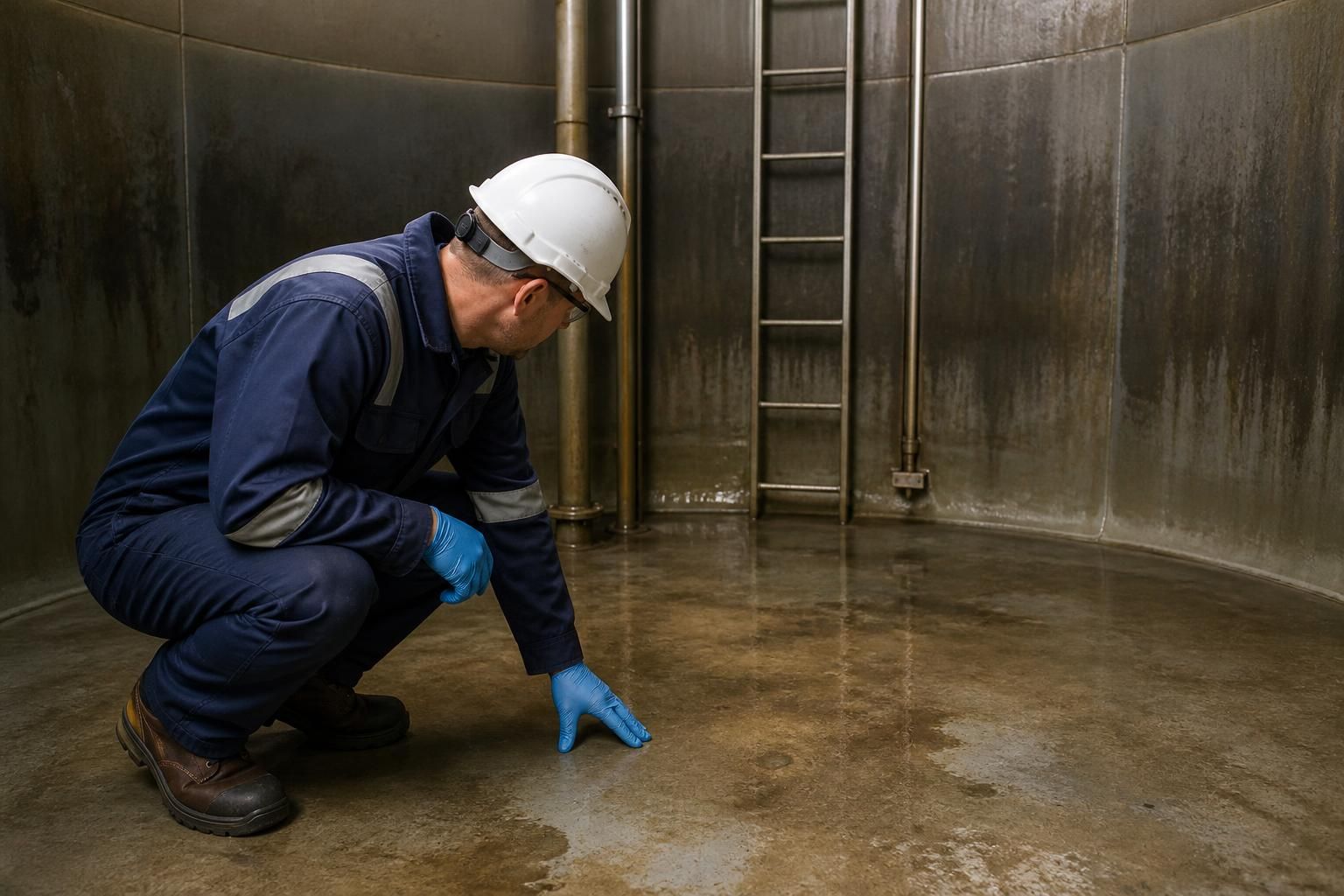
Preparing a water tank for pressure washing means establishing a safe, controlled cleaning method before any jetting begins. The preparation should confirm the tank’s construction and condition, define the work method, protect the water system from recontamination, and ensure that the people, equipment and work area are suitable for the task.
Confirm the scope of the work. Check the correct tank has been identified and establish its role within the wider water system. Relevant information includes the tank’s capacity, material, lining, age, previous cleaning history and any known defects. Review available drawings, inspection records and the site’s legionella risk assessment. This helps determine whether pressure washing is appropriate and identifies any restrictions affecting the tank, associated pipework or connected equipment.
The responsible person should agree the cleaning method before work starts. The method statement should describe the sequence of work, the equipment to be used, the areas requiring attention, the controls for people entering or working beside the tank, and the arrangements for restoring the system afterwards. Where the tank supplies water to healthcare, care, residential, manufacturing or other sensitive premises, the impact of taking it out of service should also be considered.
Check whether the tank is suitable for pressure washing. Pressure cleaning is not automatically suitable for every tank. Examine the construction and any internal coating for signs of brittleness, delamination, corrosion, cracking or previous repair. Fragile materials, damaged linings and ageing components may require a gentler method or specialist assessment. If the tank’s material or coating is unknown, obtain suitable technical advice before selecting equipment or applying water pressure.
Particular caution is needed where the tank contains damaged insulation, suspect asbestos-containing materials, heavily corroded supports or confined-space hazards. These conditions should not be treated as routine cleaning issues. Stop and obtain an appropriate assessment if the condition of the tank could create a health, structural or contamination risk.
Plan safe access and working conditions. Confirm how the cleaner will reach the tank, position equipment and inspect internal surfaces without standing on unsupported covers, pipework or tank components. Access equipment should be suitable for the location and should not introduce a fall risk or damage the tank. If entry into the tank is contemplated, assess whether the work is a confined-space activity and apply the required controls, including an entry decision, competent personnel, communication, emergency arrangements and atmospheric checks where relevant.
Consider surrounding electrical equipment, lighting, ventilation, slip hazards and the route for hoses. Pressure washing can create spray, noise and slippery surfaces, so the work area should be controlled to prevent unauthorised access and protect nearby equipment. Personal protective equipment should be selected from the task risk assessment rather than treated as a substitute for other safeguards.
Prepare clean equipment and materials. All hoses, nozzles, brushes, tools and containers that will contact the tank should be visibly clean and suitable for use in a potable-water environment where applicable. Keep equipment off contaminated floors and protect open ends when it is not in use. Arrange the equipment so that dirty surfaces, footwear and waste-handling items cannot contaminate cleaned areas or components.
Use a pressure-washing setup that allows the operator to control the spray accurately. The nozzle, hose connections and lance should be checked for damage or leakage before use. Any detergent, disinfectant or other chemical proposed for the work must be suitable for the tank and used in accordance with its safety and application instructions. Do not introduce a chemical simply because it may improve removal of deposits; its compatibility with the tank material and subsequent rinsing requirements must first be established.
Decide how contamination will be removed without spreading it. Identify where loosened deposits, biofilm and wash water will go before cleaning starts. The route should prevent contaminated water entering clean parts of the installation, unprotected surfaces or drainage points that cannot accept the discharge. Where manual removal is needed before jetting, use dedicated tools and handle collected material as contaminated waste in accordance with the site’s arrangements.
The preparation should also define the standard of cleanliness required. For example, the aim may be removal of visible deposits and biological growth, restoration of accessible surfaces, or preparation for a separate disinfection stage. Agree how inaccessible areas, tank corners, joints, inlet zones and underside surfaces will be checked, since pressure washing is only effective where the operator can direct the spray safely and adequately.
Set inspection and acceptance points. Before washing, record the tank’s condition with written notes and photographs where permitted. Record defects that may become more apparent after deposits are removed, such as exposed corrosion, damaged sealant, degraded coatings or structural movement. Decide who will review these findings and whether remedial work is required before the tank can return to service.
A properly prepared tank is therefore not simply an empty tank with a pressure washer beside it. It is a controlled work area supported by a documented method, suitable access, compatible equipment, a defined contamination route and clear criteria for deciding whether cleaning can proceed. This preparation allows the pressure-washing stage to be carried out without creating avoidable damage or compromising the hygiene of the wider water system.
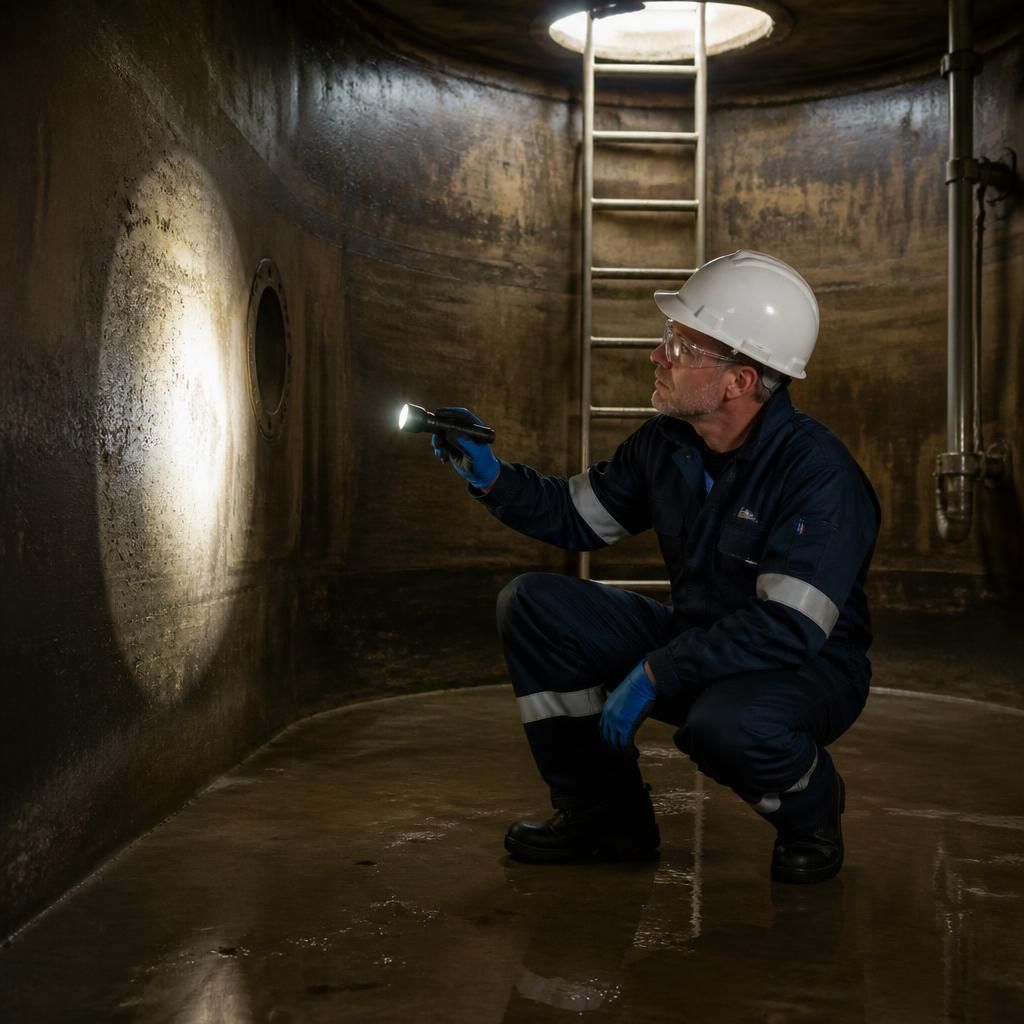
The water used for pressure washing should be suitable for the tank and kept separate from contaminated water removed during the work. Arrange a clean supply before starting, check hoses and connections for damage, and prevent any possibility of backflow from the tank or drainage equipment into the source. Hose ends should remain capped or protected whenever they are not connected.
Do not use water taken from the tank once cleaning has begun. As deposits and biofilm are disturbed, that water may carry contamination into equipment or onto surfaces that have already been cleaned. A clearly defined clean-water route and dirty-water route help the operator maintain separation throughout the preparation and washing process.
Ask about preparing a water tank for pressure washing
If you need to confirm the right preparation method for a water tank, speak to Blue Fish Water Management about a practical assessment of the tank, its condition and the proposed cleaning controls. Their water hygiene specialists can help identify the information and safeguards required before pressure washing begins.