
What should a pressure cleaner record during water tank pressure washing?
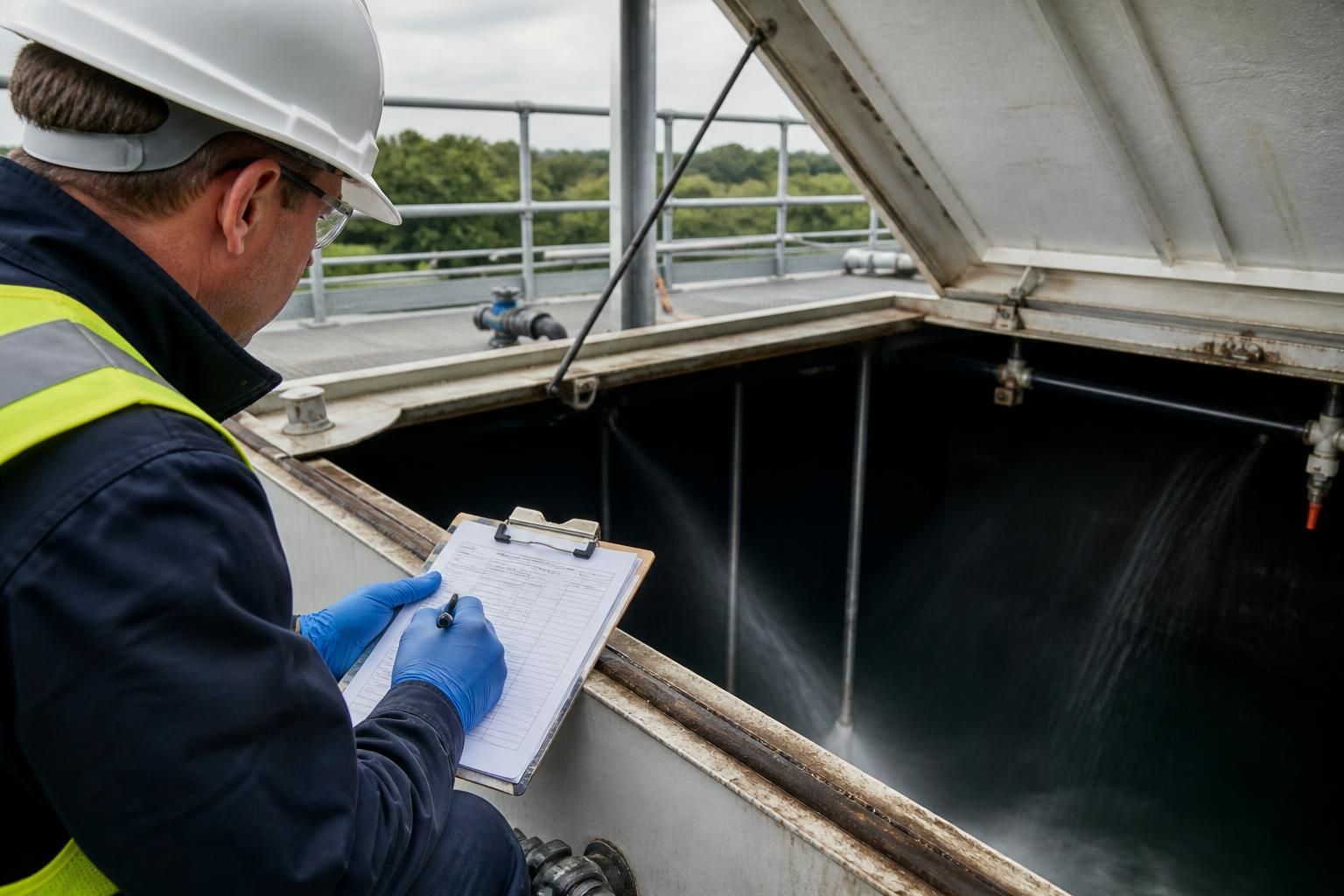
A pressure-washing record should allow another competent person to establish exactly what was inspected, how the work was controlled, what the cleaner observed, and what happened afterwards. It should be completed as the work progresses rather than reconstructed from memory, with entries attributable to the person who made them.
Record the people responsible for the work. Include the name of the cleaning contractor, the operative or operatives carrying out the task, the person authorising access, and the person responsible for accepting the tank back into service. Where a specialist subcontractor is involved, identify their role. The record should also refer to the relevant method statement, permit-to-work or site instruction so that the cleaning activity can be linked to the controls used.
Record the conditions under which the tank was accessed. Note whether the tank was isolated, drained and made safe before pressure washing, and identify any restrictions on access. The entry should cover relevant precautions such as confined-space controls, ventilation, electrical safety, access equipment and protection against contaminated wash water entering the supply. If a planned control could not be applied, record the deviation, who approved it and how the risk was managed.
Record the cleaning equipment and operating parameters in sufficient detail. In addition to naming the equipment, record the nozzle or attachment used, the pressure setting or operating range, the water source, hose condition and any relevant equipment identification number. If pressure was reduced because of a vulnerable tank lining, fitting or component, document the reason. Where gauges, meters or other instruments are used, record their status and any calibration or inspection reference that supports the reading.
Record the sequence and extent of the work. A useful log states which parts of the tank were cleaned, such as the roof, walls, floor, corners, inlet and outlet areas, overflow, access cover, internal fittings and associated pipework where included in the scope. Note the order in which areas were treated and whether an area received more than one pass. This is particularly important where baffles, supports or restricted access prevented a complete visual inspection.
Record anything that prevented a full inspection or clean. Examples include standing water, poor visibility, damaged coatings, inaccessible voids, fixed fittings, unsafe access or a tank that could not be fully drained. Do not describe an area as clean if it was not seen or treated. Instead, identify the limitation, its location and the recommended follow-up action. Photographs, sketches or marked-up tank plans can make such limitations easier to verify.
Record the condition of the tank and its components separately from the cleaning outcome. Pressure washing may expose cracks, corrosion, loose sealant, damaged supports, deteriorated coatings, defective covers, ineffective screens or signs of animal or debris ingress. Describe the location and apparent significance of each observation, and distinguish defects requiring repair from routine deposits removed during cleaning. Avoid presenting a pressure-cleaning record as a structural survey unless that inspection was specifically included.
Record waste and wash-water controls. State how sludge, scale, sediment and other material were removed, contained and disposed of, including any concern about discharge to drains or the environment. If contaminated material was segregated or a disposal record was issued, retain the associated reference. This demonstrates that cleaning did not simply transfer accumulated material into another part of the water system.
Record actions that were not completed during the visit. An action log should identify the defect or outstanding task, its location, the responsible person, any interim control and the required completion evidence. For example, a damaged access cover may require replacement before the tank is returned to service, while a heavily deteriorated lining may need a separate technical assessment. Record whether the client accepted the recommendation and whether a follow-up inspection was requested.
Link the record to post-cleaning checks. Where applicable, retain evidence of the final visual inspection, flushing, disinfection, refilling, return-to-service authorisation and any water sample taken after the work. A sampling entry should identify the sampling point, sample reference, collection details, requested analysis and laboratory report reference. The cleaning sheet should not be treated as a substitute for a formal laboratory report or a separate disinfection certificate.
Keep supporting evidence with the completed record. This may include photographs taken before, during and after cleaning, equipment checks, permits, risk assessments, disposal notes, laboratory reports, defect notifications and client sign-off. Photographs should be labelled with their location and, where relevant, linked to a numbered observation in the written log. Corrections to paper records should remain legible, with the original entry crossed through rather than erased; electronic records should retain an audit trail.
The final record should be dated and signed by the operative and reviewed by the responsible person. Store it with the water-system compliance documentation so that future inspections, remedial work and monitoring can be compared with the tank’s previous condition. This creates a defensible account of the pressure-washing activity without overstating what the cleaner inspected, tested or repaired.
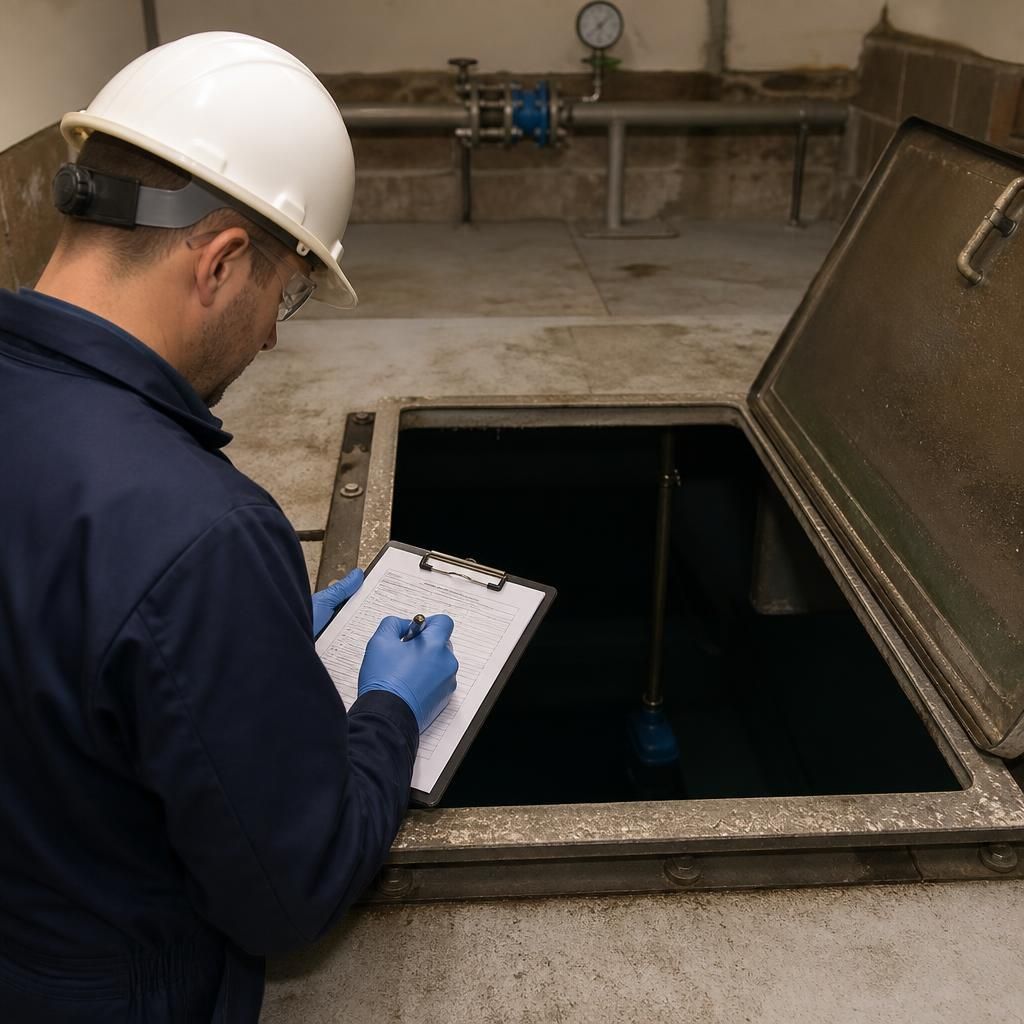
Record the cleaning result in specific, observable terms rather than writing only “cleaned”. Note whether sediment, scale, slime or other deposits remained after pressure washing, where they were located and whether their removal was complete. If residue could not be removed without risking damage to the tank or its fittings, state this clearly and explain what further action was recommended.
Where the work specification includes an acceptance check, record the check used and its outcome separately from the operative’s description of the cleaning. This helps the responsible person distinguish between work carried out, material that remained, and any decision needed before the tank is accepted for its next stage.
Need advice on water tank pressure-washing records?
If you need to align water tank pressure-washing records with wider water hygiene requirements, speak to Blue Fish Water Management Ltd for practical, system-specific advice.