
What hygiene controls should a pressure cleaner use for water tanks?
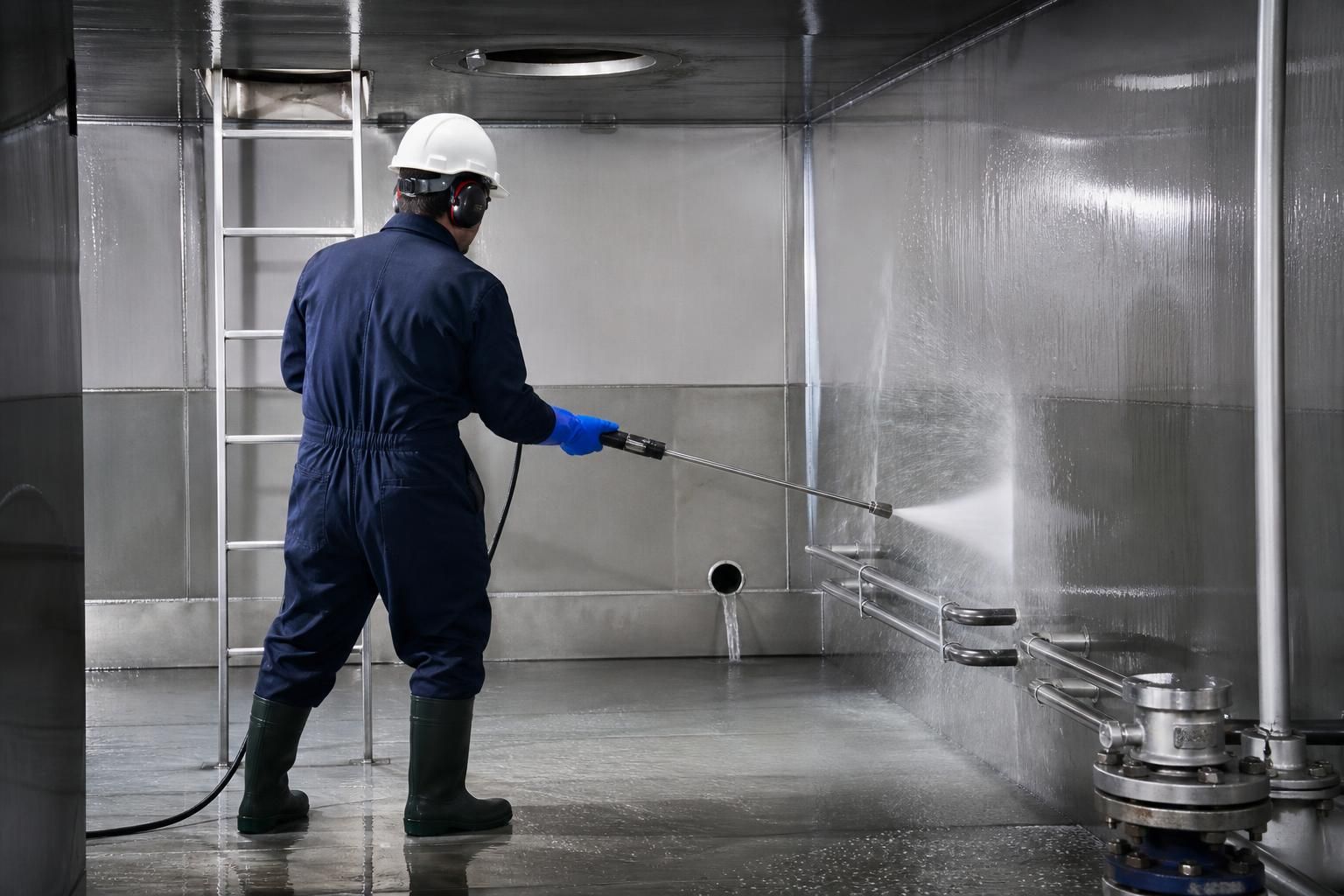
Effective hygiene control during water tank pressure cleaning depends on preventing the introduction, spread and survival of microorganisms, particularly Legionella, throughout the work. A professional cleaner should therefore use a risk-based method covering the tank’s design, the water system it serves, the cleaning equipment, chemical compatibility, worker safety and post-cleaning verification.
Start with the tank’s water hygiene risk profile. Before selecting a method, establish whether the tank supplies drinking water, domestic hot water, process water, fire systems or another non-potable use. Review the tank’s location, access arrangements, condition, water temperature, turnover, history of stagnation and any previous contamination. The risk is not determined by visible dirt alone. Warm, stagnant water, sediment, corrosion deposits, biofilm and dead legs can all affect the control strategy.
The cleaner should obtain relevant site information from the responsible person, including the current water safety arrangements and any existing legionella risk assessment. This helps identify vulnerable users, connected systems that must remain protected and restrictions on the cleaning chemicals or methods that may be used. Where the tank forms part of a healthcare, care, education, residential or industrial installation, the cleaning plan should be coordinated with the site’s responsible water hygiene personnel.
Control aerosol and cross-contamination risks. Pressure washing can disperse contaminated droplets and splashes, particularly when a jet strikes sediment, biofilm or tank surfaces at close range. The method should minimise aerosol generation and prevent contaminated water from reaching adjacent tanks, air intakes, ventilation systems, food areas, clean equipment or occupied parts of the premises. Workers should avoid directing jets towards themselves or other people and should use suitable respiratory, eye and skin protection where the risk assessment identifies exposure to aerosols or chemicals.
Clean and dirty activities should be kept separate. Equipment used in drainage, waste handling or visibly contaminated areas should not be placed on surfaces or used in clean areas without an appropriate cleaning and disinfection procedure. Hoses, fittings, brushes and ancillary tools should be inspected for cleanliness before use and stored so that their internal surfaces are not contaminated between jobs. Any item that contacts water intended for human consumption should be suitable for that purpose and managed in a way that preserves its hygienic condition.
Use chemicals only under a controlled procedure. A disinfectant or cleaning agent should be selected for the tank material, the type of deposit and the intended water use. The cleaner should follow the product’s instructions, safety data sheet and the site’s COSHH assessment rather than relying on an assumed dose or contact time. Controls should cover:
- safe storage, labelling and transport of chemicals;
- correct preparation and dilution using suitable measuring equipment;
- prevention of incompatible chemical mixing;
- protection against splashes, vapour and skin contact;
- control of chemical residues and rinse water; and
- confirmation that the treatment will not damage tank coatings, seals, valves or associated components.
Disinfection is not a substitute for physical removal of deposits. Slime, scale and sediment can shield microorganisms from a disinfectant, so the cleaning method should first address the condition of the surfaces. Conversely, an aggressive chemical or mechanical treatment can damage a lining and create rough or deteriorated surfaces that are harder to keep hygienic. Any defect found during cleaning should be assessed and reported rather than concealed by applying additional treatment.
Manage the tank as a potentially hazardous work area. A tank may present confined-space risks, restricted access, poor ventilation, difficult escape, contaminated water or hazardous atmospheres. Entry should not take place simply because the opening is large enough for a person. The responsible employer should determine whether confined-space legislation and a formal entry system apply, with suitable supervision, communication, rescue arrangements and atmospheric controls where necessary.
Other precautions may include preventing falls at openings, controlling hoses and electrical leads, using equipment appropriate to wet conditions and keeping unauthorised personnel away from the work area. These measures support hygiene as well as general safety: an uncontrolled incident can introduce dirt, bodily fluids, damaged materials or unclean rescue equipment into the tank.
Protect the quality of the water system during the work. If the tank or its components are to be used for potable water, all materials, lubricants, sealants and temporary fittings that could contact the water should be appropriate for that application. Temporary caps and blanking arrangements should be clean and secure. Openings should not be left exposed to dust, insects or other contamination between work stages, particularly if cleaning is interrupted.
The cleaner should also check for conditions that could allow contamination to recur after the work, such as damaged lids, ineffective screens, faulty overflow arrangements, poor drainage or an inlet that causes excessive splashing. These observations may fall outside the pressure cleaner’s repair scope, but they are important water hygiene findings and should be passed to the responsible person with clear recommendations.
Verify the result rather than relying on appearance. A tank can look clean while retaining contamination in seams, outlets, valves, inlet arrangements, sediment pockets or inaccessible sections. Verification should be proportionate to the system risk and may include a documented visual inspection, confirmation that the intended treatment conditions were achieved and water sampling by a competent party where required by the water safety plan or risk assessment.
Results should be interpreted in context. A laboratory result is not meaningful if the sample point, sampling method, timing or system condition is unclear. Where results are unsatisfactory, the responsible person should determine whether further investigation, remedial cleaning, disinfection or wider system review is needed. The pressure cleaner should not independently declare a water system safe for use unless that responsibility has been formally assigned and the necessary evidence is available.
Use competent people and a written method statement. The method statement should describe the sequence of work, identified hazards, hygiene barriers, chemicals, equipment, access controls, waste arrangements, emergency actions and acceptance criteria. Workers should understand why each control is required, how to recognise contamination or system defects and when to stop and escalate an issue. Supervision is particularly important where the work involves tank entry, chemical treatment or a system serving vulnerable occupants.
For UK sites, the approach should be consistent with the responsible person’s legionella control arrangements and relevant HSE guidance, including the principles in Legionnaires’ disease: The control of legionella bacteria in water systems (L8) and the associated technical guidance. The exact controls remain site-specific: a process-water tank, a domestic cold-water storage tank and a tank serving a high-risk healthcare environment may require different precautions.
A pressure cleaner should treat hygiene control as a complete chain rather than a single cleaning action. The work is properly controlled when the risk has been assessed, contamination pathways have been managed, chemicals and equipment have been used safely, defects have been reported and the evidence supports the responsible person’s decision to put the tank back into service.
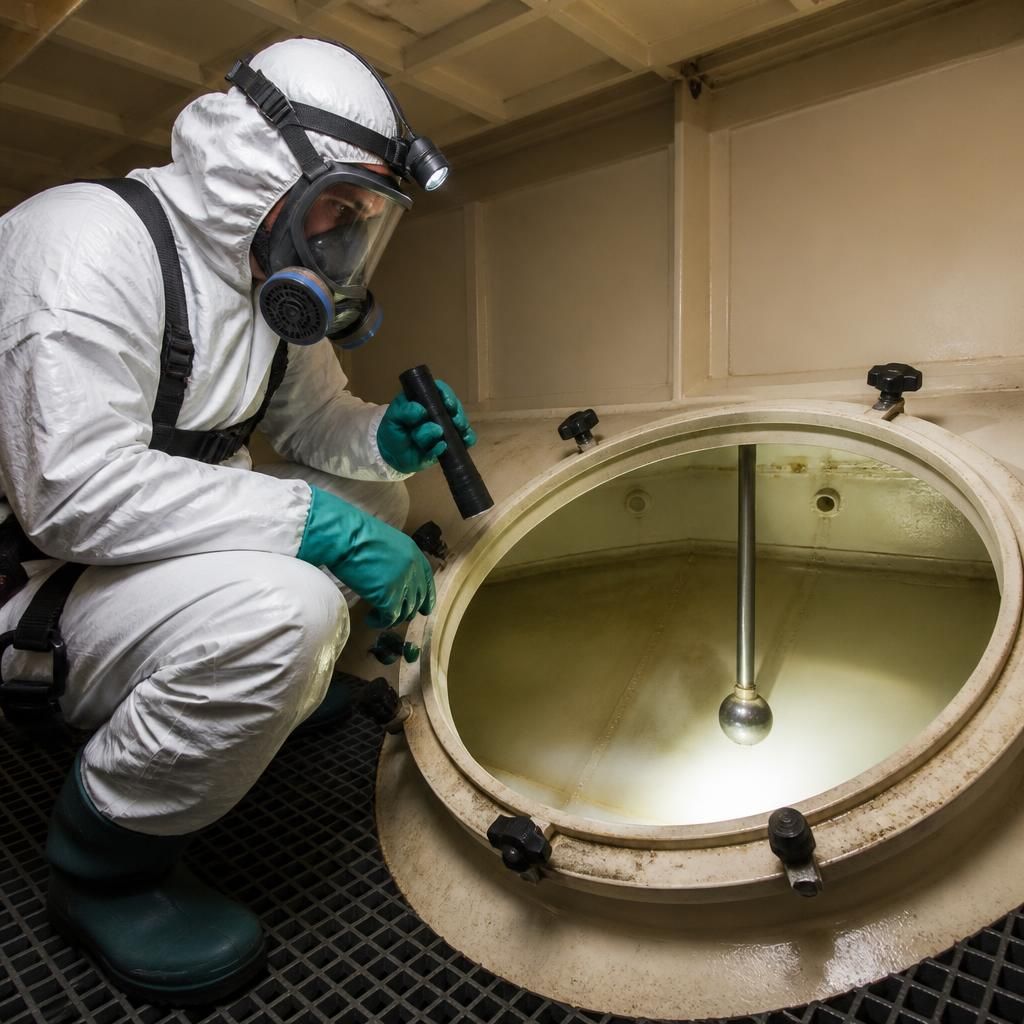
The pressure washer’s water supply is part of the hygiene control. Use a clean, suitable source and prevent contaminated tank water, hoses or cleaning solutions from flowing back into the supply through an appropriate backflow protection arrangement. Do not use water drawn from the tank being cleaned to wash equipment, prepare disinfectant or rinse another tank.
Keep the supply hose, spray lance and fittings off contaminated surfaces and protect their connections from contact with sludge, wastewater and standing water. After the work, clean and disinfect reusable equipment where the risk assessment requires it, then store it in a manner that prevents contamination before its next use. These controls reduce the chance of transferring microorganisms between tanks or recontaminating a tank after cleaning.
Discuss your water tank hygiene controls
Discuss your water tank hygiene controls with Blue Fish Water Management Ltd to review the proposed cleaning approach, verification requirements and any legionella compliance considerations. Contact the team for practical advice tailored to your site and water system.