
How should a pressure-cleaned water tank be returned to service?
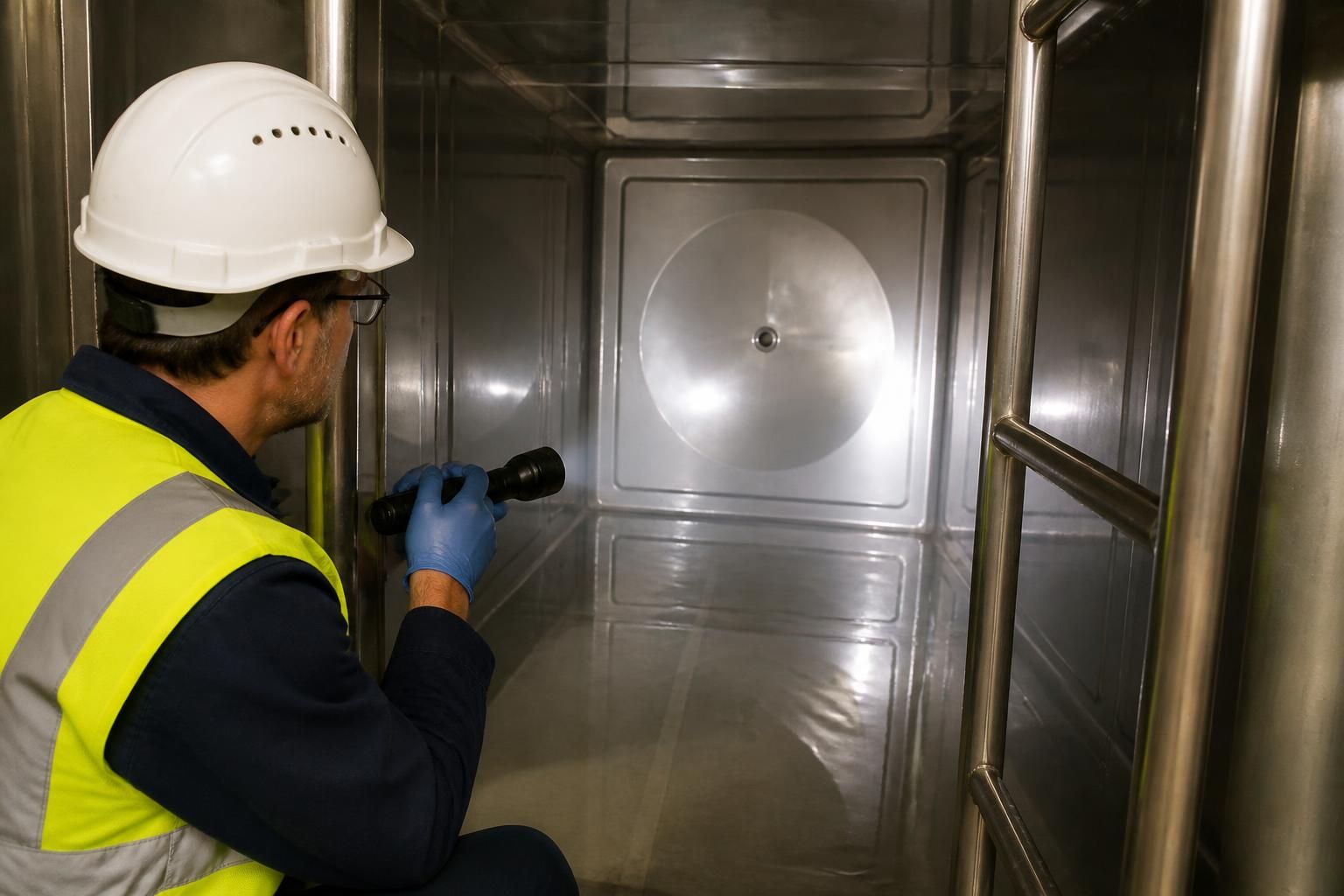
A pressure-cleaned water tank should be treated as undergoing controlled recommissioning, rather than simply being refilled. The responsible person should confirm that the tank, connected components and downstream distribution system are suitable for use, that the cleaning process has been properly completed, and that water quality is acceptable before the tank supplies occupants or process users.
Inspect the tank and its components
Before the tank is put back into service, carry out a final inspection under suitable lighting. Look for damage or defects that may have been exposed or caused during pressure washing, including:
- loose, cracked or degraded coatings and sealants;
- damaged level controls, float valves, inlet screens or outlet fittings;
- blocked or poorly protected overflow and warning arrangements;
- debris trapped behind internal fittings or in low points; and
- an ill-fitting or damaged access cover that could allow contamination after cleaning.
Any defect that could affect water quality, tank integrity or reliable operation should be corrected before recommissioning. If repairs involve materials that contact potable water, they should be suitable for that application and managed in accordance with the system’s specification.
Restore the system without recontamination
Replace cleaned fittings carefully and use hygienic handling practices throughout the final assembly. Personnel should avoid touching internal surfaces, pipe ends or cleaned components unnecessarily. Tools, hoses and temporary equipment that enter the tank or contact water should be clean and appropriate for the task.
Check that valves are returned to their correct positions and that any temporary bypasses, drain hoses, blanking arrangements or isolation points are removed or reinstated as intended. Confirm that the tank is connected to the correct part of the system and that there is no opportunity for untreated or contaminated water to enter during filling.
Use a controlled filling and flushing sequence
Filling should be controlled so that water does not disturb settled material or introduce contamination from unclean pipework. Once the tank is full, operate outlets and relevant sections of the distribution system in a planned sequence. This helps remove residual process water and brings clean water through the parts of the system affected by the work.
The sequence should reflect the tank’s arrangement, outlet locations and normal use. Pay particular attention to low-use outlets, secondary branches and points that may retain stagnant water. Flushing should continue until the system is behaving normally and the checks specified in the site procedure have been satisfied. Water discharged during this stage must be directed safely and in line with site controls.
Verify water quality and operating conditions
Testing should be based on the risk assessment, the type of supply and the extent of the work. Depending on those factors, checks may include visual appearance, odour, disinfectant residual and microbiological analysis. Samples should be taken from locations that provide useful evidence about the tank and the connected distribution system, rather than relying only on water taken from the incoming supply.
Where laboratory analysis is required, use a competent laboratory and ensure the samples are collected, labelled, transported and interpreted correctly. Results should be assessed against the relevant site standards and risk-control requirements. A result that is unsatisfactory, inconclusive or inconsistent with the condition of the system should trigger investigation and further action before normal use resumes.
Confirm normal operation
Recommissioning also includes functional checks. Confirm that the tank reaches and maintains the intended operating level, that inlet and outlet controls work correctly, and that the overflow, warning arrangements, drainage and access cover perform as designed. Check for leaks, abnormal flow, unusual noise and signs that valves or controls are cycling incorrectly.
Where the tank forms part of a domestic hot or cold water system, consider the effect of the work on storage conditions, circulation and outlets further downstream. Any temperature or control checks required by the site’s legionella control scheme should be completed and recorded before the system is accepted for routine operation.
Record the recommissioning decision
The completion record should identify the tank and system, the date of the work, the person responsible, the cleaning and disinfection procedure used, inspection findings, repairs, flushing arrangements, test results and any outstanding actions. Include photographs or certificates where they provide useful evidence.
The responsible person should review the evidence and formally authorise return to service. If a defect, failed test or missing record leaves uncertainty about the safety of the water, the tank should remain isolated or subject to appropriate restrictions until the issue has been resolved. The risk assessment, monitoring schedule and written control scheme should then be updated to reflect the work and any changes found during recommissioning.
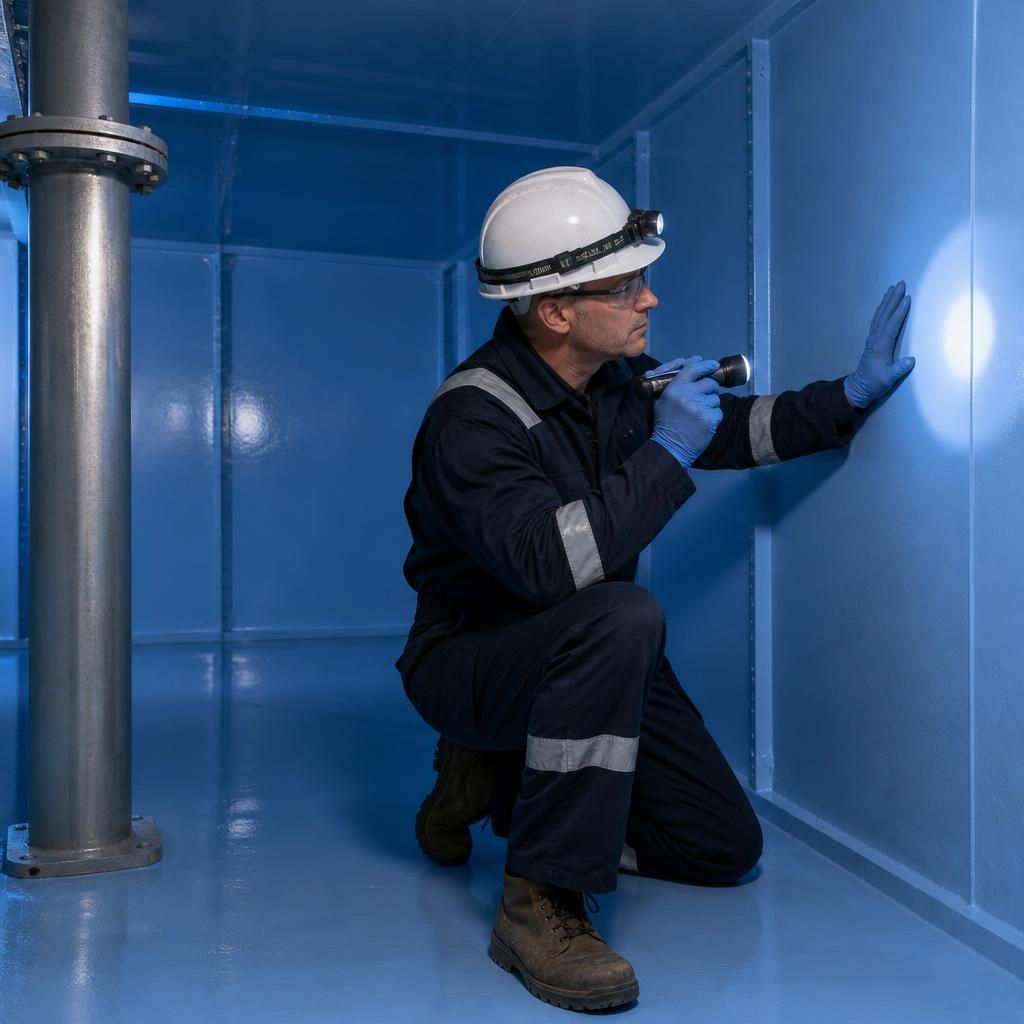
Return to service should include a controlled handover to the system’s normal control arrangements, not just the completion of cleaning. Where the tank is connected to pumps, automatic level controls, alarms or building-management systems, reinstate those connections and confirm that each signal and control operates as intended.
Check that high- and low-level alarms, pump starts and stops, duty or standby changeover and any remote fault indication respond correctly. A tank can be clean and filled correctly yet still create a water-safety or operational risk if an alarm remains isolated, a control is left in manual mode or a pump does not respond to the restored water level. Record these handover checks alongside the recommissioning evidence before the tank is accepted for routine operation.
Discuss water tank recommissioning requirements
For practical advice on confirming a water tank is safe to use after pressure cleaning, discuss your recommissioning requirements with Blue Fish Water Management Ltd.