
How can businesses assess a contractor’s competence for water tank jetting?
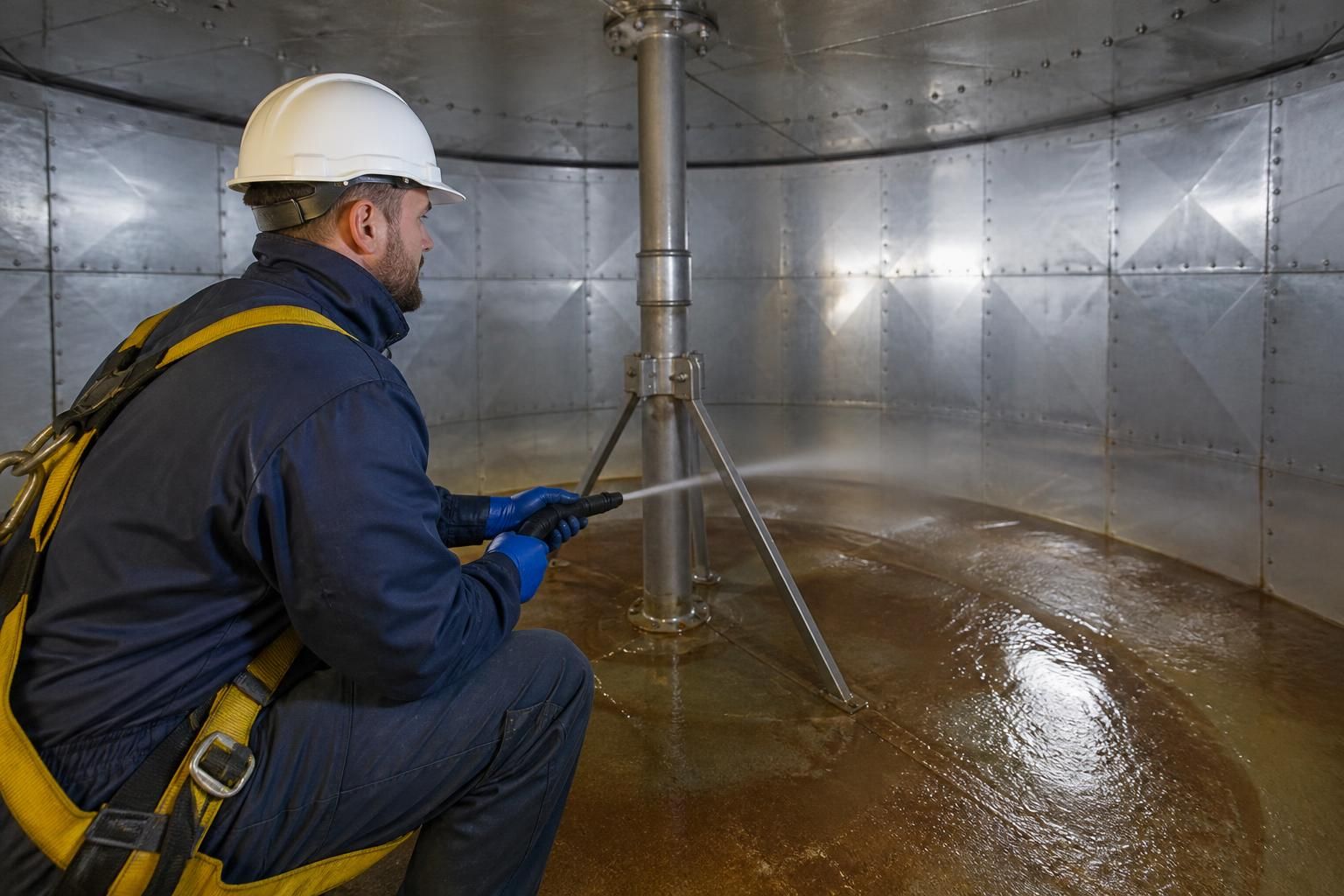
A competent water tank jetting contractor can demonstrate that its people, equipment and procedures are suitable for the particular tank, the condition of the installation and the standard of cleaning required. Businesses should assess the evidence behind the contractor’s claims rather than relying on a trade description, a low price or a general statement that the company is experienced.
Start with the contractor’s understanding of the asset. Before accepting a quotation, the contractor should ask for relevant information about the tank and its use. This may include the tank material and lining, capacity, access arrangements, inlet and outlet configuration, internal fittings, inspection history and any known defects. The proposed approach should reflect these details. A contractor that suggests the same jetting process for every tank may not have considered the risk of damaging coatings, disturbing fittings or failing to remove contamination from awkward areas.
Ask the contractor to explain how it decides whether pressure washing or jetting is appropriate. Competent advice should distinguish between removable sediment, biofilm, scale, corrosion products and damage to the tank itself. It should also identify circumstances in which high-pressure water could worsen a defect or spread contamination. Where jetting is unsuitable, the contractor should be prepared to recommend a different cleaning method or further investigation rather than forcing the work to fit a standard package.
Examine the proposed scope in technical detail. A useful quotation should make clear:
- which tank or tanks are included and how each will be identified;
- what preparation, isolation, draining and access arrangements are expected from the site;
- which internal surfaces, fittings, compartments and associated pipework will be cleaned;
- how wastewater, sediment and removed deposits will be contained and disposed of;
- what restrictions apply to the equipment or cleaning method;
- what the contractor will do if defects, damaged lining or unexpected contamination are found; and
- what records and evidence will be supplied when the work is complete.
This level of detail makes it easier to compare contractors on the work they will actually perform. It also exposes exclusions that could otherwise lead to disagreement, such as cleaning only the accessible areas, omitting a second compartment or treating disinfection as included when it has not been specified.
Check the competence of the individuals doing the work. Company-level credentials do not automatically prove that the operatives assigned to the job are trained or supervised appropriately. Ask who will lead the work, what relevant training they have completed, how their competence is maintained and whether subcontractors will be involved. The contractor should be able to describe its supervision arrangements and explain how operatives recognise damage, contamination, confined-space hazards and problems with access or isolation.
Training should be relevant to the activity, not merely a collection of unrelated certificates. Depending on the site and tank arrangement, this may include safe use of jetting equipment, water hygiene, confined-space awareness, access equipment, electrical safety and emergency procedures. The business commissioning the work should check that the proposed team’s training matches the hazards identified for its premises.
Review the equipment and its control. Ask what type of jetting equipment will be used, how pressure and flow are selected for the tank, and how the equipment is kept clean before entering a potable or otherwise controlled water system. Hoses, nozzles, pumps and ancillary equipment should be maintained, inspected and protected from introducing further contamination. Where equipment readings affect the method or acceptance of the work, the contractor should explain how those readings are checked and recorded.
It is also reasonable to ask how the contractor prevents cross-contamination between tanks or sites. Equipment management, clean storage, suitable protective clothing and separation of dirty and clean activities are practical indicators of a controlled process. Vague assurances that equipment is “sanitised” are less useful than a clear explanation of what is cleaned, when it is cleaned and how this is evidenced.
Look for relevant, verifiable experience. References should relate to comparable tank types, operating environments and access constraints. A contractor experienced in domestic storage tanks may not have the same competence for large sectional tanks, industrial installations or tanks supplying sensitive premises. Ask for anonymised examples, sample documentation or permission to contact an appropriate client representative. The evidence should show the contractor’s role, the nature of the work and how unexpected findings were handled, without disclosing confidential site information.
Past experience should not be judged solely by the number of years a business has traded. More useful questions include whether the contractor regularly encounters the relevant tank construction, whether it can identify lining limitations, and whether its previous work has been reviewed by a responsible person or water hygiene professional.
Assess how findings are escalated. Jetting may reveal cracked panels, failed seals, corrosion, damaged coatings, defective valves or inaccessible deposits. A competent contractor should have a defined process for stopping or modifying the work, notifying the responsible site contact and recording the finding. It should not carry out unapproved repairs or describe a structural defect as a cleaning issue simply to complete the job.
Where specialist repairs, sampling or further assessment are needed, the contractor should separate those recommendations from the cleaning work and identify who is qualified to undertake them. This helps the client distinguish an observed defect from a confirmed cause and prevents unnecessary remedial work being authorised without suitable evidence.
Compare the quality of the contractor’s communication. Before appointment, the contractor should provide clear answers to practical questions about access, isolation, site contact responsibilities, welfare arrangements, contamination controls and reinstatement. During the work, there should be a named person responsible for communicating changes. Afterward, the business should receive enough information to understand what was cleaned, what could not be cleaned, what was found and what actions remain outstanding.
Potential warning signs include a quotation that contains no tank-specific information, pressure figures presented without regard to the tank material, reluctance to provide evidence of training, unclear responsibility for wastewater, unexplained exclusions, or a refusal to discuss what happens if the tank is damaged or inaccessible. A very low price can also indicate that important stages, such as preparation, waste handling or follow-up documentation, have been omitted; the issue is the completeness of the scope rather than the price alone.
Finally, keep an auditable record of how the contractor was selected. Retain the quotation, technical questions and answers, competence evidence, agreed scope, insurance information, site records and any subsequent recommendations. This gives the responsible person a defensible basis for the appointment and allows future cleaning work to be assessed against the tank’s history, rather than starting the evaluation from scratch each time.
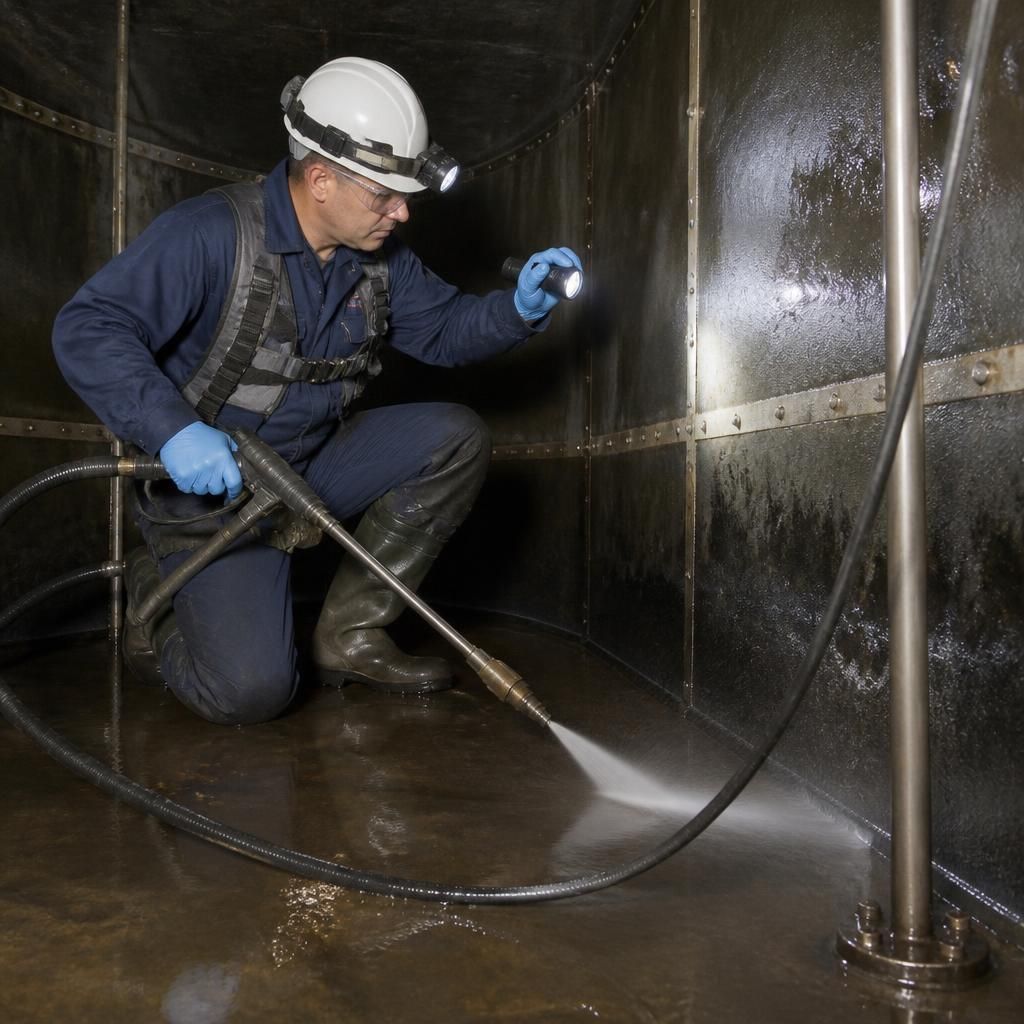
A useful way to assess a water tank jetting contractor is to ask how it will define and demonstrate a satisfactory result. “Clean” should not be treated as a vague visual claim. Before work starts, the contractor should agree suitable completion criteria for the tank, such as the removal of visible sediment and deposits from accessible surfaces, acceptable condition of the lining, correct reinstatement of fittings and photographic evidence of areas inspected.
The contractor should also distinguish between evidence of cleaning and evidence of water quality. A visual inspection may show whether deposits remain, while sampling or other verification may be needed where the site’s water safety arrangements require it. These checks should be specified in advance, including who will carry them out, what limitations apply and how results will be recorded.
This approach makes the contractor’s performance assessable rather than dependent on its own description of the work. It also helps the business identify incomplete cleaning, newly discovered defects or outstanding verification before the tank is returned to service.
Discuss your water tank jetting requirements
Discuss your water tank jetting requirements with Blue Fish Water Management Ltd to establish an appropriate scope, evidence requirements and coordination with your water safety arrangements.