
What should a water tank pressure washing report include?
A water tank pressure washing report should identify the tank and scope of work, record the cleaning method and results, and note any defects, contamination or access limitations found. It should also include dated photographs, relevant compliance information, recommendations for remedial action, and clear next steps for monitoring or follow-up.
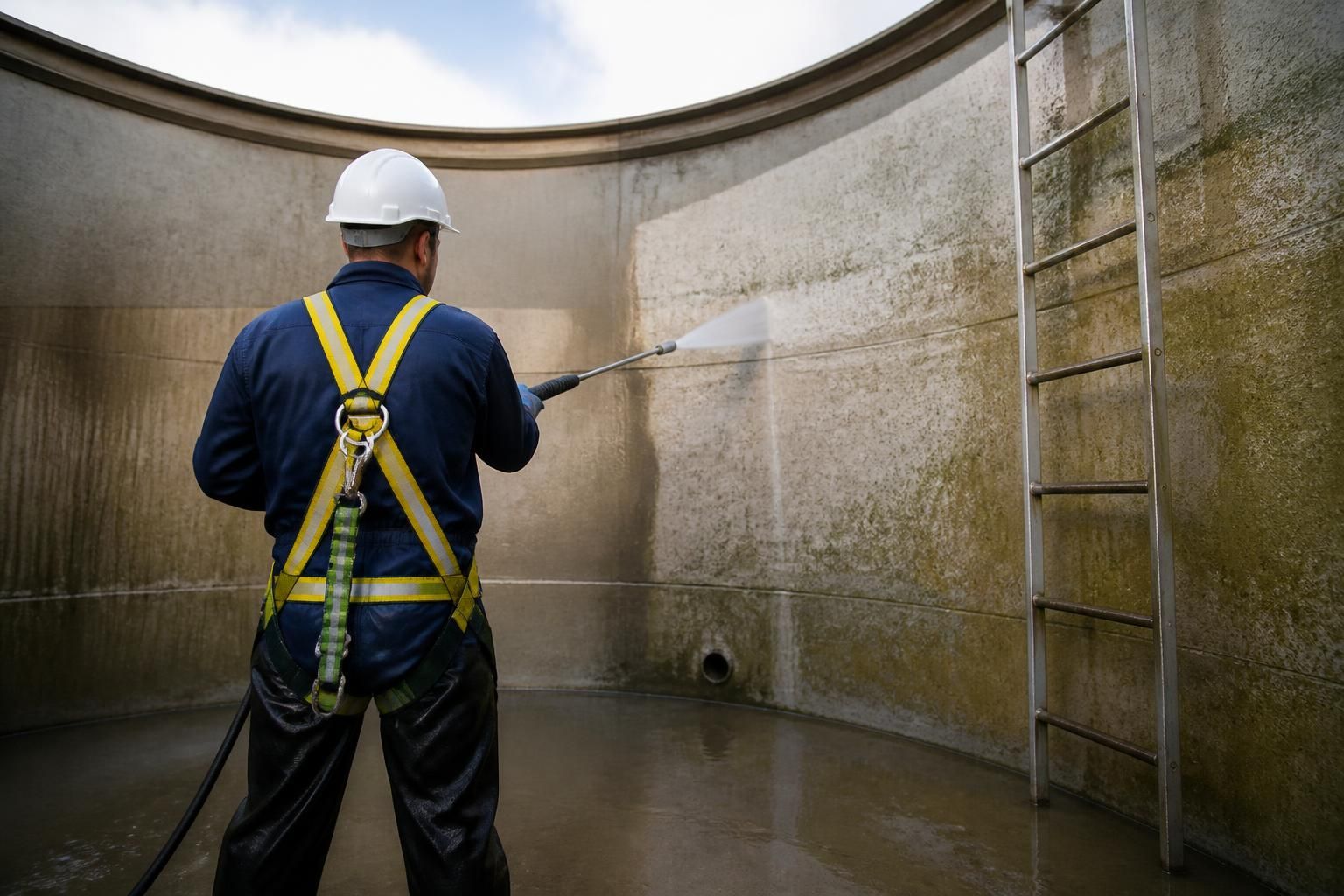
A water tank pressure washing report is an auditable record of the work undertaken, the condition observed, the evidence gathered and the decisions that follow. It should allow a responsible person, water safety adviser or auditor to understand what happened without relying on verbal explanations or assumptions.
Record the people and equipment involved. The report should name the contractor, attending personnel and any relevant competent-person roles. It should also identify the pressure-washing equipment and other tools used, including inspection or calibration references where these affect the reliability of the work. Recording this information helps establish who carried out each activity and whether the equipment was suitable for the task.
Explain the work sequence. A useful report describes the main stages in order, such as isolation, preparation, removal of sediment, washing, rinsing, inspection and return to service. It should distinguish between work that was planned and work that changed because of conditions inside the tank. Any variation should include the reason, who authorised it and whether it affected the intended outcome.
Capture operating conditions before and after cleaning. The record should state whether the tank was empty, isolated, drained or otherwise unavailable during the work, together with any relevant valve, inlet, outlet or overflow arrangements. After completion, it should record how the tank was reinstated, whether covers and fittings were correctly replaced, and whether the system was left in its intended operating configuration. This is particularly important where an error during reinstatement could affect water availability or system safety.
Describe the internal condition in a reproducible way. Rather than using broad terms such as “dirty” or “satisfactory”, the report should locate deposits, scale, corrosion, staining, biological growth, damaged coatings, loose material and standing water by reference to identifiable areas of the tank. It should distinguish between conditions removed by cleaning and defects that remain. Where access prevents a complete inspection, the inaccessible areas and the reason should be recorded explicitly.
Include relevant cleaning parameters. Depending on the equipment and the agreed method, this may include nozzle or lance type, pressure setting, water source, detergent or other substance used, rinse arrangements and controls applied to prevent damage. The report should make clear whether these details are measured values, equipment settings or descriptive observations. If a chemical was used, its identity, purpose, concentration control and safe-handling information should be traceable through the associated records.
Show how contamination and waste were controlled. The report should state how removed sediment, wash water and other waste were collected, contained and disposed of. It should note any restrictions on discharge and any event where material entered an unintended part of the system. If the tank or connected pipework required flushing, that activity and its outcome should be linked to the main job record.
Separate observations from conclusions. A clear report presents factual findings first, then explains their significance. For example, visible corrosion may require a condition assessment, while a damaged lining may affect the suitability of pressure washing or the future integrity of the tank. The report should avoid describing a tank as fit for continued use unless that conclusion is supported by the inspection and any required testing.
Make testing traceable where samples are taken. Test records should identify the sampling point, sample type, collection date and time, sampler, requested analysis and laboratory reference. Results should be reproduced accurately, with units, reporting limits and any interpretation kept distinct from the laboratory result. Where testing is used to support a decision to return the system to service, the report should explain how the result relates to that decision and identify any outstanding result.
Link actions to responsibility. Recommendations are more useful when each one states the defect or risk addressed, the required action, the suggested priority, the responsible party and the evidence needed to close it. Separate immediate controls from planned remedial work and routine monitoring. If no further action is recommended, the report should give the reason, rather than leaving the reader to infer that conclusion.
Finish with document control. The completed report should carry a unique reference, site or asset reference, visit date, issue date, author and reviewer where applicable. Amendments should be identifiable, with a revision history showing what changed and why. Supporting records such as photographs, test certificates, waste documentation, permits, isolation records and marked-up drawings should be listed as appendices or cross-references rather than left as unlabelled attachments.
Before accepting the report, the client should check that the work description matches the instruction, all limitations are visible, unresolved issues have owners, and the evidence supports the stated conclusion. A report that is complete, traceable and proportionate to the work provides a stronger basis for water safety records, future maintenance planning and any later review of the tank.
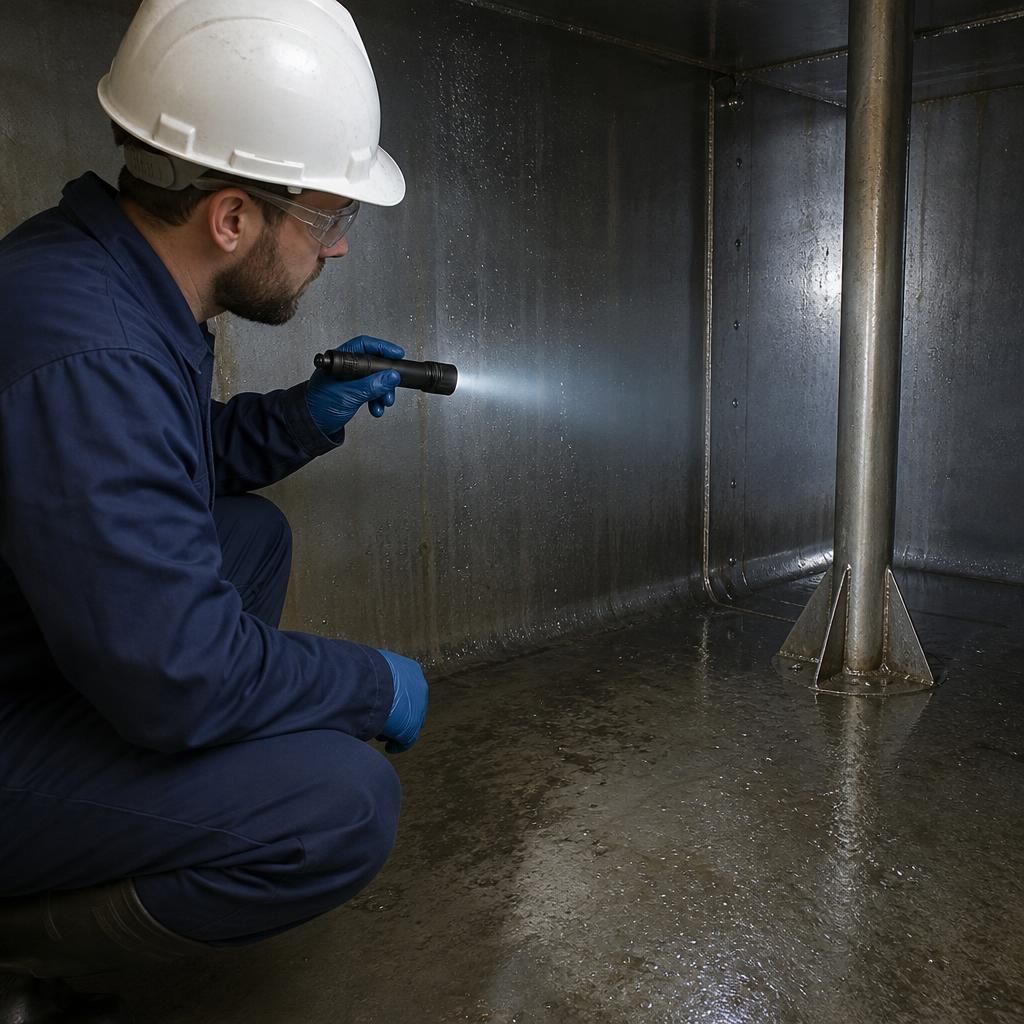
A water tank pressure washing report should state what its evidence can and cannot establish. A visual inspection may show that deposits have been removed, but it does not by itself prove that the water is microbiologically satisfactory, that hidden surfaces are defect-free or that the tank is suitable for continued operation.
The report should therefore distinguish cleaning evidence from wider water safety decisions. It should identify any further inspection, sampling, repair or specialist assessment needed before the tank is accepted for use. This prevents a record of completed washing from being mistaken for a certificate covering the condition of the whole installation.
Need help reviewing your water tank pressure washing report?
If you need help assessing whether a water tank pressure washing report supports your site records, contact Blue Fish Water Management Ltd to discuss a water hygiene compliance review.