
Who should coordinate water tank pressure washing with the site’s water safety plan?
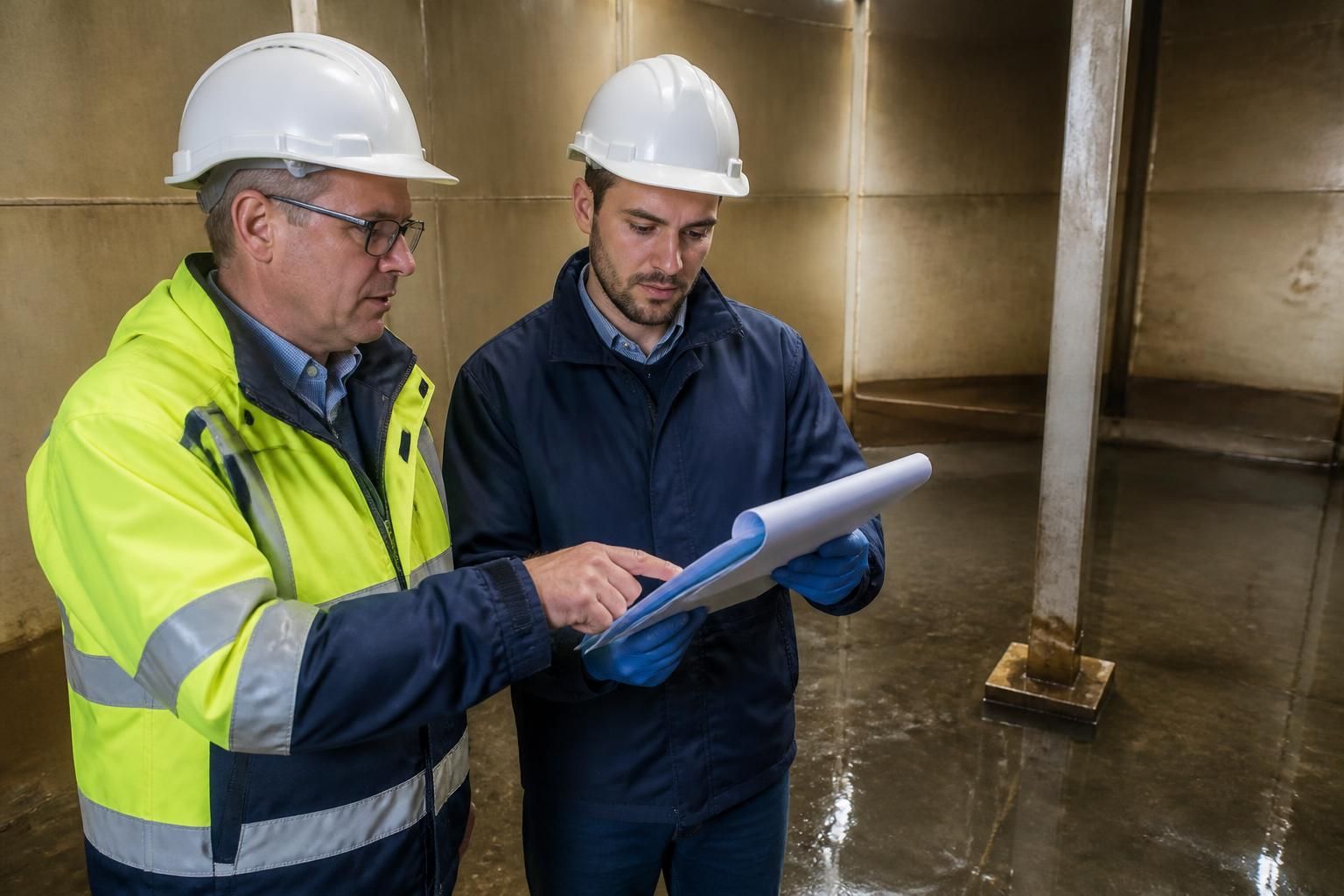
Coordination should sit with the person who has operational responsibility for the premises’ water systems, supported by a competent water hygiene specialist. The coordinator’s role is to connect the tank cleaning work with the site’s written control arrangements, rather than treating pressure washing as an isolated maintenance task.
The accountable site representative is usually the responsible person, facilities manager, estates lead or another formally appointed water safety lead. They should confirm why the tank requires cleaning, check that the proposed work is consistent with the site’s risk assessment, and ensure the relevant people have authority to approve isolation, access and reinstatement. On larger or multi-occupied sites, this may involve a water safety group or several representatives rather than one individual.
The coordinator should establish the following before a contractor attends:
- which tank or compartment is included and how it is identified within the water system;
- the reason for the work, such as accumulated sediment, inspection findings, contamination concerns or planned remedial action;
- the required service interruption and any dependent buildings, processes or occupants;
- how alternative water arrangements, isolation and drainage will be managed;
- the site rules for access, permits, confined spaces, electrical equipment and personal protective equipment;
- what evidence must be provided after completion, including photographs, findings, cleaning details and any recommendations.
The water hygiene specialist should translate the site requirement into a suitable method statement and sequence of work. This may include pre-clean inspection, isolation, draining, removal of deposits, pressure washing, rinsing, visual checks and any agreed follow-up testing or treatment. The contractor should also identify limitations before work starts. For example, heavy deposits, damaged surfaces, inaccessible areas or a vulnerable tank lining may mean that the proposed method needs adjusting or that additional remedial work is required.
Responsibility should be divided clearly. The site team remains responsible for the system, access arrangements, operational decisions and acceptance of the completed work. The contractor is responsible for carrying out the agreed cleaning method competently, controlling risks within its work activity and reporting conditions that prevent the specification from being completed. A contractor should not be expected to make wider site-management decisions without instruction from the responsible person.
Timing should be based on water safety needs and operational constraints. The coordinator should compare the proposed date with other planned work, occupancy, production activities and any scheduled inspection or monitoring. Cleaning may need to precede a system review, follow an inspection, or form part of a wider programme of remedial work. The written control arrangements should be updated where the work changes the system, its controls or the way it is operated.
Communication with affected parties is also part of coordination. Facilities staff, building users, tenants, infection prevention teams, production managers or other responsible departments may need to know when a tank will be isolated and when the system is expected to return to service. The information should be specific enough to support local planning, while avoiding assumptions that the tank can be taken offline without checking its connections and downstream effects.
After cleaning, the coordinator should review the contractor’s report against the original instruction. The record should normally make clear which tank was addressed, the date of the work, the method used, the condition found, areas that could not be cleaned, defects identified, and any further actions recommended. Where sampling, disinfection, inspection or repairs are required, these should be assigned to a named person with a defined point for review.
The final decision to return the system to normal operation should follow the site’s own procedures and the advice of the competent water hygiene professional. If the work reveals structural deterioration, damaged lining, persistent contamination or another control failure, the matter should be escalated rather than closed simply because washing has been completed. This approach keeps the cleaning record connected to the wider water safety plan and ensures that findings inform future risk assessment and maintenance decisions.

The coordinator should be the person with authority to resolve conflicts between water safety requirements and operational priorities. On a multi-site or multi-occupancy estate, this may be a central estates or compliance lead who works with the person responsible for the individual building. The water hygiene specialist provides technical advice, but should not be the sole owner of decisions affecting the site’s wider water safety plan.
A clear governance route helps prevent cleaning being approved on the basis of convenience alone. If the proposed work exposes an unresolved risk, conflicts with another control measure or cannot be completed as specified, the coordinator should refer it to the appropriate water safety decision-maker before the system is accepted back into service.
Review your water tank pressure washing plan with a specialist
Ask Blue Fish Water Management Ltd to review your proposed tank pressure washing scope with the person responsible for water safety at your site. This can help clarify the information, controls and records needed before the work is commissioned.