
How disruptive is water tank pressure washing to business operations?
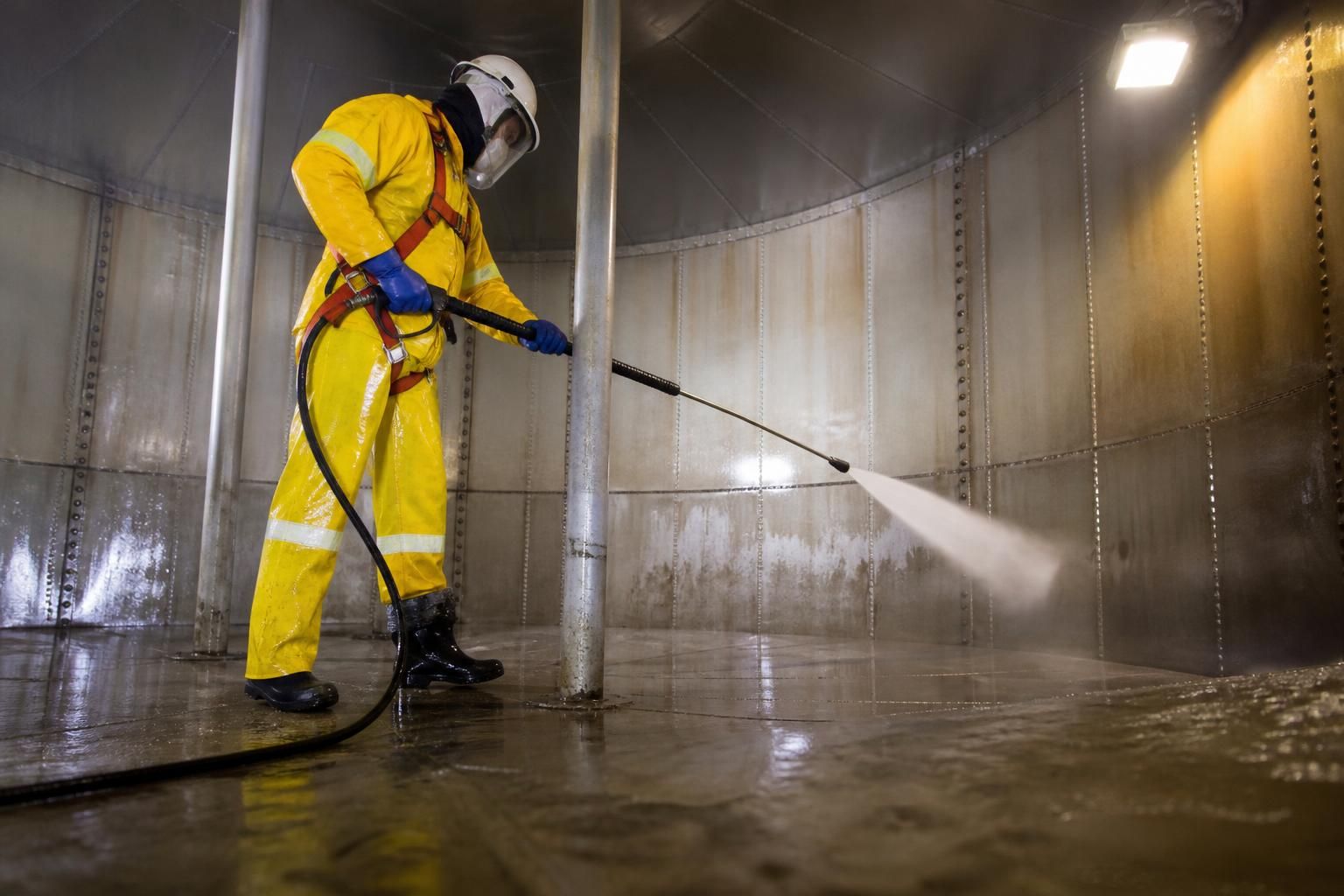
Water tank pressure washing is usually a controlled interruption rather than a prolonged shutdown, but its operational effect depends on whether the tank can be isolated without affecting occupied areas, production processes, fire protection or other critical water services. The work becomes less disruptive when the tank is accessible, isolation points are known and the cleaning sequence has been agreed with the person responsible for water safety and site operations.
What determines the level of disruption?
- The tank’s function: A storage tank serving washrooms may be managed differently from one supporting manufacturing, healthcare, food handling or other processes where water availability is operationally significant.
- Whether there is alternative supply: A duty and standby arrangement, bypass, second tank or temporary supply may allow some services to continue while the tank is taken out of use. This must be confirmed through the site’s system design and risk assessment rather than assumed.
- Isolation requirements: Valves may need to be closed, services drained and sections of pipework protected from unintended use. Poorly identified or inaccessible isolation points can extend the interruption and increase the risk of an incomplete clean.
- Access and working conditions: Restricted plant rooms, roof access, confined spaces, lifting requirements and the need to protect nearby equipment can affect how the work is sequenced.
- The tank’s condition: Heavy sediment, biofilm, corrosion, damaged coatings or defects may require additional cleaning, inspection or remedial work. Pressure washing cannot correct every underlying problem.
- Recommissioning requirements: The system may need flushing, disinfection, inspection, sampling or other verification before it is returned to service, depending on the system and the site’s water safety arrangements.
Which activities can affect operations?
Pressure washing itself is only one part of the job. Before cleaning begins, the contractor normally needs to confirm the tank identity, inspect the installation, establish safe access and agree how the tank will be isolated. Draining can affect downstream users and may require controls to prevent unintended operation of pumps or connected equipment.
During cleaning, water, sediment and cleaning residues must be contained and removed safely. Noise, hoses, electrical equipment and restricted access may affect adjacent work areas. If the tank is in a plant room or above an occupied area, the work zone may need to be separated from normal traffic. These controls can create local inconvenience even where the wider water supply remains available.
After washing, the tank should be inspected for cleanliness and visible defects. The system then needs to be restored in accordance with the agreed method. This may include refilling, flushing, disinfection and checks that valves, pumps, controls and alarms are operating correctly. A tank should not be treated as available for normal use merely because the washing equipment has been removed.
How can disruption be reduced?
- Review the system before scheduling the work. Identify the tank’s connections, users, isolation valves, access route, drainage arrangements and any dependent equipment. Existing drawings, asset records and the water safety plan can help, but the installation should also be checked on site.
- Define the operational boundary. Establish which outlets, processes and buildings could be affected by isolation. The responsible site personnel should decide whether the work can proceed with the system partially available or whether a wider shutdown is necessary.
- Choose a suitable sequence. Where a site has multiple tanks or independent sections, work may be staged so that only the relevant part is removed from service at a time. Any proposed sequence must preserve safe water conditions and avoid transferring risk to another part of the system.
- Prepare access and drainage. Clear obstructions, confirm lifting arrangements and provide suitable means of removing wash water and debris. This reduces delays and prevents the cleaning team from having to improvise around live operations.
- Protect sensitive activities. Agree controls for noise, water escape, hygiene-sensitive areas, equipment protection and access restrictions. On sites with production or public-facing operations, the work area and affected services should be communicated to the relevant managers.
- Plan recommissioning before isolation. Set out who will authorise refilling and return to service, what checks are required, and how any results or defects will be reviewed. This avoids an uncertain handover at the end of the cleaning activity.
When is temporary provision appropriate?
A temporary tank, bypass or alternative supply may be considered where interruption would affect essential operations. Its suitability depends on the required flow, pressure, water quality controls, connection method and duration of use. Temporary arrangements should be assessed as part of the site’s water safety controls; they are not automatically suitable simply because they maintain a supply.
Similarly, reducing demand or restricting selected outlets can be an option, but it requires clear communication and physical or procedural controls. Unauthorised use during isolation can compromise the work, introduce contamination or leave parts of the system without the intended flushing or disinfection.
What should be agreed with the contractor?
The scope should state which tank is being cleaned, what pressure washing will include, what is excluded, how waste will be managed and what inspection or reporting will follow. It should also identify the site contact, isolation responsibilities, access restrictions, protective measures and recommissioning process. If defects are found, the contractor should distinguish between observations, urgent controls and recommended remedial work rather than treating every defect as part of the cleaning task.
A useful completion record should link the work to the correct asset and record the condition observed, cleaning undertaken, contamination or sediment removed, defects identified, photographs where appropriate, and any follow-up action. Where testing or disinfection is required, the relevant results and release decision should be retained with the site’s water safety documentation.
How should the impact be judged?
The correct measure is not simply how long the pressure washer is operating. A site should consider the full period from isolation through to verified return to service, including preparation, drainage, cleaning, inspection, any remedial work, flushing and documentation. A well-planned job may still require a defined interruption, but it makes the affected services and decision points clear, allowing the business to manage the work without compromising water safety.
Blue Fish Water Management can advise businesses on the relationship between tank cleaning, system operation and water safety controls, including the practical planning needed to reduce avoidable disruption. Its national service supports domestic, industrial and commercial water hygiene requirements.
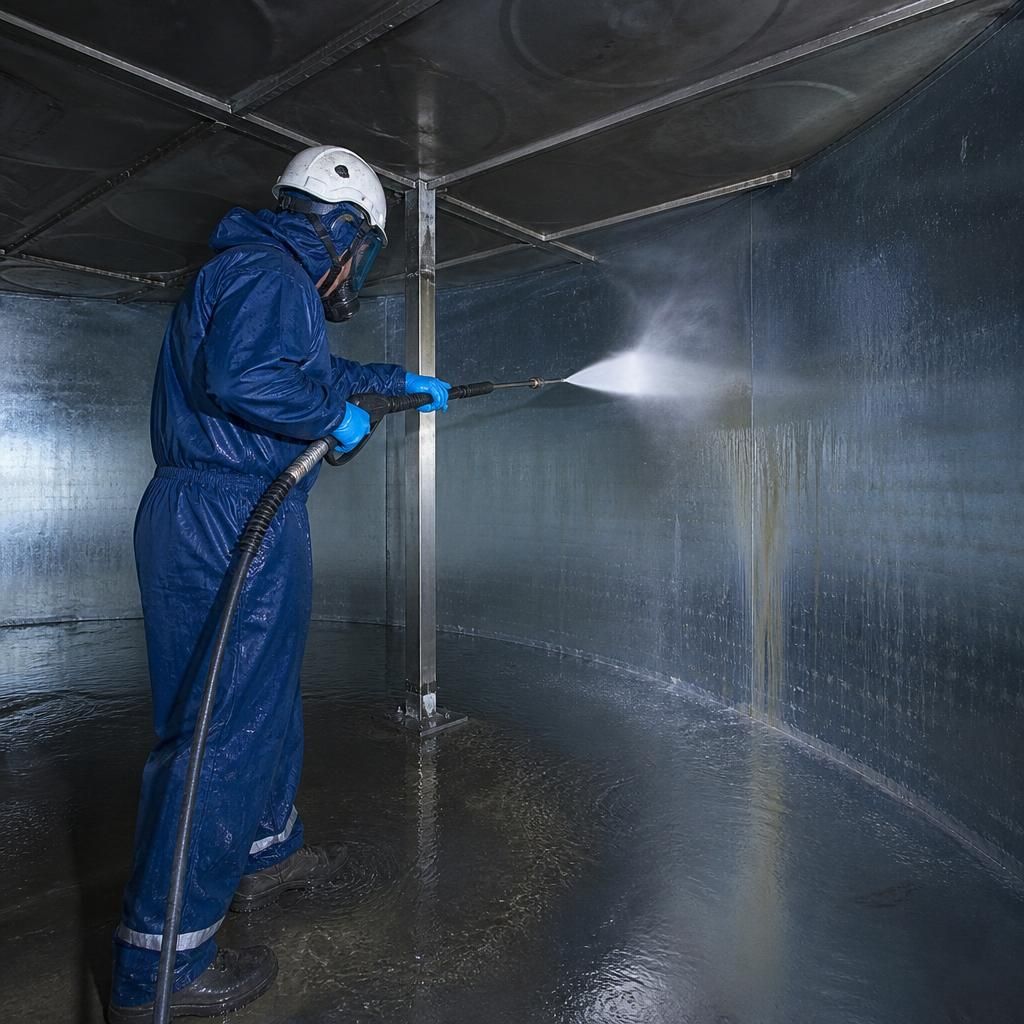
Water tank pressure washing should be managed as a controlled work activity, not simply as a cleaning task. A site permit, method statement and clear handover between the contractor and the responsible person can define the work area, authorised isolations, equipment controls and conditions for stopping or restarting the job.
This is particularly important where the tank is located near occupied offices, production areas or other contractors. Separating the cleaning zone from normal traffic, controlling access and recording each isolation decision can prevent local safety measures from becoming wider operational delays. The final handover should confirm that the agreed controls have been removed only after the tank and associated equipment are ready for the next stage.
Discuss your water tank pressure washing requirements
Discuss your water tank pressure washing requirements with Blue Fish Water Management to establish the appropriate scope and operational controls for your site. The team can help you identify the information needed before a contractor is appointed.