
When should a water tank be replaced rather than serviced?
A water tank should be replaced when corrosion, cracking, leaks, structural deterioration or persistent contamination means servicing can no longer restore its integrity or hygienic performance. Replacement may also be more appropriate where the tank is unsuitable for the system, cannot be cleaned effectively, or presents an ongoing risk that remedial work would not adequately control.
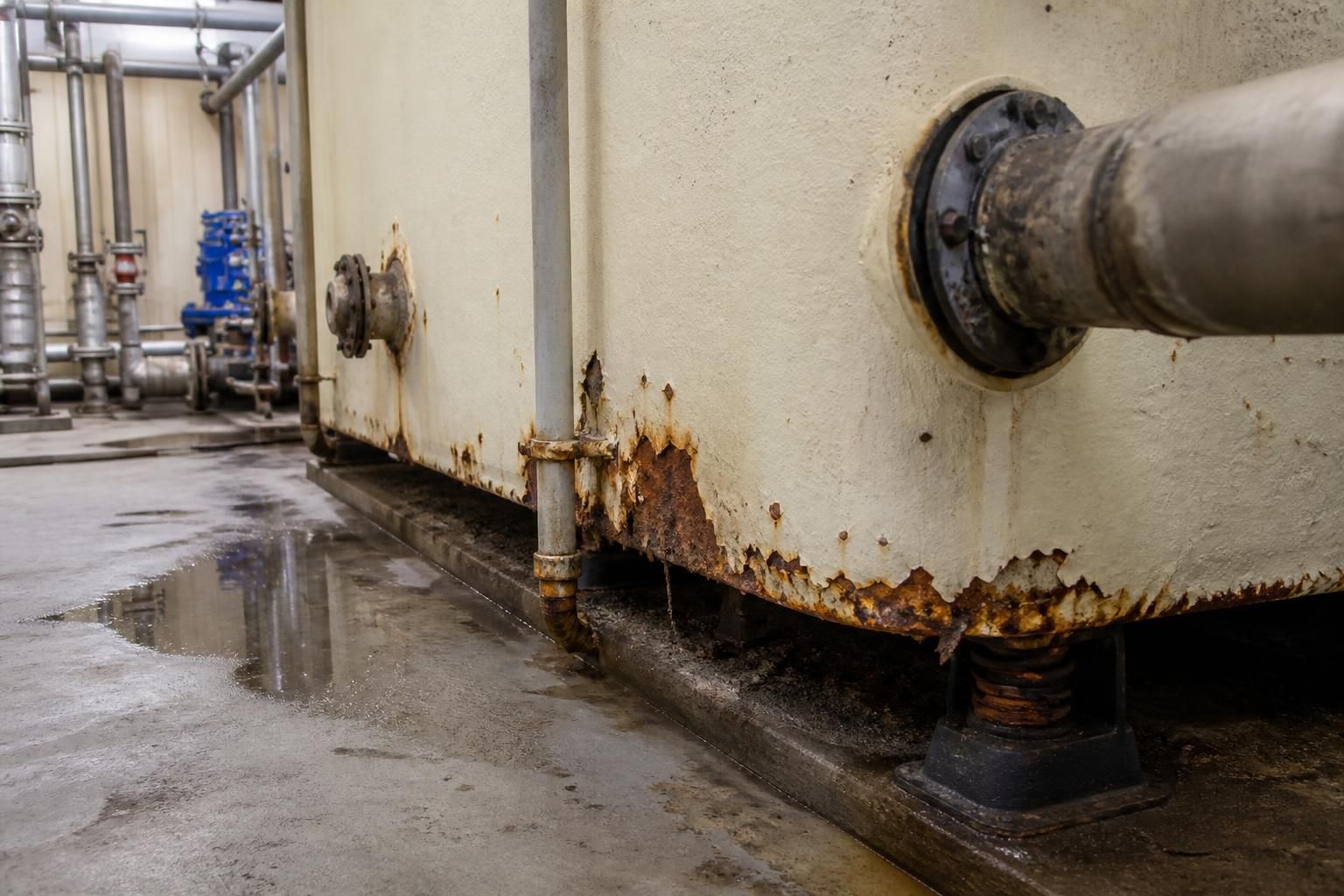
Replacement is usually more appropriate than further servicing when the tank’s condition, design or operating performance means that inspection, cleaning and minor repairs cannot provide a reliable long-term solution. The decision should be based on documented evidence from a competent inspection, the tank’s role in the water system and the risks associated with continuing to use it, rather than on age alone.
A tank may remain serviceable where its construction is sound, internal surfaces can be accessed and cleaned, fittings operate correctly and the system can be managed in accordance with the site’s water safety arrangements. Servicing can include inspection, cleaning, disinfection, adjustment of components and replacement of individual parts. This is generally more proportionate than replacing a tank that remains hygienically and mechanically suitable.
Replacement becomes a stronger option when problems are recurring despite appropriate maintenance. For example, repeated remedial visits, continuing difficulty maintaining acceptable conditions, or frequent failure of associated fittings may indicate that the existing installation is no longer a practical asset to maintain. The cost should be considered over the expected remaining service life, including access equipment, shutdowns, specialist cleaning and repeated repairs, rather than by comparing the purchase price of a new tank with one service visit.
Design limitations can also justify replacement even where the tank is physically intact. Examples include inadequate access for inspection, an ineffective or missing cover, poor drainage arrangements, unsuitable internal fittings, insufficient insulation or a configuration that makes stagnant areas difficult to eliminate. A replacement should correct the underlying design issue rather than simply reproduce it with a new vessel.
It is important to establish whether the tank is the actual source of the water hygiene concern. Water quality or temperature issues can arise from connected pipework, infrequently used outlets, circulation problems, control settings or poor housekeeping elsewhere in the system. Replacing the tank alone may therefore fail to resolve the risk. A competent assessment should consider the tank, its connections and the wider system before a specification is agreed.
Capacity and duty should be reviewed at the same time. Changes to occupancy, building use, production processes or water demand may mean that the existing tank is oversized, undersized or no longer needed in its present form. An oversized storage volume can increase turnover time, while insufficient capacity can affect operational resilience. The replacement should be selected for the current system requirements and installed with suitable support, access and drainage.
Where replacement is recommended, the work should normally include a clear scope covering:
- the reason the existing tank is being taken out of service;
- the proposed tank material, capacity and hygienic specification;
- the condition and suitability of supports, valves, outlets, overflows and connected pipework;
- safe isolation, removal and disposal arrangements;
- access for future inspection, cleaning and maintenance;
- protection against ingress, excessive heat and avoidable stagnation; and
- post-installation cleaning, disinfection, commissioning and record keeping where required by the system risk assessment.
The installation should not be treated as complete simply because the new tank is in place. Relevant control measures need to be checked, operating information updated and responsible personnel made aware of any changes. Water testing may be appropriate where the risk assessment, system history or commissioning arrangements indicate that verification is needed, but testing should support a wider control programme rather than substitute for correcting defective design or operation.
A written recommendation should explain why servicing is no longer proportionate, what evidence supports replacement and whether other parts of the system also require attention. This gives the building owner or facilities team a defensible record for compliance decisions and helps prevent a new tank from being installed without resolving the conditions that led to the original problem.
For commercial and industrial premises, Blue Fish Water Management can assess the tank within the context of the wider water system and advise whether continued maintenance, targeted remedial work or replacement is the most appropriate course. The outcome should be a proportionate decision based on condition, hygiene, design, use and the site’s documented water safety requirements.
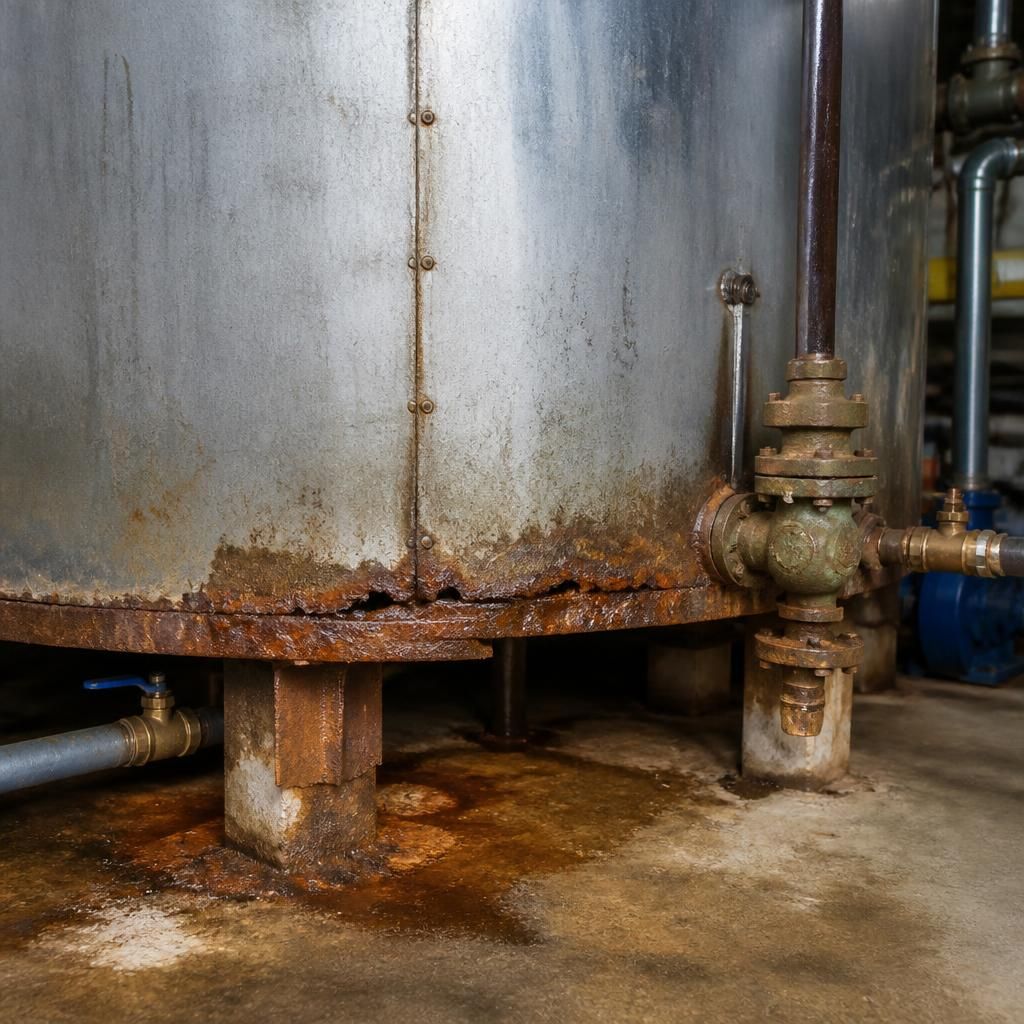
A tank may need replacement when its apparent defect is only one sign of deterioration that cannot be reliably assessed or contained. Corrosion beneath insulation, around supports, at seams or near pipe penetrations can weaken the vessel beyond the visibly damaged area. Where the tank’s construction prevents a competent inspection of these locations, continued servicing may leave uncertainty about its remaining integrity.
In this situation, the decision should consider whether the tank can be inspected, repaired and subsequently verified to a suitable standard. If the condition of concealed areas cannot be established, or if deterioration affects the tank body rather than a readily replaceable component, installing a correctly specified replacement can provide a more certain basis for ongoing water system management.
Need advice on whether your water tank should be replaced?
Speak to Blue Fish Water Management about assessing whether continued servicing or tank replacement is the more suitable option for your water system.