
Should water tank servicing include water quality testing?
Water tank servicing should include water quality testing where the risk assessment, tank condition or system use indicates it is necessary; inspection alone cannot confirm whether water is microbiologically safe. Testing can help identify contamination, including legionella risk, and verify that remedial work or cleaning has achieved the required result.
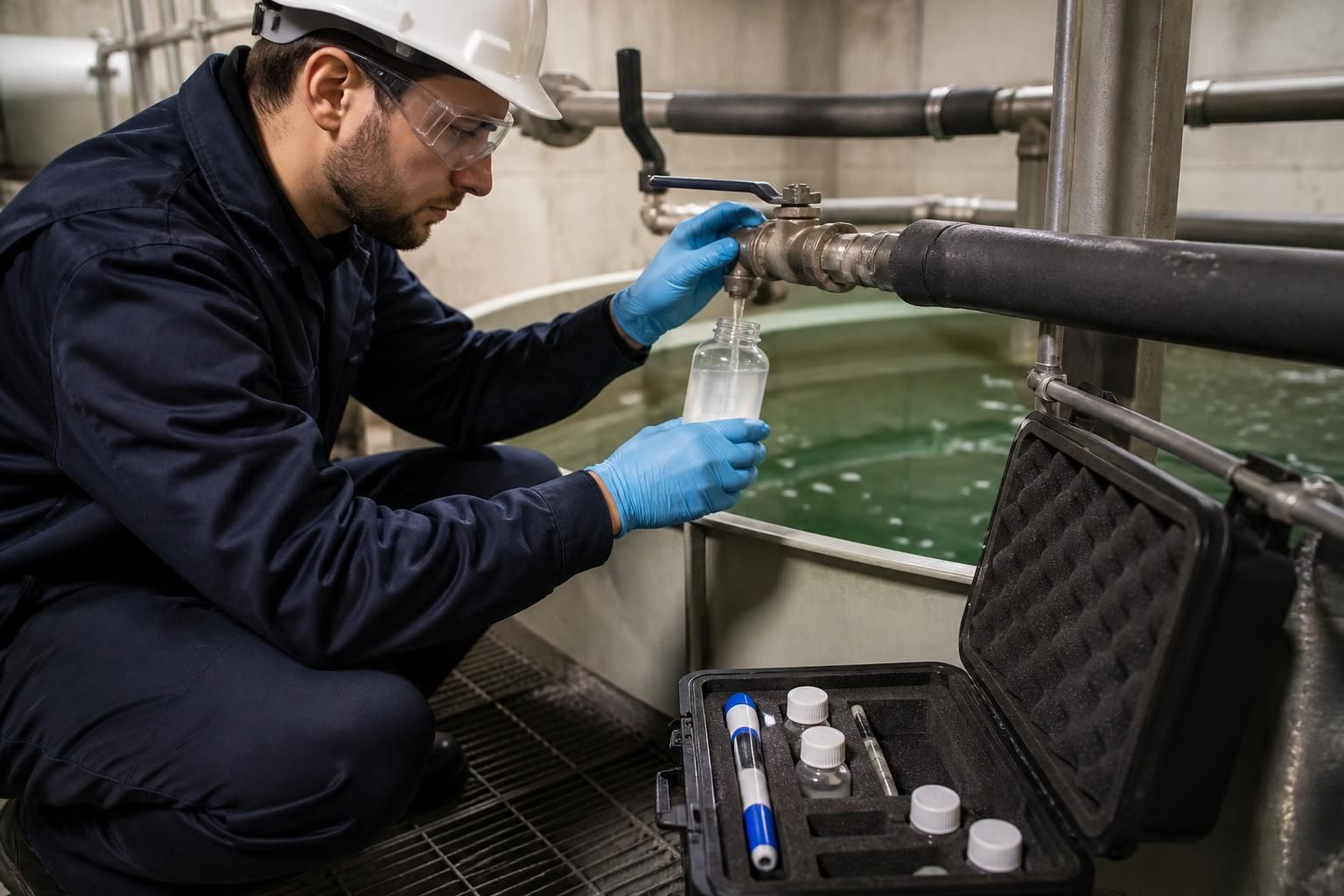
Water tank servicing should include water quality testing when the risk assessment, system purpose or service findings justify it. A service that only examines the tank, float valve, insulation and visible pipework cannot establish whether the stored water contains microbiological contamination. Testing is therefore an important part of a proportionate water hygiene programme, but it is not automatically required at every routine visit.
The correct testing approach depends on how the tank is used and the risks identified in the water system. A tank supplying drinking water, showers, healthcare areas, accommodation or other outlets where people may be exposed will generally require closer consideration than a tank serving a low-risk process. Relevant factors include:
- the age, design and condition of the tank;
- whether the tank has a secure lid, screened vents and suitable protection against ingress;
- water temperature and turnover;
- evidence of stagnation, sediment, corrosion, discolouration or unusual odour;
- previous test results, contamination incidents or remedial work; and
- the vulnerability of people who may be exposed to the water.
These findings should be considered within the written legionella risk assessment and the site’s wider water safety plan. A competent person can then determine which samples are appropriate, where they should be taken and how often testing should be repeated. A fixed testing schedule that ignores the system’s risk profile may either miss a developing problem or create unnecessary sampling.
What can water quality testing establish? The test suite should match the question being investigated. Microbiological analysis may be used to assess general bacterial activity or to investigate indicators of contamination. Where legionella is a relevant hazard, samples may be submitted for legionella analysis using an appropriate laboratory method. Depending on the circumstances, physical or chemical checks may also be relevant, such as temperature, appearance, odour or other parameters associated with the water’s intended use.
A single result does not describe every part of a water system. Water quality can vary between the tank, outlets and downstream pipework, so sample locations should be selected to reflect the suspected source of the problem and the points at which people could be exposed. Sampling must also be carried out carefully. Poor technique, unsuitable containers, incorrect storage or delays in transport can affect the reliability of a result. Testing should be arranged through a competent water hygiene provider and a laboratory accredited for the relevant examinations, where applicable.
Testing is particularly valuable after cleaning or remedial work. If a tank has been cleaned, disinfected, repaired or modified because of contamination or poor condition, a follow-up sample can provide evidence of the result of that work. It should not, however, be treated as a substitute for correcting the underlying cause. For example, a damaged lid, inadequate turnover, excessive sediment or an inappropriate temperature profile may allow poor results to recur if it is not addressed.
Results should be interpreted alongside the inspection findings rather than viewed in isolation. An unexpected result may require confirmation sampling, a review of sampling technique, examination of connected parts of the system or immediate control measures. The appropriate response depends on the organism or parameter detected, the concentration or result reported, the use of the water system and the people potentially exposed. A competent assessor should explain the significance of the result and record the actions required.
A thorough tank service should leave an auditable record. Depending on the scope of the work, this may include:
- the tank identification and location;
- the inspection findings and photographs where useful;
- cleaning, disinfection or repair work completed;
- sample points, collection dates and laboratory details;
- the test results and any interpretation provided; and
- recommendations, responsible persons and follow-up actions.
These records help the dutyholder demonstrate that the system has been assessed and maintained in a controlled way. They also allow results to be compared over time, which can reveal deterioration or recurring contamination that may not be obvious during a visual inspection.
For businesses, the practical answer is to specify water quality testing within the servicing plan where the risk assessment calls for it, where the tank supplies higher-risk uses, or where inspection and maintenance identify a reason to investigate. The service specification should state the proposed tests, sampling points, laboratory arrangements and actions to be taken if results are unsatisfactory. This produces a more useful outcome than adding a generic test to every visit without considering the system’s actual risks.
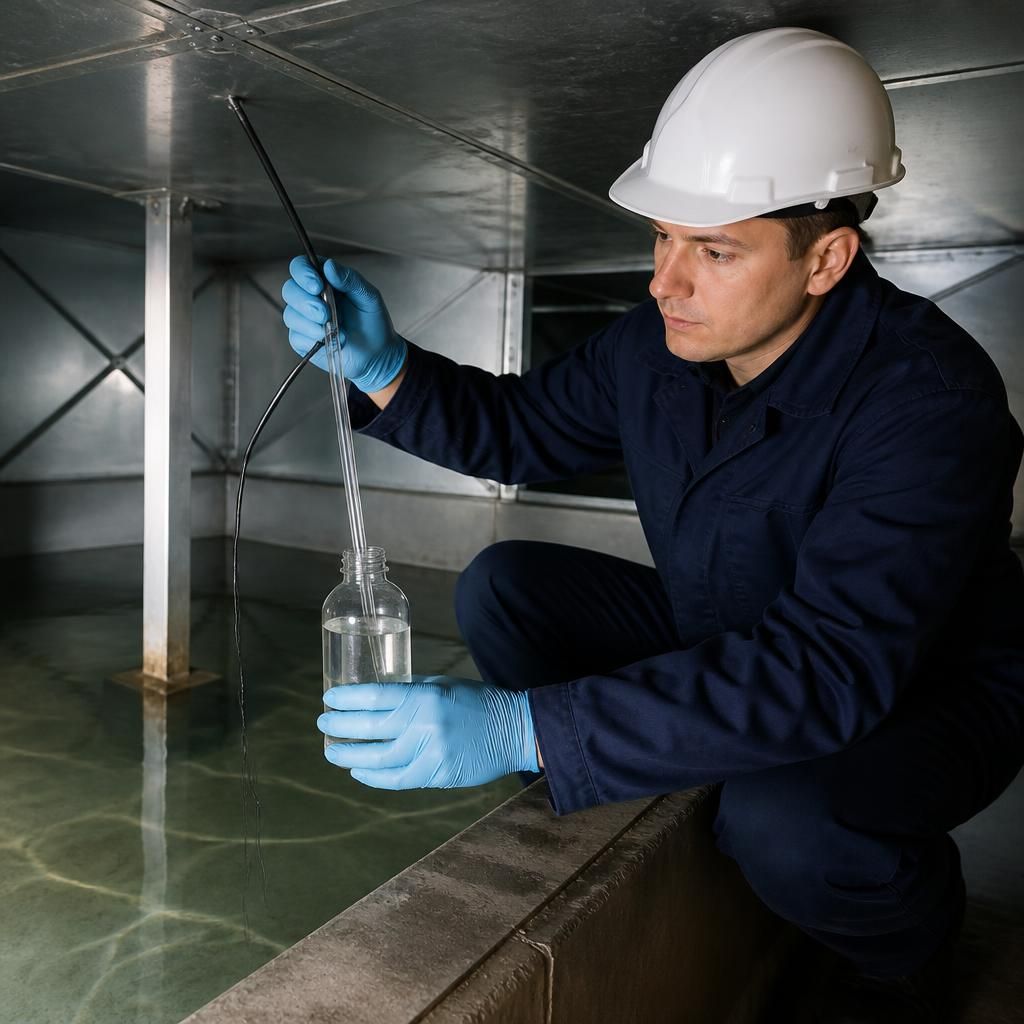
A satisfactory water quality result is evidence about the sample taken at that time, not a permanent certificate that the tank and connected system are safe. Conditions can change if water turnover falls, temperatures alter, contaminants enter through a defective cover or sediment accumulates after sampling.
For that reason, testing should support—not replace—the ongoing control measures in the water safety plan. A clear result does not remove the need for planned tank inspections, temperature management, suitable covers and effective maintenance. Equally, an adverse result should be treated as a prompt to investigate the system rather than as an isolated laboratory issue. The value of testing lies in combining the result with the tank’s condition, operating history and subsequent corrective action.
Review your water tank servicing and testing needs
If you are unsure whether your current water tank servicing arrangements provide sufficient evidence of water quality, ask Blue Fish Water Management Ltd to review the system’s testing requirements and advise on an appropriate servicing plan.