
What does water tank servicing cost?
There is no single standard cost for water tank servicing, as the price depends on the tank’s size, condition, accessibility and the scope of work required. A service may include inspection, cleaning, disinfection, water quality testing and any remedial work, so a reliable price requires an assessment of the specific system.
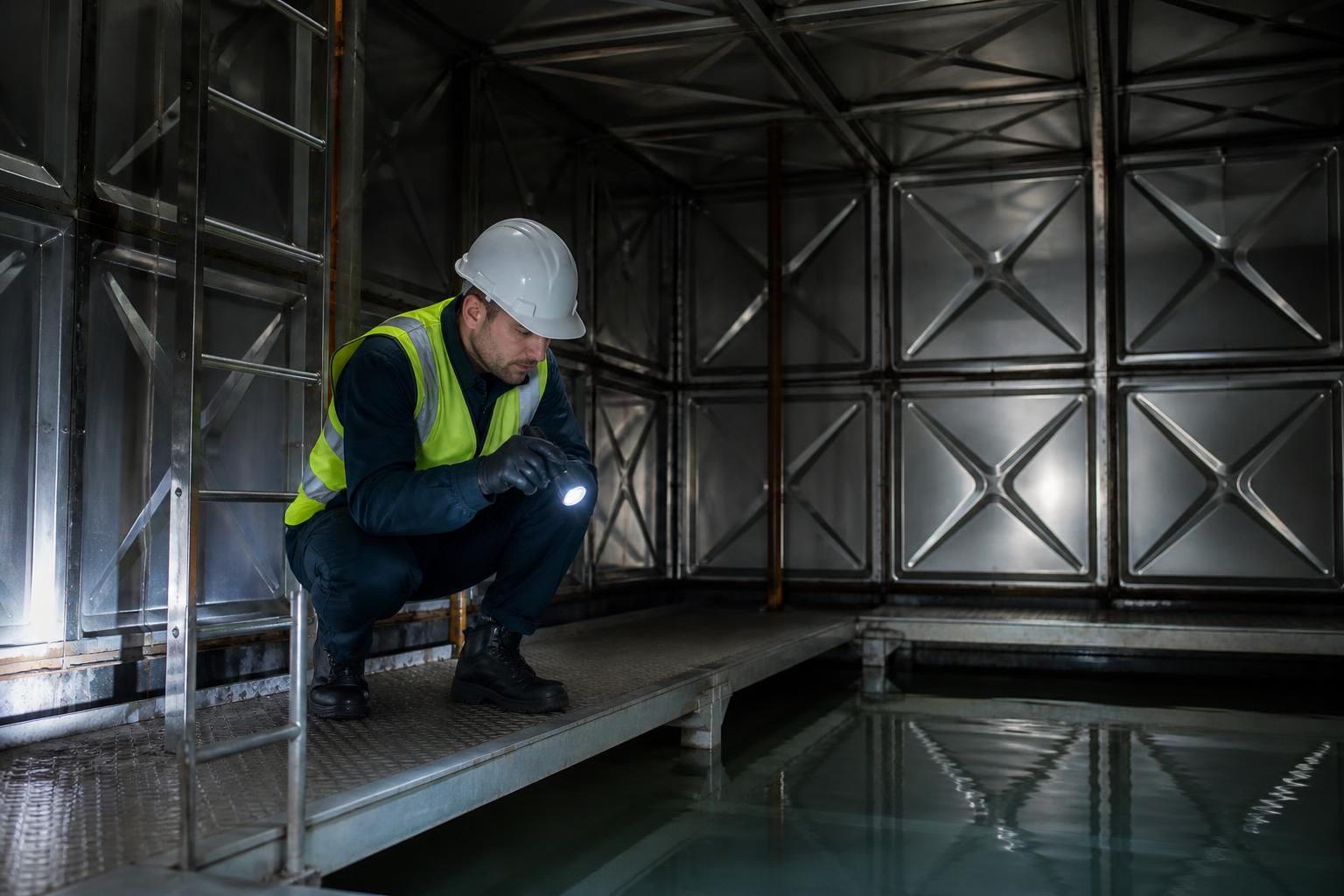
Water tank servicing is usually priced according to the work required to keep the installation hygienic, serviceable and properly documented, rather than by a universal flat rate. A typical quotation may combine a planned service charge with separate costs for laboratory analysis, access requirements, additional labour and any corrective work identified during the visit.
What a servicing quotation may include
- Review of available system information and previous service records.
- Attendance by suitably competent personnel and the labour needed to complete the planned work.
- Visual checks of the tank, lid, insulation, pipework, valves, overflow and surrounding area.
- Cleaning or disinfection where this forms part of the agreed specification.
- Water sampling and laboratory analysis where testing is requested or required by the risk-based management programme.
- A written service report, photographs where appropriate, test results and recommendations.
These items are not always bundled together. For example, a basic inspection and condition report may be quoted separately from tank cleaning or water quality analysis. Comparing quotations therefore requires checking the scope, not simply choosing the lowest headline figure.
Factors that can increase the cost
- Tank design and installation: Complex arrangements, multiple tanks or linked systems can require more inspection time and a more detailed service process.
- Access and working conditions: Restricted plant rooms, roof-level equipment, confined access routes or the need for additional safety controls can affect labour and equipment requirements.
- Tank condition: Corrosion, damaged covers, poor insulation, sediment, defective valves or evidence of contamination may require further investigation or remedial work.
- Testing requirements: The number and type of samples, the analysis requested and whether follow-up samples are needed all affect the total cost.
- Records and compliance documentation: Producing a detailed report, updating asset information and recording recommendations takes more time than a basic attendance note.
- Additional visits: A separate visit may be needed where the system cannot be isolated, access is unavailable, remedial work must be arranged or results require investigation.
Remedial work should normally be identified as a separate line in the quotation. Examples include replacing a damaged cover, repairing insulation, correcting defective pipework or addressing faults that could affect temperature control and water hygiene. Separating these costs makes it clearer which amount relates to routine servicing and which relates to improving the installation.
One-off servicing versus planned maintenance
A one-off visit may cost more per visit than servicing carried out under a planned maintenance arrangement because the provider may need to establish the system history, verify the installation and create baseline records. A planned programme can make costs easier to budget and helps ensure that inspections, sampling and follow-up actions are scheduled according to the needs of the system. The appropriate frequency should be based on the risk assessment and the characteristics of the water system, rather than on price alone.
Where a tank has been neglected or its records are incomplete, an initial assessment may involve more investigative work than subsequent routine visits. This does not necessarily indicate overcharging; it may reflect the additional information needed to make the maintenance programme reliable and defensible.
How to compare quotations
- Check whether the quotation covers inspection only, or also cleaning, disinfection, sampling and reporting.
- Confirm the number of tanks, outlets or samples included.
- Ask whether laboratory analysis is included and whether the laboratory is UKAS accredited for the relevant tests.
- Check whether access equipment, protective equipment, waste handling and travel are included or charged separately.
- Identify any assumptions about isolation, drainage, water availability and site access.
- Ensure remedial recommendations are priced separately from the agreed service.
- Confirm what records will be supplied after the work and who is responsible for reviewing any adverse findings.
The cheapest quotation may not represent the lowest overall cost if it excludes testing, reporting or necessary follow-up work. Conversely, a higher quotation is not automatically better if it includes services that the site risk assessment does not require. The useful comparison is between like-for-like scopes that address the actual risks presented by the water system.
Before requesting a quotation, provide the tank location, approximate capacity if known, number of tanks, available drawings or asset records, previous service information and any known problems. It is also helpful to state whether the work is part of a routine programme, follows a change in occupancy or follows a water quality concern. Clear information allows the provider to distinguish routine servicing from investigation and remedial requirements, giving the business a more transparent basis for budgeting.
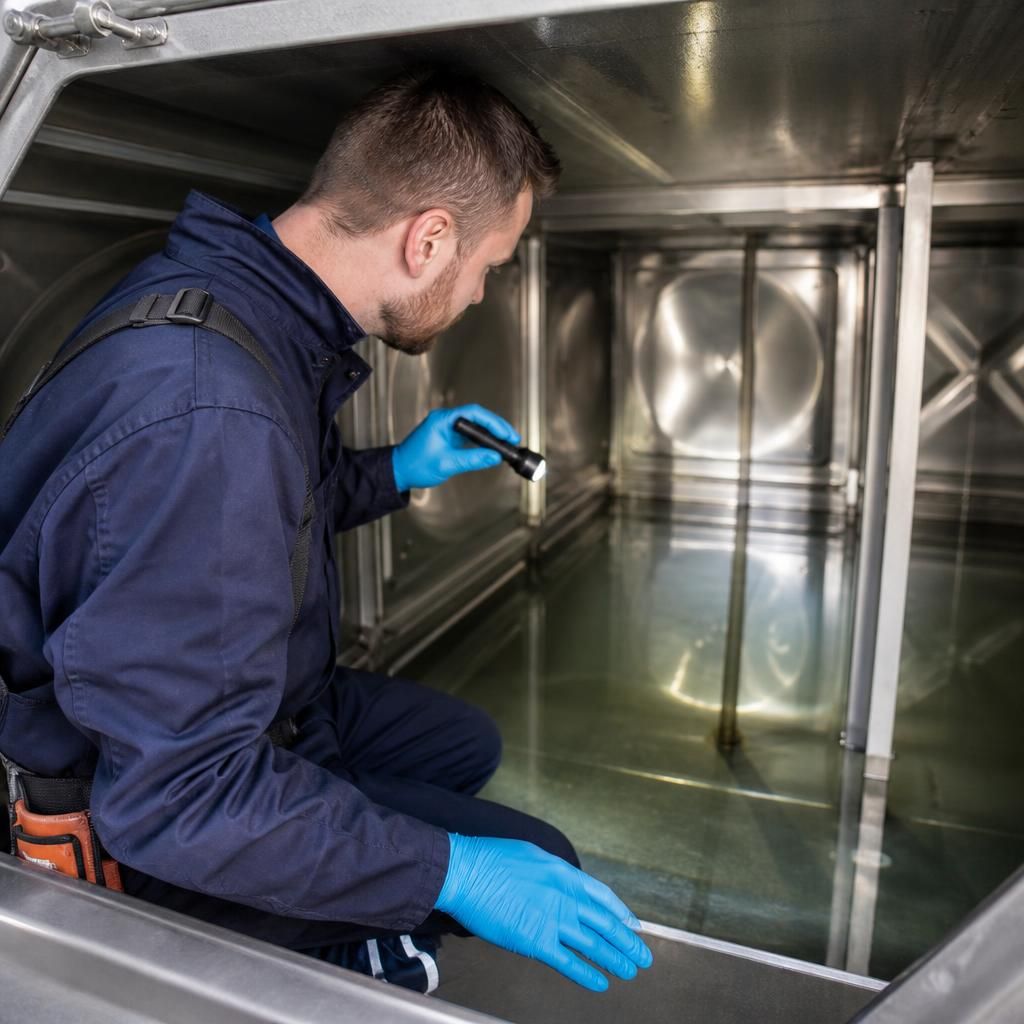
One cost consideration is how the tank can be taken out of service while work is carried out. If the system supplies occupied premises or a critical process, the quotation may need to allow for planned isolation, drainage, refilling and coordination with the person responsible for the building or process. Where temporary arrangements or additional controls are needed to maintain safe operation, these should be identified clearly rather than appearing as unexpected charges.
Ask the provider to state what assumptions the price depends on, including access, isolation and water availability. This makes it easier to distinguish the cost of servicing the tank itself from the operational arrangements required to complete the work safely.
Request a water tank servicing quotation
If you need a costed scope for your water tank servicing requirements, contact Blue Fish Water Management with your available system details and records. A site-specific quotation can then distinguish routine servicing from any testing or remedial work required.