
How often should water tank servicing be carried out?
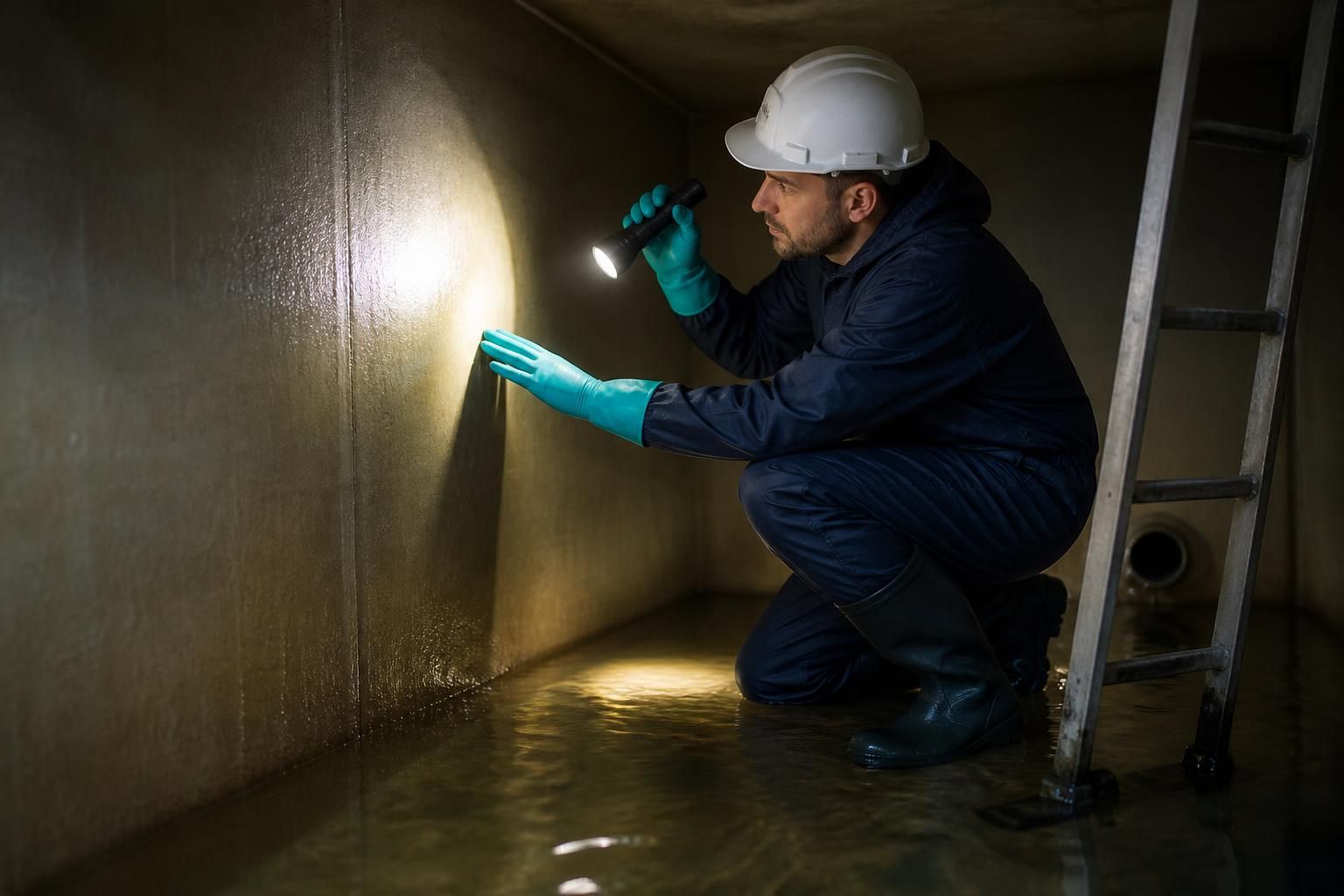
The appropriate servicing interval should be defined in the site’s written legionella control scheme rather than selected as a blanket calendar rule. A scheduled service normally combines a condition inspection with checks on the tank, associated pipework, temperature control, water turnover and existing control measures. The outcome should confirm whether the tank remains suitable, needs cleaning or disinfection, or requires repair or replacement.
It is important to distinguish between different types of servicing activity:
- Visual inspection: checks the tank, cover, insulation, warning and overflow arrangements, screens, access points and surrounding installation for defects or contamination.
- Operational checks: consider whether the tank is receiving and supplying water correctly, whether stagnation is occurring and whether temperatures are being managed in line with the site’s control strategy.
- Cleaning: removes sediment, scale, biofilm or other deposits where inspection shows that they could affect water hygiene.
- Disinfection: may be required after cleaning, contamination, certain remedial works or other events identified by the risk assessment.
- Testing and verification: may be used where the risk assessment, a suspected problem or completed remedial work makes evidence of water quality or control performance necessary.
These activities do not always need to happen at the same frequency. A tank may require regular inspection but only need cleaning when deposits or contamination are found. Treating every tank as though it requires identical cleaning and disinfection can be unnecessary, while failing to act on visible deterioration can leave a known risk unmanaged.
More frequent attention may be appropriate where a tank supplies vulnerable people, serves a large or complex building, has low or irregular demand, or forms part of a system with known temperature-control difficulties. The same applies where there is a history of sediment, corrosion, microbial findings, damaged covers, inadequate insulation or restricted access for inspection. Tanks that are rarely used, oversized for their current demand or connected to areas that have changed use should be reviewed particularly carefully.
Servicing should also be brought forward when circumstances change. Examples include alterations to the storage or distribution system, a change in occupancy or water demand, prolonged shutdown, construction activity near the installation, evidence of damage or contamination, or results from monitoring that call existing controls into question. A planned date should not be allowed to delay action where an immediate defect or hygiene concern has been identified.
After each visit, the service record should state what was inspected, the condition found, measurements or observations taken, any samples collected, work completed and recommendations outstanding. Photographs can help demonstrate the condition of covers, internal surfaces, insulation and access arrangements. The record should also make clear who is responsible for authorising remedial work and when follow-up verification is required.
The servicing schedule should be reviewed whenever the legionella risk assessment is reviewed and whenever the system or its use changes. This creates a defensible link between the frequency of visits and the actual risk at the premises, rather than relying on an arbitrary recurring appointment.
For UK sites, the relevant control approach is informed by the Health and Safety Executive’s guidance on the control of legionella bacteria in water systems, including the expectations for risk assessment, written control schemes, monitoring and maintenance. A competent water hygiene provider can translate those requirements into a practical tank inspection and maintenance schedule for the particular installation.
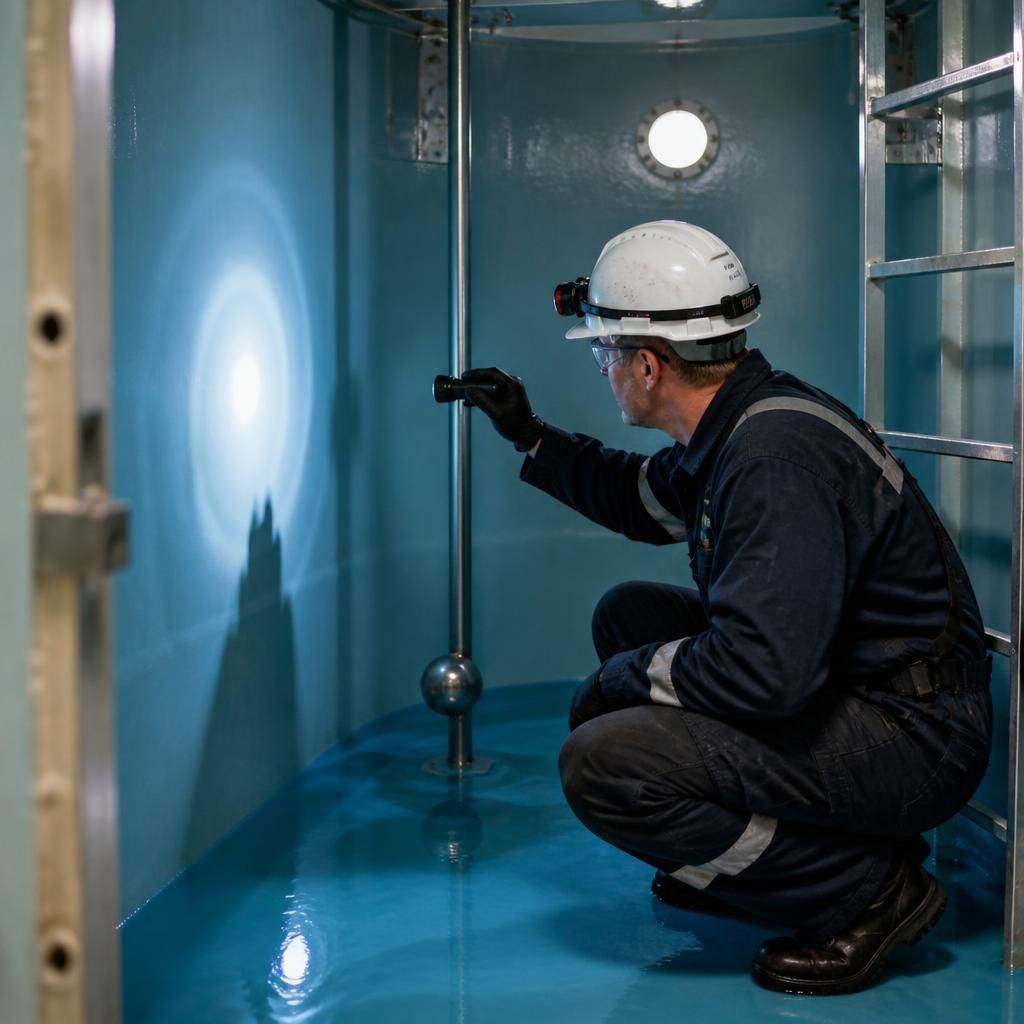
Water tank servicing is a physical examination and maintenance activity; it is not the same as routine system monitoring carried out between service visits. Temperature readings, flow checks and other operational observations can show whether controls are working, but they cannot establish the full condition of the tank’s internal surfaces, sediment levels, fittings or access arrangements.
Routine monitoring should therefore support the servicing programme rather than replace it. Records from site checks can help identify developing problems, such as unusual temperature patterns, reduced demand or changes in water use, which may justify an earlier inspection. Conversely, satisfactory monitoring results do not remove the need for the planned physical examination defined by the legionella control scheme.
When arranging the service, the person responsible for the premises should ensure that the provider has access to the tank, relevant system information and previous inspection records. This allows the condition of the installation to be assessed against its history rather than treating each visit as an isolated check.
Review your water tank servicing schedule
Ask Blue Fish Water Management to review your water tank servicing requirements against your legionella risk assessment and existing records, so an appropriate inspection and maintenance plan can be agreed.