
What records should hot water tank cleaning produce?
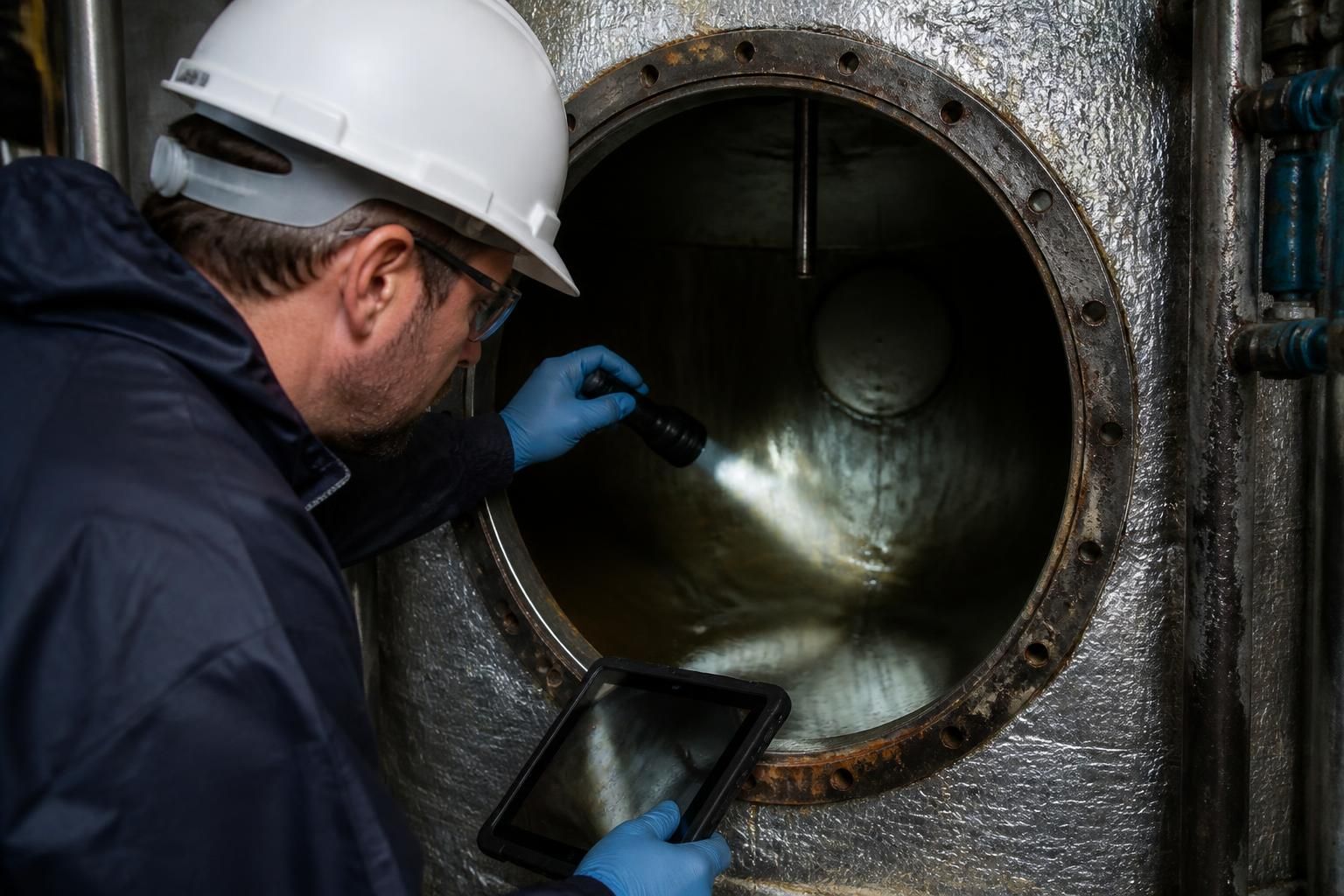
Hot water tank cleaning should produce a traceable set of records showing what was planned, what was found, what work was completed and whether the tank was suitable to return to service. The cleaning report is the central document, but it should sit alongside the supporting evidence needed to verify the work and demonstrate how any remaining risk was managed.
The record set should normally include:
- Pre-work planning: the agreed scope, relevant system information, method statement, risk assessment and control measures. Where access, confined spaces, chemicals, isolation or work at height are involved, the documentation should show how those hazards were controlled.
- Work authorisation: evidence of who authorised the work, any permit or isolation arrangements, and confirmation that affected users or responsible personnel were informed where the work could affect water availability or system operation.
- Inspection evidence: written observations describing internal surfaces, sediment, scale, corrosion, biofilm, damaged components and any defects that could affect water quality or cleanability. Photographs can be useful where they are clearly dated, identifiable and linked to the relevant tank.
- Cleaning and disinfection evidence: details of the products, equipment, contact conditions and procedure used, together with the relevant operative or contractor details. The record should make clear whether the full intended scope was completed or whether any part was inaccessible or excluded.
- Return-to-service checks: confirmation that the system was reassembled, flushed, refilled and placed back into operation in accordance with the agreed procedure. Any checks required before handover should be recorded, including whether abnormal conditions remained.
Where disinfection involves chemical dosing, the supporting record should identify the product used and provide the applicable safety and control information. It should also show how the chemical was handled, removed or neutralised where relevant. This helps the responsible person establish that the process was controlled rather than relying on a simple statement that the tank was disinfected.
Water samples may form part of the evidence, particularly where testing is specified by the risk assessment, the client’s water safety plan or the findings from the work. Keep the laboratory report with the cleaning documentation, including the sample location, collection date, test requested, result and any interpretation supplied by the competent laboratory. If a sample is taken by a third party, the records should preserve enough information to link the result to the correct system and sampling event.
Any defect or limitation should be recorded as an action rather than buried in narrative text. An action log should identify the issue, its risk significance, the person responsible, the target date, interim controls and the eventual completion evidence. Examples may include replacing a damaged lid or valve, improving access, removing redundant pipework, repairing insulation or investigating a recurring deposit. If an action is deferred, the reason and interim management arrangement should be documented.
The documentation should also record deviations from the planned work. For example, it should explain if the tank could not be fully drained, a section could not be accessed, the stated contact condition was not achieved, or a component could not be reinstated. Recording the limitation allows the responsible person to decide whether further cleaning, remedial work, inspection or risk assessment is required.
Good records are attributable and controlled. Each entry should carry the relevant date and the name or identifiable signature of the person making it. Amendments should remain auditable rather than obscuring the original entry. For electronic records, use version control and retain the associated reports, images, test certificates and correspondence in a location where they cannot be separated from the main work record.
Keep the completed documents with the wider water safety management records, not as an isolated contractor invoice. They may need to be reviewed against the risk assessment, monitoring results, previous cleaning history and remedial action register. The responsible person should be able to establish whether the work was routine, triggered by a finding or undertaken as part of a wider control measure.
There is no universally appropriate retention period for every organisation. The period should reflect the site’s management arrangements, contractual requirements, applicable guidance and the value of showing historical condition and repeat defects. Records should remain accessible to the responsible person and to anyone carrying out compliance reviews, audits or later investigations.
A useful final check is whether an independent reviewer could follow the complete sequence without relying on verbal explanations: why the work was required, what controls were applied, what the inspection found, how the cleaning was carried out, what verification was completed and how outstanding issues were managed. If that sequence is clear, the records provide meaningful evidence of water system control rather than merely confirming that an invoice was raised.
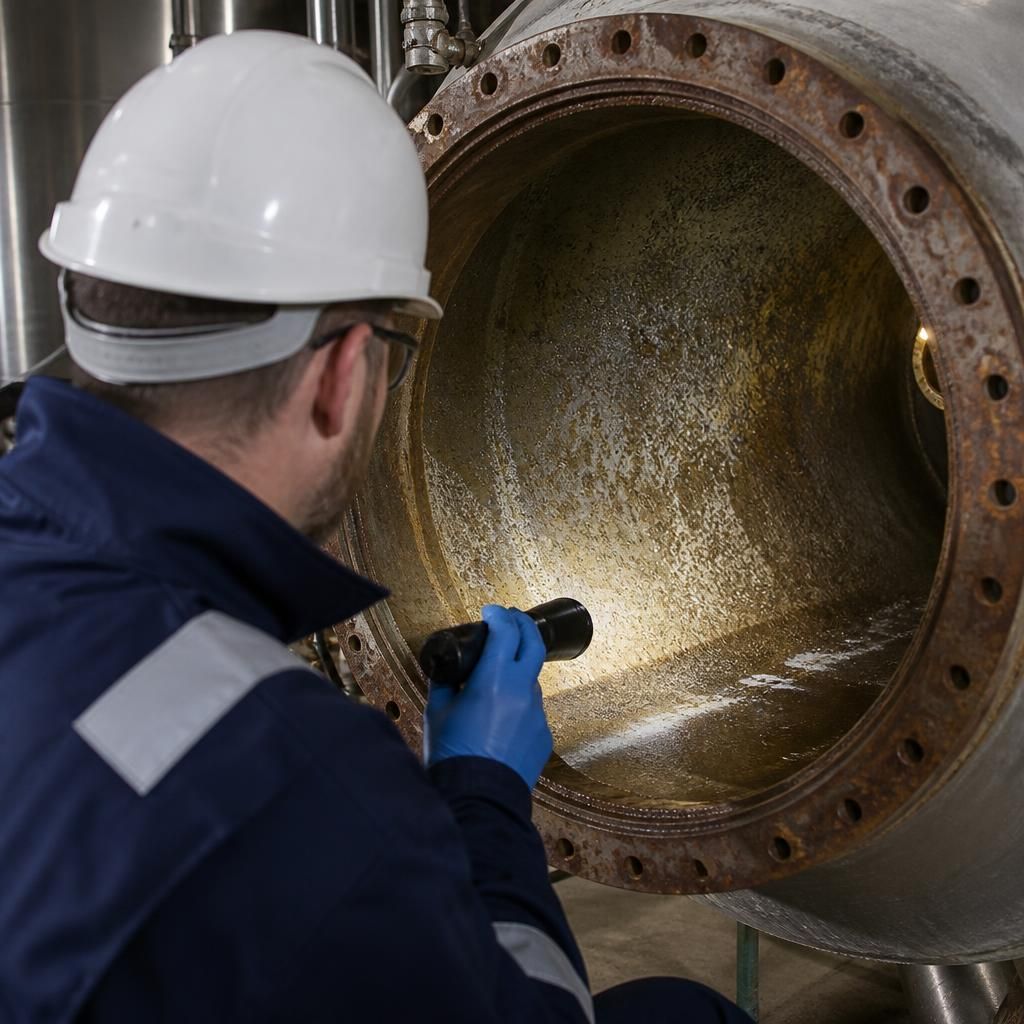
The completed record should include a clear handover decision following inspection, cleaning and disinfection. Rather than leaving the reader to infer the outcome from descriptive notes, state whether the tank was accepted for normal service, returned with restrictions, or held pending further work.
Where restrictions or follow-up apply, link the decision to the relevant finding and explain what must happen next. This gives the responsible person a practical basis for managing the system after the contractor has left and prevents an apparently completed cleaning visit from being mistaken for full resolution of every issue identified.
Discuss your hot water tank cleaning records
Discuss your hot water tank cleaning records with Blue Fish Water Management Ltd to identify any gaps in the evidence and clarify what should be documented for your water safety arrangements.