
What competence should a hot water tank cleaning contractor demonstrate?
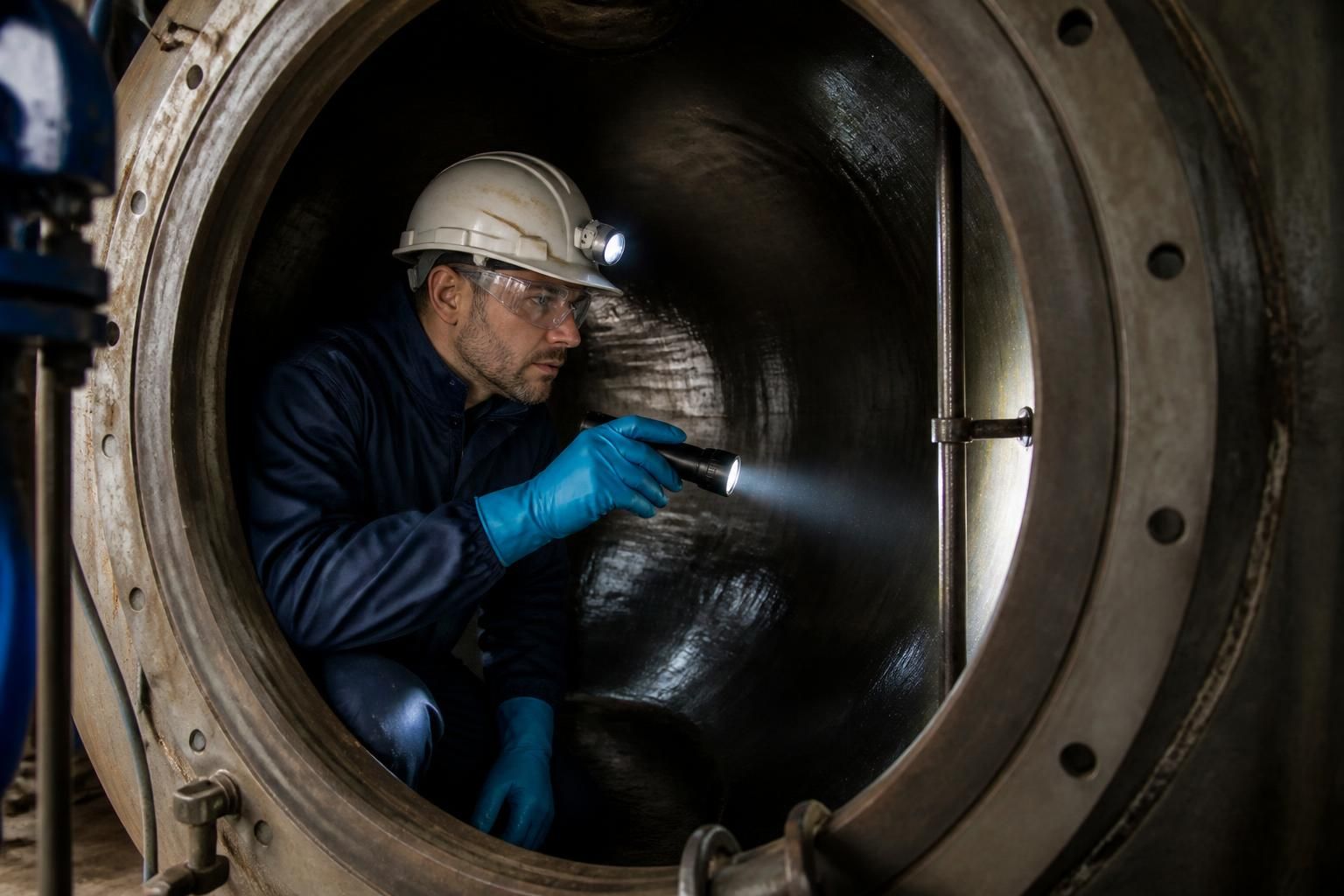
A competent hot water tank cleaning contractor demonstrates competence through documented planning, controlled work practices, appropriate technical judgement and reliable evidence of the outcome. The contractor should be able to show not only that the tank was cleaned, but that the work was suitable for the system, proportionate to the identified risk and completed without compromising water safety.
Relevant competence should cover the whole task, not just the physical cleaning. Before work starts, the contractor should understand the tank’s function, its connection to the wider hot water system, access limitations, stored water arrangements and any known history of contamination, low temperatures, corrosion or inadequate maintenance. They should review available schematics, asset information and previous monitoring records where these exist. If essential information is missing, they should identify the uncertainty rather than proceed on an untested assumption.
- System assessment: identifying the tank, associated pipework, valves, outlets, drains, lids, insulation and other components relevant to the work.
- Risk control: considering exposure to contaminated water, chemicals, aerosols, confined or restricted access, hot surfaces, electrical equipment and manual handling.
- Method selection: choosing a cleaning and disinfection method that suits the tank materials, system design, condition and intended use.
- Operational planning: coordinating isolation, draining, refilling, flushing and recommissioning so that the work does not create an uncontrolled risk elsewhere in the system.
The contractor should be able to explain how the proposed method will remove sediment, scale, biofilm and other deposits, and how disinfection will be controlled. A competent approach distinguishes between cleaning and disinfection: physical removal of deposits is not automatically achieved by applying disinfectant, while disinfection alone may not resolve a persistent source of contamination. The method should set out the products or processes to be used, the relevant control parameters, required contact conditions, flushing arrangements and the checks needed before the tank is returned to service.
Safe chemical handling is another important indicator. Personnel should understand the information supplied for any disinfectant, including dilution, contact, storage, compatibility, personal protective equipment and emergency measures. They should prevent unintended mixing of chemicals and protect users from exposure during draining, flushing and recommissioning. Where thermal disinfection is used, the plan should address scalding risk and the temperatures required for the particular system. These controls should be reflected in the site method statement and not left to informal instruction.
Competence also includes knowing when the tank is not suitable for straightforward cleaning. A contractor should recognise defects such as damaged covers, ineffective insulation, corrosion, sludge accumulation, inaccessible areas, defective valves, poor drainage or dead legs that could allow contamination to recur. They should distinguish defects that can be corrected as part of the agreed work from those requiring separate remedial attention. Recommendations should identify the observed problem, its possible significance and the action required, rather than simply describing a component as “unsatisfactory”.
Personnel should have appropriate training for the duties they perform, with supervision matched to the complexity and risk of the job. The contractor should be able to explain who is responsible for planning, site safety, chemical control, sampling, interpretation of results and final handover. Training records, role-specific experience and evidence of maintaining competence are more meaningful than a general claim that staff are experienced. Subcontracted activities should also be controlled, with clear responsibility for quality and safety.
Where samples are taken, the contractor should understand why each sample is required, where it should be collected and how sampling conditions may affect the result. Samples should be handled, labelled and transported in a way that preserves their integrity. If laboratory analysis is needed, the laboratory’s competence and the suitability of the requested tests should be clear. Results should be interpreted in relation to the system history and other control information; a single result should not automatically be treated as proof that every risk has been removed.
A capable contractor will maintain a clear audit trail. Depending on the scope of the work, this may include:
- the tank and system details considered before work;
- the agreed scope, method statement and risk controls;
- isolation, draining, cleaning, disinfection and flushing records;
- products used and relevant control readings;
- photographs or descriptions of deposits, defects and completed work;
- sample details and laboratory reports where testing was undertaken;
- deviations from the planned method and the reason for them; and
- recommissioning information and outstanding recommendations.
Records should be sufficiently specific for the responsible person or facilities team to understand what was done, what was found and what remains unresolved. A generic certificate with only a date and a statement that the tank was disinfected provides limited assurance. The contractor should also communicate any restrictions, follow-up checks or temporary controls needed after the work, particularly where defects or abnormal results remain.
Finally, competence is demonstrated by professional boundaries. A contractor should not present cleaning as a substitute for correcting poor water temperatures, inadequate design, ineffective monitoring or wider management failures. They should identify when the task requires further investigation or coordination with the duty holder, water safety group, designer or another suitably qualified specialist. This combination of technical understanding, controlled execution, honest reporting and appropriate escalation is the most reliable basis for selecting a hot water tank cleaning contractor.
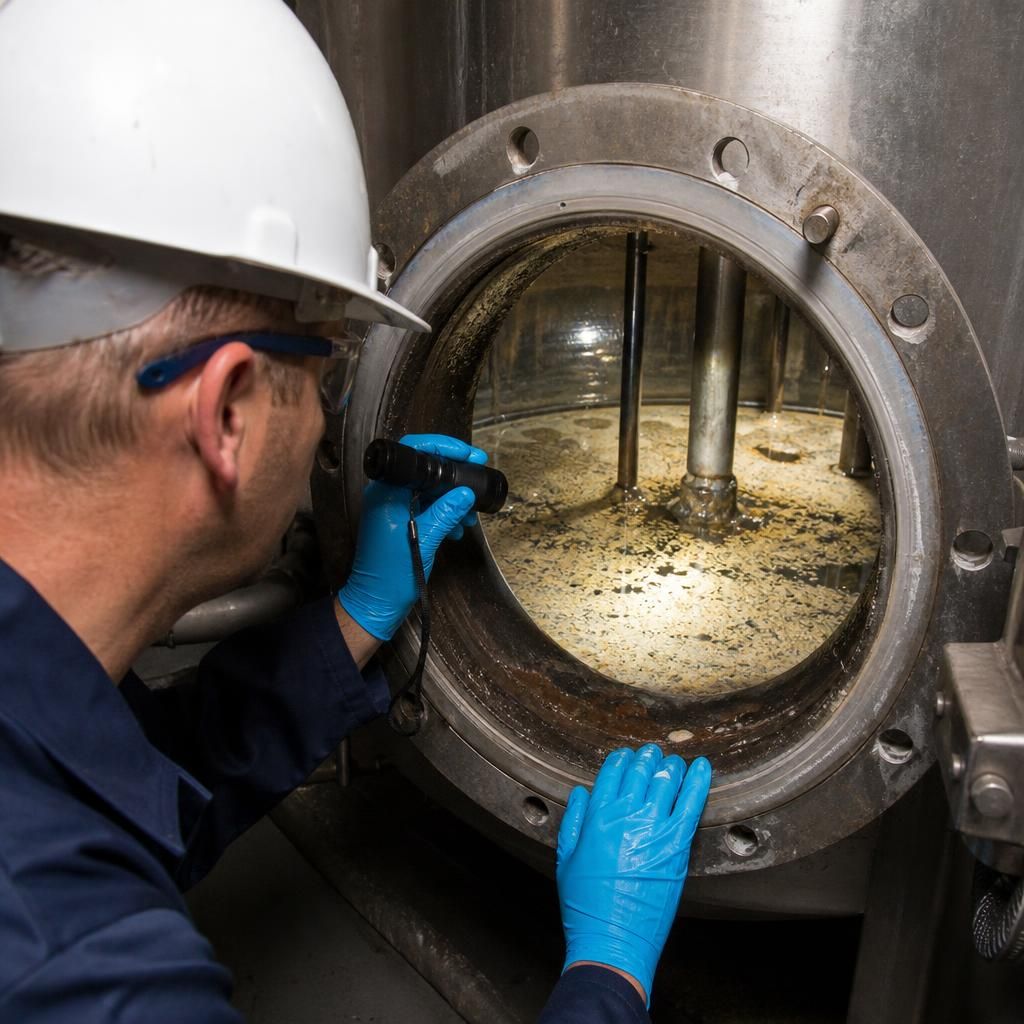
A further sign of competence is the contractor’s control of recontamination during and after the work. Cleaning a tank does not provide lasting assurance if dirty equipment, hands, hoses or temporary connections introduce contamination before the system is returned to service. Personnel should use suitably clean equipment, protect open tank surfaces from debris and prevent contact between cleaned components and contaminated materials.
This control should continue during reassembly and recommissioning. Covers, seals, access points, hoses and connections should be checked for cleanliness and secure closure, with any contamination introduced during the work dealt with before the tank is put back into use. A contractor who can explain these precautions demonstrates an understanding that effective tank cleaning depends on maintaining hygienic conditions throughout the complete task, not simply removing deposits from the tank interior.
Discuss your hot water tank cleaning requirements
Discuss your hot water tank cleaning requirements with Blue Fish Water Management Ltd to clarify the appropriate scope, evidence and practical controls for your system. Their team can help you identify the information needed to plan the work and address any unresolved water hygiene concerns.