
How often should hot water tanks be cleaned and disinfected?
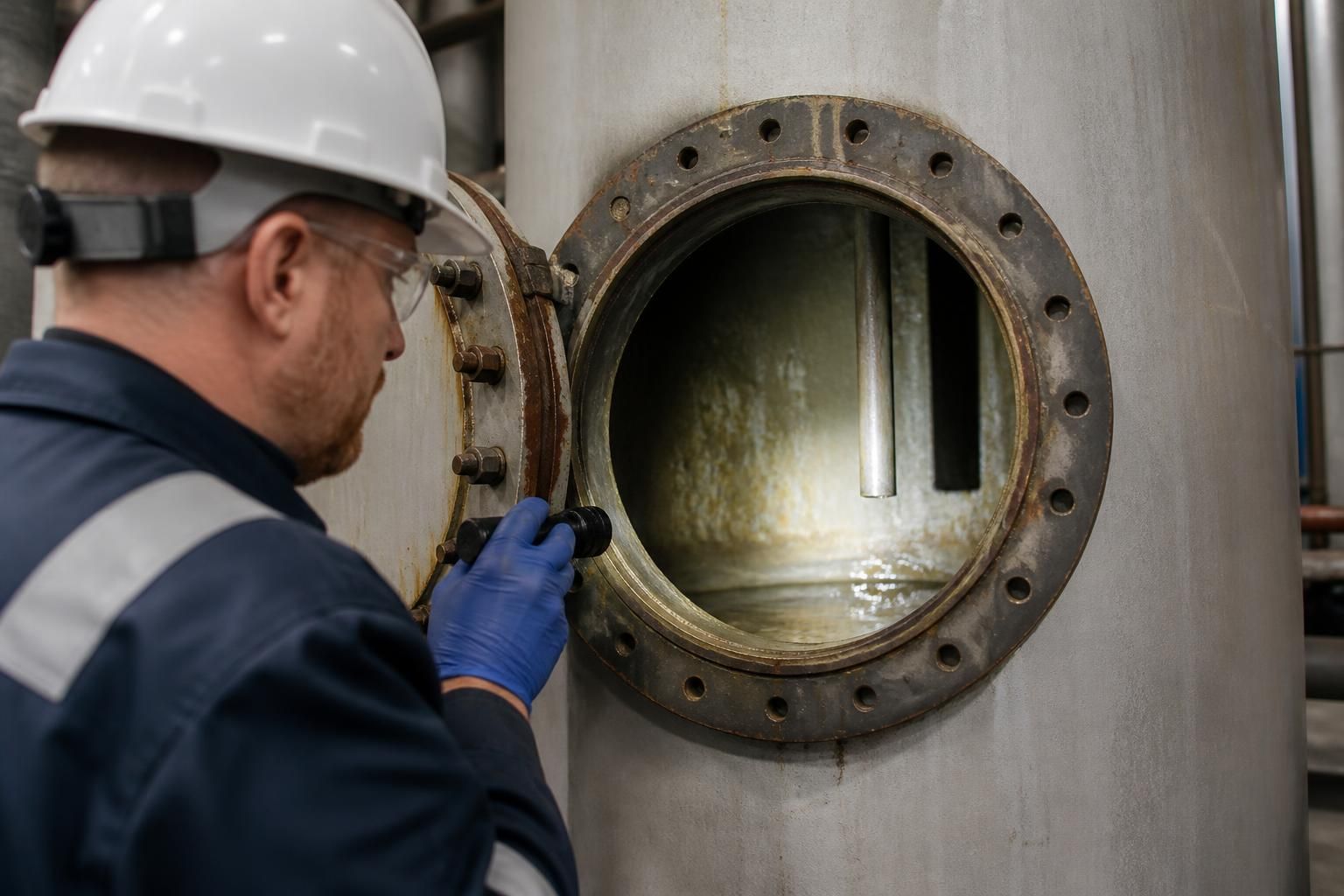
Hot water tanks should be cleaned and disinfected according to the written legionella control scheme for the building, rather than to a universal annual timetable. In practice, routine cleaning is planned around the tank’s condition and inspection findings, while disinfection is carried out when the risk assessment, monitoring results, contamination or system work indicates that it is necessary.
Cleaning and disinfection are different activities. Cleaning removes deposits such as sludge, scale, corrosion products and other material that can support microbial growth. Disinfection uses a controlled thermal or chemical process to reduce harmful bacteria within the vessel and connected system. A tank may need one activity, or both, depending on the reason for the work. Disinfection without removing heavy deposits may provide only a limited result because contamination can remain protected beneath the debris.
The planned interval should be supported by inspections and documented evidence. A competent person will consider:
- the volume and design of the storage vessel;
- the condition of internal surfaces, including scale, corrosion, sediment and sludge;
- the temperature profile and whether cold spots or inadequate circulation are present;
- water usage, periods of low demand and areas where water may stagnate;
- the age, condition and history of the system;
- previous legionella or other microbiological test results;
- changes to occupancy, building use, plant operation or control settings; and
- the vulnerability of people who may be exposed to aerosols from the system.
A visual inspection, internal examination where practicable, temperature checks and relevant sampling can show whether the existing schedule remains suitable. Findings should be compared over time rather than considered in isolation. For example, recurring sediment, deteriorating temperatures or repeated adverse sample results may indicate that the tank needs earlier intervention or that an underlying design or control problem has not been resolved.
Additional cleaning or disinfection may be required after:
- evidence of microbiological contamination;
- maintenance, refurbishment or replacement of components that could introduce contamination;
- draining, prolonged stagnation or recommissioning after a shutdown;
- changes that affect flow, storage temperature or water turnover;
- discovery of substantial deposits, corrosion or damaged internal surfaces; or
- an outbreak investigation or advice from the responsible water safety professional.
Where disinfection is planned, the method must be appropriate for the vessel, pipework, materials and wider hot water system. Thermal disinfection requires suitable temperature control and verification at representative outlets. Chemical disinfection requires the correct product, concentration, contact time, distribution and subsequent flushing. The work should be managed so that people cannot be exposed to scalding water, disinfectant residues or contaminated aerosols. Any method should follow the relevant risk assessment, manufacturer instructions and current UK water hygiene guidance.
Cleaning should not be treated as a substitute for effective day-to-day control. Storage temperatures, secondary circulation, outlet temperatures, dead legs, water turnover and access for inspection all influence whether contamination can recur. If a tank repeatedly requires intensive cleaning, the appropriate response may include correcting circulation, removing redundant pipework, improving insulation, repairing the vessel or reviewing operating controls.
The schedule should be reviewed when circumstances change. A fixed date can remain in a compliance document while no longer reflecting the actual risk. Reviews are appropriate following alterations to the building or plant, changes in occupancy, persistent low use, abnormal monitoring results, equipment failure or a change in the population using the premises. The person responsible for water safety should ensure that the revised requirements are communicated to those who operate and maintain the system.
Records should show the reason for the work, the tank or system covered, the cleaning and disinfection method, readings or test results, chemicals used where relevant, flushing and reinstatement checks, defects identified and any follow-up actions. These records allow the responsible person to demonstrate that the interval is evidence-based and to decide whether the next planned intervention remains appropriate. Specialist water hygiene advice can help establish a defensible programme for complex, shared or higher-risk commercial systems.
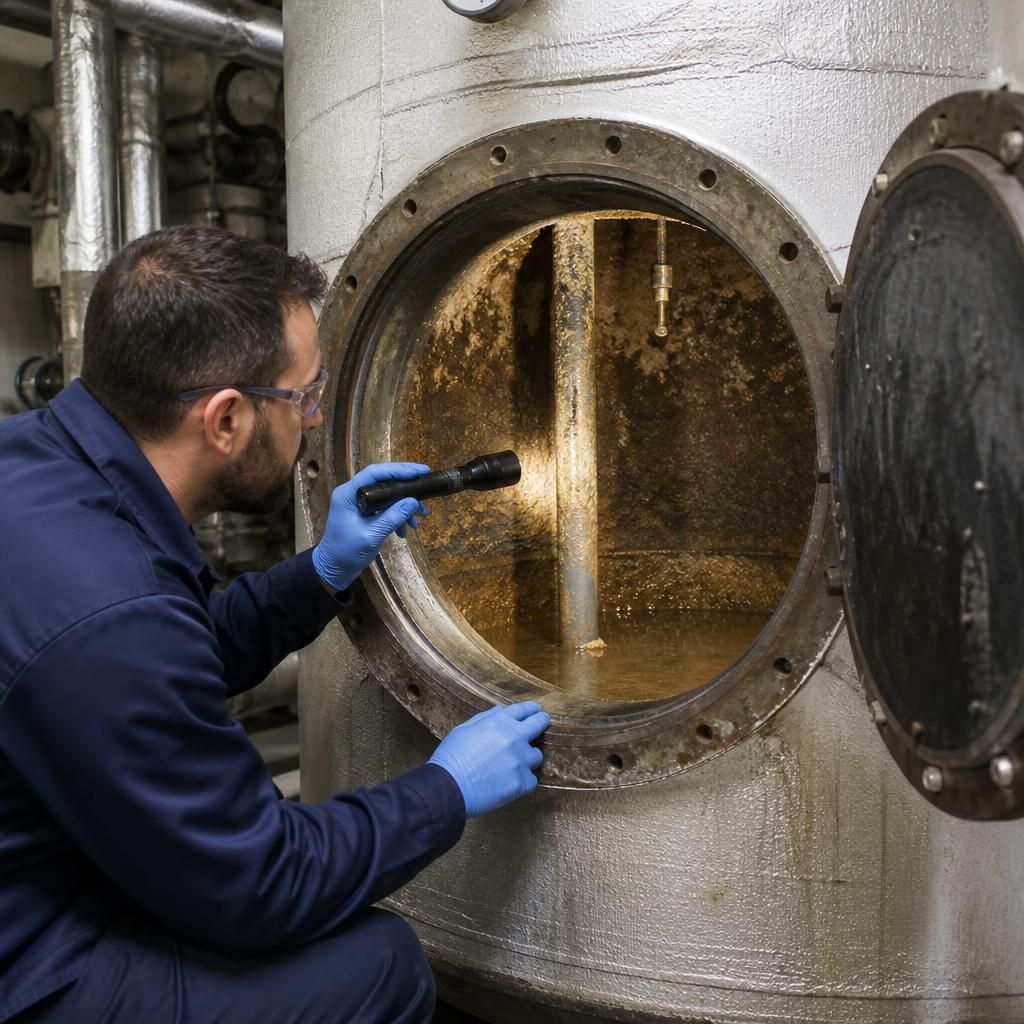
A hot water tank’s inspection, cleaning, disinfection and microbiological monitoring do not necessarily follow the same timetable. A water safety plan should set these as separate activities, because an inspection may identify a developing problem before cleaning is due, while disinfection may only be justified by a specific event or finding.
For example, a programme may require routine checks of tank condition and operating controls, with cleaning scheduled when inspection evidence reaches a defined threshold. Disinfection should have its own decision criteria, such as confirmed contamination or recommissioning after significant work. This approach avoids treating every task as an automatic calendar exercise and makes the reason for each intervention clear.
- Inspection: identifies deposits, corrosion, damage or access problems.
- Cleaning: removes accumulated material when its condition or quantity could affect water hygiene.
- Disinfection: applies an appropriate treatment when the assessed microbiological risk requires it.
- Monitoring: provides evidence that the control measures remain effective between interventions.
Keeping these intervals distinct also helps the responsible person assess whether a tank is being cleaned too often, not often enough, or for the wrong reason. The schedule should state who reviews the evidence, what would trigger earlier action and how the decision is recorded.
Review Your Hot Water Tank Cleaning Schedule
If you need to confirm whether your hot water tank cleaning and disinfection schedule remains appropriate, speak to Blue Fish Water Management Ltd about a practical review of your water hygiene arrangements.