
What affects the cost of commercial sewage tank cleaning?
Commercial sewage tank cleaning cost is mainly affected by the tank’s size, the volume and type of waste present, and how easily the tank can be accessed. Transport and disposal requirements, cleaning frequency, site conditions and any additional work needed after inspection can also influence the overall charge.
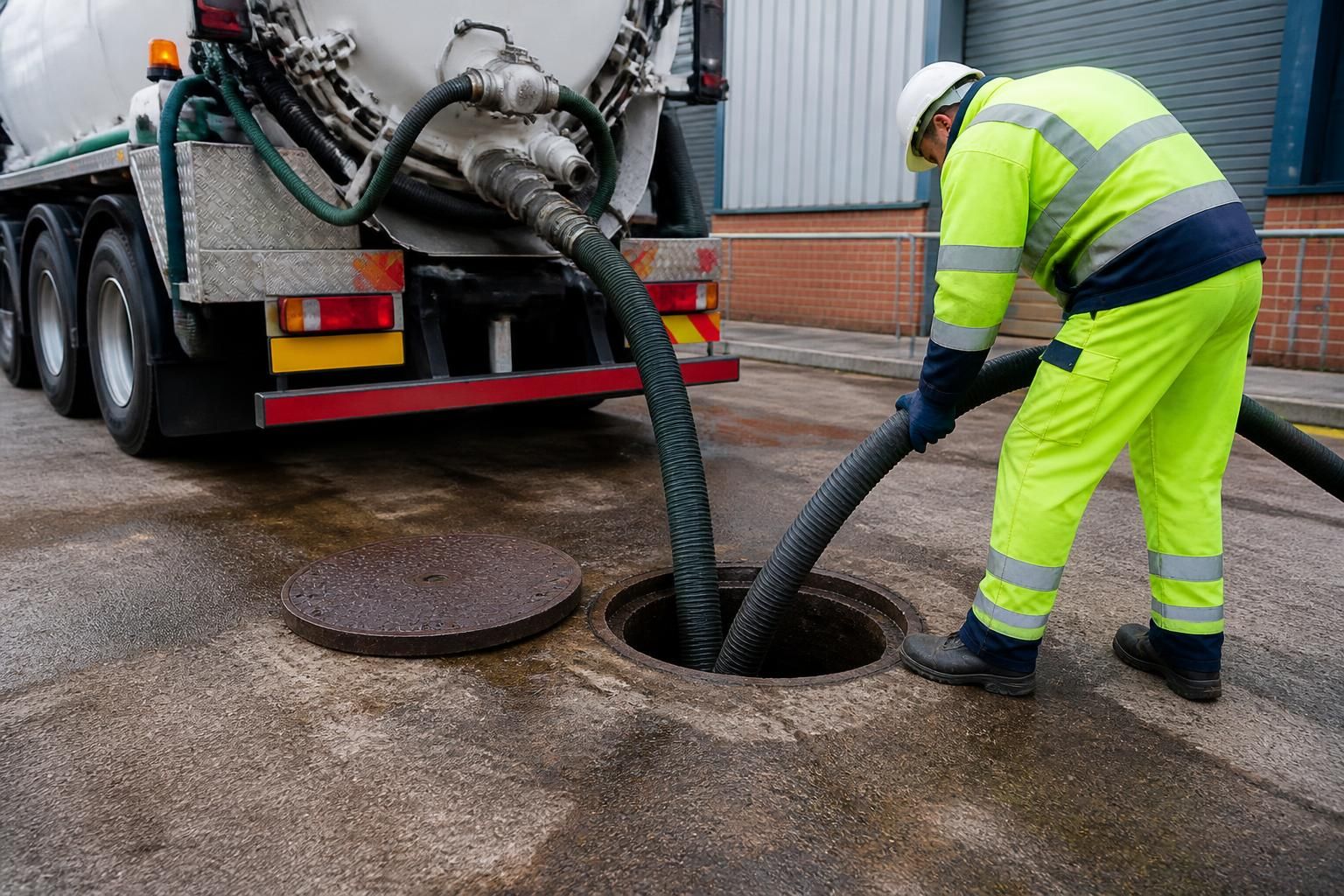
The cost of commercial sewage tank cleaning depends on the work included in the service, the resources needed to complete it safely, and the records or follow-up required afterwards. Two tanks with similar capacities can produce different prices if one needs a basic emptying service while the other requires internal washing, inspection, documentation or work on several connected chambers.
The cleaning specification is one of the most important cost factors. A quote should state whether it covers pumping out only, or also includes washing the tank walls and base, removing settled deposits, clearing connected pipework and checking the condition of accessible components. A more extensive clean takes longer and may require additional equipment, so it should not be compared directly with a quote for a basic pump-out.
The number and arrangement of tanks can also affect the charge. A site may have several tanks, chambers or linked systems rather than one standalone unit. Each may require separate preparation, pumping and reinstatement. Internal baffles, divided chambers and difficult-to-reach outlets can add to the work because the contractor may need to manage the cleaning process in stages rather than treating the installation as a single vessel.
Labour and safety requirements form part of the price. Sewage tanks can present biological, gas, engulfment and confined-space hazards. Where workers need specialist training, atmospheric monitoring, rescue arrangements, protective equipment or a controlled entry procedure, these measures must be planned and resourced. A quotation that excludes essential safety controls may appear cheaper but may not represent the true cost of compliant work.
The condition of the installation may be relevant even where remedial work is not included. Corrosion, damaged covers, defective access points, blockages or restricted connections can make pumping and cleaning more complex. A competent contractor should identify limitations and separate any recommended repair from the cleaning price, so that the client can distinguish the cost of removing waste from the cost of improving the system.
Documentation and reporting can change the scope of a commercial service. Some organisations need a service record confirming the date, equipment dealt with, work completed and waste transfer information. Others may require photographs, condition notes, recommendations or evidence for internal compliance records. These outputs are useful for planned maintenance, but they should be specified before work begins because inspection and reporting take time beyond the physical cleaning operation.
Site administration can influence the total even when the tank itself is straightforward to clean. Requirements such as induction procedures, permits, escorting, security checks, traffic management or coordination with the person responsible for the premises can add planning and labour. The contractor should be told about these arrangements when requesting a quotation rather than after a price has been agreed.
Contract structure is another consideration. A one-off clean is priced around the immediate job, while a planned maintenance arrangement may define the work, records and review points in advance. Planned work does not automatically mean a lower price, but it can make the scope clearer and help the site budget for recurring cleaning. Any proposal should explain what is included at each visit and what would be treated as extra work.
When comparing commercial sewage tank cleaning quotations, ask for the following details:
- the tanks or chambers covered by the price;
- the cleaning standard and equipment to be used;
- whether labour, safety controls and site administration are included;
- how waste documentation will be provided;
- whether inspection notes, photographs or recommendations are included;
- the treatment of blockages, defects or work outside the agreed scope; and
- any separate charges, including applicable tax or additional disposal requirements.
Providing accurate information usually produces a more useful estimate. The contractor may need tank drawings, previous service records, details of the installation, the expected cleaning standard and any known hazards. A site assessment can also clarify the number of chambers, the condition of the system and the documentation required. Blue Fish Water Management Ltd can use this information to scope commercial sewage tank cleaning and explain which elements are included in the proposed service.
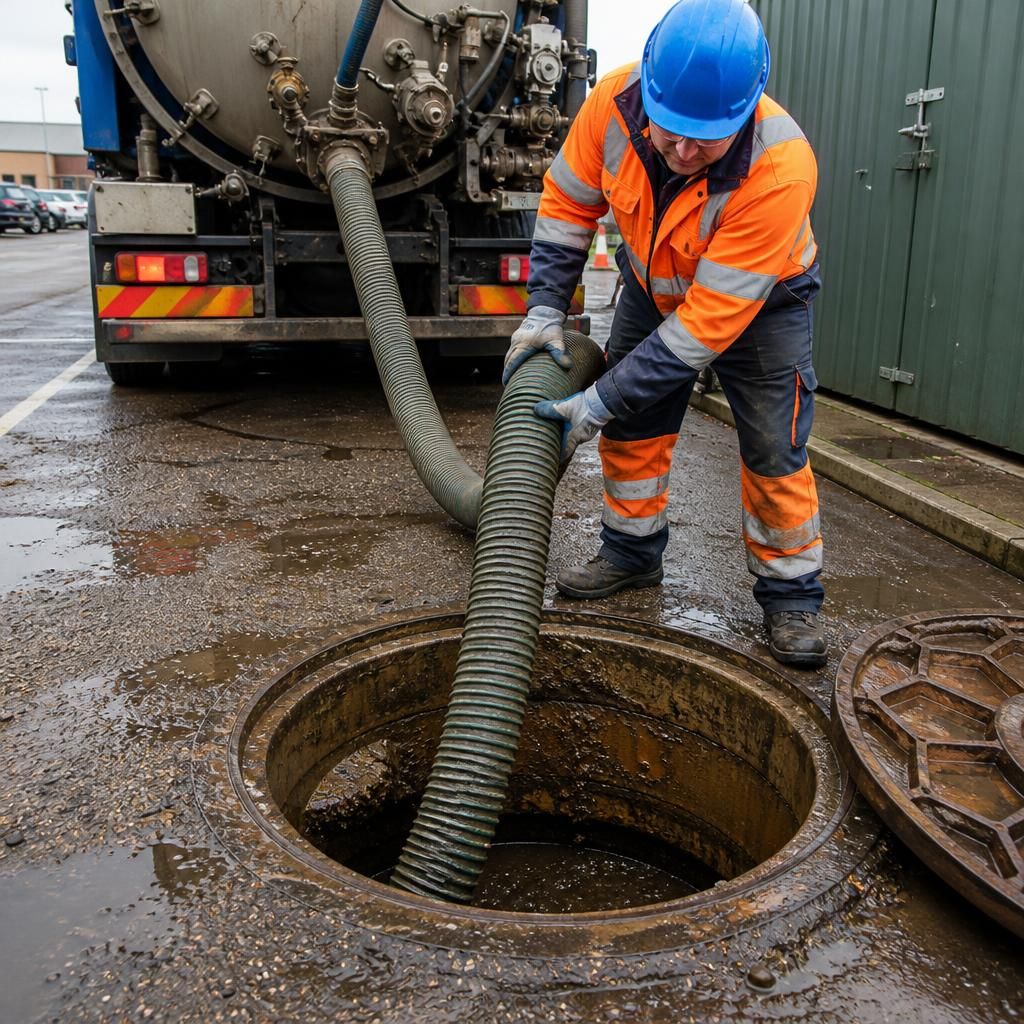
The availability and management of wash water can affect commercial sewage tank cleaning cost when the specification includes jetting or internal washing. The contractor may need a suitable water connection, additional equipment or arrangements for collecting contaminated wash water rather than allowing it to enter an unsuitable drain or surface-water system.
This should be clarified when the work is quoted. Confirm whether water supply, washdown, collection and disposal are included, and identify any site restrictions that could affect the process. A tank that only requires waste removal may therefore have a different cost from one that must be washed down and left in a specified condition.
Discuss your commercial sewage tank cleaning requirements
Discuss your commercial sewage tank cleaning requirements with Blue Fish Water Management Ltd to clarify the appropriate cleaning scope and information needed for a suitable quotation.