
How should you choose a sewage tank cleaning contractor?
Choose a sewage tank cleaning contractor by comparing relevant experience, documented competence, health and safety controls, environmental compliance and the clarity of its proposed work. Ask for a written scope covering access, cleaning methods, waste handling, reporting and any follow-up recommendations, then assess whether the contractor can coordinate safely with your site’s operational requirements.
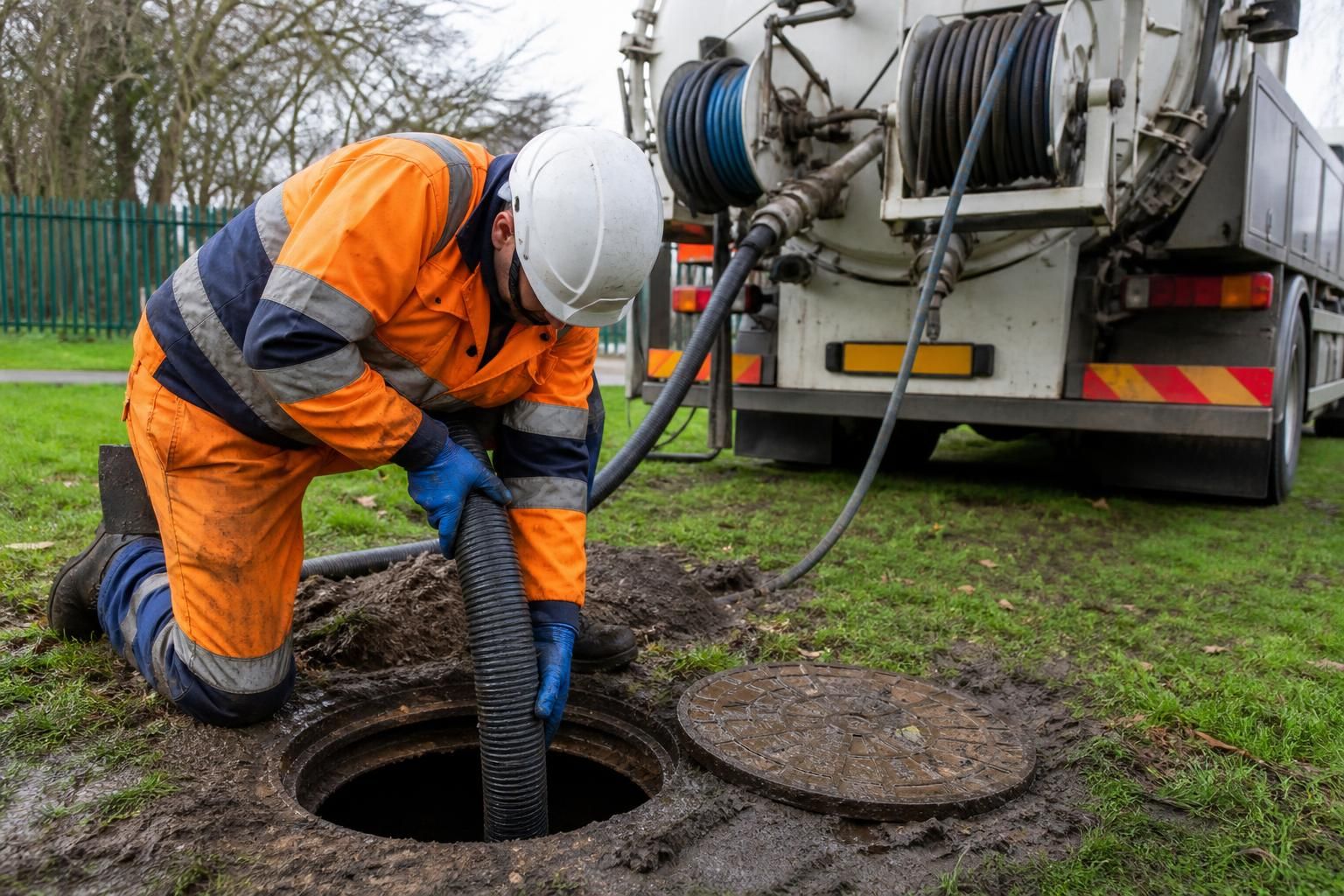
Choosing a sewage tank cleaning contractor means assessing whether the company can carry out the work lawfully, safely and to a standard that protects the site’s drainage system and surrounding environment. The decision should be based on verifiable competence, suitable resources, waste-disposal arrangements, site-specific planning, transparent pricing and the quality of the records provided after the work.
Start with the type of tank and the work required. Contractors may deal with septic tanks, cesspools, settlement tanks, interceptors, grease tanks and other wastewater assets, but not every company has the same equipment or relevant experience. Explain the tank’s purpose, construction, approximate capacity, location, condition and access restrictions. Confirm that the contractor understands whether the requirement is routine emptying, sludge removal, inspection, blockage clearance or cleaning before maintenance work. A contractor that cannot distinguish between these requirements may produce an unsuitable method or price.
Ask how the contractor establishes the condition of the tank before work begins. Useful checks may include reviewing previous service records, inspecting visible access points and identifying signs of structural damage, surcharge, leakage or unusual contents. Cleaning will not correct a damaged tank, defective inlet or outlet, poor ventilation arrangement or drainage fault. The contractor should explain how such issues will be recorded and reported without presenting additional work as an automatic requirement.
Check the contractor’s legal and operational arrangements. A suitable company should be able to explain how it manages the waste removed from the tank and where that waste is taken. Ask for evidence that its waste-carrier and disposal arrangements are appropriate for the material involved. The paperwork should identify the type and quantity of waste where applicable, the receiving facility and the parties responsible for each stage of transfer. Be cautious if a quotation treats disposal as an unexplained incidental cost or gives no clear account of the waste route.
Insurance is another basic verification point. Request confirmation of relevant public liability cover and, where the work involves employees or site-specific hazards, employers’ liability cover. If the contractor will operate vehicles or lifting equipment on the premises, check that its arrangements account for vehicle movements, loading areas and the risk of damage to roads, paving, drainage covers or other property. The level of cover should be considered in relation to the site and the work, rather than accepted as a box-ticking exercise.
Examine how the contractor will work on your site. The method should reflect the tank’s position, available turning space, hose distance, ground conditions, nearby buildings, pedestrian routes and the presence of other contractors. Ask who is responsible for providing access, unlocking gates, isolating equipment and confirming that the tank can be reached. If access is difficult, find out whether the contractor has suitable hose lengths, tankering arrangements and contingency measures rather than assuming these are included.
Consider the effect of the work on the site’s operations. A commercial premises may need controls for vehicle movements, public exclusion, odour, noise, hygiene and temporary restrictions around the tank. The contractor should identify information it needs from the site and explain what must be in place before arrival. For higher-risk locations, request the relevant risk assessment and method statement before authorising the work, and make sure the proposed controls are specific to the actual site rather than generic wording copied between jobs.
Pay particular attention to confined-space competence. A tank should never be entered simply because cleaning cannot be completed from the surface. Entry into a sewage tank can involve oxygen deficiency, toxic gases, engulfment, biological exposure and difficult rescue conditions. Ask the contractor to confirm whether its method avoids entry. If entry is genuinely necessary, the company must be able to explain the formal controls, competent personnel, atmospheric testing, suitable equipment, communications and rescue arrangements. Do not accept an informal promise that someone will be nearby in an emergency.
Site hygiene should also be part of the selection process. Ask how the contractor prevents contamination of clean areas, manages hose and equipment handling, controls spills and cleans or disinfects equipment where appropriate. The method should address what happens if the tank contains unexpected materials, chemical residues or unusually hazardous waste. Work should stop for further assessment where the contents differ materially from the information supplied.
Compare quotations on a like-for-like basis. A low headline price may exclude disposal, additional pumping, difficult access, waiting time, treatment of unexpected contents, cleaning of surrounding surfaces or a written completion record. Ask each contractor to state its assumptions, exclusions, charging basis and circumstances that could lead to additional charges. Check whether the quotation covers mobilisation, equipment, labour, waste transfer, final checks and any agreed photographs or documentation.
The written terms should also explain cancellation, postponement, damage, payment, responsibility for access and the procedure for approving extra work. A contractor should not undertake materially different work without an agreed variation, except where immediate action is necessary to prevent danger or environmental harm. Comparing the detail behind each price is more useful than comparing totals alone.
Assess the quality of the completion information. After cleaning, the record should normally identify the site and tank, date of attendance, work completed, relevant observations, waste-disposal details and any limitations encountered. Photographs can be useful where they are safe and proportionate, particularly if access covers, pipework or defects need to be reviewed later. The record should distinguish between completed cleaning, observed defects and recommended further investigations.
Ask whether the contractor can keep service records in a form that supports the site’s maintenance and compliance arrangements. Consistent records help the responsible person identify changes in sludge accumulation, access problems, recurring faults or evidence that the cleaning interval needs review. They should not be used to claim that a tank is safe or compliant in every respect when the visit only covered cleaning.
Use references and evidence carefully. Relevant references should relate to similar tank types, site conditions and operational risks, not simply to general drainage work. Ask for examples of how the contractor managed restricted access, unusual waste, environmental incidents or coordination with an occupied commercial site. Evidence should be current enough to reflect the company’s present procedures, equipment and personnel. Confirm who will actually perform the work if subcontractors are used, and establish which organisation remains responsible for supervision, insurance, records and waste arrangements.
Before appointing a contractor, ask these practical questions:
- What information is needed about the tank and its contents before the visit?
- What equipment and vehicle access will the work require?
- How will waste be documented and transferred for disposal?
- What site controls are expected from the client?
- How will unexpected contents, damage or unsafe conditions be handled?
- Will subcontractors be involved, and who supervises them?
- What records and recommendations will be issued after completion?
- Which items are included in the price and which could incur an additional charge?
Red flags include an unusually vague quotation, pressure to approve unpriced extra work, reluctance to discuss waste disposal, no clear arrangements for difficult access, generic safety paperwork, or claims that cleaning alone resolves structural or drainage defects. The strongest choice is the contractor that can explain its limitations as clearly as its capabilities, provides evidence for its arrangements and gives the site enough information to make an informed appointment.
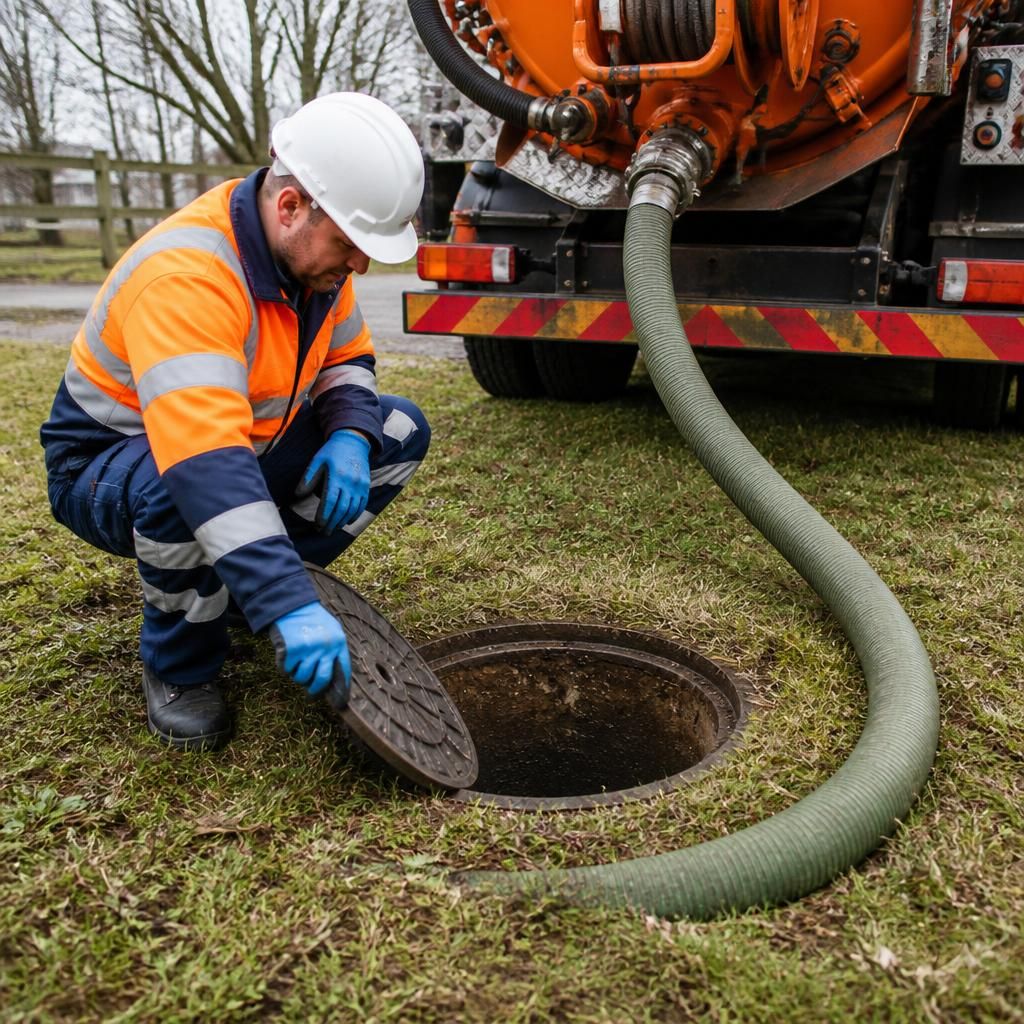
Verify that the documents belong to the contractor you are appointing. Check that the legal name on the quotation matches the organisation named on its insurance documents, waste-carrier information, method statement and invoice. If another company will transport or receive the waste, identify that organisation and establish its role before work begins. This prevents uncertainty over who is responsible for the work, waste transfer and any resulting records.
Do not rely solely on logos, certificates or a trading name. Ask for current, relevant evidence and check that it relates to the type of sewage tank work proposed. Any discrepancy in company names, expired documentation or unexplained third-party involvement should be resolved in writing before the contractor is appointed.
Discuss Your Sewage Tank Cleaning Requirements
Discuss your sewage tank cleaning requirements with Blue Fish Water Management Ltd and provide details of the tank, site access and intended work. This helps establish a suitable scope before you appoint a contractor.