
What does commercial sewage tank cleaning involve?
Commercial sewage tank cleaning involves isolating the tank, safely removing accumulated sewage and sludge, cleaning internal surfaces, and inspecting the tank and associated pipework for defects or blockages. The waste is then handled and disposed of in accordance with applicable environmental requirements, with any maintenance or remedial work identified during the process recorded for action.
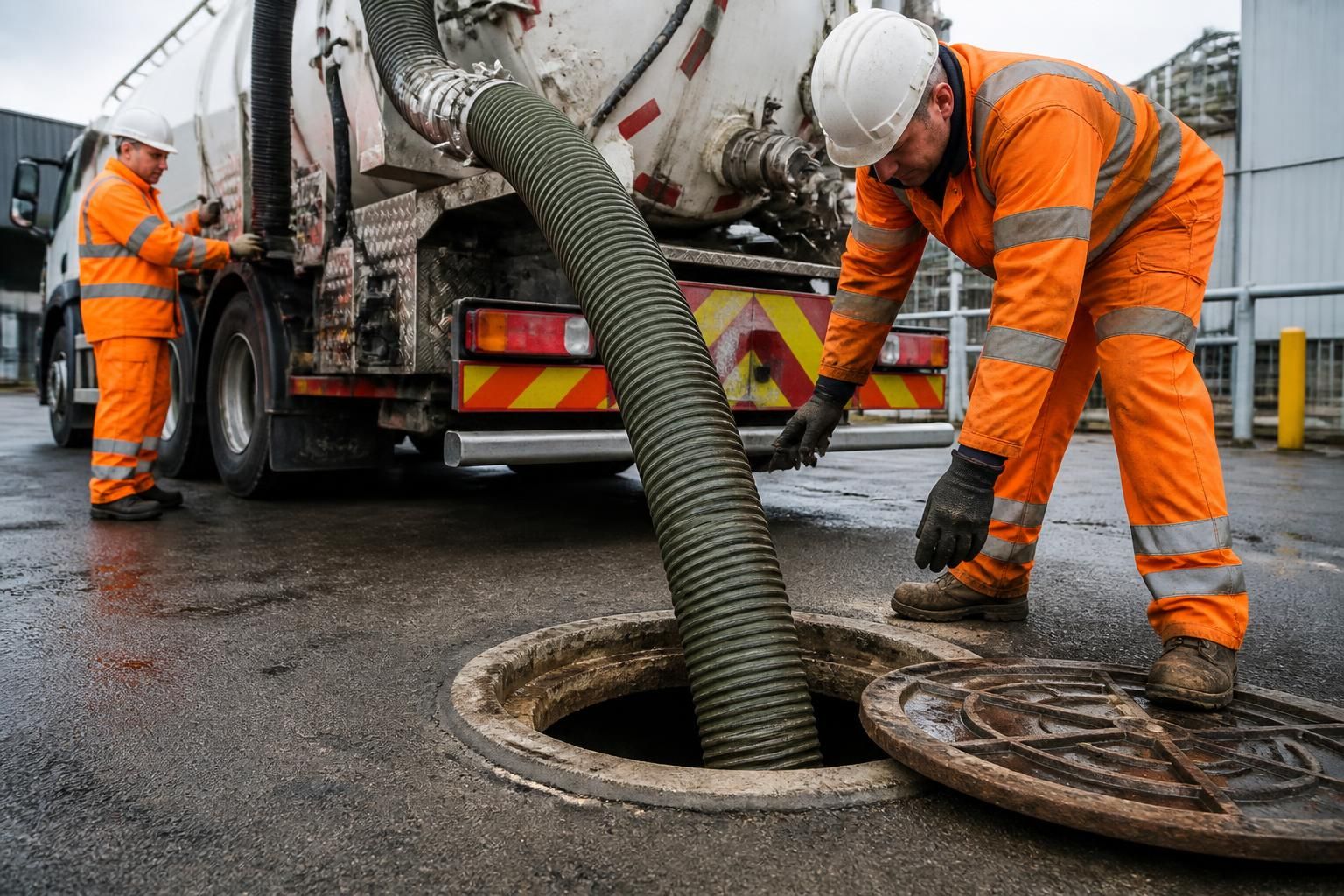
Commercial sewage tank cleaning is a planned maintenance operation that combines site preparation, controlled access, specialist equipment, hygiene precautions, waste tracking and post-cleaning checks. It is more involved than simply emptying a tank because the work must protect people, the surrounding site, the drainage system and the business’s operational records.
The process normally begins with a review of the installation and its use. A contractor should establish the tank’s location, construction, access points, connected drainage, likely contents and any restrictions affecting vehicles or equipment. The assessment should also consider whether the tank is in a confined space, whether hazardous gases may be present, and how cleaning can be completed without exposing employees, visitors or members of the public to sewage.
A suitable method statement and risk assessment should set out the work sequence and control measures. These may include:
- identifying who is responsible for authorising and supervising the work;
- keeping unauthorised people away from openings, hoses and equipment;
- controlling vehicle movements and positioning suction equipment safely;
- checking that access covers, ladders and surrounding ground are suitable for use;
- providing appropriate personal protective equipment and hygiene facilities;
- planning for spills, equipment failure, difficult access or unexpected tank contents; and
- confirming how the system will be returned to service after the work.
Before work starts, the contractor should coordinate with the site contact. Commercial premises may need temporary arrangements for toilets, production areas, kitchens, washrooms or other facilities connected to the tank. The timing and sequence of the work should therefore be considered alongside the business’s activities, rather than treated as an isolated drainage task.
Tank access requires particular care. Sewage tanks can contain oxygen-deficient or toxic atmospheres, and entering a tank is not a routine part of cleaning. Where entry is proposed, it requires a dedicated confined-space assessment, suitable monitoring, trained personnel, rescue arrangements and equipment appropriate to the identified risks. In many cases, cleaning can be completed from outside the tank, which avoids introducing people into a hazardous space.
Specialist vacuum equipment is selected according to the tank’s size, location and contents. The contractor should work in a way that limits splashing, aerosol generation and contamination of nearby surfaces. Hoses, tools and protective equipment should be managed to prevent sewage being transferred to clean areas. Any contaminated equipment or ground should be dealt with as part of the site clean-up, and personnel should follow suitable hand-washing and decontamination procedures before leaving the work area.
Cleaning may reveal issues that are not apparent during normal operation. These can include damaged covers, defective access points, corrosion, root intrusion, displaced connections, poor ventilation, unusual build-up or evidence that the tank is receiving unsuitable material. Findings should be distinguished between defects requiring immediate attention and items that can be included in planned maintenance. A cleaning contractor should not undertake additional repairs without the client’s agreement, unless an immediate safety or environmental measure is necessary.
Waste management is a separate part of the job, not an administrative afterthought. The contractor should identify the waste stream, use an authorised disposal or treatment route and retain the relevant transfer or consignment information. The business commissioning the work should keep documentation showing what was removed, when it was collected, where it was taken and who carried out the work. This provides an auditable record and helps demonstrate that sewage was handled in accordance with applicable environmental requirements.
After cleaning, the tank and surrounding area should be left in a safe condition. Covers and barriers need to be correctly reinstated, access points secured and any temporary isolation arrangements removed only when it is safe to do so. The responsible site contact should be told about defects, restrictions or operating changes that could affect future use. If the tank forms part of a larger drainage or water-management system, relevant findings should be passed to the person responsible for that system’s maintenance and compliance.
A useful completion report should record the asset or location, date of work, observed condition, cleaning method, waste details, defects found and recommendations. Photographs can support the record where they can be taken safely. Keeping these reports alongside previous service information makes it easier to identify recurring blockages, changes in the level of solids or deterioration in the installation, helping the business plan maintenance based on evidence rather than relying only on emergency call-outs.
Blue Fish Water Management’s wider water hygiene and compliance expertise can be relevant where sewage infrastructure sits alongside broader commercial water-safety responsibilities. The important principle is that tank cleaning should be treated as a controlled, documented maintenance activity, with the method matched to the installation and the risks identified before work begins.
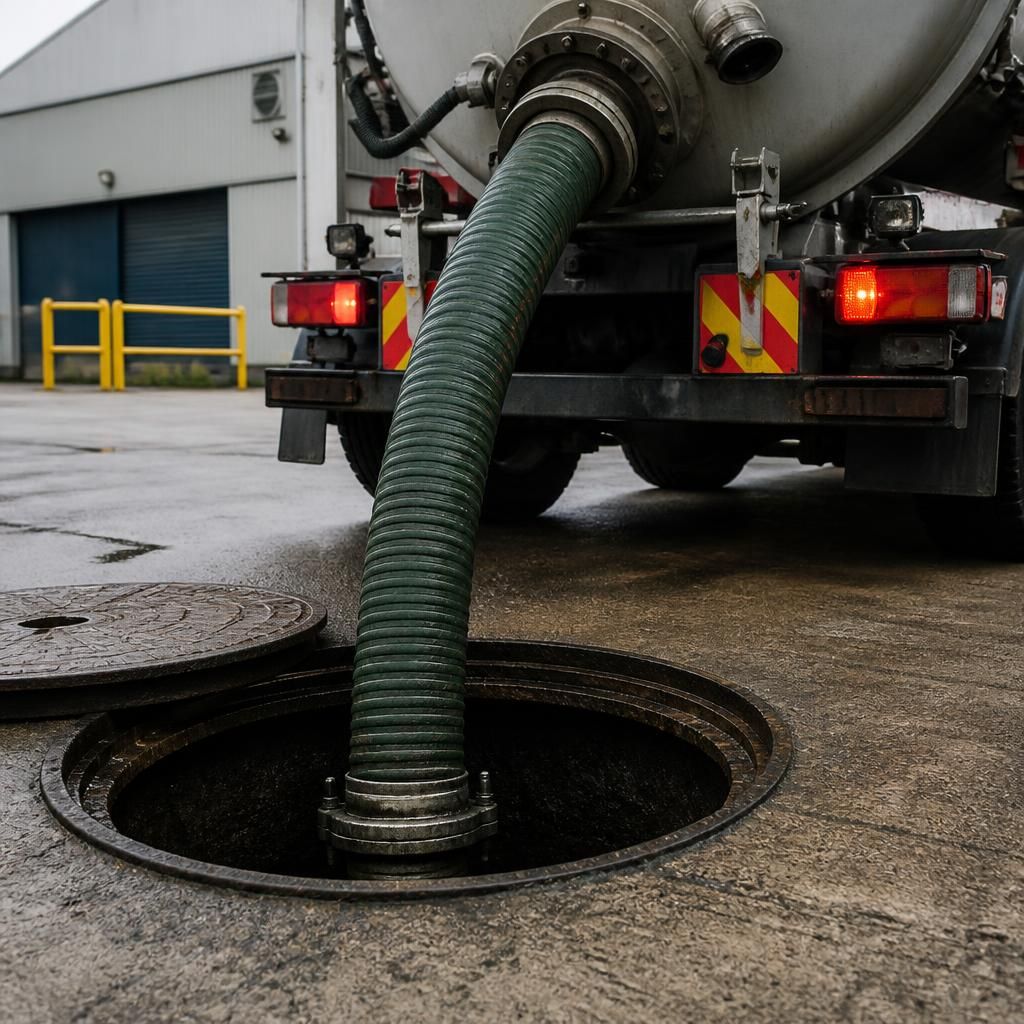
Commercial sewage tank cleaning is intended to remove accumulated solids and deposits that reduce usable capacity, restrict flow or conceal defects. The aim is not simply to make the tank appear clean: the cleaning method must remove material effectively without damaging the tank structure, protective coatings, seals or connected pipework.
The contractor should select the cleaning approach according to the tank’s construction, condition and contents. For example, deposits that adhere to internal surfaces may need controlled washing after the bulk waste has been removed, while fragile surfaces or older installations may require a less aggressive method. Any wash water and loosened material must also be captured and managed as part of the waste-handling process, rather than allowed to enter surrounding drainage or ground.
This balance is important because excessive pressure or unsuitable equipment can worsen existing defects, damage joints or dislodge material into downstream pipework. A competent cleaning process therefore combines effective deposit removal with care for the asset itself, leaving the tank in a condition that can be assessed and returned to service safely.
Discuss your commercial sewage tank cleaning requirements
Discuss your commercial sewage tank cleaning requirements with Blue Fish Water Management to establish a suitable maintenance approach for your site and operations.