
How often should commercial sewage tanks be cleaned?
Commercial sewage tanks should be cleaned according to their capacity, usage, incoming flow and the level of accumulated sludge, rather than on a single standard timetable. Routine inspections and records should identify when cleaning is needed, with the interval reviewed after changes to the system, occupancy or wastewater loading.
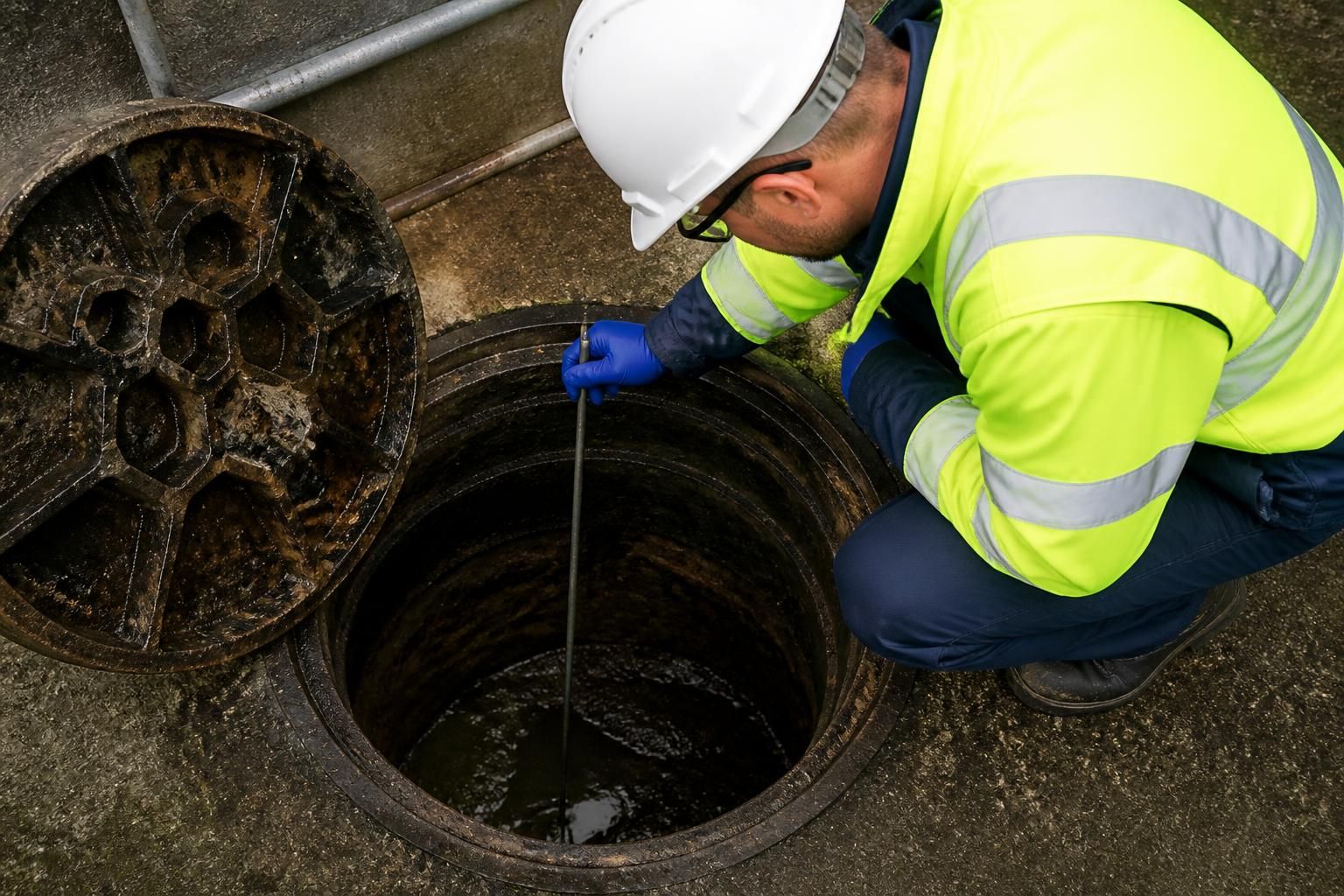
There is no universal cleaning interval for a commercial sewage tank. The appropriate frequency is the point at which accumulated solids, scum or deposits could reduce effective capacity, interfere with treatment, cause an escape of sewage or create an unacceptable operational and environmental risk. The interval should therefore be set through inspection, operating records and the tank manufacturer’s or treatment system designer’s guidance, rather than by applying a calendar date without checking the system’s condition.
Commercial systems generally require closer management than domestic tanks because wastewater loading can vary substantially. Relevant factors include:
- the tank’s working capacity and available freeboard;
- the number of people using the premises and whether occupancy is consistent;
- the volume and character of incoming wastewater;
- whether the premises produces high levels of fats, oils, grease, solids or cleaning chemicals;
- the type of installation, such as a septic tank, cesspool, settlement tank or packaged sewage treatment plant;
- the condition of inlet and outlet pipework, baffles, filters, pumps and alarms; and
- seasonal use, changes in occupancy, extensions to the premises or alterations to drainage.
Inspection should establish how much sludge and scum have accumulated and whether the tank is still operating as designed. A visual check may identify a high level, damaged cover, overflow, odour, ponding or signs of leakage, but it will not always show the depth of settled solids. Where appropriate, a competent contractor can use suitable measuring equipment and inspect accessible components without exposing people to unnecessary contact with sewage or hazardous gases.
A tank may need cleaning sooner than planned if the liquid level rises unusually quickly, toilets or drains discharge slowly, sewage backs up, an alarm activates, odour becomes persistent, or effluent appears to be escaping. These signs should be treated as faults requiring investigation, not as a reason simply to arrange routine emptying. The underlying cause could be an obstruction, damaged pipework, a failed pump, excessive hydraulic loading, poor ventilation, a blocked outlet filter or a treatment-process problem.
Cleaning should remove accumulated sludge and floating material while protecting the tank, pipework and treatment equipment. For a sewage treatment plant, indiscriminate removal of all contents can disrupt the biological population needed for treatment. The contractor should understand the particular system and follow its operating instructions. Cleaning is also different from repairs: emptying a tank will not resolve structural defects, infiltration, root ingress, electrical failures or problems caused by unsuitable discharges.
For compliance purposes, the operator should maintain a documented maintenance schedule based on the site’s risk and actual operating history. Useful records include inspection dates, observed sludge levels, tank capacity information, cleaning and maintenance work, faults, corrective actions, waste documentation and any changes to use or occupancy. Reviewing these records makes it possible to identify a reliable site-specific interval. If a tank repeatedly reaches capacity between planned visits, the interval or the system’s capacity and loading should be reassessed.
Waste removed from a commercial sewage tank must be handled and transported in accordance with applicable waste requirements. The business responsible for the premises should use a suitably competent and authorised contractor, retain the relevant transfer documentation and confirm where the waste has been taken. Any discharge from the system must also remain within the conditions applying to that installation and its environmental permit or exemption, where relevant.
Cleaning frequency should be reconsidered after a change such as a building extension, increased staffing, conversion to a different use, installation of water-efficient fittings or connection of new appliances. A reduction in water use does not automatically mean less sludge production, while the introduction of food preparation, industrial processes or stronger cleaning products can change the waste profile significantly.
A practical management cycle is to inspect the installation at planned intervals, measure or assess accumulation, arrange cleaning before capacity becomes restricted, check the tank and associated equipment after emptying, and record the findings. The first interval may be provisional where reliable history is unavailable; subsequent inspections should refine it. This approach provides a more defensible maintenance plan than relying on a fixed annual assumption and helps demonstrate that sewage storage and treatment have been managed responsibly.
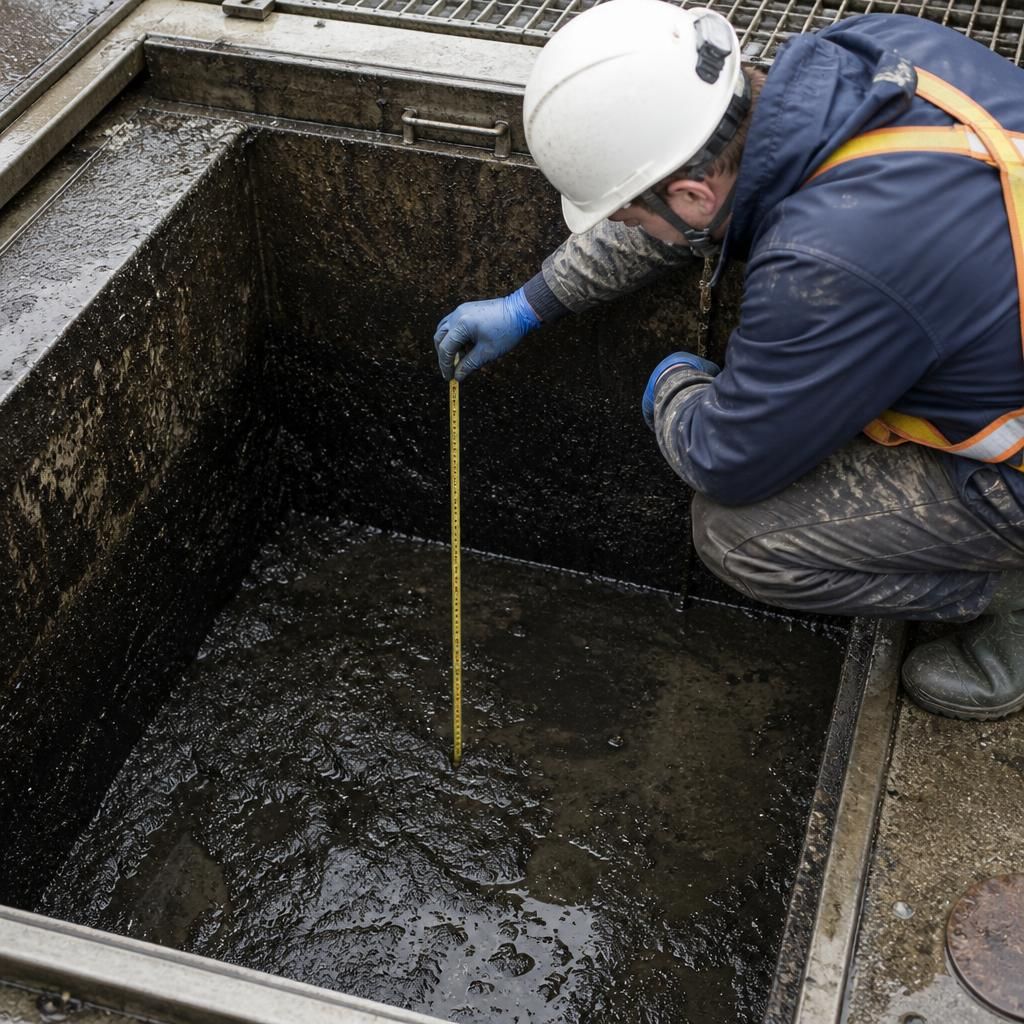
Tank cleaning should be scheduled separately from checks on filters, pumps, alarms and other treatment equipment. These components can require attention before the tank itself needs emptying, while a tank may still need desludging even when its mechanical equipment is functioning correctly. A single combined service interval can therefore lead to unnecessary cleaning in some areas and missed maintenance in others.
Inspection findings should identify which task is required: measuring sludge and scum levels, clearing an accessible filter, testing an alarm or investigating a pump fault are different interventions. Recording them separately gives the operator a clearer basis for setting the next cleaning date and helps prevent a minor equipment issue from being mistaken for a need to empty the whole tank.
Review your commercial sewage tank cleaning needs
If you need to establish or review a cleaning schedule for a commercial sewage tank, speak to Blue Fish Water Management Ltd about the system’s condition, usage and maintenance records. A site-specific review can help identify the appropriate next steps.