
Who is qualified to clean an unvented hot water tank?
An unvented hot water tank should be cleaned by a competent professional with suitable training in unvented hot water systems and water hygiene, such as a qualified plumbing engineer or legionella control specialist. Where the work involves safety controls, discharge pipework or other unvented-system components, the person should also have the appropriate unvented hot water qualifications and experience to inspect and reinstate the system safely.
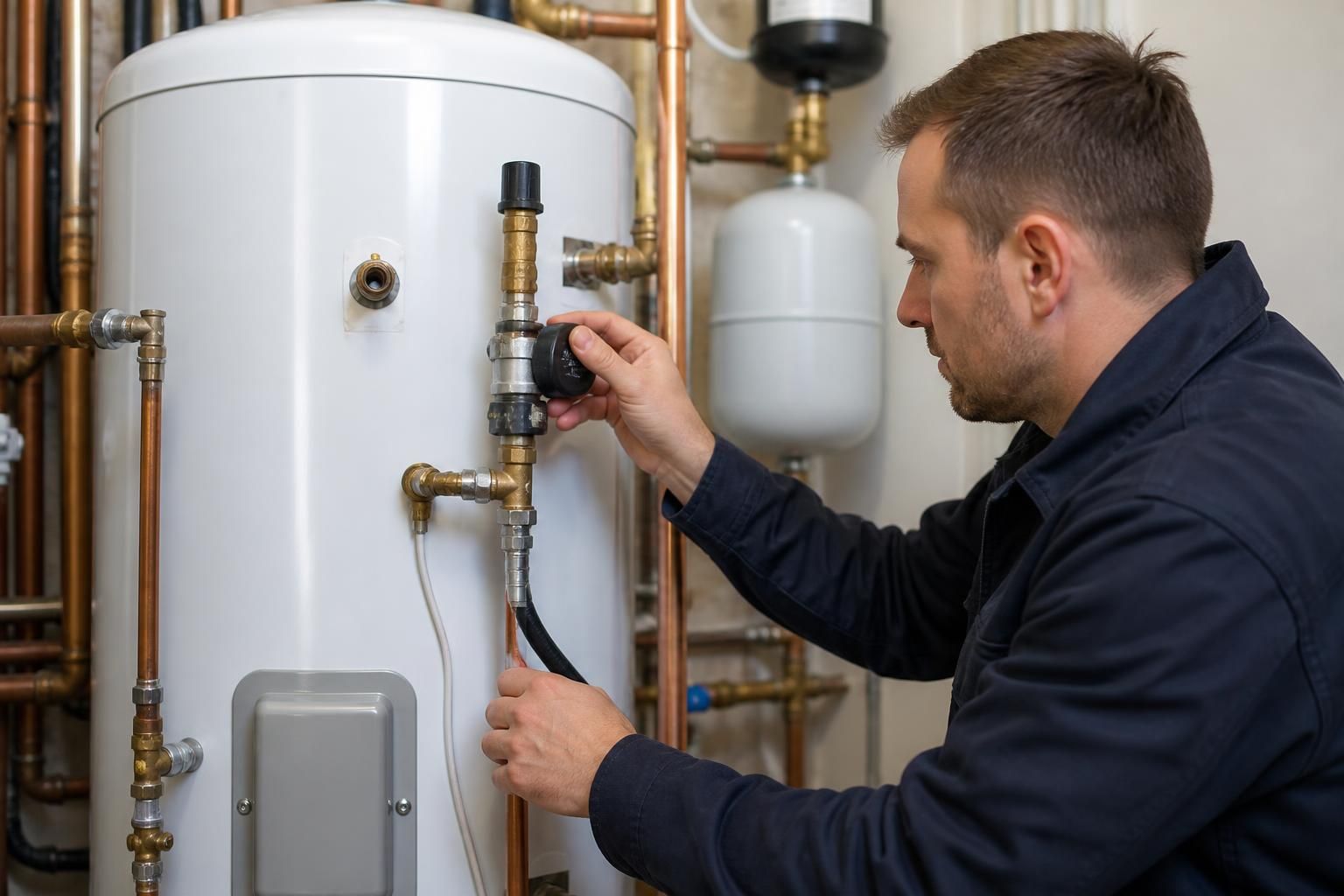
The person responsible for cleaning an unvented hot water tank should be able to demonstrate competence for both sides of the work: safe intervention in a pressurised hot water system and hygienic control of the stored water. In practice, this usually means a suitably trained plumbing or heating engineer, a water hygiene professional with relevant system experience, or a team whose combined skills cover both disciplines.
There is not one universal job title that automatically makes someone qualified. Competence depends on the work being undertaken, the type of installation and the risks identified at the premises. A suitable person should be able to understand the tank arrangement, isolate and drain it safely, remove and replace access covers or components correctly, clean and disinfect surfaces without damaging the vessel, and return the system to service in accordance with the manufacturer’s instructions.
For a commercial or industrial site, the contractor should also understand how the tank forms part of the wider domestic hot water system. This includes associated cold-water storage or supply pipework, secondary circulation, temperature controls, outlets, strainers, valves and any thermostatic mixing arrangements. Cleaning only the visible vessel may not address contamination or stagnation elsewhere in the system.
- Unvented-system competence: The engineer should understand stored pressure, expansion control, temperature and pressure relief arrangements, tundishes, discharge pipework and the correct operation of safety devices.
- Water hygiene competence: The person should understand contamination risks, scale and biofilm, stagnation, flushing, disinfection principles and the precautions needed to prevent recontamination.
- Practical experience: Training should be supported by experience with comparable unvented cylinders and the particular configuration installed at the premises.
- Risk assessment skills: The contractor should identify hazards before work begins, including scalding, stored pressure, electrical supplies, confined access, chemical exposure and possible interruption to critical operations.
- Evidence of controlled working: There should be a clear method statement, suitable equipment and a defined process for checking the system before it is handed back.
Some tasks require additional competence beyond routine cleaning. If a safety valve, expansion vessel, thermostat, immersion heater, temperature control or discharge arrangement is defective, the person carrying out the work must be capable of testing and dealing with that component, or arrange for the appropriate specialist to do so. Cleaning personnel should not adjust, dismantle or certify safety-critical parts merely because they are accessible during the clean.
The distinction between cleaning and servicing is important. Removing deposits from a cylinder does not by itself prove that the unvented system is safe. Following the work, relevant controls should be checked, connections should be secure, leaks should be excluded, and the system should be refilled, vented and brought back into operation in a controlled manner. Where a safety device has been disturbed or replaced, the required functional checks should be completed by someone competent to perform them.
For premises covered by a legionella control programme, the responsible person should select a contractor whose water hygiene competence matches the risk. The contractor may need to work from the site’s written scheme, understand the findings of the legionella risk assessment and coordinate with the person responsible for water safety. A domestic-scale cleaning approach may be unsuitable where the tank supplies care settings, accommodation, healthcare facilities, production areas or other premises with vulnerable occupants or complex distribution systems.
Before appointing a contractor, a business can ask for:
- details of relevant training in unvented hot water systems and water hygiene;
- evidence of experience with similar tank types and system arrangements;
- the proposed risk assessment and method statement;
- confirmation of who will undertake any work on safety controls or discharge pipework;
- details of the cleaning or disinfection method and chemicals to be used, where applicable;
- the inspection, testing and handover records that will be supplied; and
- evidence that the work will be carried out in line with applicable health and safety requirements and the site’s water management procedures.
A business should be cautious if a contractor cannot explain the limits of the work, proposes to bypass a safety device, offers no documented method or treats all tanks as identical. The right question is not simply whether someone has cleaned a hot water tank before, but whether they can safely manage the specific unvented system and the water hygiene risks associated with it.
After completion, the records should identify the asset, date of work, person or company carrying it out, findings, cleaning method, any defects, remedial recommendations and the checks completed before return to service. If disinfection has been undertaken, the relevant results and acceptance criteria should also be recorded. These documents help the dutyholder demonstrate that the work was planned and completed by a person with appropriate competence, while providing useful evidence for future inspections and water safety reviews.
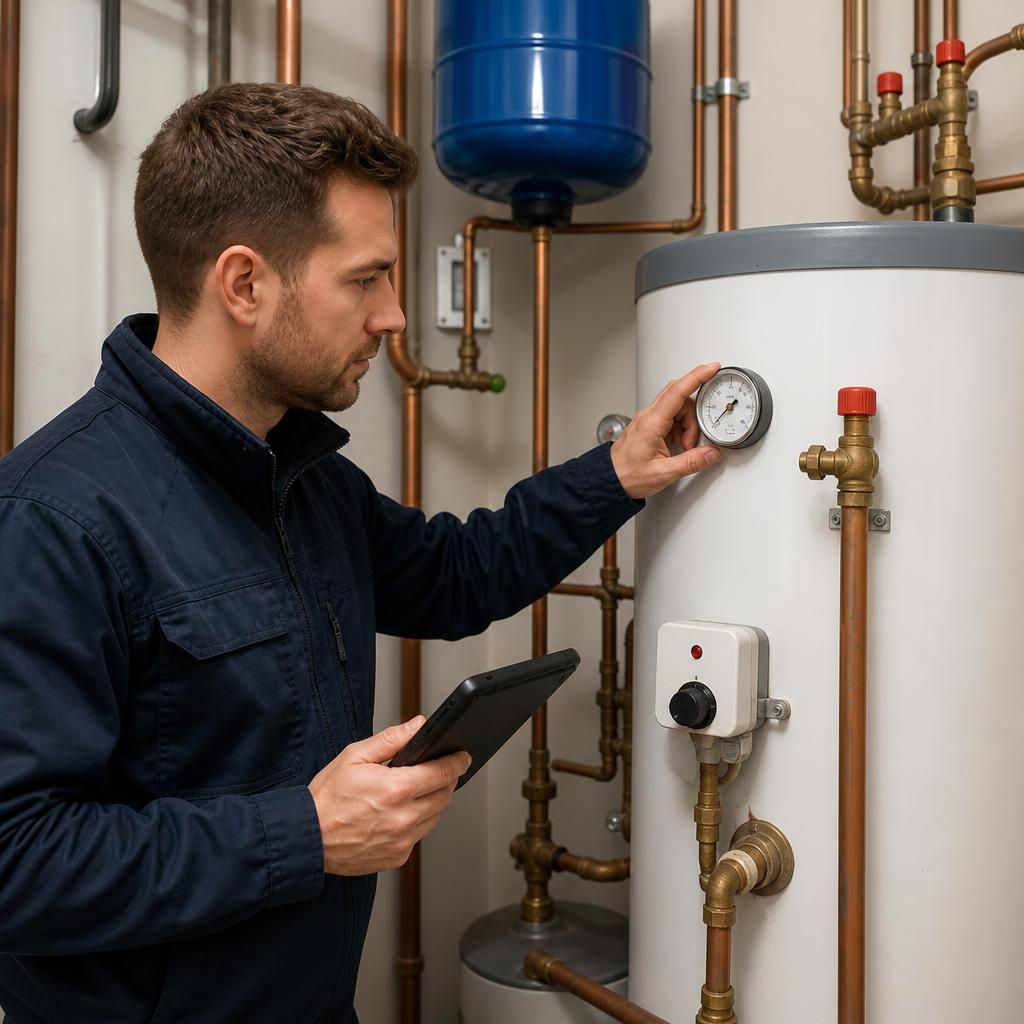
Appointing a qualified contractor does not transfer the business’s responsibility for managing water safety. The dutyholder should retain oversight of the work, provide relevant information about the system and ensure that any recommendations are reviewed and acted on by the appropriate person.
This is particularly important where cleaning identifies defects, unusual system conditions or a need for further investigation. The contractor can report findings and confirm the checks completed, but the business should ensure that outstanding actions are assigned, recorded and followed through. A clear division of responsibilities helps prevent a cleaning visit from being treated as a substitute for ongoing management of the unvented hot water system.
Discuss who is qualified to clean your unvented hot water tank
If you need to confirm the appropriate competence for cleaning your unvented hot water system, discuss the installation and its water hygiene requirements with Blue Fish Water Management Ltd.