
How disruptive is unvented hot water tank cleaning for business operations?
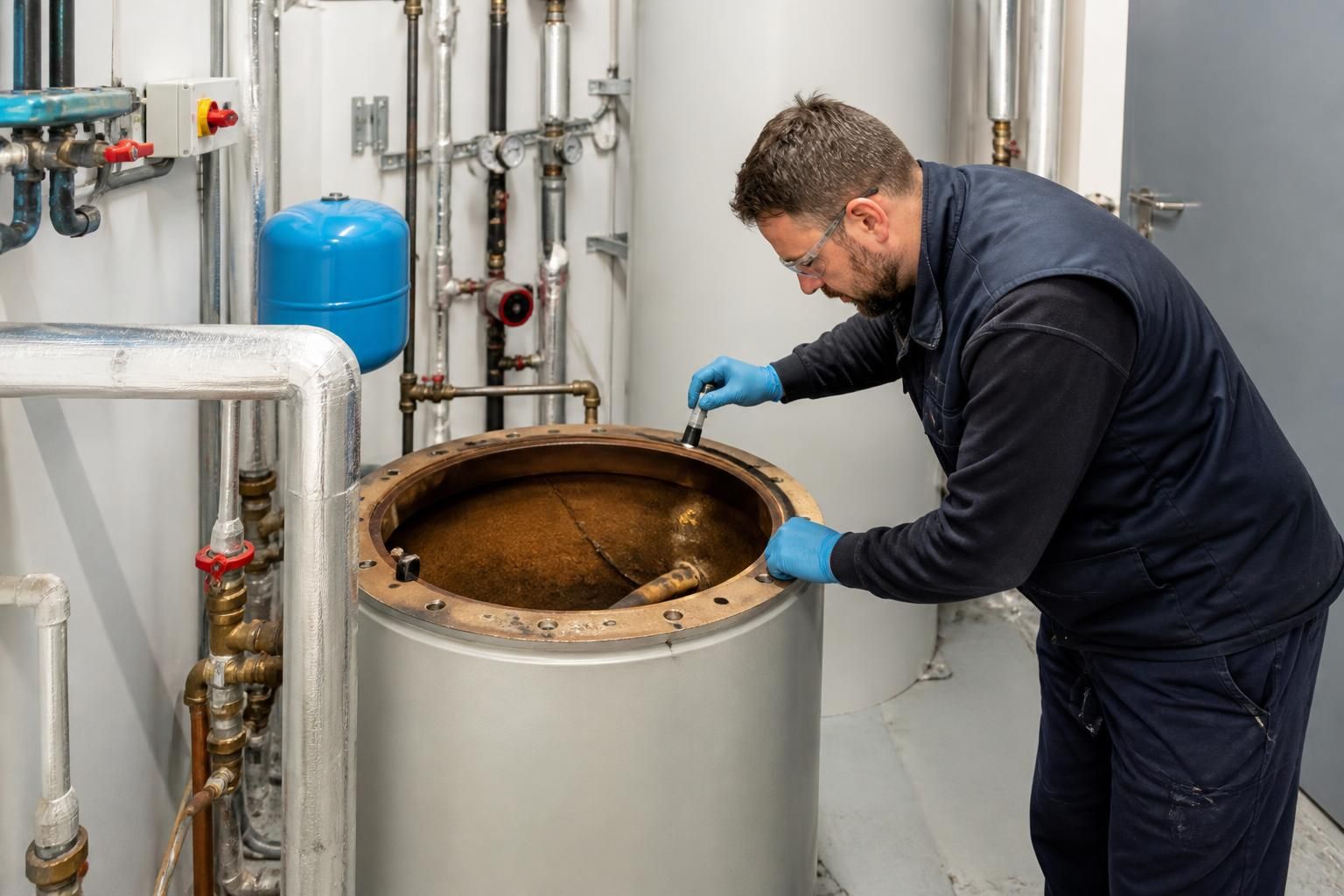
Unvented hot water tank cleaning is usually a controlled maintenance activity, but it can temporarily affect hot water availability, access to plant areas and the use of connected facilities. The operational impact is normally greatest where the tank is the sole source for welfare facilities, showers, kitchens or production processes, or where the installation cannot be isolated without affecting other equipment.
The work itself does not necessarily require the whole building to close. A suitably planned visit separates the cleaning activity from the services that must remain operational. Before work starts, the responsible person, facilities manager or contractor should establish which outlets and processes depend on the tank, whether more than one hot water source is available, and whether any vulnerable occupants or critical activities could be affected by an interruption.
Factors that influence disruption include:
- the tank’s size, location and accessibility;
- whether the installation forms part of a wider hot water system;
- the condition of the vessel, internal surfaces, valves and associated pipework;
- the extent of cleaning required and whether deposits or contamination are difficult to remove;
- the number of outlets supplied by the system;
- the availability of isolation valves and suitable drainage arrangements; and
- whether defects are identified that require remedial work before the system can be returned to service.
For many businesses, the main interruption is the period during which the tank is isolated, drained, cleaned and refilled. The system may also need checks before normal use resumes. This means that the effect is not limited to the time spent physically cleaning the vessel: safe isolation, preparation, flushing, inspection and recommissioning must also be allowed for. A professional assessment of the installation should establish the likely sequence and identify any constraints before the work is scheduled.
A typical controlled process may involve:
- confirming the system layout, access requirements and isolation points;
- agreeing which facilities will be unavailable and notifying the relevant building users;
- isolating the tank and associated equipment in accordance with the system design;
- draining the vessel where required and carrying out the appropriate cleaning activity;
- checking accessible components for damage, fouling or other conditions that could affect safe operation;
- refilling and flushing the system; and
- returning it to service only after the necessary operational and safety checks have been completed.
The work may take longer than anticipated if access is restricted, isolation valves do not operate correctly, drainage is inadequate or deposits are more extensive than expected. A tank that has not been maintained appropriately may also reveal issues with expansion vessels, temperature controls, pressure-relief arrangements or connected pipework. These findings should not be bypassed simply to restore hot water more quickly. They should be assessed and recorded so that the system can be returned to service safely.
Businesses can reduce avoidable disruption by providing accurate system information in advance, arranging clear access to the plant, identifying critical users and making sure the contractor knows about any operational constraints. It is also sensible to coordinate the work with other planned maintenance rather than creating separate periods of isolation. Where the building has multiple tanks or independent hot water circuits, the work may be sequenced so that unaffected areas remain available, subject to the design and safe working requirements of the installation.
Communication is an important part of the control process. Staff, tenants, contractors and other affected users should be told which facilities may be unavailable, the expected work sequence and the conditions for returning the system to normal use. Notices should be updated if the scope changes. This is particularly important in workplaces with shared welfare facilities, residential accommodation, healthcare-related environments or production areas where loss of hot water could affect hygiene procedures.
After cleaning, retain the relevant service documentation, including the date of the work, the system or tank concerned, the findings, actions taken and any recommendations for further work. Where testing or verification forms part of the agreed scope, those results should be kept with the maintenance records. Clear records help demonstrate that any interruption was managed as part of a defined water hygiene control process rather than treated as an unplanned failure.
In practical terms, disruption is best judged by the consequences of isolating the particular tank, not by the cleaning label alone. A well-documented installation with good access and effective isolation may be straightforward to manage, while a poorly configured or heavily used system can require more coordination. Blue Fish Water Management Ltd can assess the relevant system conditions and provide pragmatic advice on planning the work around business requirements, while keeping the focus on safe and compliant operation.
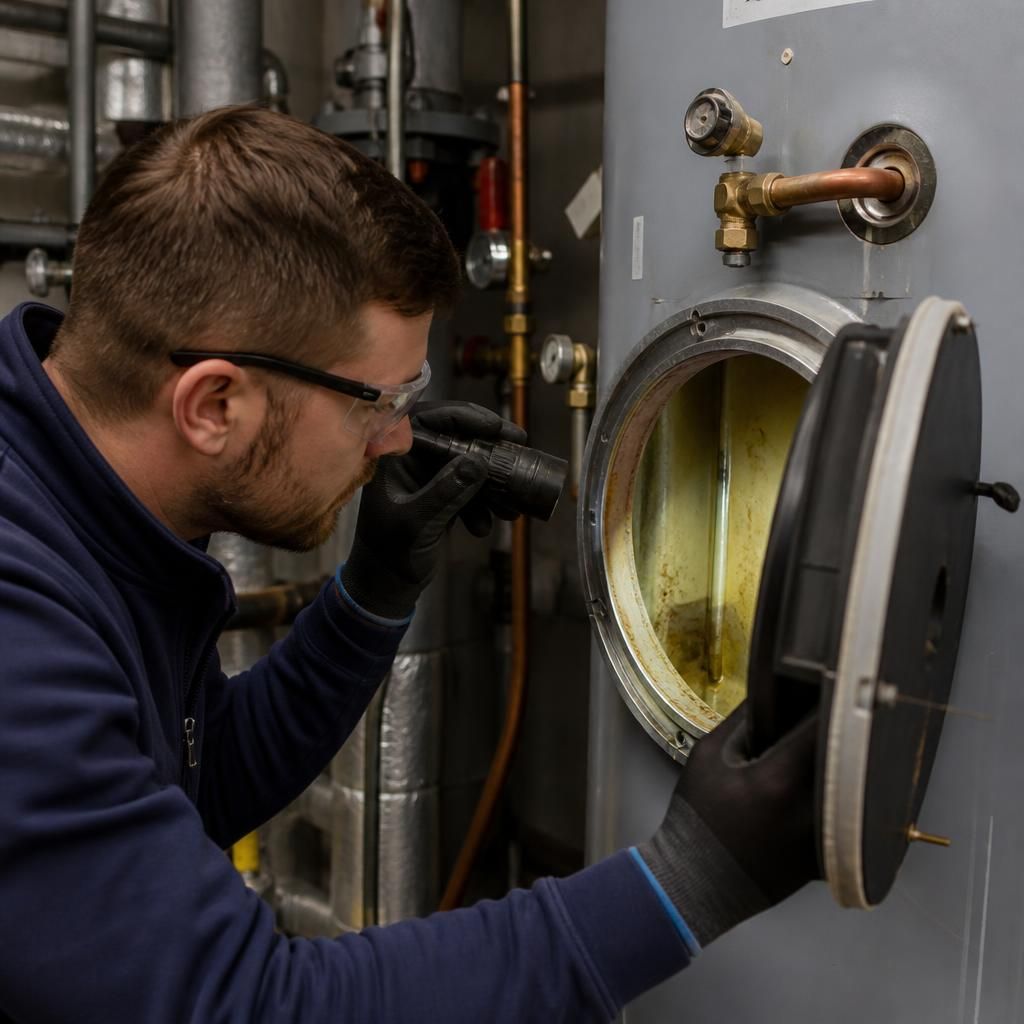
The expected duration should be assessed as two separate periods: the time the contractor is working at the tank and the time for which connected hot water services cannot be used. These periods may not be identical. For example, some preparation or inspection may take place while other facilities remain operational, whereas draining, cleaning, refilling and verification may require the tank to stay isolated.
Before approving the work, businesses should ask for the proposed sequence and the conditions for restoring service rather than relying on a standard time estimate. The scope should identify any dependencies on access, drainage, isolation equipment, cleaning requirements and follow-up checks. This gives the facilities team a more realistic basis for arranging temporary welfare or process measures where needed, while avoiding an unnecessarily broad shutdown.
Discuss your unvented hot water tank cleaning requirements
Discuss your unvented hot water tank cleaning requirements with Blue Fish Water Management Ltd to clarify the appropriate scope and controls for your installation. Sharing available system information will help establish the right next steps for your business.