
Can unvented hot water tank cleaning be tailored to different system configurations?
Yes. Unvented hot water tank cleaning can be tailored to the system’s design, capacity, controls, connected pipework, access arrangements and operational requirements, with the method and scope defined after reviewing the installation and its condition.
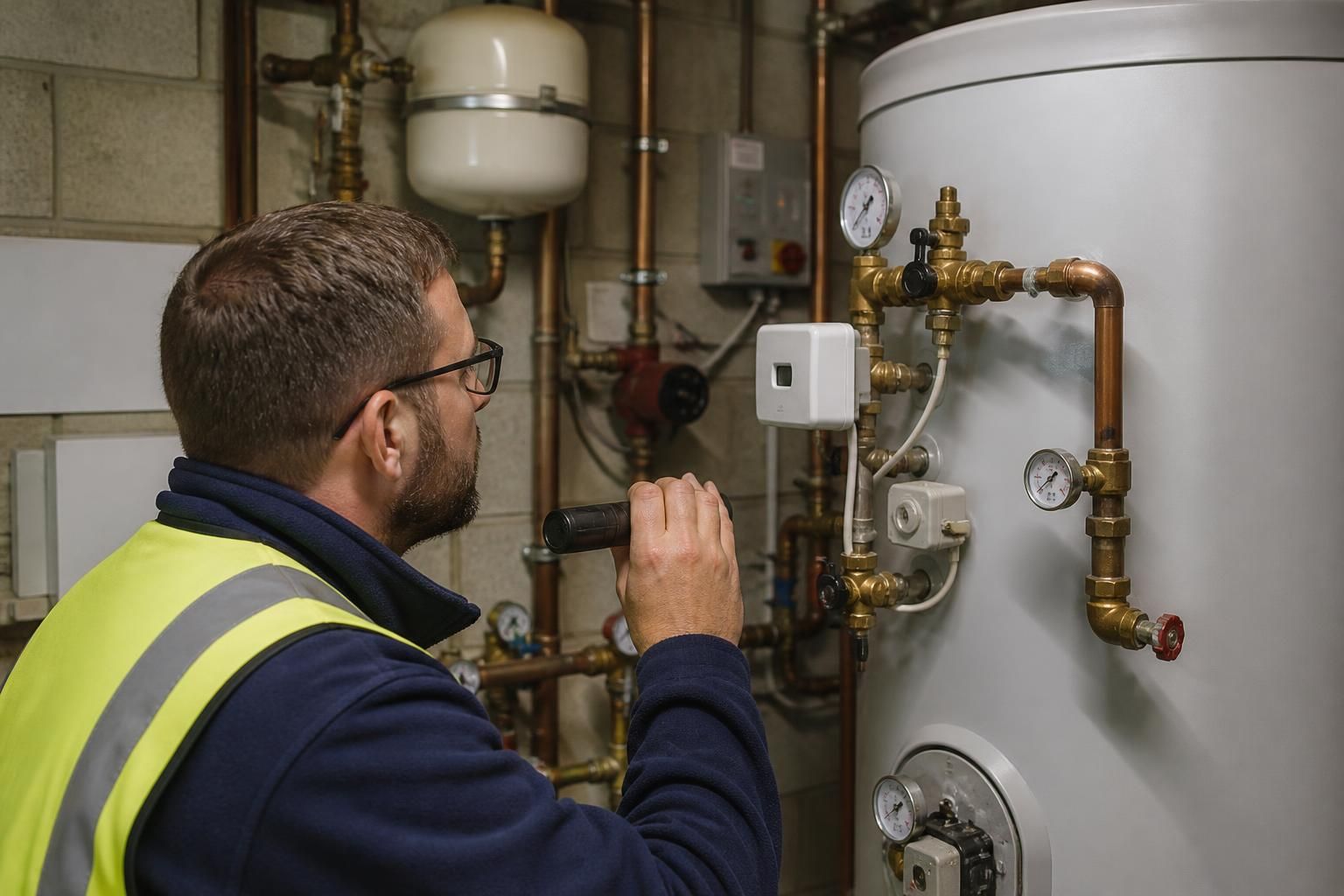
Tailored unvented hot water tank cleaning means adapting the inspection, cleaning and, where required, disinfection process to the cylinder arrangement and the wider hot water system, rather than applying one standard procedure to every installation. The work should reflect how the system stores, heats and distributes water, as well as the condition of its internal and connected components.
The system configuration is assessed first. An unvented cylinder may serve a single outlet group, a large commercial installation or several buildings through interconnected services. The assessment considers the cylinder type and capacity, the number of vessels, the heating arrangement, secondary return pipework, temperature controls, expansion equipment, safety devices and the accessibility of the installation. These factors determine which parts require attention and how the work can be carried out safely.
- Single-cylinder systems: The scope may concentrate on the vessel, inlet and outlet connections, temperature and pressure controls, expansion arrangements and nearby distribution pipework.
- Multiple-cylinder systems: Each vessel and its associated controls may need to be considered separately, particularly where cylinders operate in sequence, share pipework or have different usage patterns.
- Systems with secondary circulation: The return loop, circulating pump, balancing arrangements and remote outlets are relevant because stagnant or poorly circulated sections can affect the overall water hygiene risk.
- Indirect systems: The cylinder’s primary heating circuit, coil arrangement and control settings may be reviewed alongside the stored hot water components, while keeping the two water circuits separate.
- Installations with limited access: The method can be planned around plant rooms, cupboards, access panels, drainage points and the position of valves, with any limitations recorded before work begins.
Cleaning is not limited to removing visible debris from the tank. Depending on the findings, the scope may include draining the vessel, examining accessible internal surfaces, removing scale or sediment where practicable, cleaning strainers and checking connected fittings. Deposits can affect heat transfer, interfere with valves and provide areas where microorganisms may persist. The appropriate treatment depends on the material, extent and location of the deposits, as well as the condition of the equipment.
Connected components also influence the cleaning plan. Inlet control sets, expansion vessels, temperature and pressure relief arrangements, thermostats, blending valves and pumps may require inspection or functional checks as part of the wider assessment. A cleaning visit should not compromise safety controls or leave a system unable to regulate pressure and temperature correctly. Any defective, inaccessible or unsuitable component should be identified separately from routine cleaning so that remedial work can be specified accurately.
Temperature and usage patterns are important when defining the work. A cylinder serving showers, healthcare-related facilities, accommodation, staff areas or intermittently occupied premises may present different operational considerations. Low-use outlets, seasonal areas, long pipe runs and irregular circulation can require closer review than frequently used points. The cleaning plan may therefore include selected outlets or sections of distribution pipework rather than treating the storage vessel in isolation.
Where the risk assessment indicates that cleaning alone is insufficient, disinfection may be considered as a separate or associated control measure. Its selection and application must be compatible with the system materials, the cylinder manufacturer’s requirements and the operational circumstances. Chemical and thermal approaches have different limitations, and a competent person should define the method, controls, contact conditions, flushing requirements and verification arrangements. Water should not be returned to normal use until the system has been safely reinstated and the required checks have been completed.
Sampling and verification can also be configured to suit the installation. Samples may be taken from representative outlets, storage vessels or circulation points where testing is required by the risk assessment or management plan. The locations should provide useful evidence about the condition of the system, rather than being selected solely for convenience. Results are interpreted alongside inspection findings, operating temperatures, usage information and any previous records.
A tailored service should produce records that explain what was inspected, which parts were cleaned, any restrictions encountered, the treatment applied, test or sample results, and recommendations for further action. For complex sites, a marked-up schematic or asset schedule can help link findings to individual cylinders, loops, valves and outlets. This makes future monitoring and maintenance more consistent, particularly where the installation changes over time.
Blue Fish Water Management can use its legionella control and water hygiene expertise to assess the installation and define a proportionate scope for unvented hot water tank cleaning. The resulting plan should be based on the actual system configuration and risk, with any necessary remedial works, monitoring or follow-up testing clearly distinguished from the cleaning activity itself.
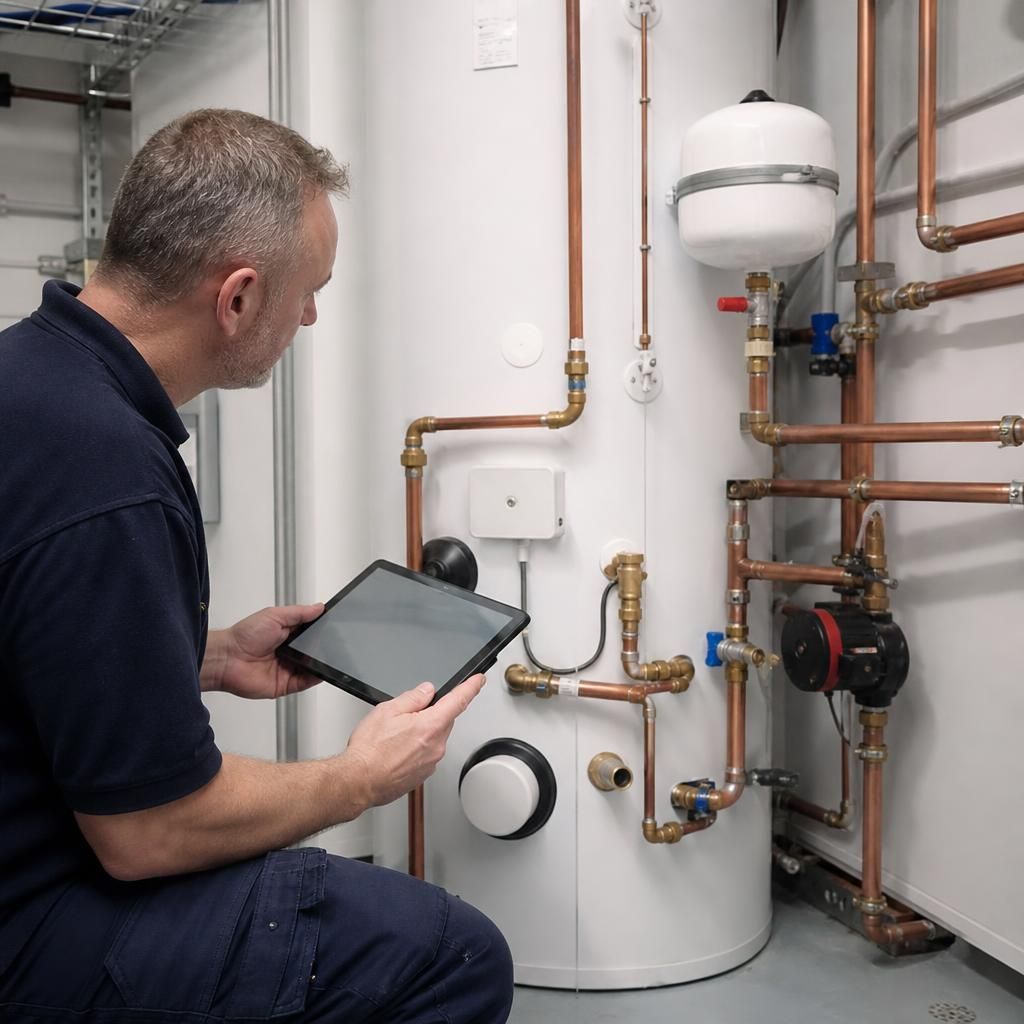
Tailoring begins with establishing an accurate picture of the installation before any cleaning method is selected. Available schematics, asset registers, operating instructions and previous water hygiene records can help identify how the unvented cylinder connects to outlets, circulation pipework, heating controls and safety equipment.
Where documentation is incomplete or the system has been altered, the installation may need to be traced and its components identified on site. This prevents work being planned around an assumed layout that does not match the current arrangement. The resulting scope can then distinguish accessible areas suitable for cleaning from sections requiring further investigation, specialist remedial work or separate management.
Discuss your unvented hot water tank cleaning requirements
Discuss your unvented hot water tank cleaning requirements with Blue Fish Water Management to determine the appropriate scope for your system configuration. Providing available system records and details of any known issues can help inform the initial assessment.