
How often should an unvented hot water tank be cleaned?
An unvented hot water tank should be cleaned at a frequency determined by a risk assessment, taking account of the system’s condition, usage, water quality and the potential for contamination. Cleaning may be needed alongside routine inspection, monitoring and disinfection rather than on a fixed timetable, with the schedule reviewed when circumstances change.
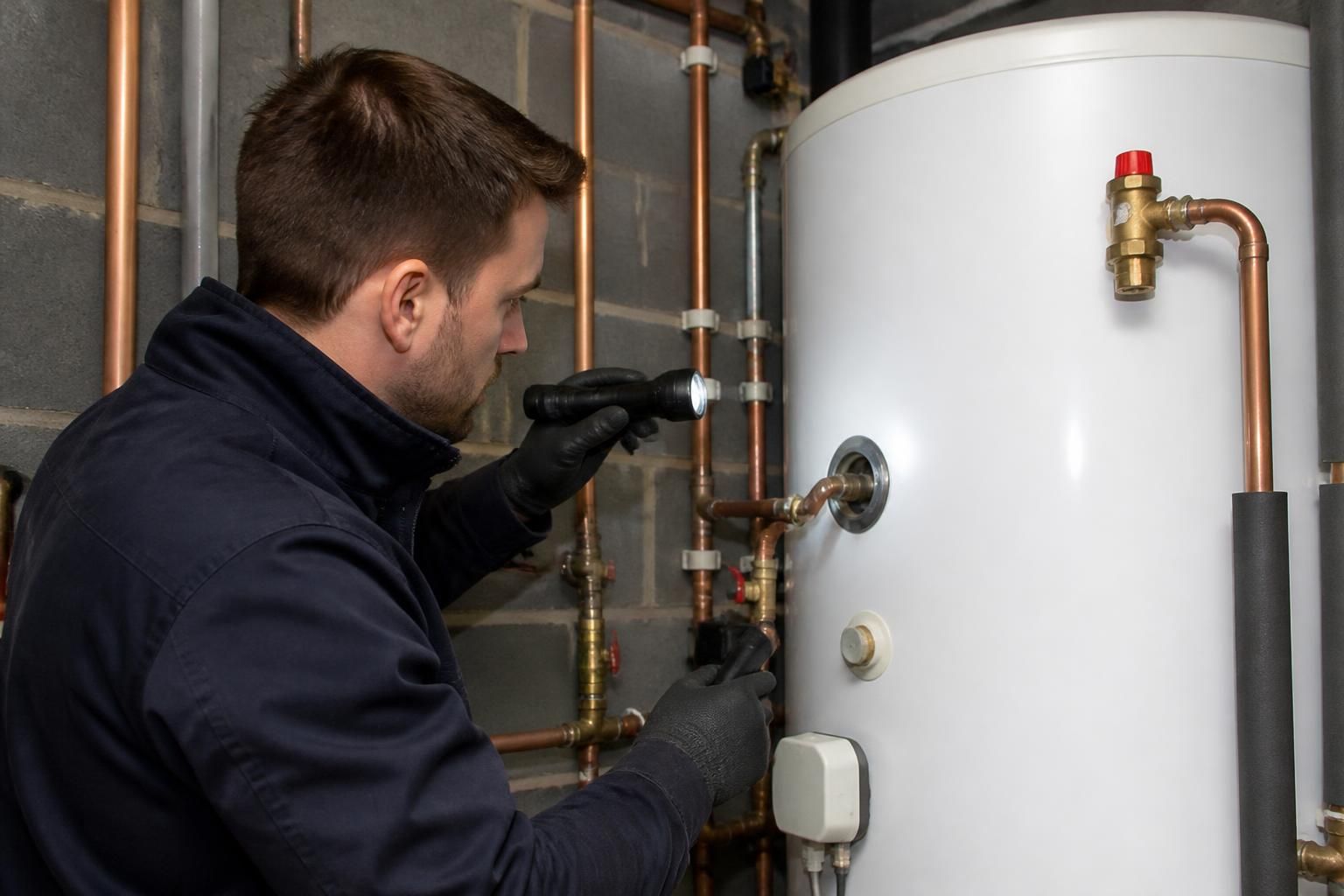
The appropriate cleaning interval for an unvented hot water tank is the interval set out in the system’s water hygiene arrangements after assessing its actual condition and risk. Cleaning is not automatically required at every routine service, and a calendar-only approach may either overlook developing contamination or lead to unnecessary work.
Cleaning should be considered when:
- sediment, scale, biofilm or other deposits are found inside the cylinder or associated components;
- water quality results indicate contamination or deterioration;
- the tank has been left unused, partially drained or taken out of service;
- there has been a change in occupancy, building use, water demand or operating conditions;
- temperature control, circulation or turnover has been inadequate;
- repairs, alterations or a failure have introduced a contamination risk; or
- inspection findings show that the existing cleaning interval is no longer suitable.
Usage is particularly important. A cylinder serving regularly occupied premises may have better water turnover than one supplying intermittently used rooms, vacant areas or seasonal accommodation. Low demand can allow water to remain stagnant for longer, while fluctuating demand may create different conditions within the system. The risk assessment should therefore consider how the tank is used rather than relying solely on its age or size.
Water quality and system design also affect the decision. Hard water can encourage scale formation, which may provide protected areas for deposits and microorganisms. Poorly controlled temperatures, dead legs, inadequate circulation, faulty thermostats and ineffective blending arrangements can increase the need for investigation and remedial cleaning. An unvented cylinder should be assessed as part of the wider hot water system, including outlets, secondary circulation where present, valves, temperature controls and connected pipework.
Routine monitoring should determine whether the planned interval remains appropriate. This may include checking operating temperatures, inspecting accessible components, reviewing usage patterns and taking samples where the risk assessment identifies a need. A satisfactory check does not necessarily replace cleaning where deposits or physical defects are present, and cleaning does not replace the need to correct an underlying design or operational problem.
Cleaning and disinfection are related but different activities. Cleaning removes physical matter such as scale, sediment and biofilm. Disinfection is a controlled treatment intended to reduce harmful microorganisms. If disinfection is carried out without first addressing heavy deposits, its effectiveness may be reduced. The appropriate treatment, sequence and verification should be selected by a competent water hygiene professional, taking account of the cylinder materials, connected equipment and manufacturer’s requirements.
Work on an unvented system requires particular care because the cylinder operates under mains pressure and incorporates safety controls. Before cleaning, the system normally needs to be safely isolated, drained and made secure. Safety valves, expansion equipment, thermostats and other protective components should not be bypassed or disturbed without suitable competence. After the work, the system should be returned to service in a controlled manner, checked for leaks and correct operation, and any required water quality verification should be completed.
A review is also needed after a cleaning exercise. The person responsible for the premises should establish why cleaning was required, whether the cause has been corrected and whether the planned monitoring or cleaning interval should change. Repeated deposits, recurring contamination or poor temperature control indicate that further remedial action may be more appropriate than simply cleaning more frequently.
For business premises, the documented arrangements should identify the tank, the relevant risk controls, inspection findings, cleaning or disinfection carried out, test results, defects and follow-up actions. Blue Fish Water Management Ltd can support businesses with legionella risk assessments, water testing, monitoring and remedial water hygiene advice, helping determine a proportionate cleaning programme for the system in use.

An unvented cylinder’s routine service and its water hygiene clean are separate activities. A service may examine the expansion equipment, safety valves, thermostat, controls and signs of leakage, but it does not necessarily involve inspecting or removing deposits from internal surfaces. Equally, cleaning the cylinder does not confirm that its pressure protection and temperature controls are operating correctly.
When setting or reviewing the cleaning frequency, the responsible person should therefore consider both aspects of maintenance:
- Are the cylinder’s safety and operating components being serviced in accordance with the relevant maintenance requirements?
- Is there sufficient evidence about the internal condition of the cylinder and connected system to justify the planned cleaning interval?
Keeping these decisions separate helps prevent a routine engineering service from being treated as proof that no water hygiene cleaning is needed, while also ensuring that cleaning work does not overlook defects that could affect safe operation.
Discuss Your Unvented Hot Water Tank Cleaning Schedule
Discuss your unvented hot water tank cleaning schedule with Blue Fish Water Management Ltd to establish whether your current arrangements remain suitable for the system and its use.