
What risks must industrial tank cleaning services control?
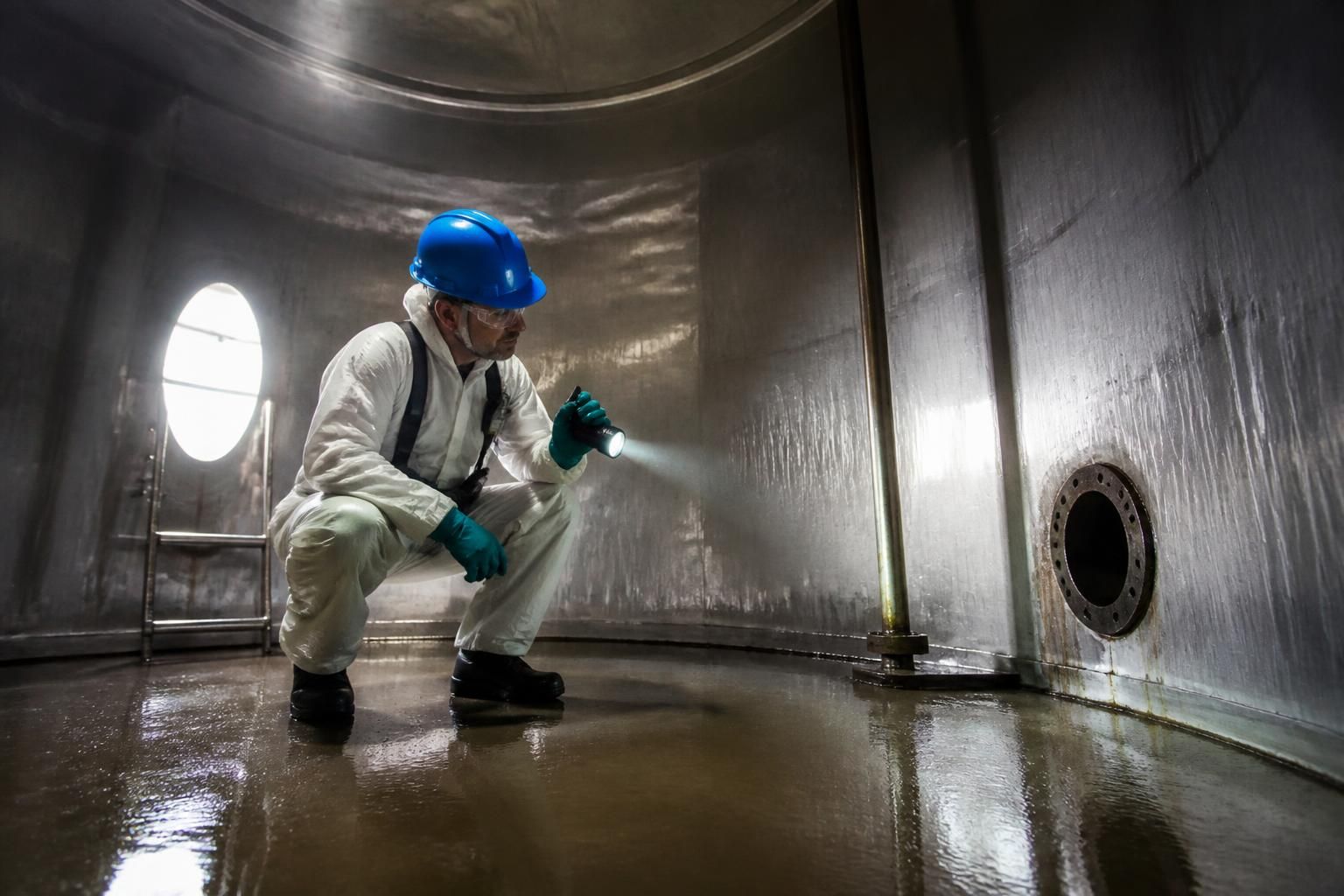
Industrial tank cleaning services control risks to water quality, tank integrity, plant operation and legal compliance by removing deposits, identifying defects and restoring the tank to a hygienic, serviceable condition. The work also needs to control hazards created by the cleaning activity itself, including isolation, confined access, chemical use and the handling of contaminated water.
Key risks controlled through proper tank cleaning include:
- Loss of water quality: Deposits and residues can alter the condition of stored water and provide places where harmful organisms may persist. Cleaning removes the material that routine circulation or turnover may not dislodge.
- Stagnation and uneven circulation: Sludge or obstructions can reduce usable tank volume and interfere with inlet, outlet or overflow arrangements. This may create poorly refreshed areas in which water quality deteriorates.
- Corrosion and structural deterioration: Deposits can conceal pitting, joint failure, coating breakdown and other defects. Emptying and cleaning the tank allows these conditions to be inspected and recorded before they develop into leakage or a more serious integrity problem.
- Plant damage and process interruption: Loose material can enter pumps, valves, filters and downstream equipment. Removing it reduces the risk of blockages, abrasive wear and faults caused by sediment being drawn into the system.
- Cross-contamination: Shared equipment, contaminated hoses, poor drainage or incorrect reconnection can transfer material between tanks or systems. A controlled method specifies suitable equipment, separation, flushing and reinstatement checks.
- Environmental and disposal risks: Wash water, sludge and chemical residues must be contained, assessed and disposed of in accordance with site requirements and applicable waste controls. Discharging them without consideration can affect drainage systems or the surrounding environment.
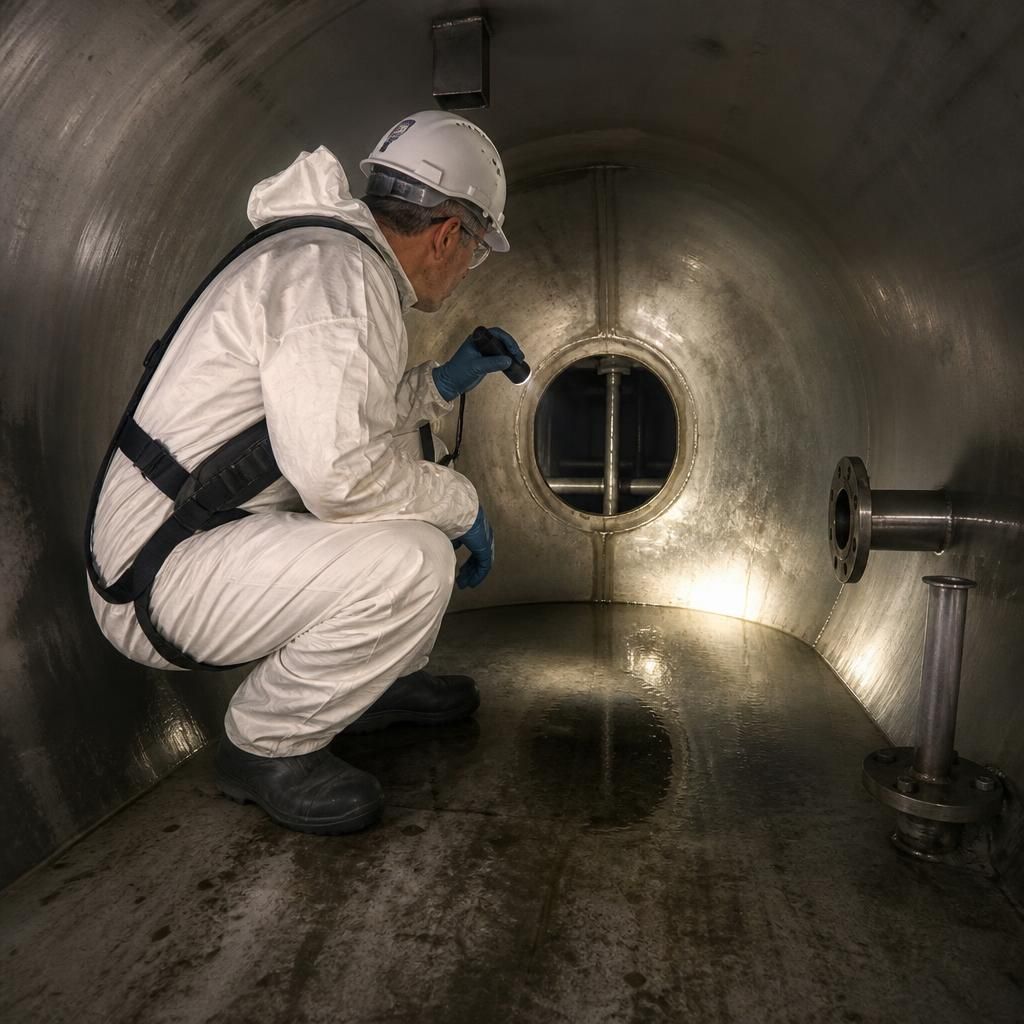
The cleaning plan should begin with information about the tank, its contents, connected pipework, access arrangements and operational role. A competent assessment can then identify isolation points, drainage routes, access hazards, electrical or mechanical interfaces and any substances that may remain inside. Where the tank is large or difficult to access, confined-space controls, atmospheric checks, communication arrangements and rescue provisions may be necessary. These controls protect personnel as well as the system being cleaned.
Isolation is particularly important where a tank connects to pumps, automatic valves, pressurised pipework or live production systems. The supply, outlet and energy sources should be identified and secured before entry or internal work begins. Cleaning chemicals must be selected and used according to the condition and intended use of the tank, with suitable handling controls, contact-time management, rinsing and verification where required. Uncontrolled chemical mixing or inadequate rinsing can create a separate water-quality hazard.
Cleaning alone does not remove every risk. The tank should be inspected for damaged linings, defective fittings, insecure covers, inadequate vents, blocked overflows and signs of vermin or external ingress. Findings may require remedial work before the tank is returned to service. If the tank forms part of a wider water system, associated pipework and downstream points may also need consideration so that material is not immediately reintroduced after cleaning.
Following the work, reinstatement should include removal of cleaning equipment, confirmation that access covers and fittings are secure, controlled refilling and flushing where appropriate. Sampling or other checks may be used to verify that the system is suitable for its intended use. The service record should identify the tank, work undertaken, defects found, materials or chemicals used, verification results and any recommended follow-up action.
For industrial sites, this evidence is important because it demonstrates that tank condition and water hygiene risks have been assessed rather than relying solely on a cleaning date. The appropriate interval and level of work depend on the tank’s use, contents, construction, condition, turnover and risk assessment. A documented inspection and cleaning programme therefore provides better control than treating every tank as requiring the same procedure.
Discuss Your Industrial Tank Cleaning Requirements
Discuss your industrial tank cleaning requirements with Blue Fish Water Management Ltd, providing details of the tank, its contents and connected system so the appropriate cleaning and risk controls can be considered.