
What information is needed before arranging industrial tank cleaning?
Before arranging industrial tank cleaning, provide details of the tank’s type, contents, capacity, dimensions, access points, location and cleaning history. Information about suspected contamination, hazardous substances, connected systems, isolation and drainage arrangements, site access and relevant risk assessments will help determine the safe and suitable cleaning method.
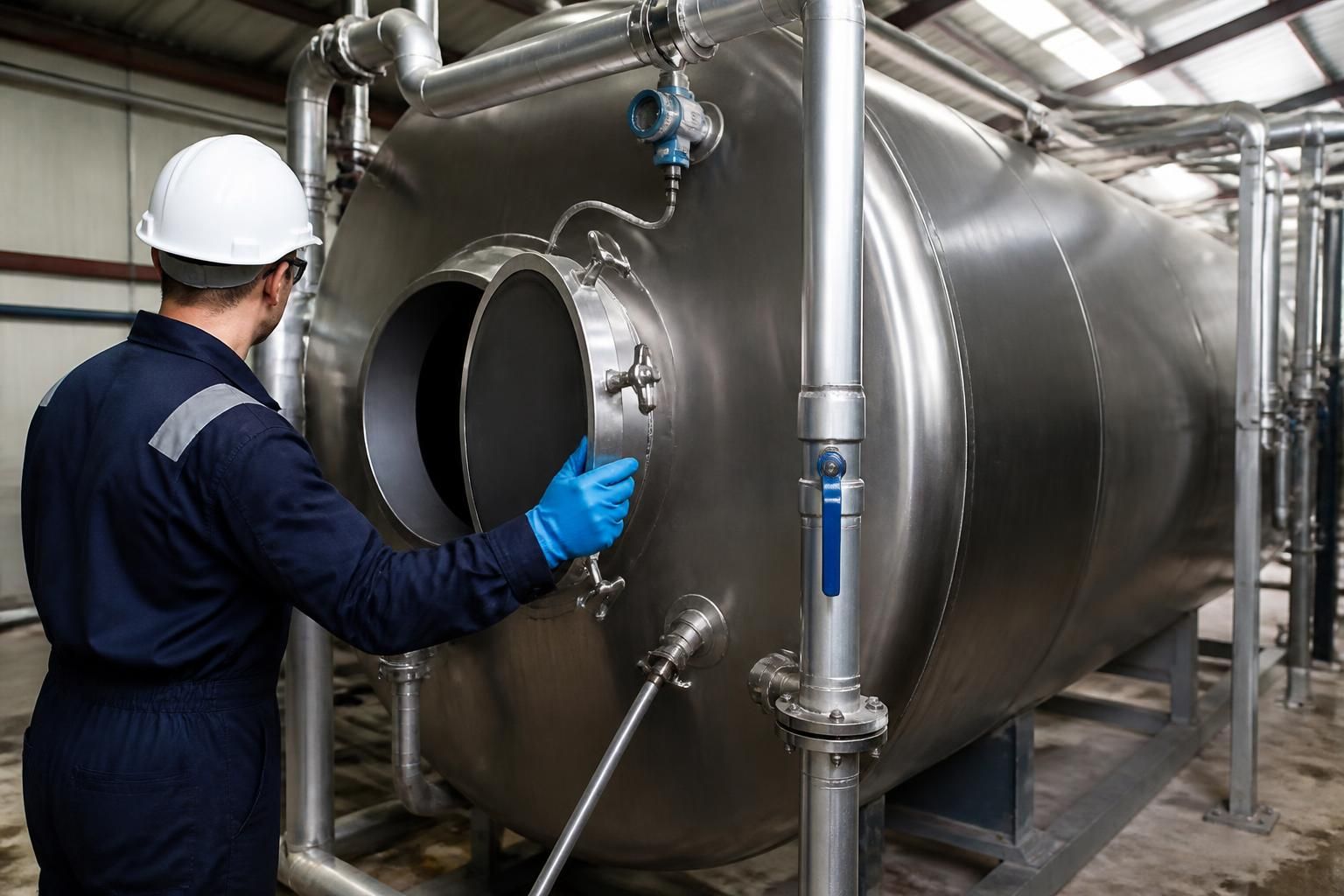
Before industrial tank cleaning is arranged, the contractor needs enough operational, safety and compliance information to define the work scope and produce a suitable method statement. The most useful additional information concerns who controls the site, how the tank supports the operation, what restrictions apply during the work and what evidence will be required when the tank is returned to service.
Confirm the tank’s operational purpose. Explain what the tank supplies or supports, whether it forms part of a potable water, process, heating, cooling, fire protection or other installation, and what would happen if the system were unavailable. This helps determine whether the work can be completed during a planned shutdown, whether temporary arrangements are needed and whether cleaning must be coordinated with other maintenance.
Provide relevant records and drawings. Useful documents may include the latest schematic, asset register entry, previous inspection reports, cleaning certificates, water quality results, maintenance records and details of earlier remedial work. If the installation has been altered, note whether the available drawings reflect the current arrangement. Accurate records help the contractor understand the intended sequence of work and identify information that needs verifying on site.
Identify responsible people and site controls. Supply the details of the person responsible for authorising the work, the site contact, the system owner and anyone who must approve isolation or recommissioning. The contractor should also know about site induction requirements, permit-to-work arrangements, restricted areas, security procedures, emergency arrangements and any rules governing contractors. Where several organisations share responsibility, clarify who controls each part of the system.
Explain the required standard of completion. The brief should state whether the work is routine planned maintenance, a response to an inspection finding, preparation for an audit or part of a wider remedial programme. Agree what the completion record must include, such as photographs, cleaning details, inspection observations, disinfection information, test results, defects identified and recommendations for follow-up work. For water systems, confirm whether post-cleaning sampling or other verification is required before use.
Describe operational and environmental constraints. Tell the contractor about production processes, vulnerable occupants, hygiene-sensitive areas, temperature controls, noise restrictions, chemical restrictions and any activities that cannot be interrupted. Details of working surfaces, lifting arrangements, ventilation and welfare facilities may also affect the method statement. If waste, sludge or spent cleaning solution will require controlled handling, the site’s disposal procedure and nominated waste arrangements should be made clear in advance.
Provide health and safety information that affects the work. Alongside the site’s general risk assessment, disclose known hazards such as confined spaces, work at height, electrical equipment, fragile structures, biological exposure, restricted ventilation and nearby hazardous processes. Relevant COSHH information should be available for substances encountered during the work, including safety data supplied by the site where applicable. Any medical, access or competence requirements for entering controlled areas should also be identified before planning begins.
Clarify access and coordination with other contractors. Although physical access details form part of the initial technical survey, the wider programme should also identify delivery restrictions, lifting or plant requirements, shared work areas and other contractors working nearby. This reduces the risk of conflicting activities, unplanned energisation or a cleaning programme that cannot be completed safely within the agreed site controls.
A practical information pack should therefore contain:
- the system’s operational purpose and the consequences of taking it out of service;
- current drawings, asset records and previous inspection or maintenance documentation;
- named contacts, approval responsibilities and applicable permit procedures;
- the reason for cleaning and the required completion evidence;
- operational, environmental and waste-management constraints;
- known hazards, relevant COSHH information and emergency arrangements; and
- any required sampling, inspection or authorisation before recommissioning.
A competent industrial tank cleaning provider will review this information before proposing the work. A site survey may still be necessary to verify the records, assess the condition of the installation and confirm that the planned method, controls and completion checks are appropriate.
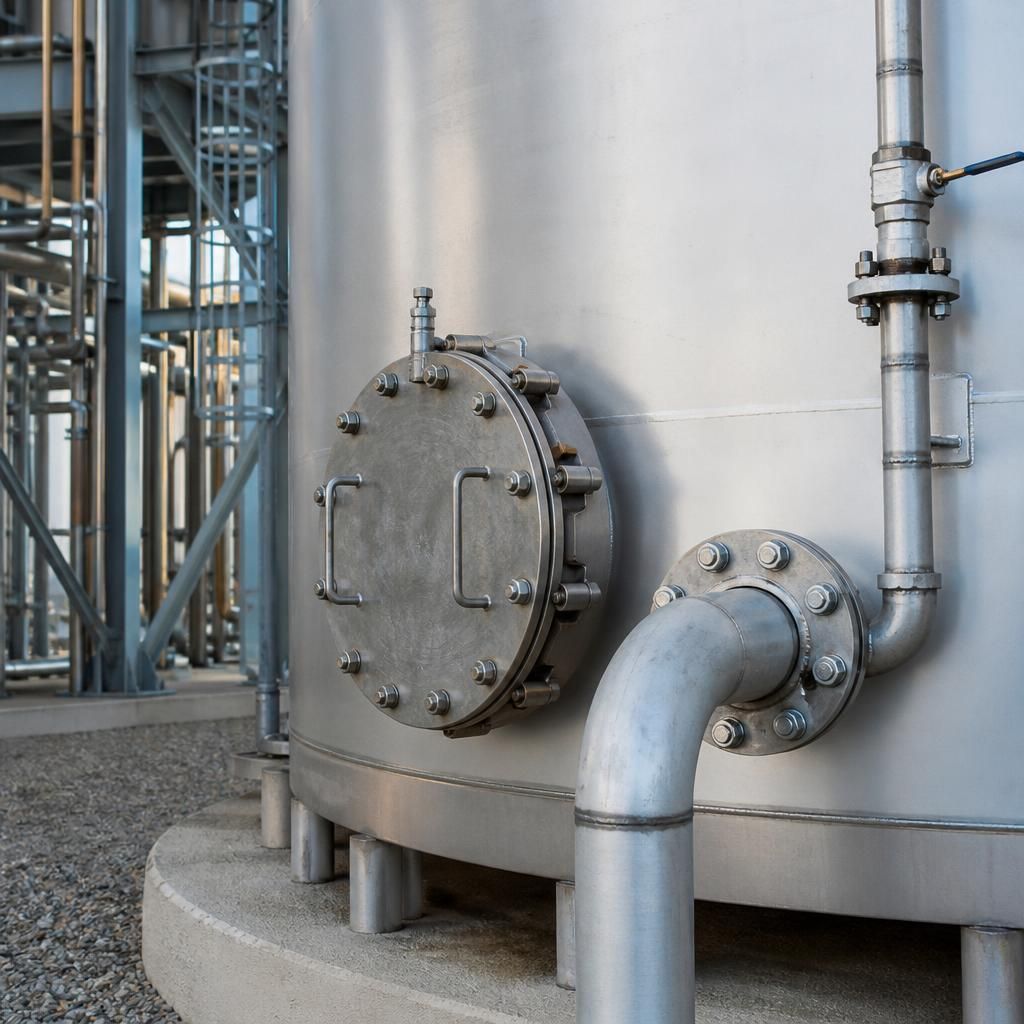
The tank’s construction and condition should be provided before cleaning is specified. Identify the materials used for the shell, lining, coatings, seals, internal supports and connected fittings, and report any known corrosion, cracking, blistering, delamination or previous repairs. These details help determine which cleaning equipment and products can be used without damaging the tank or compromising its integrity.
Include any restrictions from the tank manufacturer, site engineer or previous inspection, such as surfaces that must not be abraded, components that require removal or areas that cannot support personnel or equipment. Clear information about the tank’s condition allows the contractor to distinguish cleaning from remedial work and to record defects that need attention before the tank is returned to service.
Discuss your industrial tank cleaning requirements
Discuss your industrial tank cleaning requirements with Blue Fish Water Management Ltd to clarify the information needed to define a suitable scope of work. Our team can review your available details and identify any further information required before planning begins.