
How frequently should industrial tanks be cleaned?
Industrial tanks should be cleaned at an interval determined by a documented, risk-based assessment rather than a fixed calendar period. The schedule should consider the tank’s contents, design, usage, contamination history and inspection findings, with additional cleaning after contamination, significant maintenance or any change that could affect water quality.
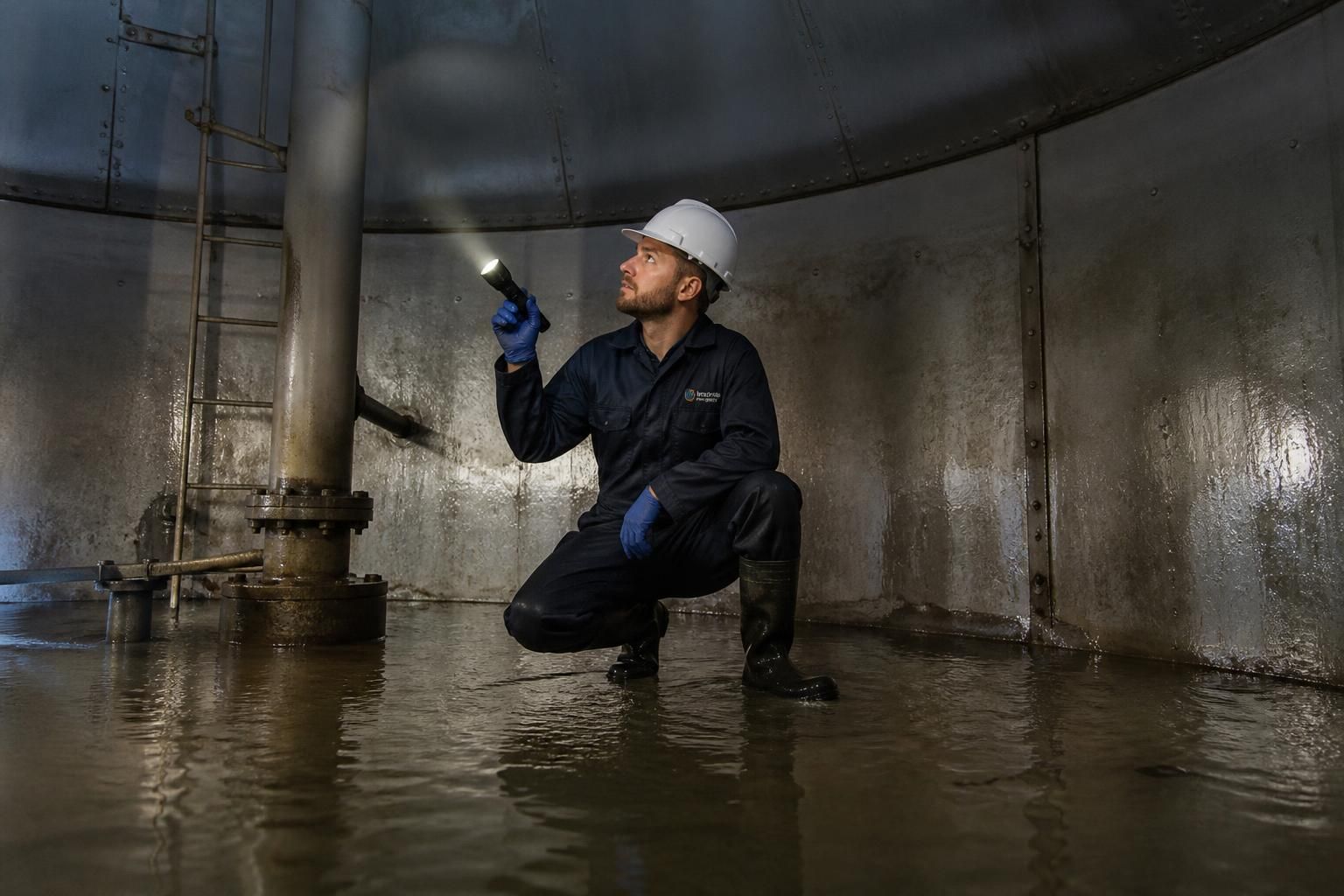
Industrial tank cleaning should be scheduled according to the level of contamination risk the tank presents, with the interval recorded in the site’s water hygiene or asset management plan. A tank used for drinking water, hygiene services or other human exposure generally requires closer control than one containing a stable, non-contact process liquid. The schedule should be supported by inspections, relevant water quality data and evidence from previous cleaning activities.
Factors that determine the interval
- Tank contents: Potable water, process water, cooling water and other stored liquids have different contamination hazards. The potential consequences of contamination are also relevant, particularly where water may be inhaled as an aerosol or used by vulnerable people.
- Temperature: Water held within conditions that support microbial growth, including Legionella, may require more frequent management than water maintained outside those conditions. Temperature control should be assessed across the tank and connected system rather than at one convenient sampling point.
- Turnover and demand: Low-use tanks, oversized storage and fluctuating production can allow water to remain undisturbed. Poor turnover increases the opportunity for sediment, biofilm and microbial growth to develop.
- Design and condition: Internal surfaces, access arrangements, inlet and outlet positions, covers, insulation, vents and drainage all affect how readily a tank can become contaminated and how thoroughly it can be cleaned.
- Previous findings: Repeated sediment, scale, biofilm, poor microbiological results or visible deterioration indicate that the existing interval may be too long, or that the underlying system needs improvement.
- Operational changes: Changes to occupancy, production, water demand, treatment equipment or connected pipework can alter the risk profile and should prompt a review of the cleaning schedule.
How a suitable schedule is established
- Identify the tank’s purpose, contents, capacity, connected outlets and users.
- Assess hazards associated with stagnation, temperature, ingress, sediment, corrosion and microbial growth.
- Review inspection records, sampling results, maintenance history and any previous incidents.
- Set a cleaning interval that is proportionate to the assessed risk and define who is responsible for arranging it.
- Specify the inspection, cleaning, disinfection, sampling and reporting requirements in the written plan.
- Review the interval after each significant finding and during the formal review of the water safety or maintenance plan.
For tanks forming part of a water system covered by Legionella control arrangements, cleaning cannot be considered separately from temperature management, circulation, flushing, inspection and monitoring. UK guidance, including the Health and Safety Executive’s Legionnaires’ disease: The control of legionella bacteria in water systems and the relevant parts of HSG274, supports a risk-based approach rather than a universal cleaning date. The responsible person should be able to explain why the chosen interval is suitable for the specific system.
Inspection and cleaning are different activities. A tank may appear satisfactory externally while retaining deposits or biofilm internally. Conversely, an inspection may show that the tank is clean but reveal defects such as a damaged cover, inadequate screening, corrosion or an arrangement that encourages poor turnover. Inspection findings should therefore be used to check both the cleaning result and the condition of the tank and its associated equipment.
Water testing can help determine whether a cleaning schedule remains effective, but a clear test result does not remove the need for planned inspection and maintenance. Sampling should be interpreted alongside the tank’s operating conditions and history. Where results are unsatisfactory, the investigation should consider the wider system rather than treating the tank as an isolated component.
Signs that the interval needs reassessment
- Visible sediment, slime, scale, corrosion or unusual discolouration.
- Recurring adverse microbiological or chemical results.
- Persistent temperature control problems or evidence of stagnation.
- Blocked strainers, fouled outlets or reduced flow linked to tank deposits.
- Water quality complaints, unexplained odour or changes in the stored liquid.
- Repeated findings that cleaning does not remain effective for the planned period.
Records should identify the tank, the date and scope of the work, the condition found, the method used, any disinfection or post-cleaning checks, test results and corrective actions. These records provide evidence for compliance audits and make it possible to compare findings over time. If the same problem keeps returning, increasing the cleaning frequency alone may not be sufficient; the tank design, water turnover, treatment controls or operating procedures may also need remedial attention.
For a complex industrial site, the most reliable schedule is one that links tank cleaning to the site’s risk assessment, inspection programme and water quality controls. A competent water hygiene specialist can assess those factors, document the rationale for the interval and identify whether remedial work is needed alongside cleaning.
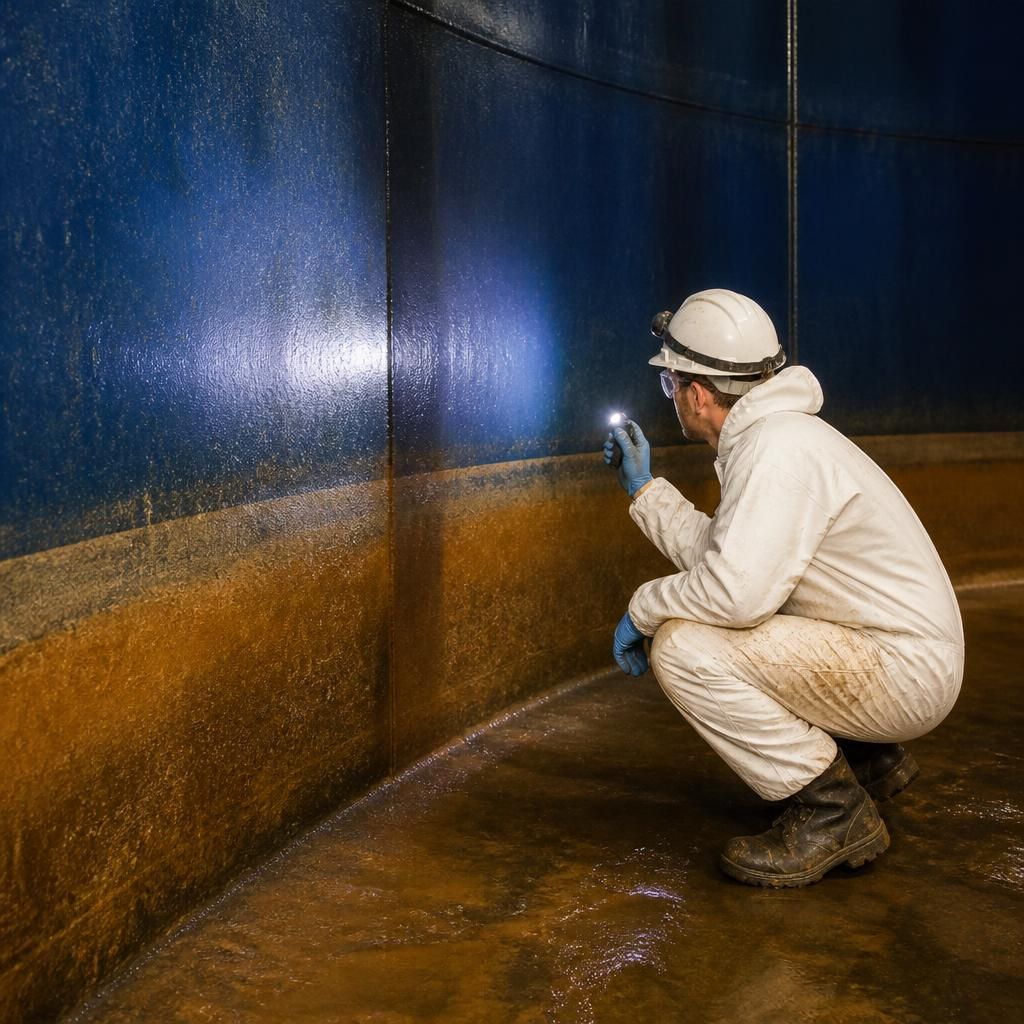
The cleaning date should be coordinated with the tank’s operational status, particularly where the tank is taken out of service for maintenance or seasonal production. Before arranging work, confirm how the tank will be isolated, whether an alternative supply is available and what flushing or recommissioning checks are needed before it is returned to use. This prevents a clean tank from being put back into service with stagnant water or disturbed deposits elsewhere in the connected system.
For interconnected tanks, the cleaning record should also identify any effect on linked pipework, pumps, valves and outlets. A schedule is more reliable when it covers the complete return-to-service process, rather than recording only the date on which the tank was emptied and cleaned.
Review Your Industrial Tank Cleaning Schedule
Arrange a professional review of your industrial tank cleaning schedule to confirm that the documented approach remains suitable for the tank’s use and risk profile. Blue Fish Water Management Ltd can help assess the relevant water hygiene controls and identify any further action required.