
What evidence should an industrial tank cleaning contractor provide?
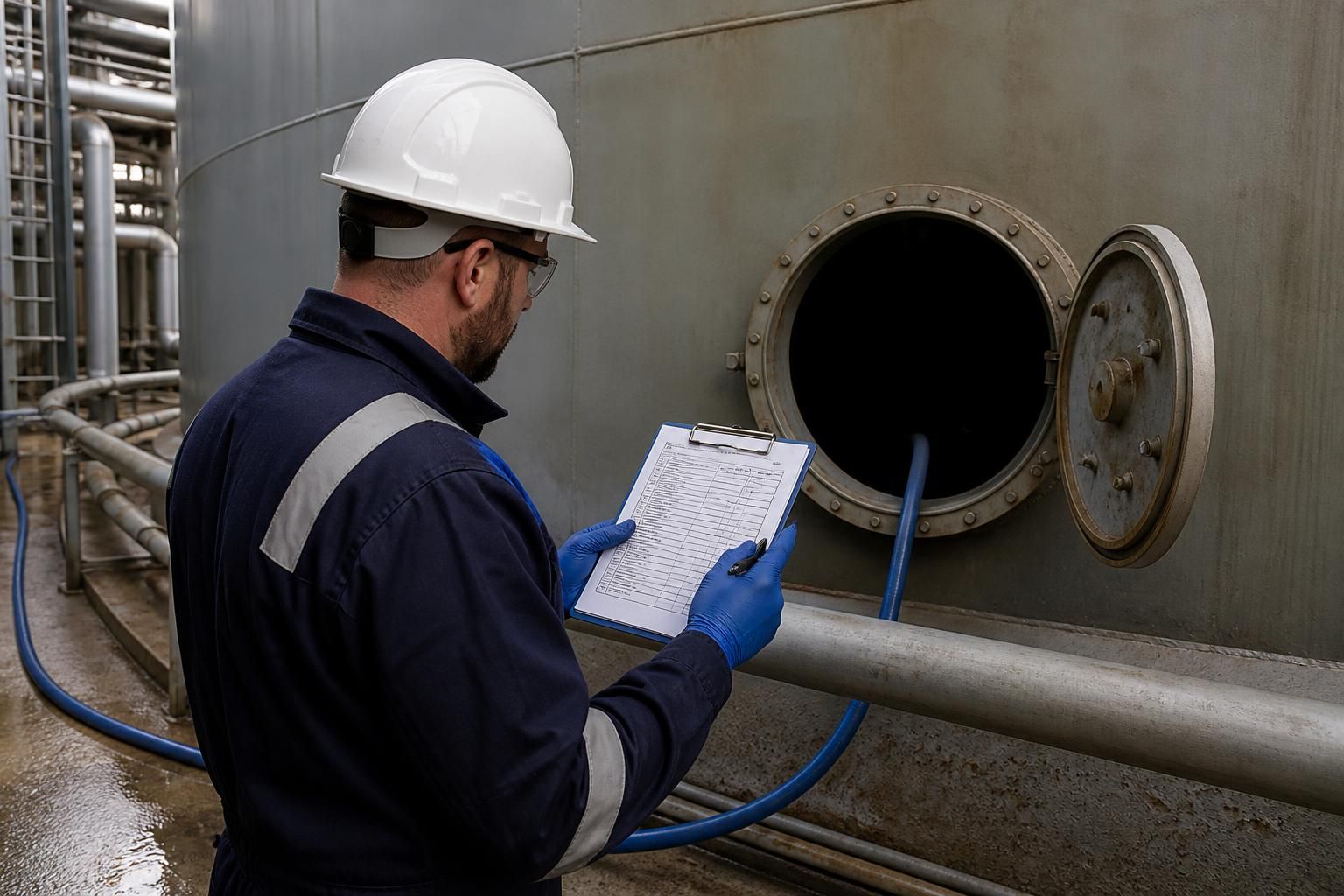
The most useful evidence is a traceable document pack that links the contractor’s planned work, site controls, cleaning activity and verification results to the specific industrial tank. It should allow the duty holder to establish what was inspected, which controls were applied, what changed during the work and whether any outstanding risk remains.
Before work starts, request evidence that the tank and its operating context have been correctly identified. This should include the tank reference or asset number, location, service, contents, connected systems and any relevant operational restrictions. The contractor should explain the boundaries of the work, including whether associated pipework, access equipment, valves, coatings, sediment or ancillary components are included or excluded. Clear boundaries prevent a general cleaning document from being mistaken for evidence that the whole installation was addressed.
- A site-specific survey or inspection record showing the condition and configuration considered before cleaning
- A clear record of the person responsible for authorising and overseeing the work
- Confirmation that access, isolation and reinstatement arrangements have been agreed with the site operator
- Details of any information the contractor needs from the client, such as tank drawings, previous findings or operating instructions
Ask for evidence of task-specific control measures, not just generic company paperwork. Depending on the tank and its contents, the document set may need to address confined-space entry, hazardous substances, work at height, electrical or mechanical isolation, ventilation, atmospheric monitoring and emergency arrangements. Where chemicals or disinfectants are used, the relevant COSHH information should identify the substances, controls, exposure precautions and required rinsing or disposal arrangements. If a permit-to-work or isolation certificate is required by the site, copies or references should be retained with the job record.
The contractor should also explain how changes were controlled. For example, if the tank condition meant that the planned method could not be followed, the final file should record who approved the change, why it was necessary and whether the change affected safety, cleanliness or the return-to-service decision. Unrecorded deviations make it difficult to assess whether the completed work remained within the agreed scope.
Where water quality testing forms part of the commission, request results that are traceable to the correct samples. A useful laboratory report identifies the sampling date, sample locations, parameters tested, results, units and any relevant interpretation. Sample labels, laboratory references and a chain-of-custody record help confirm that the result relates to the tank in question rather than to another site or an earlier visit. The contractor should distinguish between tests undertaken before cleaning, tests used to verify the outcome and routine monitoring recommended after the tank is returned to service.
Results should not be presented without context. Ask the contractor to explain any unusual or adverse result, whether a repeat sample was taken, what corrective action was proposed and whether the tank could safely be reinstated. A result alone does not demonstrate that an identified defect has been resolved.
Check the contractor’s quality and document-control arrangements. Evidence may include controlled templates, inspection checklists, review or approval records and a defined process for correcting errors in issued documents. Reports should carry enough identification to show the relevant asset, visit date, document version and approving person. Amended records should be identifiable rather than silently overwritten.
For higher-risk work, it is reasonable to ask how the contractor separates the person carrying out a check from the person approving the final record, where that is practicable. The purpose is not to create unnecessary paperwork; it is to provide confidence that critical findings, limitations and follow-up actions have been reviewed before the tank is accepted back into service.
Evidence of completion should include decisions and follow-up, not only a statement that cleaning was successful. The final pack should make clear:
- Whether the tank was suitable for return to service and who made that decision
- Any defects that cleaning could not rectify, such as damaged linings, defective covers, corroded fittings or access problems
- Any restrictions, monitoring requirements or further investigations that remain
- Who is responsible for closing each action and what evidence will demonstrate closure
- When the next inspection, cleaning review or sample is due, where this has been determined by the site’s risk assessment
Where remedial work is recommended, request enough detail to distinguish an urgent safety issue from a maintenance suggestion. Photographs, marked-up drawings, defect references or quotations may support the recommendation, but the underlying report should still describe the defect, its likely significance and the consequence of leaving it unresolved.
Before appointing a contractor, verify the evidence rather than accepting a certificate at face value. Check that documents are current, relate to the legal entity being appointed, cover the type of work required and identify any limits on their application. A certificate for a different activity, site or service does not establish competence for industrial tank cleaning. Similarly, a test report is only useful if the sampling and laboratory arrangements are appropriate to the parameter being assessed.
The completed evidence pack should be retained with the site’s water hygiene and asset records. It should be available to the responsible person, facilities or engineering team, auditors and anyone later planning maintenance. Keeping the pre-work information, change records, test results, acceptance decision and outstanding actions together provides a defensible history of the cleaning activity and supports more informed decisions about future tank management.

Waste documentation is an important part of the evidence supplied by an industrial tank cleaning contractor, particularly where cleaning produces sludge, contaminated residues or spent chemicals. The records should show what waste was removed, how it was classified, who collected it and where it was taken for recovery, treatment or disposal.
Ask for the relevant waste transfer or consignment records, together with details of any carrier or receiving facility used. The description should be consistent with the tank contents and the cleaning method. If hazardous characteristics may apply, the paperwork should reflect the required controls rather than describing the material simply as general waste.
These records help the site operator demonstrate that removed material was managed as part of the planned work and not left unaccounted for. They can also identify whether additional environmental, storage or transport controls were needed before the tank was cleaned.
Discuss your industrial tank cleaning evidence requirements
If you are reviewing an industrial tank cleaning contractor, contact Blue Fish Water Management Ltd to discuss the evidence your site should require and how it should be assessed.