
How is industrial tank cleaning adapted to different tank contents?
Industrial tank cleaning is adapted to the tank’s contents by assessing the material’s properties, contamination risks and required hygiene standard before selecting the cleaning method. Water storage tanks may require different controls from tanks holding process liquids, chemicals or residues, including suitable isolation, equipment, cleaning agents, waste handling and verification.
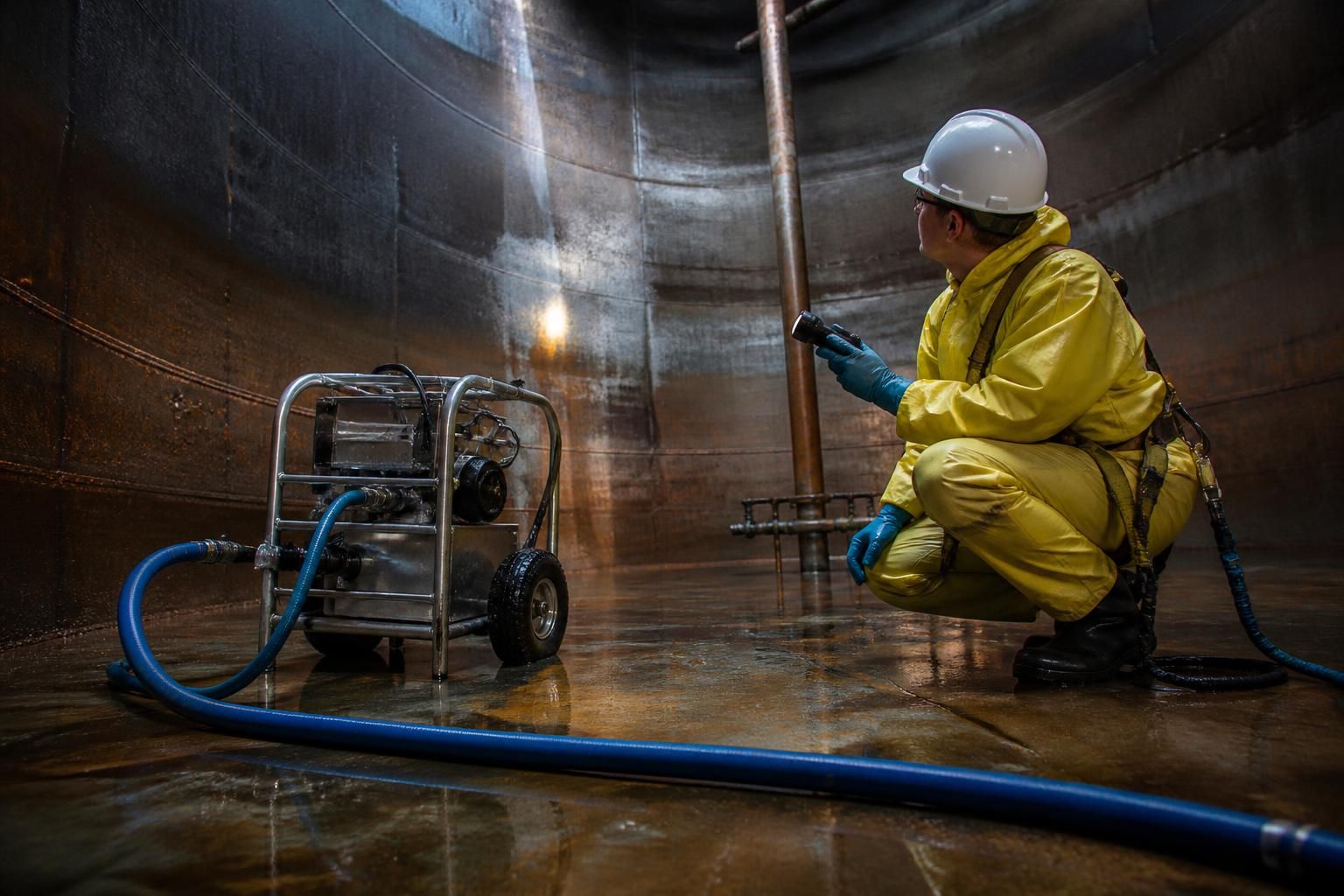
The decisive factor in industrial tank cleaning is the nature of the material previously stored, along with the condition of the tank and the standard required for its next use. Cleaning a tank that holds potable water is different from cleaning one containing process water, chemical residues, oils or settled solids because each material creates different hazards, deposits and verification requirements.
Before work begins, the contractor should establish what the tank has contained, whether any residue remains, how long it has been in service and whether the tank lining, seals and fittings are compatible with the proposed method. Information such as safety data sheets, previous cleaning records and water-quality results can help identify hazards that may not be apparent from a visual inspection. The assessment should also consider whether the tank requires entry, whether hazardous atmospheres could form and how removed material will be contained.
- Potable and domestic water tanks: The priority is to remove sediment, biofilm and other contamination without introducing further contaminants. Work normally requires hygienic handling, suitable cleaning equipment, controlled disinfection where appropriate, thorough rinsing and evidence that the tank is suitable to return to service. Water sampling may be needed when the risk assessment or the intended use calls for it.
- Process-water tanks: Deposits may include scale, corrosion products, biological growth or material carried over from the production process. Mechanical removal, low-pressure washing or a carefully selected cleaning solution may be used according to the deposit and the tank construction. The method must avoid damaging coatings, welds, valves and other components.
- Chemical storage tanks: A chemical residue requires a more controlled approach. The substance must be identified before selecting personal protective equipment, ventilation, monitoring arrangements and cleaning agents. Incompatible substances must not be mixed, and residues, wash water and used absorbents must be collected and disposed of through an appropriate waste route. Tank entry should only take place where the relevant confined-space and hazardous-substance controls are in place.
- Oil, grease and similar residues: These materials usually need a degreasing approach rather than water alone. The contractor may need to remove bulk residue first, use compatible absorbent or cleaning materials, and prevent oily wash water from entering unsuitable drainage systems. The tank's seals and lining should be checked for any effect from the cleaning agent.
- Sludge and high-solids contents: Thick deposits are generally removed in stages so that they do not block outlets, overwhelm pumps or spread across previously cleaned surfaces. Vacuum recovery or controlled extraction can allow solids and liquid waste to be segregated and managed more effectively.
The cleaning equipment is also selected according to the contents. Brushes, scrapers, vacuum systems, pressure-washing equipment and extraction tools each suit different deposits. A method that is effective for hardened scale could damage a protective coating, while aggressive pressure or an unsuitable chemical could drive contamination into joints or fittings. Where the tank is used for drinking-water storage, equipment and consumables must be suitable for hygienic work and protected from cross-contamination.
Cleaning chemicals are chosen for the residue, not simply for convenience. The assessment should cover concentration, contact time, temperature, ventilation, material compatibility and the method used to remove the chemical afterwards. Neutralisation may be required for some residues, but it must be controlled and verified rather than assumed. The contractor should also define how spent solutions and rinse water will be captured, classified and transferred for disposal.
The required end point changes with the tank's intended use. A tank returning to potable-water service may need a higher level of hygienic control than a tank used for a non-contact process. For chemical or industrial applications, the key checks may include the absence of visible residue, acceptable surface condition, removal of the previous substance and confirmation that cleaning materials have been flushed out. Visual inspection, photographs, swab testing, rinse-water checks or laboratory analysis can be selected where they provide relevant evidence.
For a reliable record, the cleaning report should identify the tank, its previous and intended contents, the deposits found, the method used, products applied, waste arrangements, inspection results and any restrictions on returning it to service. If the tank cannot be cleaned to the required standard because of damaged lining, inaccessible areas or persistent contamination, the report should state this and recommend remedial work or further investigation rather than treating the tank as clean.
In practice, effective adaptation means matching the whole process to the stored material: preparation, isolation, access controls, equipment, cleaning chemistry, waste handling and verification all need to follow from the contents and the tank's intended use.
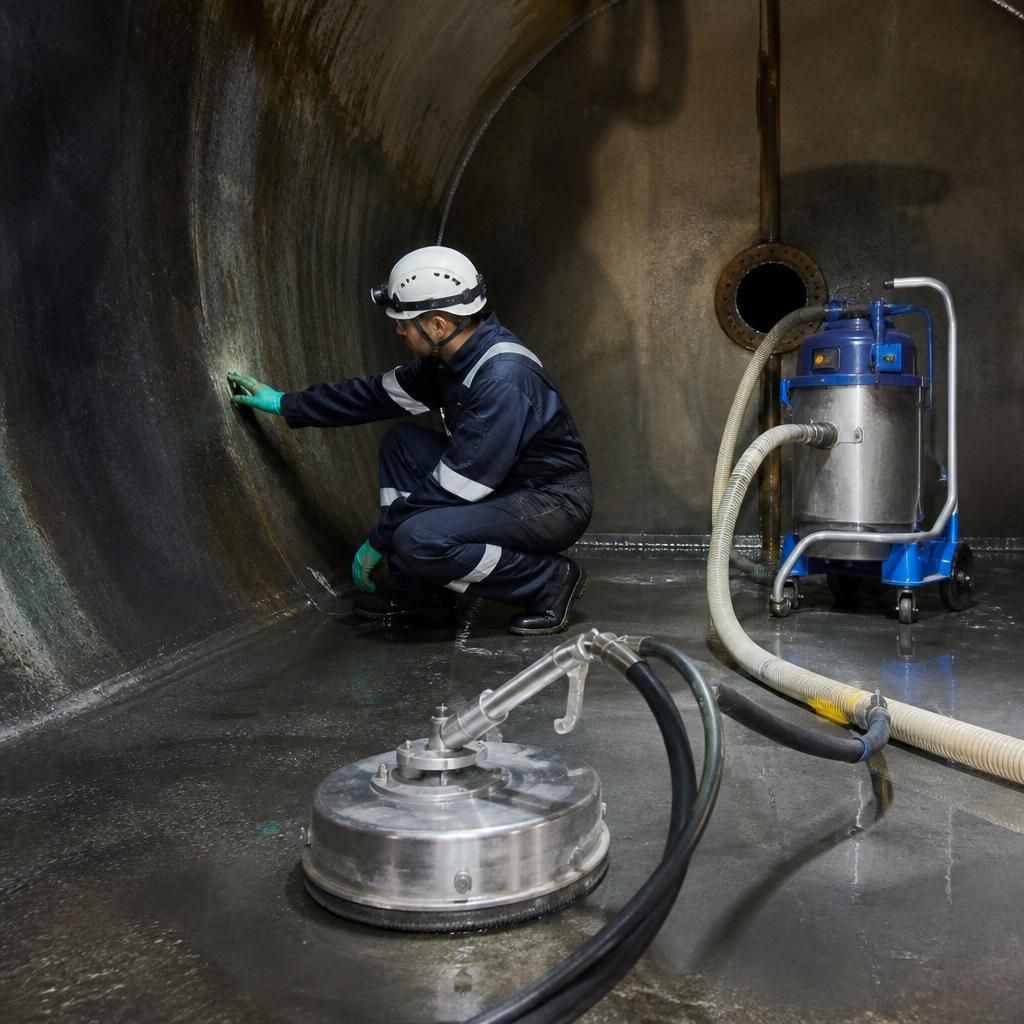
Industrial tank cleaning is adapted to the material’s current condition, not just the name of the product previously stored. During storage, a liquid may evaporate, settle, crystallise, separate into layers or react with moisture and air. The remaining residue can therefore have different properties from the original contents and may require a different removal method.
Where the condition of the residue is uncertain, the cleaning plan should be based on information from the operator, tank history and suitable pre-cleaning checks. This helps determine whether the contents can be removed as a liquid, require controlled loosening, or need separate treatment at different points in the tank. Recognising these changes prevents a method designed for the original contents from being applied blindly to a concentrated or altered residue.
Discuss your industrial tank cleaning requirements
Discuss your industrial tank cleaning requirements with Blue Fish Water Management Ltd, including the tank’s previous contents, intended use and any known access or residue concerns. This information can support a proportionate cleaning plan and identify the evidence needed before the tank returns to service.