
How is industrial tank cleaning coordinated with production activities?
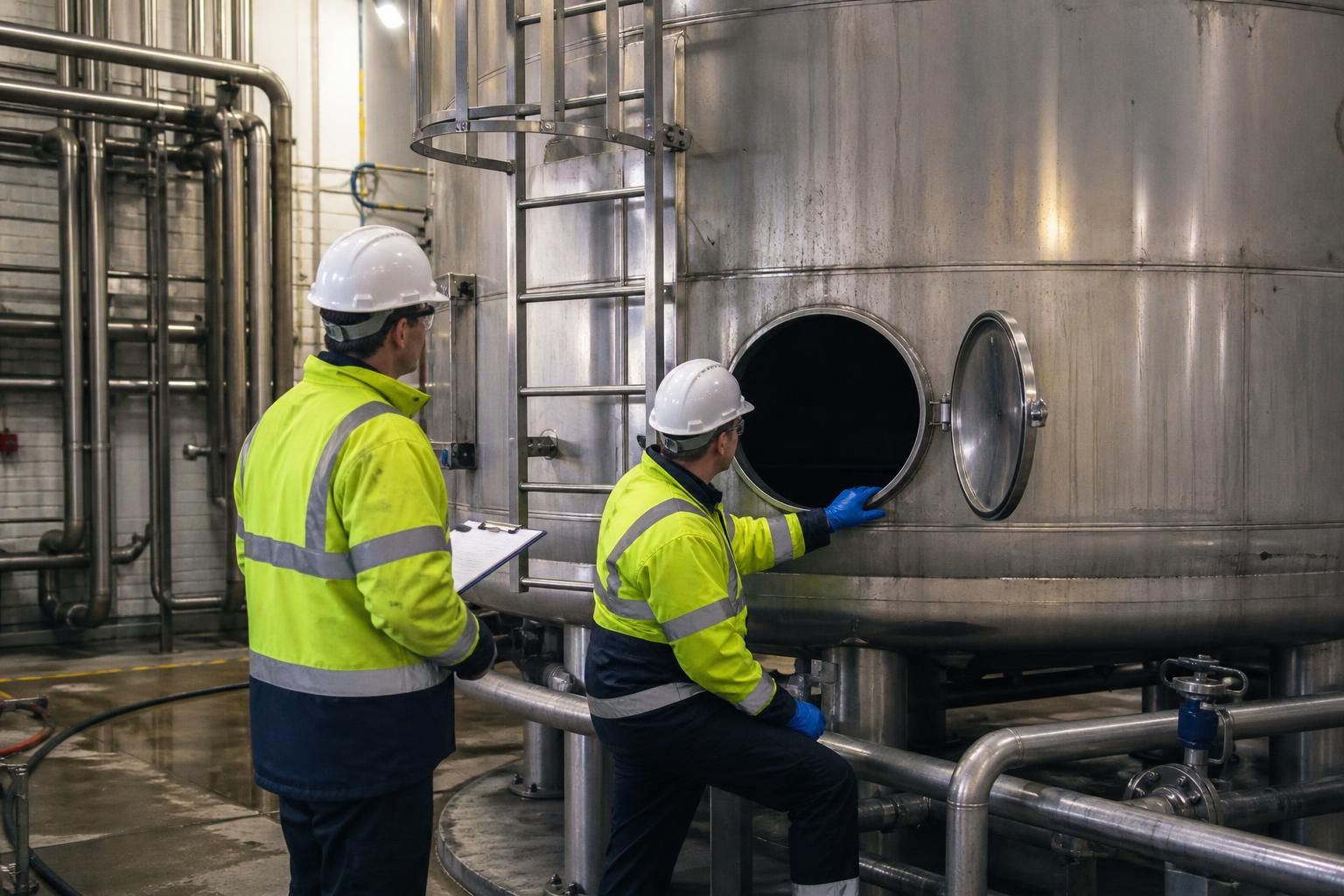
Industrial tank cleaning is coordinated with production by treating the tank as part of the wider process rather than as an isolated asset. The cleaning plan should show how supply, storage, distribution, personnel, access, safety controls and quality requirements will be maintained while the tank is unavailable, then define the conditions for returning it to service.
The first step is to understand the tank’s operational role. A tank that provides process water, potable water, fire protection, ingredients, chemicals or effluent capacity will have different production dependencies. The contractor and site team should identify connected tanks, pumps, valves, transfer lines, control systems and downstream users. This determines whether the tank can be removed independently, whether another asset can provide temporary capacity, or whether production must be reduced or paused.
A suitable coordination plan normally includes:
- Operational review: confirming the tank contents, service, connections, operating levels and the activities that depend on it.
- Isolation planning: identifying the valves, electrical supplies, automatic controls and other energy sources that must be isolated, locked off or clearly labelled.
- Production interface: agreeing what work may continue nearby, which processes must stop, and how accidental transfer into or out of the tank will be prevented.
- Access arrangements: planning the movement of cleaning equipment, hoses, waste containers and personnel without obstructing production routes or emergency access.
- Safety controls: assessing confined-space, chemical, work-at-height, manual-handling and contamination risks, with permits and rescue arrangements where applicable.
- Acceptance requirements: agreeing the inspections, records, sampling or other checks needed before the tank can support production again.
The timing should be selected using operational information, not simply a convenient calendar date. Relevant considerations include planned maintenance, stock levels, demand, batch changes, delivery schedules, shift patterns and any other work affecting the same equipment. Where a tank supports a continuous process, the plan may use a controlled reduction in demand or a staged transfer of service. Where that is not practicable, production may need a defined stoppage with clear start and release points.
Responsibilities should be allocated before work begins. The site operator normally controls production decisions, system isolation and authorisation to release the tank. The cleaning contractor manages the agreed cleaning method, equipment and task controls. Engineering, quality, health and safety and facilities personnel may also need defined roles. A named person should coordinate decisions when conditions change, rather than allowing operators and contractors to make separate assumptions.
Communication is particularly important at the handover points. Operators should know when the tank is being taken out of service, what restrictions apply to connected equipment and who can authorise changes. The cleaning team should receive accurate information about the tank and its contents, including hazards that could affect draining, entry or waste handling. A short pre-start briefing can confirm the work boundary, isolation status, emergency arrangements and the method for reporting unexpected conditions.
Cleaning work may reveal issues that alter the production plan. Heavy deposits, damaged linings, corrosion, inaccessible areas, defective valves or contaminated components can require additional work or specialist assessment. The contractor should record these findings and obtain approval before extending the scope. If the agreed method, duration or safety controls need to change, production and site management should review the consequences before work continues.
Return to service should be managed as a formal handover rather than an assumption that cleaning is complete. The responsible parties should confirm that equipment and access points are secure, temporary items have been removed, isolations have been cleared by authorised personnel and valves or controls are in the correct position. Any required inspection, disinfection, water quality testing or other verification should be completed and reviewed by the appropriate site representative.
Records provide evidence that production was considered throughout the task. Useful documentation can include the agreed method statement, risk assessment, permits, isolation record, cleaning report, photographs where appropriate, inspection findings, test results, waste documentation and the final handover. These records help the operator demonstrate control of the work and provide a reference for future maintenance planning.
Blue Fish Water Management Ltd can support this type of planning through industrial tank cleaning, water hygiene advice, testing and remedial work. The appropriate arrangement depends on the tank’s function, contents, construction and connection to the production system; an effective plan is one that controls those site-specific interfaces without treating compliance checks as an afterthought.
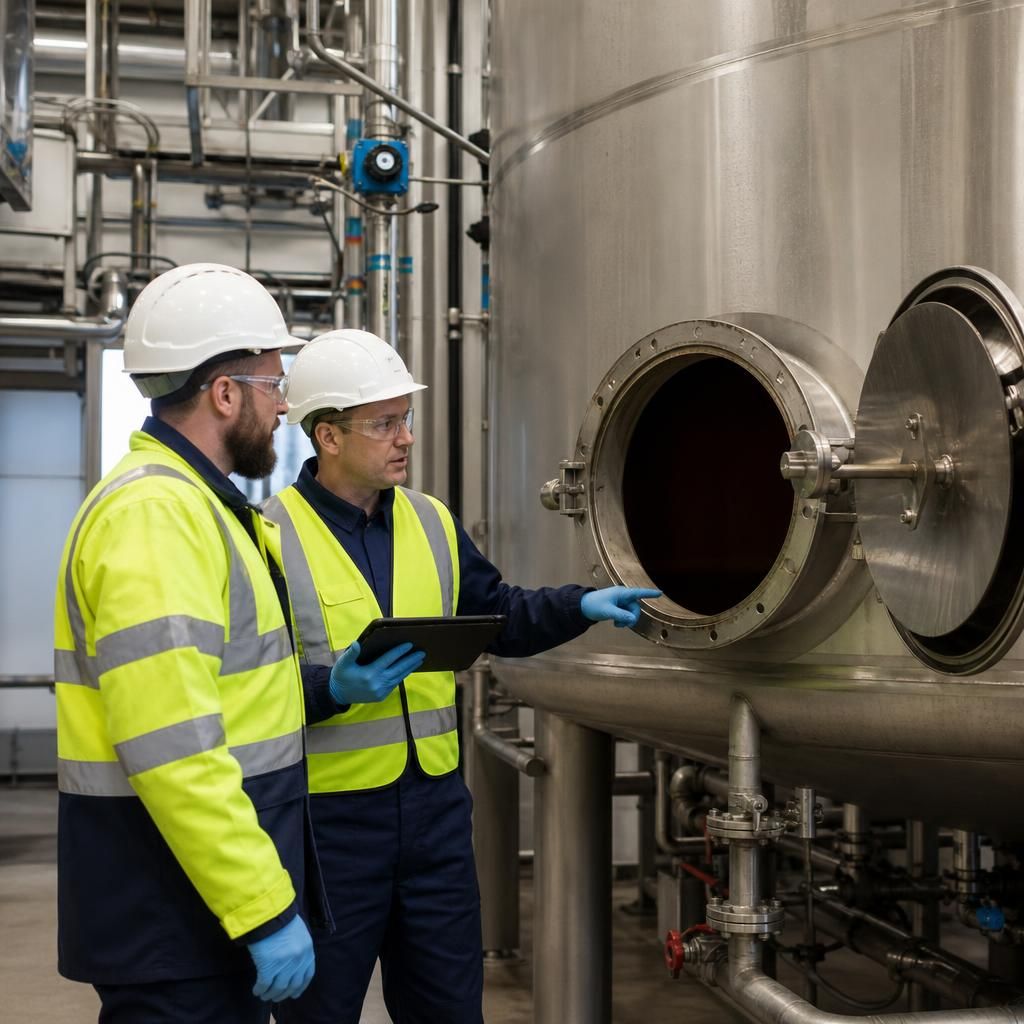
Production coordination is strongest when tank cleaning is managed through agreed hold points rather than as one continuous task. Before each stage, the site representative confirms that the relevant production condition has been met—for example, that the tank is empty before cleaning begins, that cleaning chemicals have been removed before inspection, and that the tank is approved for filling before it is reconnected.
This approach gives production, engineering and quality personnel clear opportunities to review unexpected findings without allowing the work to progress on assumption. If the tank condition, cleaning method or operating requirement changes, the next stage should remain on hold until the revised approach has been assessed and authorised.
Discuss Your Industrial Tank Cleaning Plan
Discuss your industrial tank cleaning plan with Blue Fish Water Management Ltd to review the proposed scope, site constraints and production interfaces before work is commissioned.