
What determines the frequency of industrial tank cleaning?
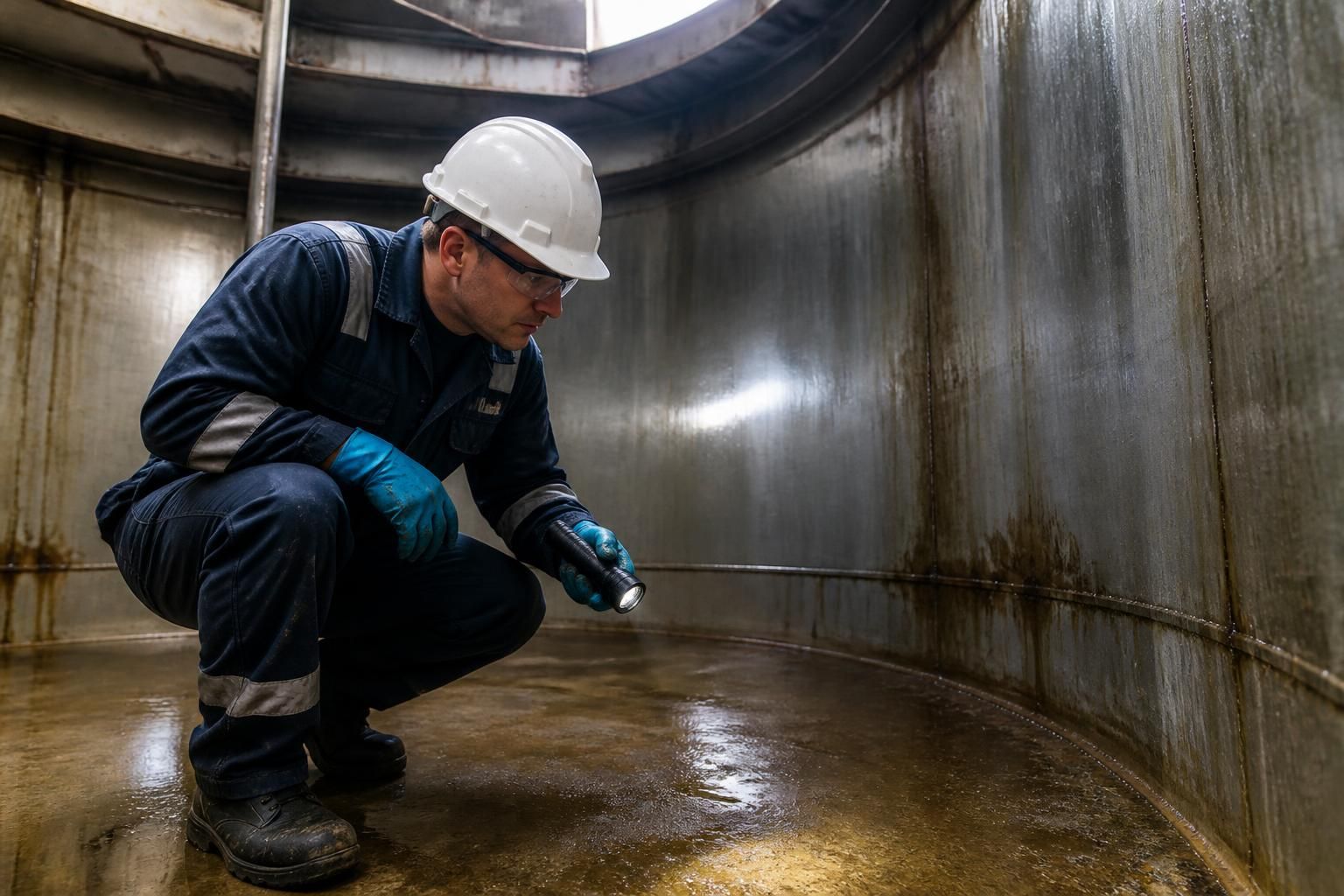
Industrial tank cleaning frequency is set by the level of contamination risk and by evidence from the tank’s actual operating history. A suitable programme combines an initial assessment with planned reviews, inspection findings, water-quality results and clearly defined triggers for additional cleaning. There is no universal interval that is appropriate for every industrial tank.
The condition of the tank and its internal arrangement are important determinants. Tanks with rough surfaces, damaged coatings, inaccessible areas, poorly positioned outlets or features that trap solids can retain contamination more readily than tanks designed for effective drainage and inspection. The condition of lids, vents, seals, overflow arrangements and access points also matters because defects may permit dust, debris, insects or other contaminants to enter.
Water movement and turnover affect how quickly cleaning may be needed. Low-use tanks, storage vessels with extended retention periods and systems containing stagnant sections may provide more opportunity for deposits and microbial growth to develop. Conversely, regular turnover does not remove the need for cleaning if solids are being introduced continuously or if deposits have already formed in low-flow areas. The assessment should therefore consider actual usage patterns rather than the tank’s intended capacity alone.
Previous inspection and sampling results provide practical evidence for adjusting the programme. Repeated sediment, discolouration, abnormal odour, deterioration in water-quality results or visible surface growth may indicate that the planned interval is too long. A clean inspection history, stable results and effective control measures may support the existing schedule, but they do not remove the need for periodic examination. Records should show what was found, where it was found and how the findings affected the next planned intervention.
The consequences of a tank-related failure also influence the frequency decision. Where contamination could interrupt production, affect a critical process, compromise product quality or create a significant health risk, the cleaning strategy may require more formal controls and closer review. The decision should reflect the importance of the water or stored material to the operation, not simply the physical size or age of the vessel.
Cleaning frequency should also be reconsidered after events that can alter internal conditions, including:
- major maintenance, relining, repair or replacement of tank components;
- prolonged shutdown, reduced demand or a change in production pattern;
- water-quality deterioration or a failed control measure;
- evidence of ingress, leakage, structural damage or defective covers and fittings;
- introduction of a different stored material or a change in treatment arrangements; and
- an incident involving contamination, unexpected deposits or an unsatisfactory inspection.
A sound programme separates routine cleaning from event-led work. The planned interval provides a controlled baseline, while defined trigger points allow cleaning to be brought forward when circumstances change. This is more reliable than relying on a fixed calendar date or waiting until contamination is obvious.
The final frequency should be recorded in the site’s water hygiene or asset-management documentation, with the reasoning, responsible personnel, inspection method, sampling requirements and acceptance criteria clearly stated. It should be reviewed when new evidence becomes available and whenever the tank, its contents or the surrounding process changes. A competent industrial tank cleaning contractor can help interpret inspection and testing information, identify conditions that justify a shorter or longer interval, and produce records that support the site’s compliance arrangements.
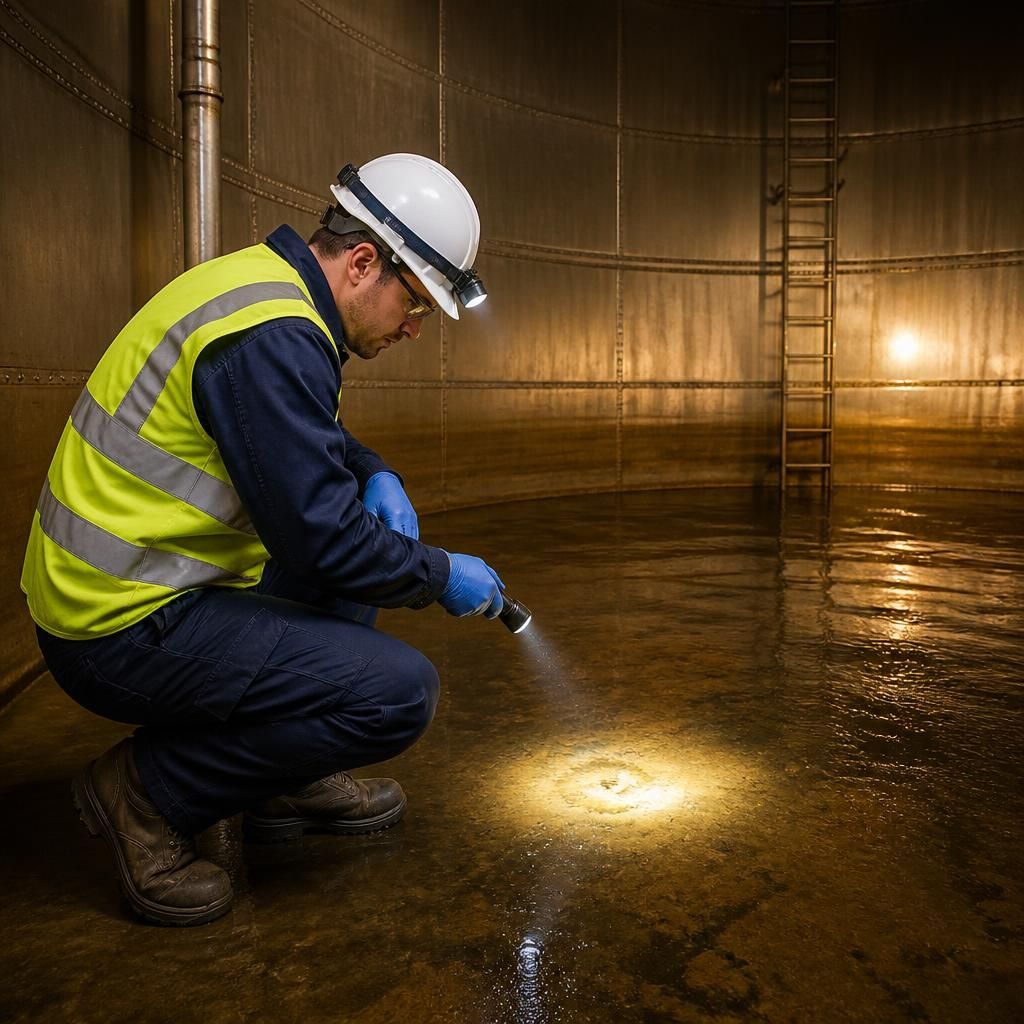
Cleaning frequency should be set for each tank rather than applied uniformly across an entire site. Two vessels may hold the same type of water but experience different turnover, access conditions, sediment accumulation or contamination exposure. A shared calendar can therefore overlook the tank with the greater practical risk.
Where several tanks form part of one system, the programme should also consider their relationship. A tank that supplies another vessel, receives return flow or sits upstream of a critical process may warrant closer review because contamination can affect connected equipment. Inspection records should identify each tank separately, show its cleaning history and explain any difference between its schedule and that of other vessels.
Discuss your industrial tank cleaning frequency
Speak to Blue Fish Water Management Ltd about reviewing the evidence behind your industrial tank cleaning schedule and defining suitable inspection and cleaning triggers. Their specialists can help align the programme with your site’s water hygiene and asset-management documentation.