
How often should hot water tanks be maintained?
Hot water tanks should be maintained at intervals set by a competent risk assessment, taking account of the system’s design, condition, usage and risk of contamination. Routine monitoring should be supported by periodic inspection, cleaning and servicing in line with the tank manufacturer’s instructions and the site’s water safety plan.
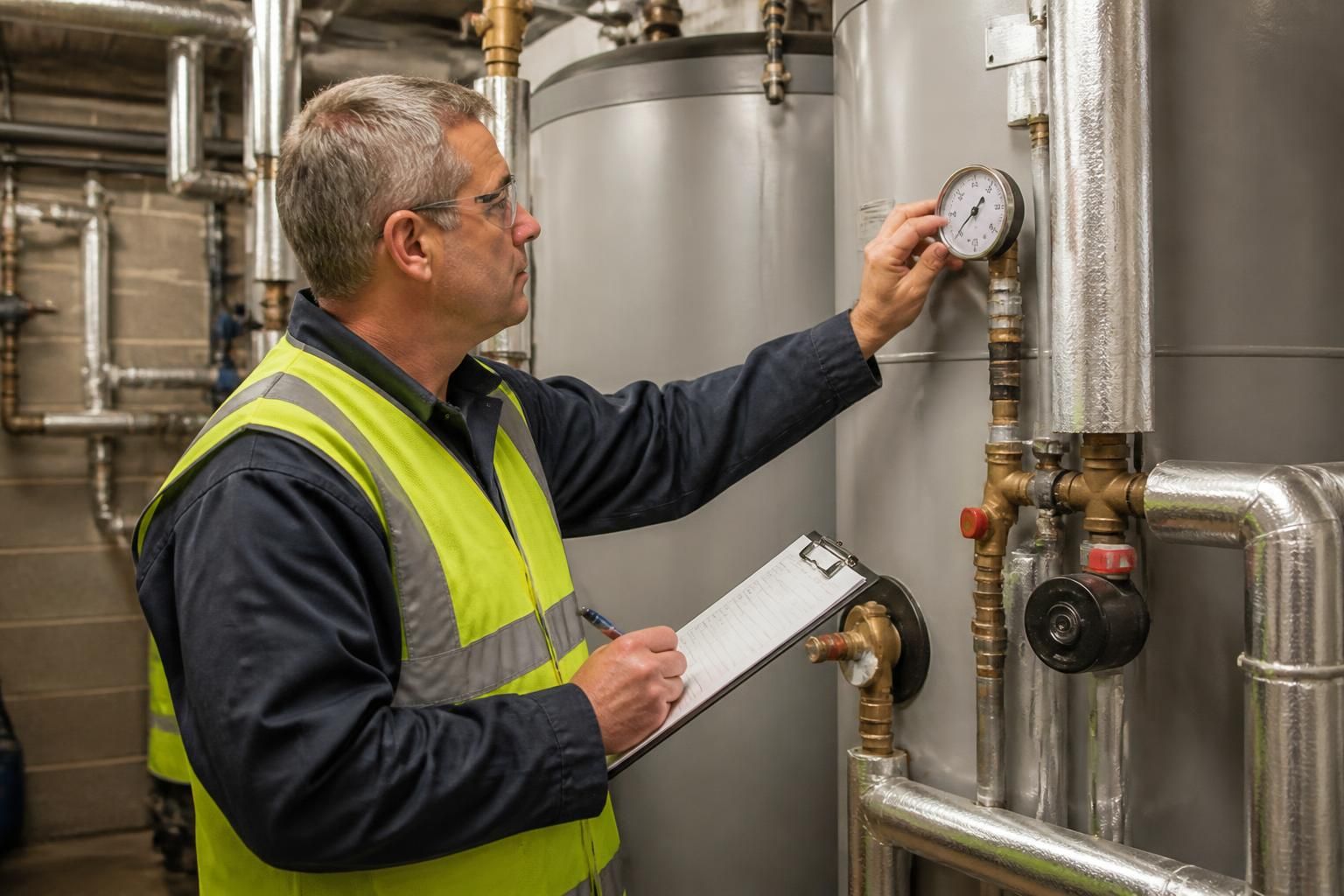
There is no single maintenance interval that applies to every hot water tank. The appropriate frequency is set by the site’s water safety risk assessment and reviewed when the system, building use or risk profile changes. A maintenance schedule should separate routine operational checks from planned servicing, condition inspections and any cleaning or remedial work identified by those checks.
Routine checks should take place at the frequency specified in the water safety plan. These checks may include confirming that temperatures are being controlled, observing signs of leakage or corrosion, checking insulation and access arrangements, and recording unusual changes in system performance. They are not a substitute for a competent inspection of the tank and associated components.
Planned servicing should follow the equipment requirements and the findings of the risk assessment. The service should consider the tank, immersion heaters or other heat sources, thermostatic controls, valves, expansion arrangements, pipework connections and protective components. Components that affect temperature control or water turnover may need attention before the tank itself appears defective.
Inspection and cleaning are needed when inspection records, operational checks or water hygiene results indicate sediment, scale, biofilm, corrosion or other deterioration. They may also be required after prolonged stagnation, a significant change in occupancy, a shutdown, engineering work or an incident affecting water safety. Cleaning should not be treated as an automatic replacement for controlling the conditions that allowed contamination or deposits to develop.
The interval should be shortened where a tank is old, difficult to access, heavily scaled, subject to fluctuating demand, connected to a complex system or located in premises with occupants who may be particularly susceptible to legionella. Conversely, a lower-risk installation may require a different programme, provided the decision is documented and supported by competent assessment. A previous satisfactory service does not, by itself, justify leaving the interval unchanged if site conditions have altered.
A useful maintenance schedule should state:
- which checks are required and who is competent to carry them out;
- when temperature, condition and other control information must be recorded;
- when a detailed inspection, service, clean or disinfection is due;
- which findings require escalation or corrective action;
- how defects, missed checks and completed remedial work are recorded; and
- when the schedule itself must be reviewed.
Maintenance should also be brought forward if monitoring identifies temperatures outside the intended control range, persistent loss of hot water performance, leaks, unusual noise, visible damage or evidence of contamination. Following remedial work, the system should be checked to confirm that the work has addressed the underlying issue and that the water safety controls remain effective.
Records should show the date of each inspection or service, the equipment examined, readings and observations, defects found, action taken and the person who completed or authorised the work. These records allow the responsible person to identify deterioration over time and provide evidence that the maintenance programme is being followed.
In practice, the correct answer is therefore a documented, risk-based timetable rather than an arbitrary annual or fixed-period appointment. A competent water hygiene professional can review the tank arrangement, existing records and control measures, then recommend intervals that are proportionate to the installation and keep them under review.
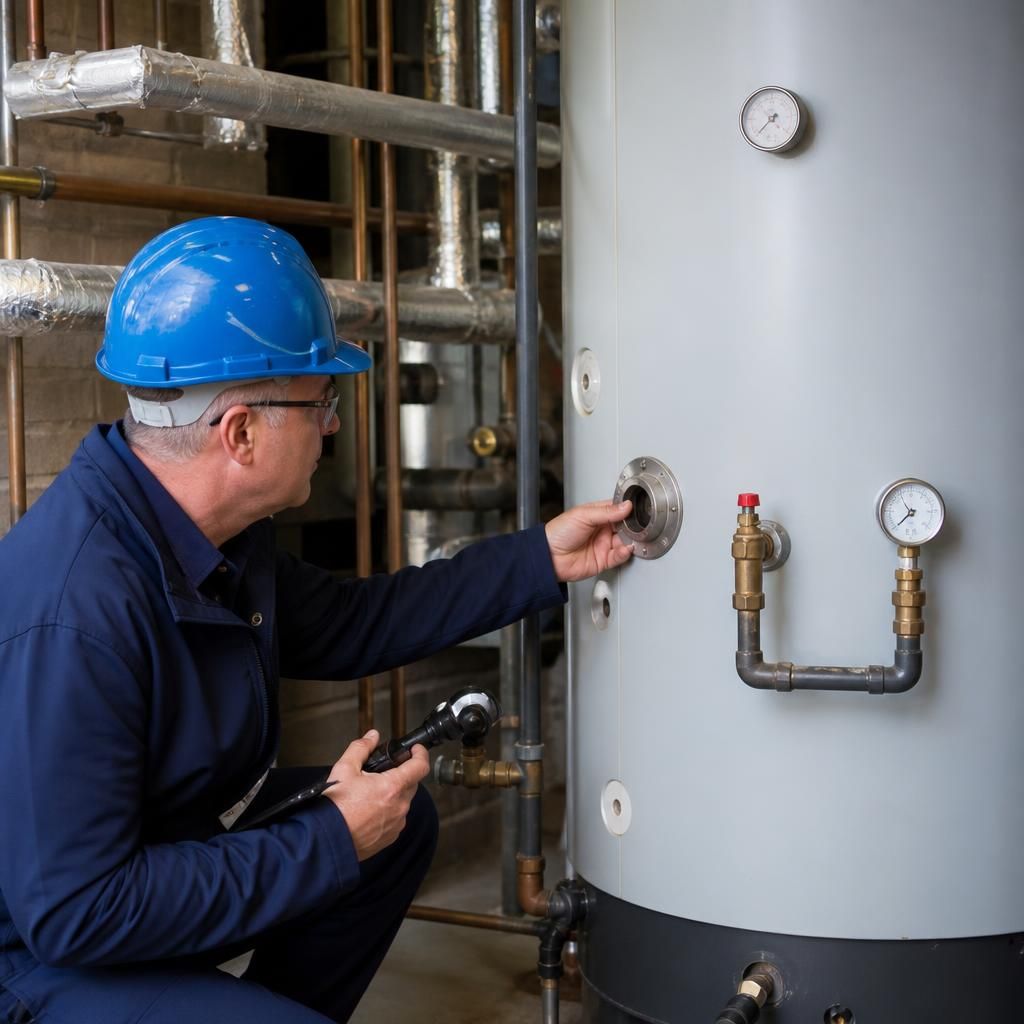
Maintenance may be due before the next planned service when a hot water tank is recommissioned after a prolonged shutdown. Before normal use resumes, the responsible person should ensure the tank and connected pipework are in suitable condition, confirm that the system is operating as intended and address any water hygiene concerns created by stagnation.
This is an event-based check rather than a routine calendar appointment. The same principle applies after substantial alterations, replacement of control components or work that affects water storage and circulation: the system should be reassessed before the existing maintenance timetable is relied upon.
Discuss your hot water tank maintenance schedule
Discuss your hot water tank maintenance schedule with Blue Fish Water Management Ltd to review whether the current arrangements remain appropriate for your system and water safety responsibilities.