
What does hot water tank maintenance involve?
Hot water tank maintenance involves inspecting the tank, associated components and surrounding installation, then cleaning, checking temperatures and addressing defects or contamination risks. It should also include appropriate monitoring and clear records to support safe operation and legionella control.
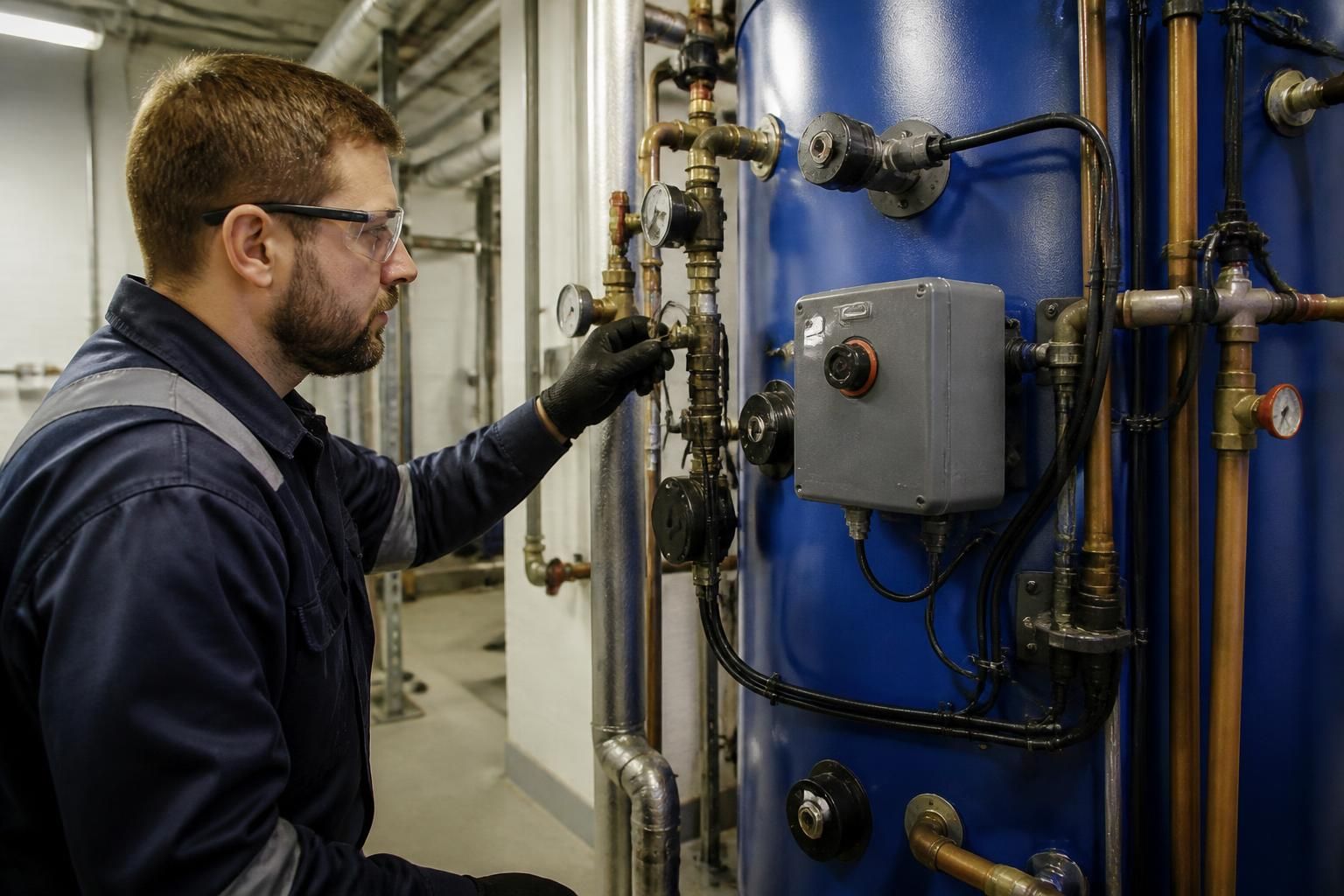
Hot water tank maintenance is a planned set of technical checks and servicing tasks that keeps the storage vessel, heating equipment and distribution system operating safely. The work is normally based on the system’s design, how the water is used, the condition of the equipment and the findings of the site’s water safety risk assessment.
The maintenance scope should begin with a review of relevant information, including system drawings, previous service records, known faults, water usage patterns and any changes to the building or occupancy. This helps determine whether the tank is correctly sized and whether its operation could create areas where water remains warm but not sufficiently controlled. Storage arrangements, outlet usage and connections to little-used parts of the system may all be relevant.
Mechanical and electrical components may require separate checks. Depending on the installation, these can include:
- immersion heaters, boilers, heat exchangers and associated controls;
- thermostats, sensors, programmers and high-temperature cut-outs;
- inlet valves, non-return valves, strainers and pressure-reducing equipment;
- expansion vessels, safety valves, discharge pipework and drain points;
- pumps, secondary return arrangements and circulation controls; and
- pipework insulation, access covers, seals and supports.
Servicing may involve removing scale, sludge or other deposits from accessible parts of the vessel and its fittings. The appropriate method depends on the tank material, the type of deposit and the manufacturer’s requirements. Any cleaning or disinfection procedure should be controlled so that it does not damage components or leave the system unsuitable for use. Where corrosion, pitting, damaged lining or persistent leakage is identified, the responsible person may need to consider repair or replacement rather than continued routine servicing.
Safe isolation and reinstatement are important parts of the work. A competent person should identify the relevant water, electrical and heat sources before starting, control access to the work area and use suitable protective measures. After servicing, the tank should be returned to operation in a controlled manner, with valves and controls left in their intended positions. Where work has affected the water system, appropriate flushing or other water hygiene measures may be necessary before normal use resumes.
Maintenance should also consider how the tank performs as part of the wider hot water system. A vessel can appear sound while poor circulation, incorrect control settings or unused branches create a water hygiene concern elsewhere. Checks may therefore need to include the relationship between stored water, secondary circulation and outlets, together with any actions identified by the legionella risk assessment. Water sampling or other testing is not automatically required for every maintenance visit; it should be selected where the risk assessment, system history or investigation findings justify it.
The completed report should make the work auditable. It should identify the equipment, date of service, checks completed, defects found, readings or test results where relevant, cleaning or remedial work undertaken, parts requiring attention and recommended follow-up actions. Clear records allow building managers and other responsible persons to track recurring faults, demonstrate that planned maintenance is being managed and coordinate the work with wider legionella control arrangements.
For commercial and industrial premises, the exact frequency and depth of maintenance should be set by the system risk assessment and equipment requirements rather than by a generic checklist alone. Complex installations, vulnerable occupants, repeated temperature concerns or evidence of contamination may require a more detailed investigation by a suitably competent water hygiene professional.
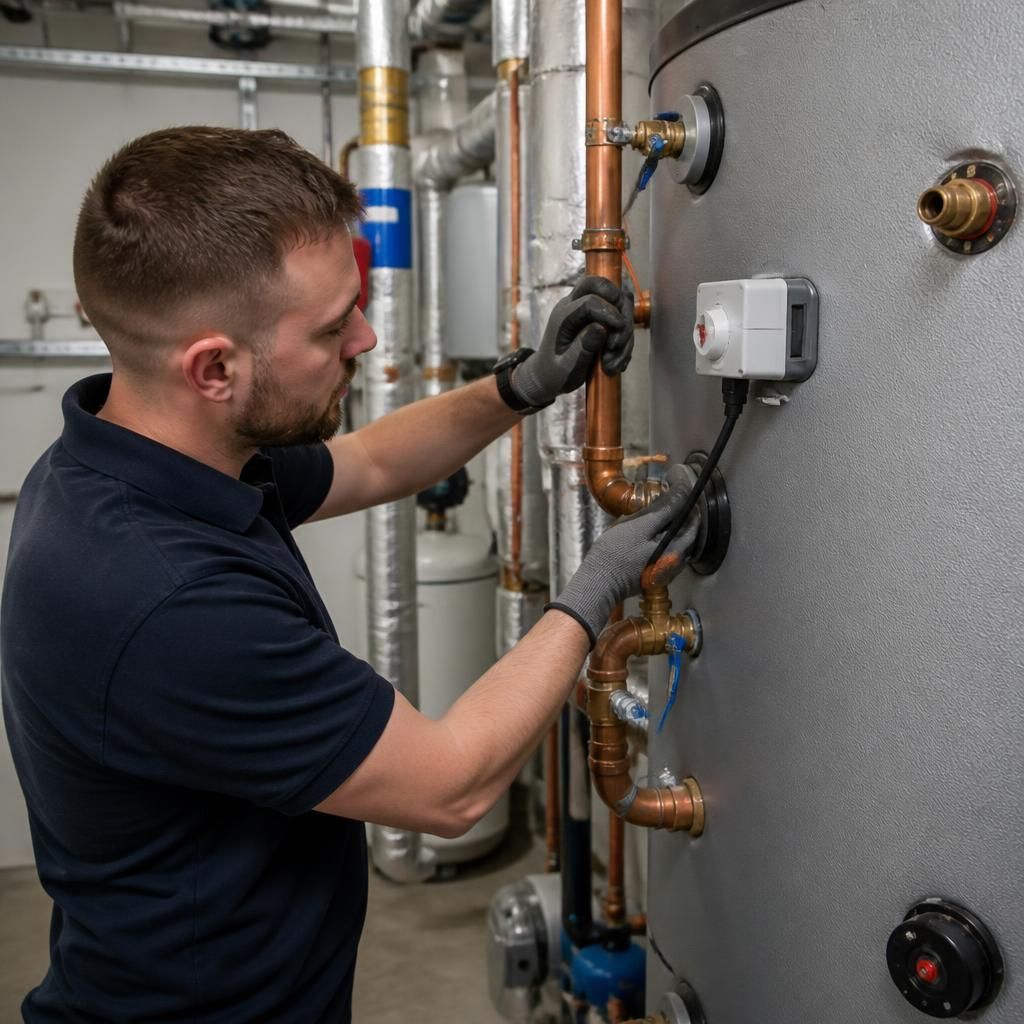
Hot water tank maintenance does not necessarily mean draining and cleaning the vessel at every visit. Routine work may confirm that the tank and its controls are operating as intended, while more intrusive cleaning or disinfection is considered when inspection findings, system history or the water safety risk assessment indicate a need.
This distinction helps prevent unnecessary disruption while ensuring that deposits, deterioration or contamination risks are not overlooked. Any decision to drain, clean or disinfect should take account of the tank’s construction, the condition of its internal surfaces and the effect on connected parts of the hot water system. The reason for the work and any restrictions placed on use should be recorded as part of the maintenance documentation.
Discuss your hot water tank maintenance requirements
Discuss your hot water tank maintenance requirements with Blue Fish Water Management to clarify the appropriate scope of work for your premises and water system.