
How does hot water tank maintenance support legionella control?
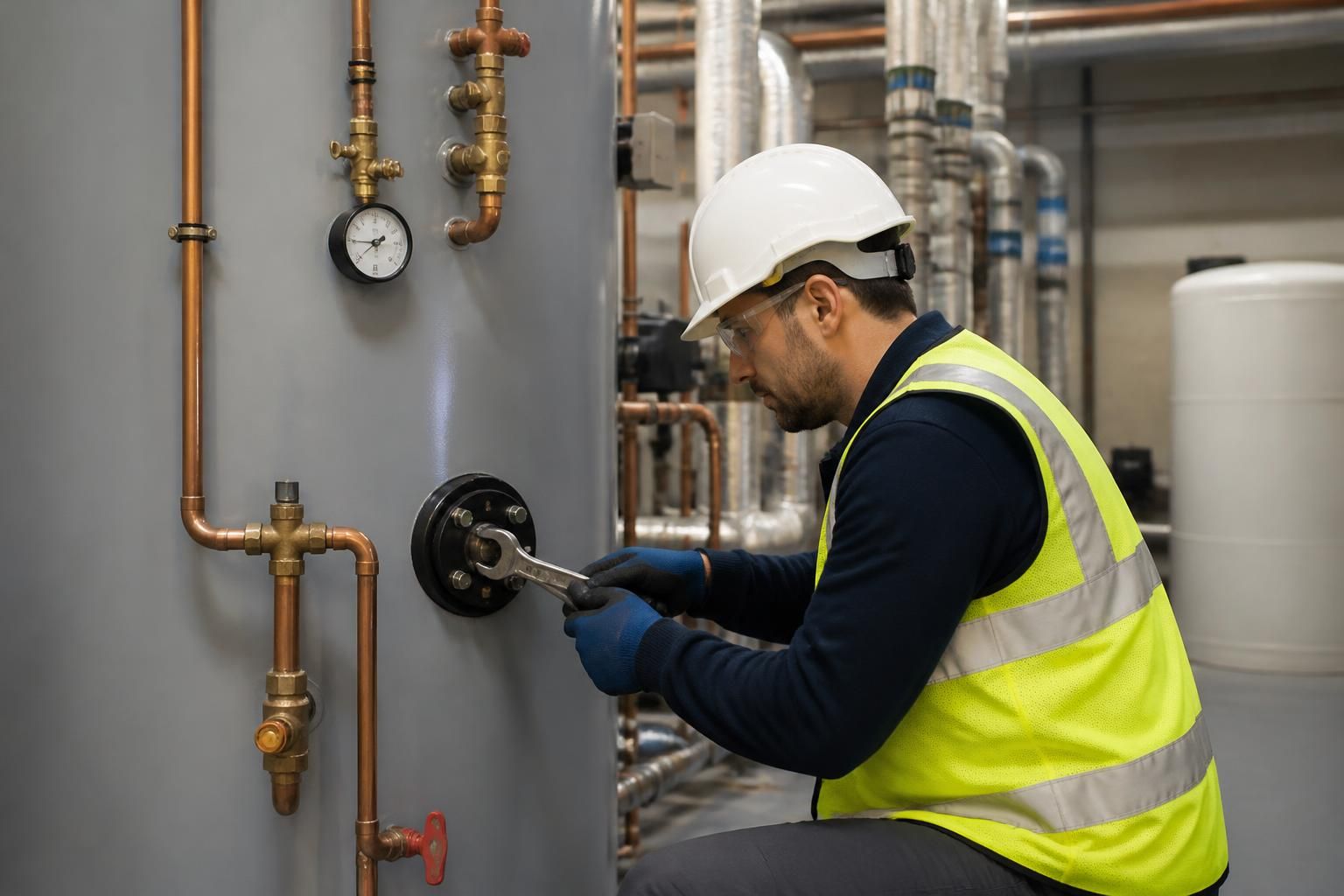
Hot water tank maintenance supports legionella control by providing evidence that the hot water system is being managed as designed, operated safely and kept in a condition that does not encourage bacterial persistence. It forms part of a wider water safety management plan alongside a legionella risk assessment, routine monitoring, sampling where appropriate and corrective action.
It helps maintain effective system operation. A tank, calorifier or hot water cylinder must work with the rest of the system to produce and distribute hot water consistently. Maintenance checks can confirm that heating equipment, thermostatic controls, pumps, valves, insulation and associated pipework are functioning correctly. If a component is faulty or poorly adjusted, some parts of the system may not receive sufficient heat or flow. Identifying and correcting that defect helps keep the system within its intended operating parameters.
It reduces the opportunity for biofilm and deposits to develop. Legionella can persist within biofilm, scale and other deposits attached to internal surfaces. Inspection may identify contamination, corrosion, scaling or accumulated material inside the tank and connected components. Where the risk assessment supports it, cleaning, disinfection or remedial work can remove or reduce those conditions. The appropriate method depends on the tank design, system use, materials and the nature of the contamination; maintenance should therefore be planned by a competent person rather than applied as a standard procedure to every installation.
It helps control low-use parts of the installation. A tank rarely operates in isolation. Outlets, branches, bypasses, secondary return arrangements and redundant sections can affect how water moves through the system. Maintenance inspections can reveal parts that are rarely used, incorrectly connected or no longer required. These findings can lead to practical measures such as removing redundant pipework, improving circulation, reviewing outlet use or introducing suitable flushing arrangements. Such work is particularly important in larger premises where the system may have changed since its original installation.
It provides an opportunity to verify controls and monitoring. A water safety plan depends on reliable information. During maintenance, responsible persons can check that monitoring points are suitable, thermometers and other instruments are fit for purpose, and records reflect the system as it currently exists. Where readings or observations fall outside the control limits set for the site, the issue should be investigated and recorded. Maintenance records can then demonstrate what was inspected, what was found, what action was recommended and whether that action was completed.
Maintenance may also identify conditions that are not directly visible during routine temperature checks. Examples include:
- internal corrosion or damage that could affect water quality;
- defective lids, seals, drains or access points that make inspection or cleaning difficult;
- faults affecting heat transfer or circulation;
- poorly configured valves or pipework that create unintended routes or bypasses;
- evidence that the system has been altered without the risk assessment or schematic being updated; and
- access or safety problems that prevent routine checks from being carried out properly.
Corrective work should be proportionate to the risk. A minor defect may require adjustment, replacement of a component or closer monitoring. More significant findings may require cleaning, disinfection, system modification, removal of redundant sections or further investigation, including water sampling. Sampling can provide useful evidence in the right circumstances, but a satisfactory sample does not replace physical maintenance or ongoing control of the system.
Hot water tank maintenance must also take account of scalding, access and system integrity. Changes made to improve temperature control should not introduce an unacceptable risk to users, and any thermostatic mixing arrangements should be maintained as part of the overall system. Work should be documented within the site's water hygiene arrangements, with responsibilities, findings and follow-up actions clearly assigned.
For commercial and industrial premises, the most useful approach is to link tank maintenance to the legionella risk assessment and planned monitoring schedule. This creates a traceable process: the risk assessment identifies hazards, maintenance addresses the condition of the equipment, monitoring checks ongoing performance, and review confirms whether further action is needed. Used in this way, tank maintenance is not a standalone cure for legionella risk; it is a practical control that helps keep the hot water system safe, inspectable and compliant with the organisation's water management procedures.
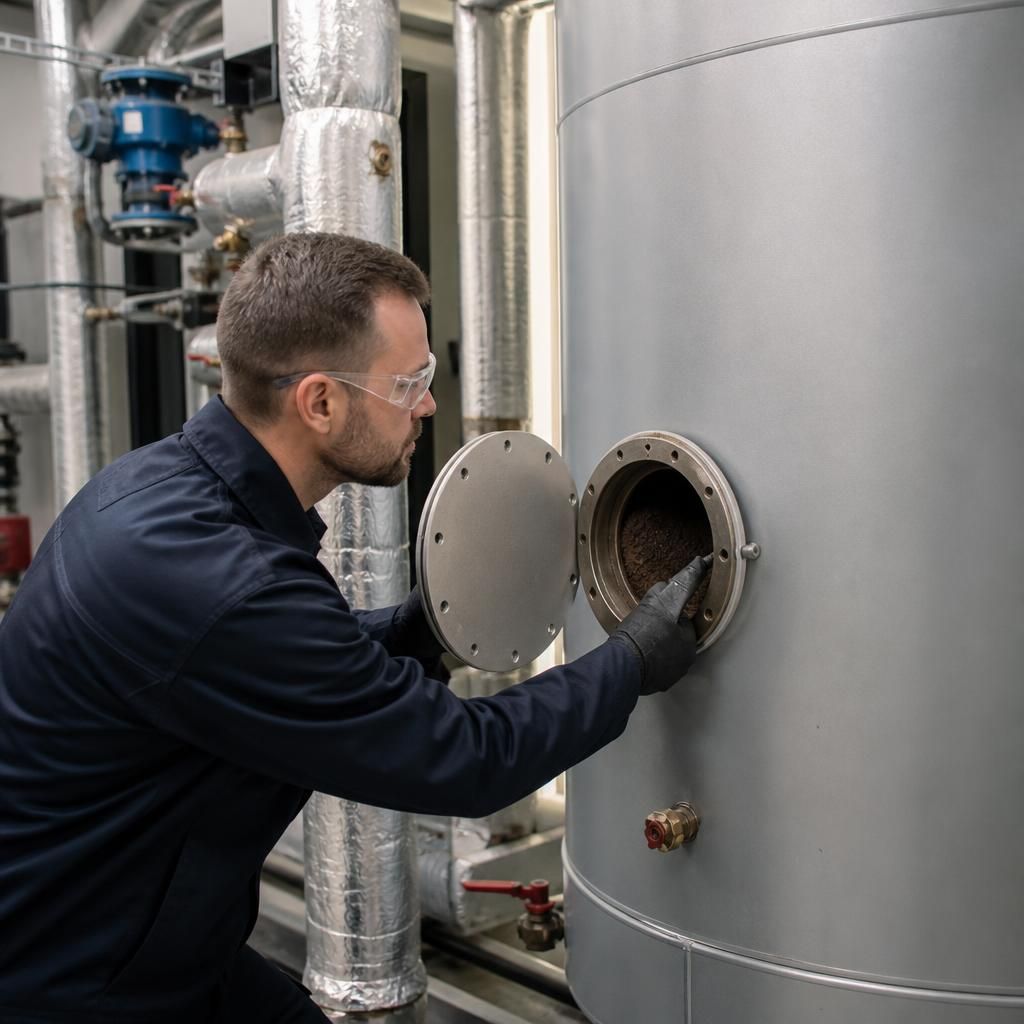
Hot water tank maintenance also supports legionella control when it prompts a review of whether the storage arrangement still matches the building’s current use. Changes in occupancy, operating hours, facilities or water demand can leave a tank oversized for the premises or alter how quickly stored water is used. That can increase retention and make the original control measures less suitable.
A maintenance review should therefore consider the tank’s role within the current hot water system, not just its physical condition. Where the installation no longer reflects operational needs, the findings may support changes to storage arrangements, control settings or the water safety plan. This change-management approach helps ensure that legionella controls remain appropriate throughout the system’s service life.
Discuss Hot Water Tank Maintenance for Legionella Control
Discuss your hot water tank maintenance requirements with Blue Fish Water Management Ltd to identify suitable inspection, testing or remedial steps within your site’s water safety arrangements.