
How can businesses plan hot water tank cleaning around site operations?
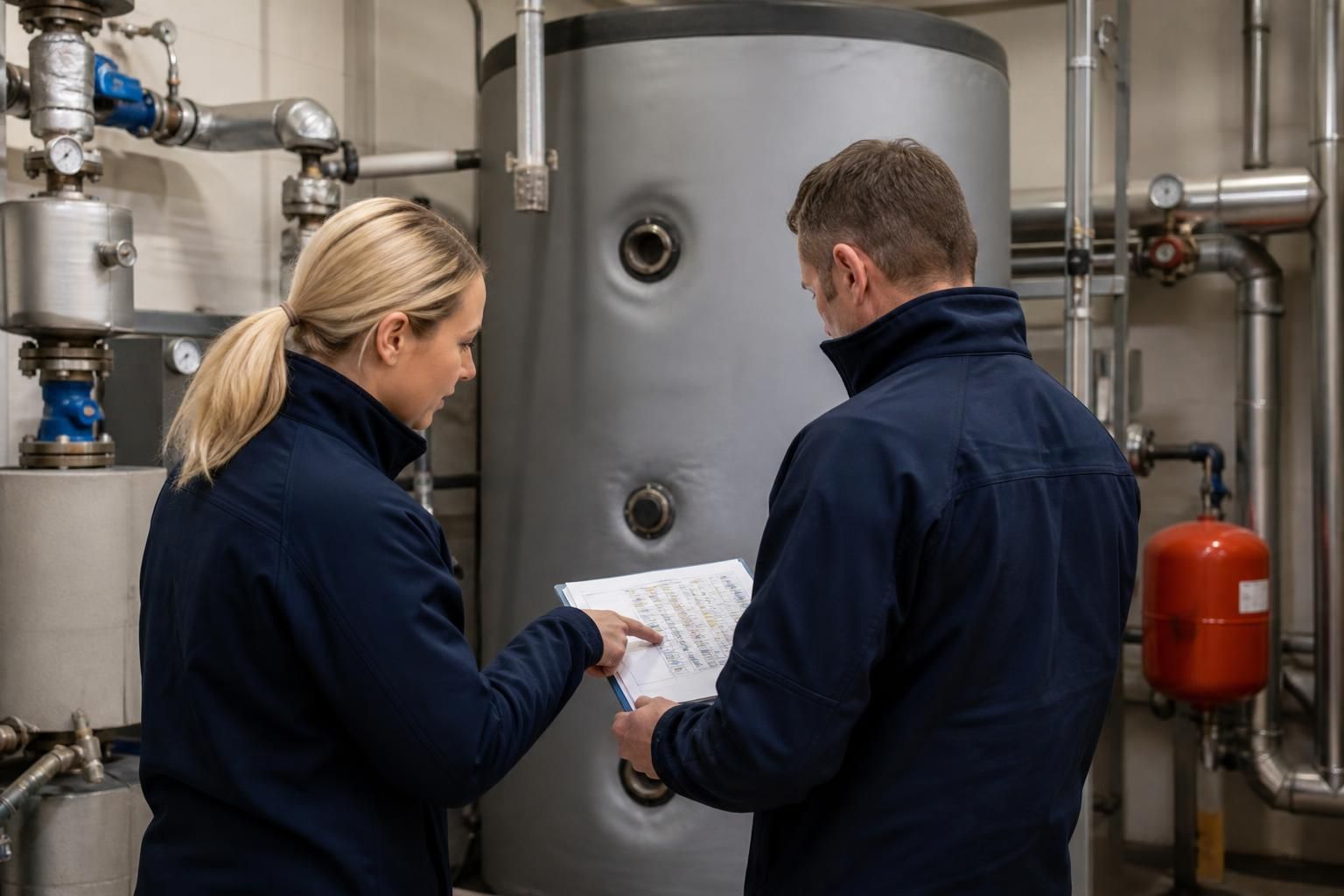
Hot water tank cleaning should be planned as a controlled maintenance activity within the site’s wider water safety programme, rather than fitted into the calendar as an isolated cleaning task. The most suitable date is the one that gives the contractor enough time to complete the defined work, allows the business to manage reduced or altered water demand, and leaves sufficient time for checks before normal operations depend on the system.
Begin by reviewing the current water hygiene information and the reason for the cleaning. The decision may follow a planned maintenance interval, inspection findings, microbiological results, changes to occupancy, evidence of sediment, or a remedial action from a legionella risk assessment. These factors affect the scope and urgency of the work. A tank requiring routine cleaning can usually be planned differently from one associated with contamination concerns or a wider failure in water management controls.
- Occupancy patterns: identify periods when the fewest people rely on the hot water system, taking account of shift changes, teaching or treatment schedules, seasonal occupancy and planned closures.
- Operational dependency: record activities that need hot water, including welfare facilities, cleaning, food preparation, healthcare processes and manufacturing operations.
- System configuration: establish which tank, calorifier, outlets and secondary systems are affected. A single tank may serve several departments or buildings, so the apparent location of the work may not reflect its full operational impact.
- Site constraints: account for security procedures, permit systems, delivery movements, confined-space considerations, noise, drainage capacity and any restrictions on contractor activities.
- Related maintenance: check whether valves, pumps, controls, insulation or distribution pipework need inspection at the same time. Combining compatible tasks can avoid repeated interference with the system, but additional work should not be added without reviewing the programme and risks.
Use actual demand information where it is available instead of relying solely on assumptions about a quiet period. Building-management data, hot water consumption records, production schedules and discussions with department managers can reveal short periods of high demand that are not obvious from the main site calendar. The selected date should also avoid important operational events such as audits, examinations, stock movements, production changeovers or visits that depend on uninterrupted welfare facilities.
The work should be supported by a written scope and method statement that sets out the equipment covered, the planned stages, responsibilities, hazards and acceptance criteria. The site team should know which decisions require approval before work begins, who can authorise changes, and who will confirm that the system is suitable for return to service. This prevents the cleaning contractor, facilities team and operational manager from working to different assumptions.
Allow realistic time for activities that are easy to overlook when creating the programme. This includes preparation, equipment setup, draining, removal of deposits, cleaning, disinfection where required, refilling, temperature stabilisation, inspection and any sampling. A tank may appear clean before the rest of the system has been shown to operate correctly. The programme should therefore include a defined review point before dependent activities resume, rather than ending when physical cleaning is complete.
Where the site has more than one tank or hot water circuit, ask whether the work can be divided into separate work packages. Phasing can reduce the number of departments affected at one time and may be appropriate where systems are independent. It is not suitable simply because it appears less disruptive: each phase must still be technically safe, properly controlled and capable of achieving the intended water hygiene outcome. The contractor should confirm whether partial operation changes temperatures, flow patterns or the performance of the remaining equipment.
Communication should be proportionate to the risk and the number of people affected. Facilities management may coordinate the work, but department leads, responsible persons, health and safety staff, infection prevention teams and production managers may also need to review the plan. Provide them with the relevant date, affected areas, restrictions, contact arrangements, escalation route and criteria for changing the schedule. Staff should not be left to infer from a general maintenance notice that hot water may be unavailable or subject to additional controls.
Build decision points into the programme rather than assuming that every job will follow the original plan. For example, the work may need to pause if the tank cannot be safely drained, deposits indicate a wider defect, the condition of internal components differs from the survey, or the agreed scope is no longer sufficient. Define who assesses such findings and how the operational impact of a change will be approved. This is particularly important where the tank forms part of a critical process or supplies vulnerable occupants.
After the work, retain the planned scope, attendance details, findings, cleaning and disinfection information where applicable, inspection results, sampling arrangements and any recommendations for follow-up. These documents allow the responsible person to demonstrate what was done and to update the water safety plan, asset register and future maintenance schedule. They also help determine whether the next intervention should remain calendar-based or be adjusted in response to the tank’s condition and the way the site is used.
A competent water hygiene contractor can help convert these operational details into a practical programme, identify dependencies that site teams may miss and advise when cleaning should be coordinated with wider legionella control measures. The business remains responsible for providing accurate information about its operations and for ensuring that the agreed controls are implemented by the relevant site personnel.

Classify the hot water service by operational criticality before selecting a cleaning window. A system supporting essential welfare, clinical activity, food production or temperature-sensitive processes needs a more controlled plan than one serving a low-use administrative area, even if both have similar tank arrangements.
For each system, record the consequence of losing hot water, the departments affected, the maximum acceptable interruption and the controls needed before work starts. This helps the responsible person decide whether the activity can proceed under a standard maintenance plan or requires senior operational approval, additional contingency arrangements and a more formal return-to-service review.
The classification should be revisited if occupancy, processes or the use of the building changes. It provides a defensible basis for prioritising cleaning work and prevents scheduling decisions being based only on the contractor’s preferred date or a general assumption that the site will be quiet.
Discuss your hot water tank cleaning schedule
Discuss your proposed hot water tank cleaning schedule with Blue Fish Water Management Ltd to check that the planned work aligns with your site’s water safety arrangements and operational requirements.