
What does waste water tank cleaning involve?
Waste water tank cleaning involves isolating the tank, removing liquid, sludge and accumulated deposits, then cleaning the internal surfaces and inspecting the tank for damage or defects. The system is then safely refilled and returned to service, with the work and any recommended remedial action recorded for compliance purposes.
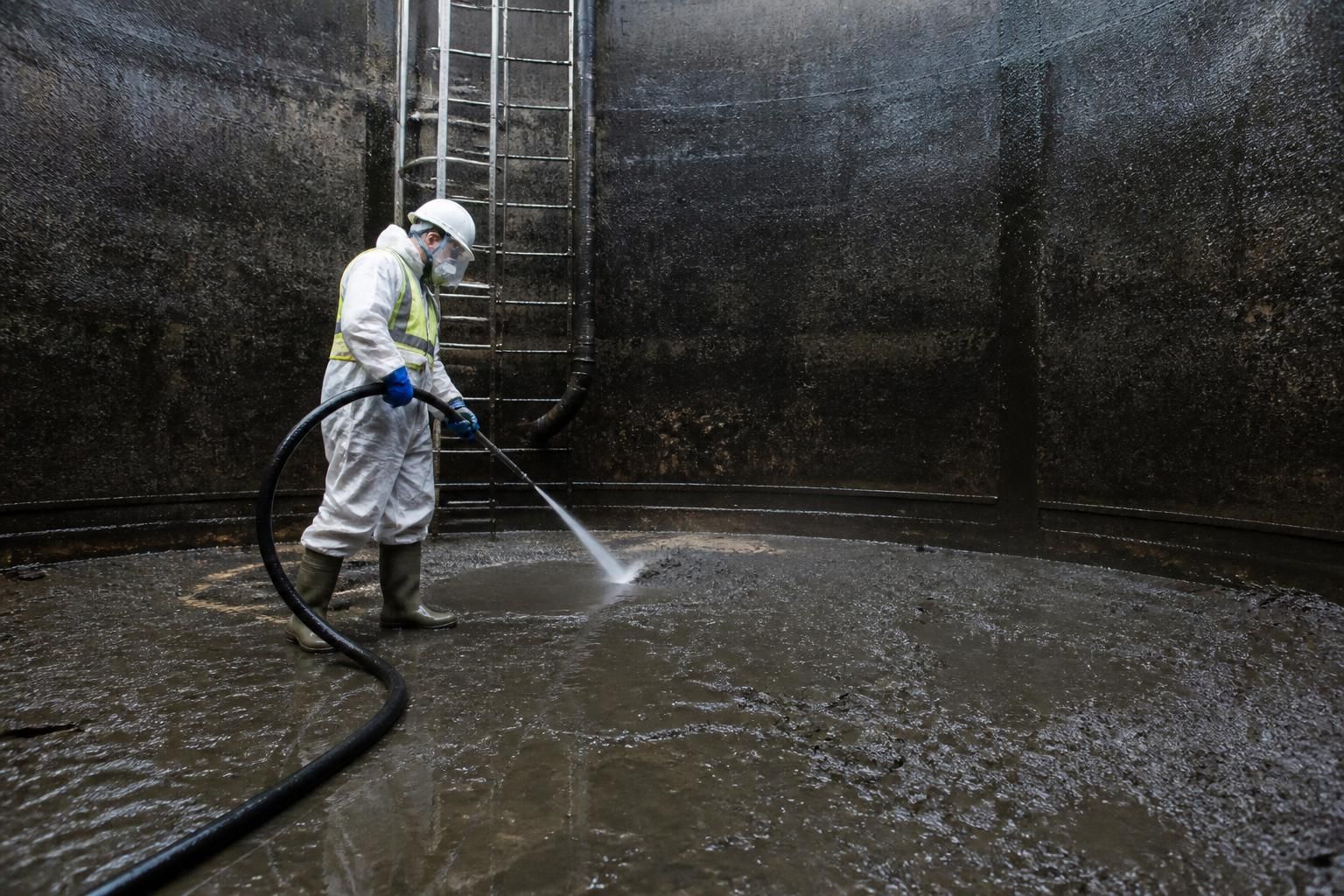
Waste water tank cleaning is a controlled maintenance operation used to remove settled solids, organic matter, contaminated residues and other deposits that can affect tank capacity, hygiene and system performance. The work is planned around the tank’s contents, construction, location and connected equipment, because the hazards and cleaning method vary between sewage tanks, process-water tanks, attenuation tanks and other waste water storage systems.
Before cleaning begins
- The tank and connected pipework are assessed to identify access points, isolation requirements, electrical or mechanical equipment, likely contaminants and any confined-space hazards.
- A method statement and risk assessment should define the sequence of work, required controls, emergency arrangements and responsibilities on site.
- The tank is taken out of service in a controlled manner. Inlet flows, pumps, valves and automatic controls must be managed so that the tank cannot unexpectedly refill or start while personnel are working.
- Workers select suitable personal protective equipment and establish controls for biological agents, hazardous gases, splashes, slips, manual handling and contaminated waste.
Where entry into the tank may be necessary, this must be treated as a confined-space activity. Atmospheric testing, forced ventilation, suitable access equipment, communications, supervision and a rescue plan may be required. A tank should never be entered simply because it has been emptied; oxygen deficiency, toxic gases, restricted movement and residual contamination can remain after pumping.
Removing contents and deposits
Liquid is normally extracted using appropriate pumping equipment, with heavier sludge and compacted deposits removed separately where necessary. Cleaning may involve vacuum recovery, low-pressure washing, mechanical agitation or other controlled methods selected for the tank material and the nature of the residue. High-pressure cleaning is not automatically suitable: it can damage linings, disturb settled contamination or create aerosols, and must be controlled where it is used.
Recovered liquid, sludge and wash water must be contained and transferred for lawful handling. Disposal arrangements depend on the material, its contamination and the receiving facility. Waste should not be discharged to a drain, watercourse or treatment system unless that route is permitted and appropriate for the waste concerned. Documentation such as waste transfer information may form part of the site record.
Inspection during the work
Once deposits have been removed, the internal surfaces can be examined more effectively. The inspection may identify corrosion, cracking, damaged coatings, failed seals, blocked outlets, defective level controls, sediment traps or problems around access covers and connections. Photographs and condition notes provide useful evidence for deciding whether remedial work is needed before the tank is returned to service.
Cleaning does not correct structural or mechanical defects by itself. Repairs may include replacing seals, restoring protective coatings, clearing outlets, repairing access covers or addressing defects in pumps and controls. Any repair must be assessed for compatibility with the tank contents and for the effect it may have on future cleaning or inspection.
Returning the tank to service
After cleaning and inspection, the tank is checked for remaining debris and the equipment is reinstated in a controlled sequence. Valves, pumps, alarms, level sensors and automatic controls should be tested where they form part of the operation. The system is then refilled or allowed to receive flow gradually, while checking for leaks, abnormal operation or signs that deposits have been left in connected pipework.
The final record should identify the tank, date of work, cleaning method, waste removed, inspection findings, defects, photographs where relevant and any recommended follow-up. It should also record who carried out the work and whether further monitoring, repair or a revised cleaning schedule is required. Keeping this information with the site’s water-management and maintenance records helps demonstrate that the tank has been managed systematically.
For business premises, the appropriate cleaning scope depends on the tank’s purpose, contents, construction, usage and risk assessment. Blue Fish Water Management can provide practical advice on water hygiene, risk assessment, monitoring and remedial requirements where waste water tank cleaning forms part of a wider water-management programme.
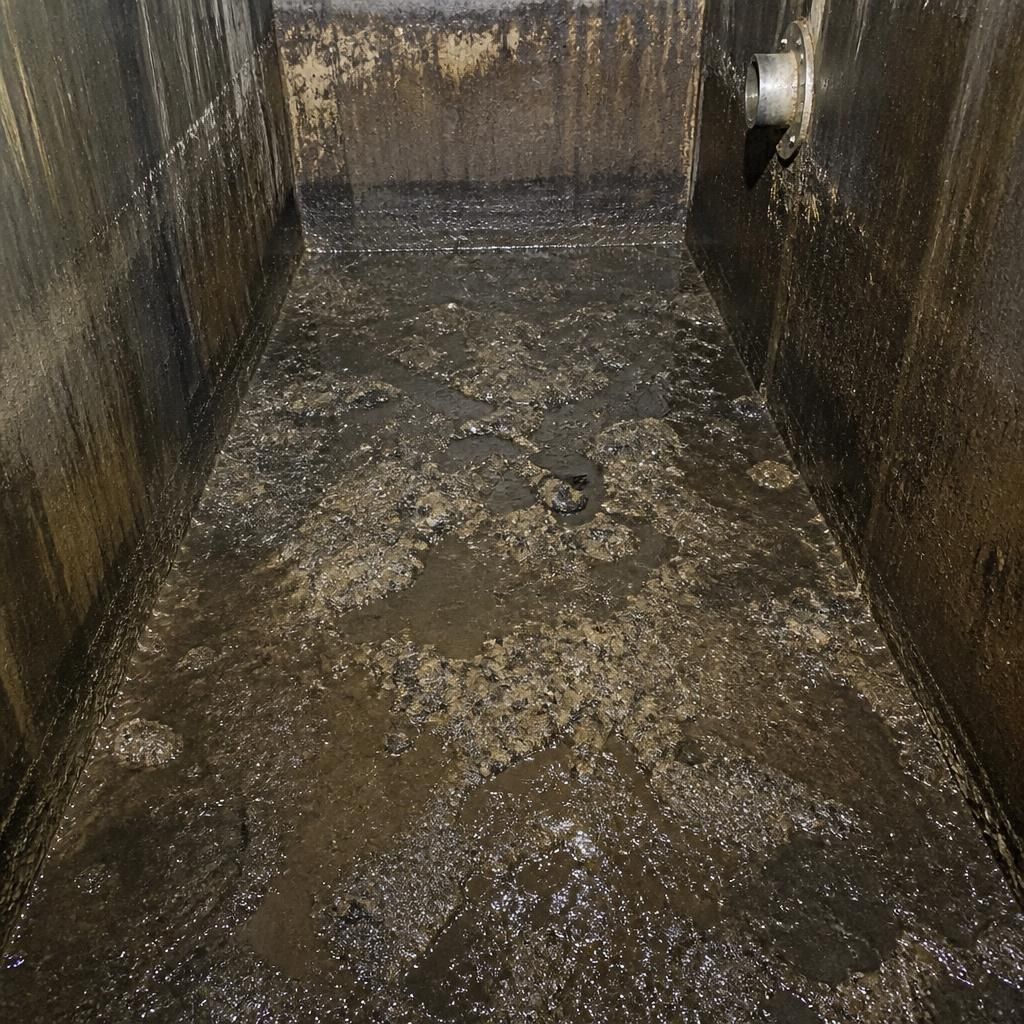
Waste water tank cleaning and disinfection are separate activities. Cleaning removes sludge, solids, organic matter and other deposits from the tank, while disinfection uses an approved treatment to reduce microorganisms on suitable surfaces. Disinfection is not automatically required after every cleaning operation; its suitability depends on the tank’s purpose, the material stored, the level of contamination and the requirements of the site’s risk assessment.
Where a disinfectant is appropriate, the product and application method must be compatible with the tank lining, connected equipment and intended use. Contact time, rinsing requirements and the management of spent solution should be defined before work starts. Any chemical residues must be contained and handled through an appropriate disposal route, rather than being released into drainage or the environment without permission.
This distinction helps businesses specify the correct scope of work. A quotation or maintenance plan should identify whether it covers physical cleaning only, cleaning followed by disinfection, or further treatment based on inspection findings.
Discuss your waste water tank cleaning requirements
Discuss your waste water tank cleaning requirements with Blue Fish Water Management to clarify the appropriate scope, site controls and records for your premises.