
How should businesses prepare for waste water tank cleaning?
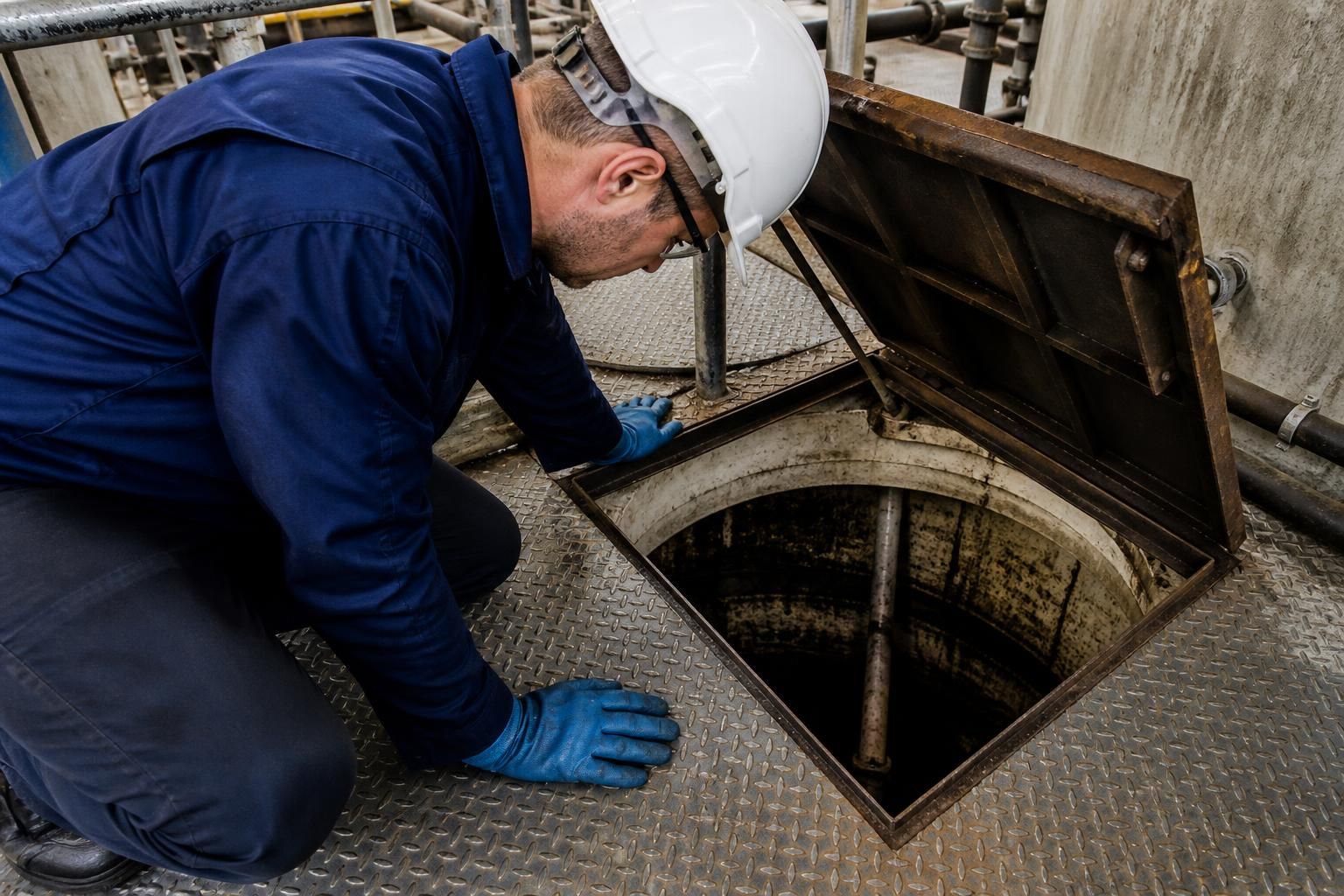
Businesses should prepare for waste water tank cleaning by establishing the work scope, confirming site responsibilities, organising the required safety controls and deciding how cleaning results will be recorded. Good preparation gives the contractor accurate information, helps prevent avoidable disruption and provides evidence that the tank has been managed in accordance with the site’s environmental and health and safety procedures.
Confirm the tank’s condition and history
Before the visit, the responsible person should gather the information available about the tank and its connected system. This may include:
- Tank drawings, specifications and capacity information.
- The type of waste water or trade effluent held by the tank.
- Previous cleaning records, inspection reports and maintenance findings.
- Known defects, leaks, corrosion, blockages, odours or structural concerns.
- Any history of unusual contamination or materials that may require additional controls.
- Details of pumps, sensors, valves, alarms and other equipment associated with the tank.
Accurate records help the contractor plan a suitable cleaning method rather than relying on assumptions. If information is incomplete, this should be made clear before the work is planned so that the site survey and method statement can address the uncertainty.
Define the scope of the work
A quotation or work instruction should make clear whether the service includes removal of settled material, internal washing, sludge extraction, visual inspection, disinfection where appropriate, waste transfer and reporting. Cleaning alone may not resolve damaged linings, defective pumps, cracked covers or recurring deposits, so businesses should distinguish between cleaning and any remedial work that may be identified.
It is also useful to agree the standard for completion in advance. This could include removal of visible deposits, inspection of internal surfaces, photographic records, confirmation that equipment has been left in its intended condition and documentation of waste removed. Clear acceptance criteria reduce disagreement after the work has finished.
Prepare the site’s safety documentation
The business should provide the contractor with relevant site rules, emergency arrangements and information about hazards nearby. The pre-start planning should consider vehicle movements, electrical equipment, chemicals, biological hazards, work at height, nearby plant and other contractors working in the same area.
If internal entry could be required, the preparation must be more detailed. A competent person should determine whether entry is necessary and ensure that the assessment, permit controls, atmospheric monitoring, communication arrangements and rescue provisions are suitable for the tank and its contents. A person should not enter a tank simply because it appears easier than cleaning from outside. Confined space work requires appropriate competence and equipment, with a rescue plan that does not depend solely on an unprotected colleague entering to help.
Nominate responsibilities and brief affected people
One person should coordinate the work for the business and be available to make decisions on the day. Their responsibilities may include confirming the scope, checking that site controls are in place, authorising relevant permits, communicating with the contractor and receiving the completion report.
Employees, tenants, production teams, maintenance staff and other affected parties should be told what the work involves and which activities may be restricted. Where the tank supports toilets, drainage, manufacturing or another essential process, the business should identify how that function will be managed during the cleaning operation. This planning should cover welfare facilities, deliveries, traffic routes and any process that could introduce waste water into the system while the tank is being cleaned.
Plan waste handling and environmental controls
Waste removed from a tank must be handled in accordance with its classification and the applicable site and environmental requirements. The business should provide information about the material held and any substances that may have entered the system. The contractor can then establish suitable handling, transport and disposal arrangements.
Preparations should also cover protection of drains, ground surfaces and nearby watercourses, together with arrangements for dealing with spills or unexpected material. Waste transfer documentation and disposal records should be retained with the tank’s maintenance file where applicable.
Agree the reporting and follow-up process
Before work starts, confirm who will receive the service report and what it should contain. Useful records may include the date of cleaning, tank identification, work completed, waste details, defects observed, photographs, limitations on the inspection and recommendations for further action.
After cleaning, the responsible person should review the report rather than treating the job as complete once the tank is visibly empty. Defects, damaged components or evidence of recurring build-up may require investigation. Any recommended repairs, changes to inspection arrangements or revised cleaning intervals should be assigned to a named person and tracked to completion.
Using a competent water hygiene contractor can help businesses turn this preparation into a documented method of work. Blue Fish Water Management provides practical advice on water management, cleaning requirements and associated compliance considerations, enabling organisations to plan tank maintenance around the condition and use of their systems.
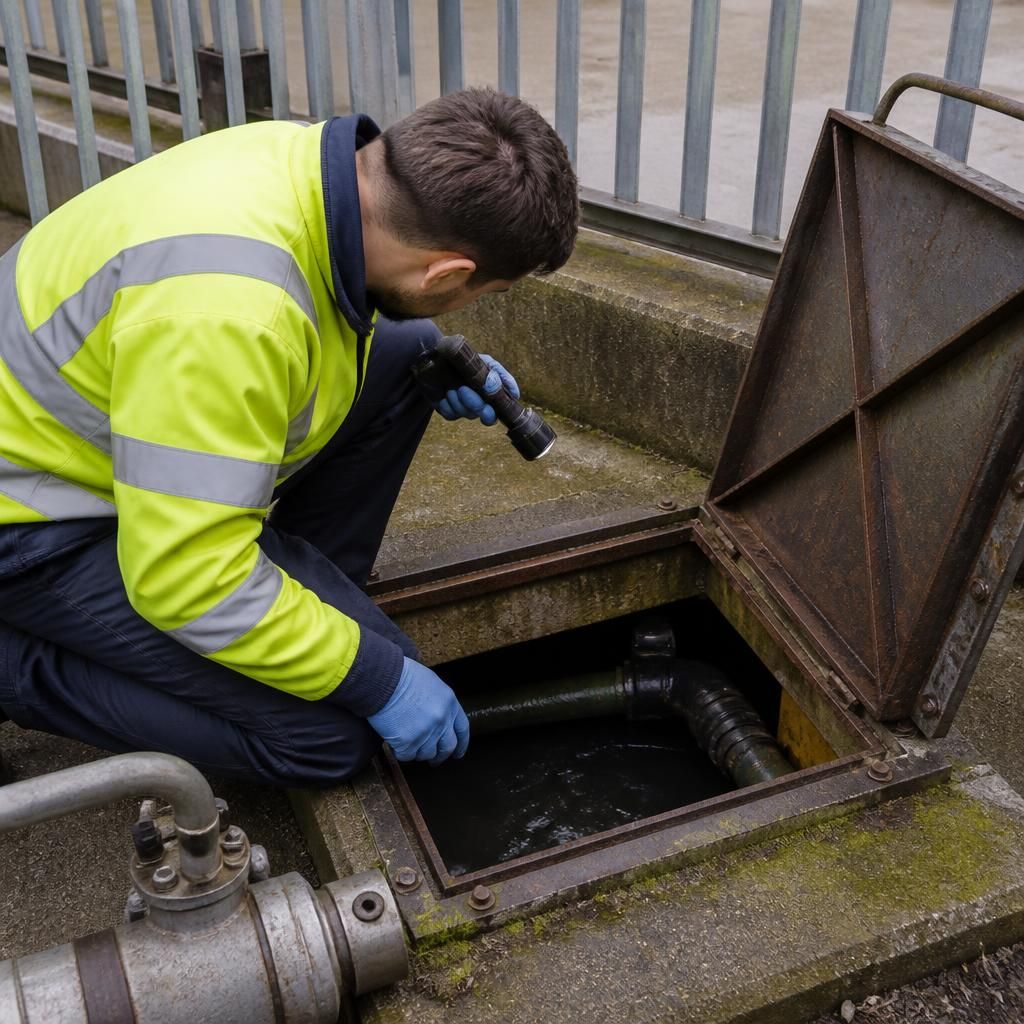
Businesses should also plan how the tank will be protected from recontamination after cleaning. Removing sludge or deposits will have limited value if loose covers, damaged seals or uncontrolled solids allow contaminants to enter again.
- Check that covers, access points and inlet screens can be secured properly.
- Identify any upstream activity that could introduce excess solids, chemicals or foreign materials.
- Make sure temporary hoses, tools and pumping equipment will not introduce additional contamination.
- Agree who will check the tank and connected equipment before the system is placed back into normal use.
Including these checks in the preparation helps distinguish a completed cleaning operation from a tank that is ready to operate without immediately repeating the original problem.
Discuss your waste water tank cleaning requirements
Contact Blue Fish Water Management to discuss your waste water tank cleaning requirements, including the appropriate scope, site constraints and completion records for your system.